

Global spy games heat back up
Advertisement
Read this article for free:
or
Already have an account? Log in here »
To continue reading, please subscribe:

Digital Subscription
One year of digital access for only $205*
- Enjoy unlimited reading on winnipegfreepress.com
- Read the E-Edition, our digital replica newspaper
- Access News Break, our award-winning app
- Play interactive puzzles
*First annual payment billed as $205.00 + GST for one year. This annual subscription will automatically renew at $233.00 + GST every 52 weeks (10% off the regular annual price of $259.35). Offer available to new and qualified returning subscribers only. Cancel any time.
To continue reading, please subscribe:
Add Free Press access to your Brandon Sun subscription for only an additional
$1 for the first 4 weeks*
- Enjoy unlimited reading on winnipegfreepress.com
- Read the E-Edition, our digital replica newspaper
- Access News Break, our award-winning app
- Play interactive puzzles
*Your next Brandon Sun subscription payment will increase by $1.00 and you will be charged $17.95 plus GST for four weeks. After four weeks, your payment will increase to $24.95 plus GST every four weeks.
Read unlimited articles for free today:
or
Already have an account? Log in here »
In 2013, whistleblower Edward Snowden exposed a massive dragnet of U.S. surveillance programs built to intercept the data and communications of targets worldwide. By comparison, human intelligence work suddenly seemed clumsy and antiquated. Perhaps even unnecessary.
Yet espionage is now making a comeback. Governments are rediscovering the value of covertly undermining rivals and dealing with risks abroad before they pose security threats at home.
Israeli and American forces swiftly decapitated Iran’s leadership in March thanks to Mossad agents penetrating the regime in Tehran and tracking officials’ daily movements beforehand. Russian and Ukrainian operatives have staged at least 150 assassination attempts on each other’s soil since 2022.
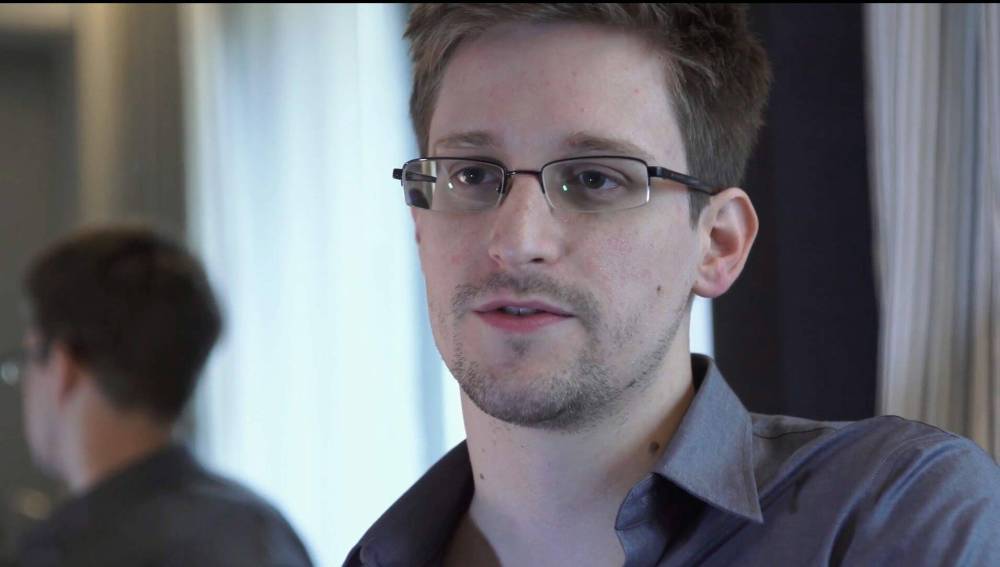
THE ASSOCIATED PRESS FILES
Whistleblower Edward Snowden leaked information in 2013 showing just how much technology was taking a lead role in espionage. Now, many spy agencies are going back to human assets — and Canada might be next.
North Korean spies are using fake IT credentials and AI-generated profiles to get hired at Fortune 500 companies. The goal: steal trade secrets and divert lucrative tech salaries toward Pyongyang’s nuclear weapons program.
Sweden’s new spy agency will launch next January. Japan is standing up its own centralized intelligence agency too, to deal with threats from Russia and China.
“During the ongoing war in Ukraine, it has become very clear that an information advantage and the ability to rapidly and continuously adapt various technical systems are just as crucial as advanced weapons systems,” Sweden’s foreign minister said in May.
Germany’s centre-left coalition government just endorsed draft legislation to permit its intelligence community to use AI-powered offensive cyber tools to thwart terror plots and sabotage.
“It is high time we positioned ourselves to be competitive and on an equal footing with our partner services around the world,” interior minister Alexander Dobrindt told German media. “This requires operational capabilities and active powers to tackle modern state terrorism and extremist groups more effectively.”
The new law — pending parliament approval — has been long debated. However, it was expedited earlier this month after an Islamist attacked Berlin’s Pride parade in late July and the subsequent discovery of a drone carrying explosives near a cargo plane at Leipzig airport bound for Ukraine.
Canada, meanwhile, faces its own challenges.
Belgian authorities last month arrested a “Canadian national of Chinese origin” working as an intern at NATO headquarters in Brussels on allegations she was spying for Beijing. Media reports identified her as a 33-year-old from North York, Ont., with a graduate degree in computer science from the University of Ottawa.
The suspect previously held positions at the Canadian Space Agency, National Research Council and Statistics Canada. Her posting to NATO was sponsored by Global Affairs Canada and she passed background checks from the RCMP. Beijing hasn’t commented on the situation.
“We should be embarrassed,” Richard Fadden, a former director of the Canadian Security Intelligence Service, said recently. “Any country who has one of their citizens caught in something like this should be. But it happens to everyone.”
The situation echoes 2021, when two Chinese scientists working in Winnipeg at the National Microbiology Lab were fired for stealing materials and backchannelling with the Chinese government.
Legislative amendments in 2014 granted CSIS incrementally broader powers to conduct activities abroad. Canada is also a member of the Five Eyes intelligence sharing network, alongside the U.S., Australia, Britain and New Zealand.
However, a more unstable world and a widening rift between Ottawa and Washington mean calls are growing louder for Canada to develop its own dedicated foreign intelligence service. But it’s complicated.
First, it would carry a major price tag. Canadian operations that diverge from U.S. priorities might be co-opted or derailed by the vastly more powerful Central Intelligence Agency. Scandal would erupt if a Canadian asset ever got caught — a near certainty as the fledgling agency found its feet.
And then there’s public acceptance.
“This country has long branded itself as an upstanding, law-abiding global actor, and it would be hard to square that image with an agency whose job is to influence far-flung governments and promote Canadian interests in secret,” filmmaker Matthew A. MacDonald wrote recently in Maclean’s.

Still, experts are steadily warming to the idea.
“It probably won’t be globe-trotting like the CIA or even MI6,” Canadian security expert Wesley Wark wrote last year, speculating what form a Canadian foreign intelligence service could take. “More likely, it would be limited to collecting intelligence rather than engaging in more action-oriented schemes to undermine or overthrow regimes,” he added.
Limited resources would have to be concentrated wisely on a few select theatres of operation, Wark suggested. For example, Russia’s Arctic region, the Caribbean, southern Latin America or francophone parts of Africa.
Then again, if this happens — and is done well — we’ll never know all the details.
Kyle Volpi Hiebert is a Montreal-based political risk analyst focused on globalization, conflict and emerging technologies.