

Take advantage of hydroelectric potential
Advertisement
Read this article for free:
or
Already have an account? Log in here »
To continue reading, please subscribe:

Digital Subscription
One year of digital access for only $205*
- Enjoy unlimited reading on winnipegfreepress.com
- Read the E-Edition, our digital replica newspaper
- Access News Break, our award-winning app
- Play interactive puzzles
*First annual payment billed as $205.00 + GST for one year. This annual subscription will automatically renew at $233.00 + GST every 52 weeks (10% off the regular annual price of $259.35). Offer available to new and qualified returning subscribers only. Cancel any time.
To continue reading, please subscribe:
Add Free Press access to your Brandon Sun subscription for only an additional
$1 for the first 4 weeks*
- Enjoy unlimited reading on winnipegfreepress.com
- Read the E-Edition, our digital replica newspaper
- Access News Break, our award-winning app
- Play interactive puzzles
*Your next Brandon Sun subscription payment will increase by $1.00 and you will be charged $17.95 plus GST for four weeks. After four weeks, your payment will increase to $24.95 plus GST every four weeks.
Read unlimited articles for free today:
or
Already have an account? Log in here »
Manitoba Hydro tells us that we are going to need significant new electricity generation over the coming decades.
Hydro, like every other utility in the world has recognized this fact. Around the world, new generating capacity is being built. Countries that have access to hydroelectric potential are building dams and planning for the future. Other countries, without the natural advantage rivers provide, are building nuclear energy capacity. And yes, in almost all those countries solar and wind generating capacity are being developed as quickly as possible.
All that additional energy capacity is needed to fuel our endless need for technology, data storage and a thousand other things. Quickly moving to electric vehicles from combustion engines will also drive up demand.
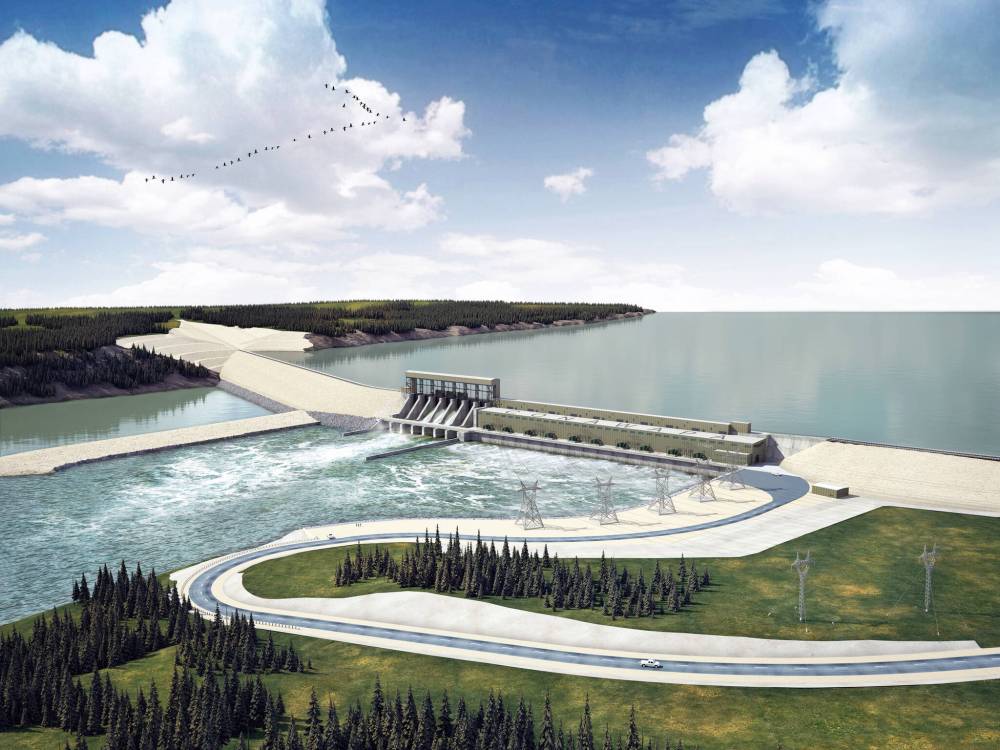
File
An artist’s rendering of Manitoba Hydro’s Conawapa hydroelectric project, from 2012.
Although it is tempting to think that ever larger and better battery storage will help, it will only help in how energy is distributed. The introduction of more and better battery storage is not likely to limit the total demand for energy. The enthusiasm for battery storage is understandable, but it is certainly possible that battery storage will effectively increase our use of energy, simply because it can be so reliably accessed from our battery storage systems.
Experts are predicting that the global demand for electricity will double by 2050. Even that forecast may be woefully shortsighted. That is because few have been talking about how the climate crisis may affect our energy-use patterns.
Canada has warmed by about 2 C over the past 50 years or so. We are going to face ever-increasing demand for electrical power to cool our homes during longer and warmer summers. We are going to need more dependable electric power throughout the year to keep our homes both warm and cool.
We have always needed a reliable and abundant power supply, and for the last 115 years that has been provided by hydro power.
Fortunately, Manitoba has untapped hydroelectric generating capacity on the Nelson River. An earlier NDP government built Limestone on time and on budget, knowing that when Manitoba needed more electricity it already had put in place the infrastructure to add significantly to our electric generating capacity.
Currently, much of the preparatory work has been done for the construction of Conawapa (1,400 megawatts) and, downstream, the Gillam Island project (1,000 megawatts) is waiting to add capacity.
These energy producing giants will still be producing electricity, clean, green power, for the next 100 years at least. Manitoba’s Pointe du Bois generating station was commissioned in 1911, 115 years ago, and is still producing clean, reliable power for Manitobans.
Manitoba Hydro critics have it wrong.
First, there are already dams and generating stations upstream from what would be the last two projects on the Nelson River. The additional environmental damage that may be caused by building two more dams on the Nelson River is negligible, either in terms of flooding or damage to wildlife and fish. Second, as former Hydro vice-president and chief financial officer Vince Warden has pointed out (“Hydro debt is good debt”, Think Tank, Aug. 6), hydro in Manitoba has always been a good investment.
Manitoba Hydro is a solid company with assets that make it financially sound. Its debt load reflects its asset base and its capacity to earn income. No thoughtful assessment of Manitoba Hydro’s appeal to investors has ever suggested that it was a risky investment. It is, and always was, the best kind of long-term investment for our province.
Some Manitoba Hydro critics have pointed to drought years that affect Manitoba Hydro’s bottom line, and the unpredictability of the status of water power reserves as reasons for being cautious about new dam construction.

The weather is unpredictable, but so is the price of the natural gas that will fire our new gas turbines. And natural gas is a non-renewable resource.
By choosing to use a fossil fuel to solve a short-term problem, we will be releasing more greenhouse gases into the atmosphere. Because natural gas is a market commodity, Manitoba will also lose some control of the cost of producing electricity. Big oil will control the cost of gas, not Manitobans or their government.
Why is Manitoba committing itself to a short-term, environmentally costly project instead of using the alternatives available? Spending $3 billion, or more, to produce electricity using natural gas, in a world quickly becoming dangerously hot, is not the best response. It is contributing to the problem. Manitoba has not done enough to promote conservation of energy at home. Some would say little headway has been made supporting the residential use of heat pumps or wind and solar installations to “find’ the energy savings we need until Conawapa is producing reliable power for Manitobans.
We have already put off the construction of Conawapa for more than a decade while costs of construction have continued to escalate. Like any worthwhile venture, the best time to invest in Manitoba Hydro is years ago or now.
Jerry Storie is a former provincial cabinet minister responsible for Manitoba Hydro.