

Where is Mark Carney going with Senate changes?
Advertisement
Read this article for free:
or
Already have an account? Log in here »
To continue reading, please subscribe:

Digital Subscription
One year of digital access for only $205*
- Enjoy unlimited reading on winnipegfreepress.com
- Read the E-Edition, our digital replica newspaper
- Access News Break, our award-winning app
- Play interactive puzzles
*First annual payment billed as $205.00 + GST for one year. This annual subscription will automatically renew at $233.00 + GST every 52 weeks (10% off the regular annual price of $259.35). Offer available to new and qualified returning subscribers only. Cancel any time.
To continue reading, please subscribe:
Add Free Press access to your Brandon Sun subscription for only an additional
$1 for the first 4 weeks*
- Enjoy unlimited reading on winnipegfreepress.com
- Read the E-Edition, our digital replica newspaper
- Access News Break, our award-winning app
- Play interactive puzzles
*Your next Brandon Sun subscription payment will increase by $1.00 and you will be charged $17.95 plus GST for four weeks. After four weeks, your payment will increase to $24.95 plus GST every four weeks.
Read unlimited articles for free today:
or
Already have an account? Log in here »
A decade after Justin Trudeau dropped Liberal Senators from the party’s national parliamentary caucus and introduced a new appointment process based on non-partisan criteria, his successor, Prime Minister Mark Carney, has recently reintroduced partisanship as a possible basis for appointment to the 205-member Senate.
Commentators were quick to offer immediate, mostly negative assessments of the Carney move. My view is that before rushing to judgment, we need to know more about what Carney has planned for the future partisan makeup of the Senate and its independence from government control.
In law, the Governor General appoints senators, but in practise they are selected by the prime minister.
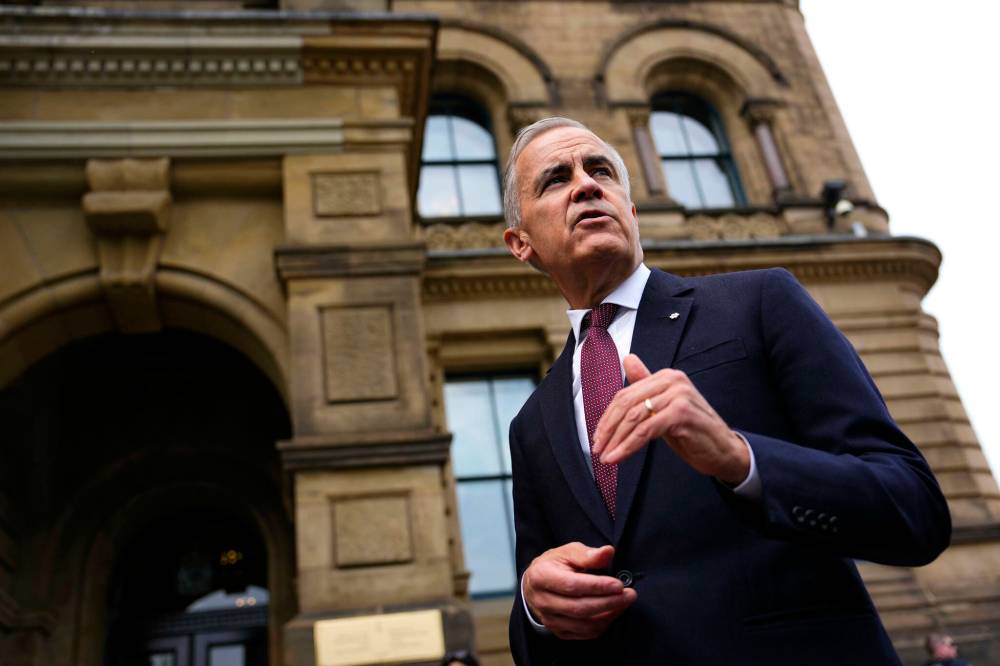
JUSTIN TANG / THE CANADIAN PRESS
Prime Minister Mark Carney’s proposed changes to the Canadian Senate are not yet completely clear.
Historically, appointment was mostly based on past or anticipated future service to the governing party. Trudeau broke with this tradition by making non-partisanship a criteria for appointment. He also created independent advisory committees to identify potential nominees.
In the past, patronage appointments meant that Liberal and Conservative caucuses, subject to party discipline, dominated the “old” Senate. Trudeau promised a new, independent Senate. During his decade in power, he made 100 appointments. Most of his early appointees were highly accomplished individuals, only a few of whom had a Liberal party affiliation.
The result was a Senate which was more willing to challenge, delay and to amend government legislation. At the same time, Senators acted with restraint, stopping short of using their authority to block bills already approved by the House of Commons.
This pattern changed in 2024 when the Liberals seemed headed for defeat. Approximately half of Trudeau’s final 22 appointments in 2024-2025 had connections to the Liberal party, a move apparently designed to constrain a potential future Conservative government led by Pierre Poilievre.
Once appointed, new Senators decide whether they will sit as independents or join one of several parliamentary groupings which emerged as a result of the Trudeau reforms: the Independent Senators Group, the Canadian Senators Group and the Progressive Senate Group. The numbers within each group have fluctuated over time. The only traditional party caucus left is the CPC Senators, who are still subject to party discipline. Their number has dwindled to just 12.
The appointment of “notables”, most with little or no prior political experience, meant there were fewer senators who had the skills in negotiation and compromise needed for the proper functioning of the Senate as a legislative body. Many of the new senators focused their efforts narrowly on their longstanding areas of accomplishment.
In the months before July 7, 2026, when he announced his own Senate changes, Carney had achieved a majority in the House of Commons by persuading five Opposition MPs to cross the floor of the House of Commons to join the Liberals. As a result, the Senate became the place where he lacked a workable majority. If he wanted to move quickly with his national projects he needed to achieve some measure of top-down political direction in the upper house.
Accordingly, Carney eliminated the non-partisan requirement for appointments. The official reason was that the Senate needed more political experience to handle the challenges facing the country. To this end, he appointed his then principal secretary and veteran Liberal campaign manager Tom Pitfield (Quebec) to serve as his point man in the Senate.
It is important to note that Carney has said future appointees will not be invited to join the Liberal parliamentary caucus, so that part of the Trudeau reforms is preserved.
In a relatively rare move, Carney also appointed Conservative MP Richard Martel (Quebec) who declared that he would not sit as a Conservative in the Senate. The appointment caused further damage to Poilievre’s leadership and created a byelection opportunity for the Liberals.
Carney also announced that his future appointments would focus on people with expertise in the economy and strategic industries of the future. Completing his initial four appointments were a cancer physician/researcher from New Brunswick and an accountant from Manitoba.
There was criticism aplenty for Carney’s moves, but only three can be mentioned briefly in the space available here.
Some commentators offered the longstanding fundamental criticism that the Senate remained an anachronism in the 21st century, an appointed upper house which lacked democratic accountability to the public. This complaint ignored the great difficulty, approaching impossibility, of amending the constitution to abolish the Senate or to make it an elected body.
Other critics claimed Carney was reverting to a patronage-based Senate which would be so docile in dealing with government business that it would not be worth the public money spent on it. Originally, the primary constitutional roles of the Senate were to provide a regional voice and “sober second thought” on bills, functions which were allegedly overridden by partisan loyalty.

At this point, Carney’s longer term goal is unclear. His intention could be an appointment process which balances political experience, including partisanship, with the representation of various territorial, occupational, social and identity backgrounds. Appointment can be used more directly than elections to achieve such diversity. Under Trudeau greater female and Indigenous representation was created.
A final criticism was that the promised appointment of persons from the peak sectors of the economy would make the Senate more of a target for lobbying by various interest groups. Since 2016, the more independent Senate had already attracted more lobbying activity. Critics also pointed to the June 2026 revisions to the Senate’s Code of Ethics, which they claimed would expose senators to more outside influence. In fact, the revisions simply clarified the existing rules on the acceptance of gifts and the involvement of senators in political fundraising and, in doing so, may aid enforcement.
As an unelected body the Senate will always attract criticism. Though far from perfect, it actually does more valuable work (especially in its committees) than is generally recognized.
Abolishing it or making it elected is unlikely to happen, so let’s make it work better. Maybe that is what Carney is hoping to achieve.
Paul G. Thomas is professor emeritus of political studies at the University of Manitoba.