

Manitoba Hydro’s $3 billion fossil fuel bet
Advertisement
Read this article for free:
or
Already have an account? Log in here »
To continue reading, please subscribe:

Digital Subscription
One year of digital access for only $205*
- Enjoy unlimited reading on winnipegfreepress.com
- Read the E-Edition, our digital replica newspaper
- Access News Break, our award-winning app
- Play interactive puzzles
*First annual payment billed as $205.00 + GST for one year. This annual subscription will automatically renew at $233.00 + GST every 52 weeks (10% off the regular annual price of $259.35). Offer available to new and qualified returning subscribers only. Cancel any time.
To continue reading, please subscribe:
Add Free Press access to your Brandon Sun subscription for only an additional
$1 for the first 4 weeks*
- Enjoy unlimited reading on winnipegfreepress.com
- Read the E-Edition, our digital replica newspaper
- Access News Break, our award-winning app
- Play interactive puzzles
*Your next Brandon Sun subscription payment will increase by $1.00 and you will be charged $17.95 plus GST for four weeks. After four weeks, your payment will increase to $24.95 plus GST every four weeks.
Read unlimited articles for free today:
or
Already have an account? Log in here »
Manitoba Hydro plans to spend $3 billion to build three new fossil fuel power generation turbines in 2030. This big bet on fossil fuel generation would be a big mistake for both the planet and Manitoban’s pocketbooks.
The initial $3 billion price tag is only part of the financial harm we will suffer if these plans go ahead. At ongoing public hearings at Manitoba’s Public Utilities Board, Manitoba Hydro admitted that gas plant costs will be higher than forecast but has declined to say by how much.
Even worse, the electricity produced by the fossil fuel turbines will be costly because it requires burning expensive gas — unlike hydroelectric, solar, and wind generation.
Tim Smith / Brandon Sun files
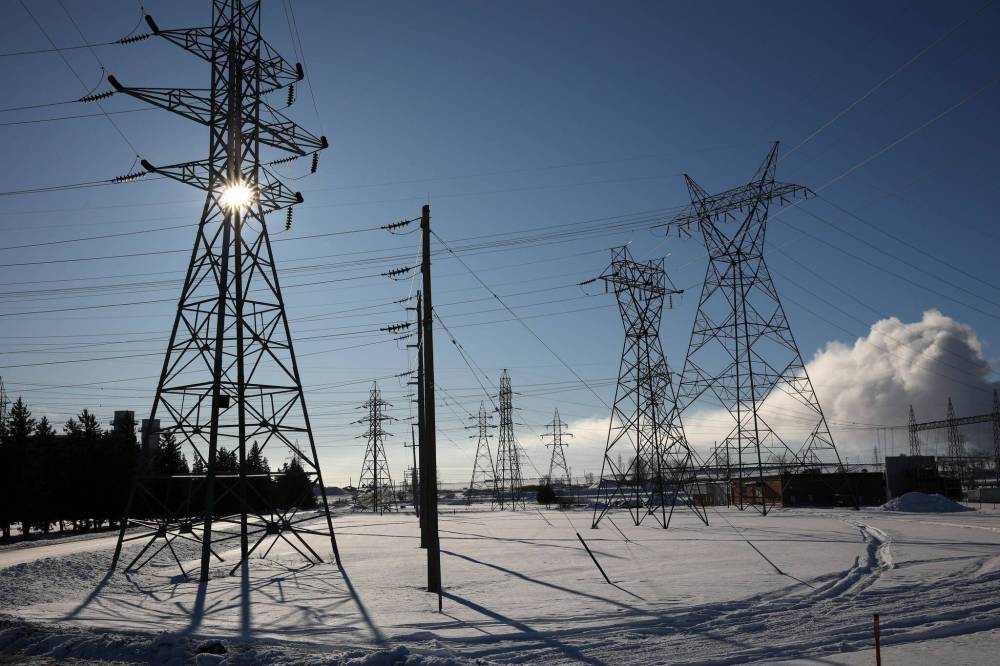
Hydro lines lead away from the Manitoba Hydro Brandon Generating Station. Advocates are asking the crown corporation to consider batteries and micro nuclear reactors.
Also, Manitoba Hydro plans to build the least-efficient kind of gas plant (a simple-cycle gas turbine), increasing the volume of gas required (and cost) for every unit of electricity produced.
The plan would also leave Manitobans exposed to price spikes in gas and reduce energy sovereignty for the province.
The financial picture gets even worse by 2035, when Manitoba plans to implement a fully net-zero grid. To comply, the gas plant will need to burn expensive biofuels, which will raise the cost of electricity even more and take those biofuels away from other important uses.
Or Manitoba Hydro will need to buy expensive carbon offsets. These additional costs underline how financially reckless it is to be building new fossil fuel generation in the midst of a climate crisis.
The climate consequences are also maddening.
These plans roughly triple the fossil fuel generation in the provincial grid.
Under drought conditions, the greenhouse gas pollution from electricity generation will increase dramatically from current levels.
Also, this new fossil fuel generation would push out alternatives that would help reduce greenhouse gas emissions across the region. These alternatives (renewables coupled with batteries) would allow Manitoba to meet our needs with green energy and make money exporting green energy to our neighbours to help them reduce reliance on expensive fossil fuel generation.
Manitoba Hydro argues that the cost of gas generation and the carbon pollution will be low because the plants will be used so infrequently.
But that is not true in drought conditions when our hydroelectric plants produce less energy — a situation becoming more and more common with climate change.
Manitoba Hydro’s PUB filings acknowledge its new fossil fuel turbines could be run 25 per cent of the time in those conditions, which will harm our pocketbooks and the planet.
Manitoba Hydro’s plans are based on outdated thinking and outdated data.
Its estimates for the cost of fossil fuel generation are too low and, for alternatives such as batteries, too high.
The market disagrees with Manitoba Hydro’s assessment. A recent competitive procurement in Ontario pitted proposed fossil gas generation projects against battery storage projects. Gas won no contracts; battery storage won them all.
Manitoba Hydro also fails to recognize many of the ways that batteries save us money, such as helping to avoid building new electricity transmission and distribution lines, reducing the losses of electricity on those power lines and using cheap or free energy to charge a battery when there is a glut of electricity available and later selling that energy back at a profit when prices rise.
Finally, Manitoba Hydro argues that batteries don’t work in cold weather and cannot provide dependable electricity capacity when it is needed the most, during multi-day cold snaps.
That is untrue. Battery storage can be built to work in extremely low temperatures (-40 C and lower) because they are very easy to heat and insulate — much easier than gas plants — and they already produce heat themselves when cycling.
Also, Manitoba can depend on batteries during multi-day cold snaps because they can recharge when demand is lower and electricity supply is higher, such as in overnight periods.

As well, gas plants are less reliable than batteries in cold weather. During the PUB hearing this week, Manitoba Hydro admitted that its gas plant in Brandon failed during three of the 10 highest multi-day highest electricity demand periods over the past five years. In other words, in 30 per cent of the cold-snap events where we need reliable electricity capacity the most, the fossil fuel gas plant could not be relied on.
In addition, battery storage has proved to be more reliable than gas in cold snaps in other jurisdictions, supporting electricity capacity needs even while gas plants have failed to do so (e.g., during Winter Storm Fern in January 2026).
The coming months will be the last chance we have to change course. The PUB will issue recommendations on Manitoba Hydro’s plans, which the Manitoba government will use to make a final decision. Manitoba Hydro needs to be sent back to the drawing board and to use cheap bridging solutions (e.g., batteries) to meet our needs while it re-evaluates its plans.
Rather than getting burned by fossil fuels, it is time for Manitoba Hydro to get supercharged about building batteries.
James Beddome is executive director of the Manitoba Eco-Network. Kent Elson is a lawyer representing the Manitoba Eco-Network and Environmental Defence Canada, interveners in the ongoing PUB review of Manitoba Hydro’s Integrated Resource Plan and Major New Facilities application.