

The best hockey I knew was the first
Advertisement
Read this article for free:
or
Already have an account? Log in here »
To continue reading, please subscribe:

Digital Subscription
One year of digital access for only $205*
- Enjoy unlimited reading on winnipegfreepress.com
- Read the E-Edition, our digital replica newspaper
- Access News Break, our award-winning app
- Play interactive puzzles
*First annual payment billed as $205.00 + GST for one year. This annual subscription will automatically renew at $233.00 + GST every 52 weeks (10% off the regular annual price of $259.35). Offer available to new and qualified returning subscribers only. Cancel any time.
To continue reading, please subscribe:
Add Free Press access to your Brandon Sun subscription for only an additional
$1 for the first 4 weeks*
- Enjoy unlimited reading on winnipegfreepress.com
- Read the E-Edition, our digital replica newspaper
- Access News Break, our award-winning app
- Play interactive puzzles
*Your next Brandon Sun subscription payment will increase by $1.00 and you will be charged $17.95 plus GST for four weeks. After four weeks, your payment will increase to $24.95 plus GST every four weeks.
Read unlimited articles for free today:
or
Already have an account? Log in here »
“Nothing is as good as it used to be and it never was. The ‘golden age of sports,’ the golden age of anything, is the is the age of everyone’s childhood.” — Ken Dryden
I grew up in Winnipeg, in a small suburban enclave called Morse Place. Not exactly the centre of the hockey universe, but it was home. A little working-class pocket in the north part of the city. Terry Sawchuk, the great Detroit goaltender was probably our best known hockey export.
Dad worked in an iron foundry, and mom ran the house like a general. My older sister excelled at school and her choir singing. We weren’t poor, but let’s just say there was very little money left over after dad brought home the paycheque.
File
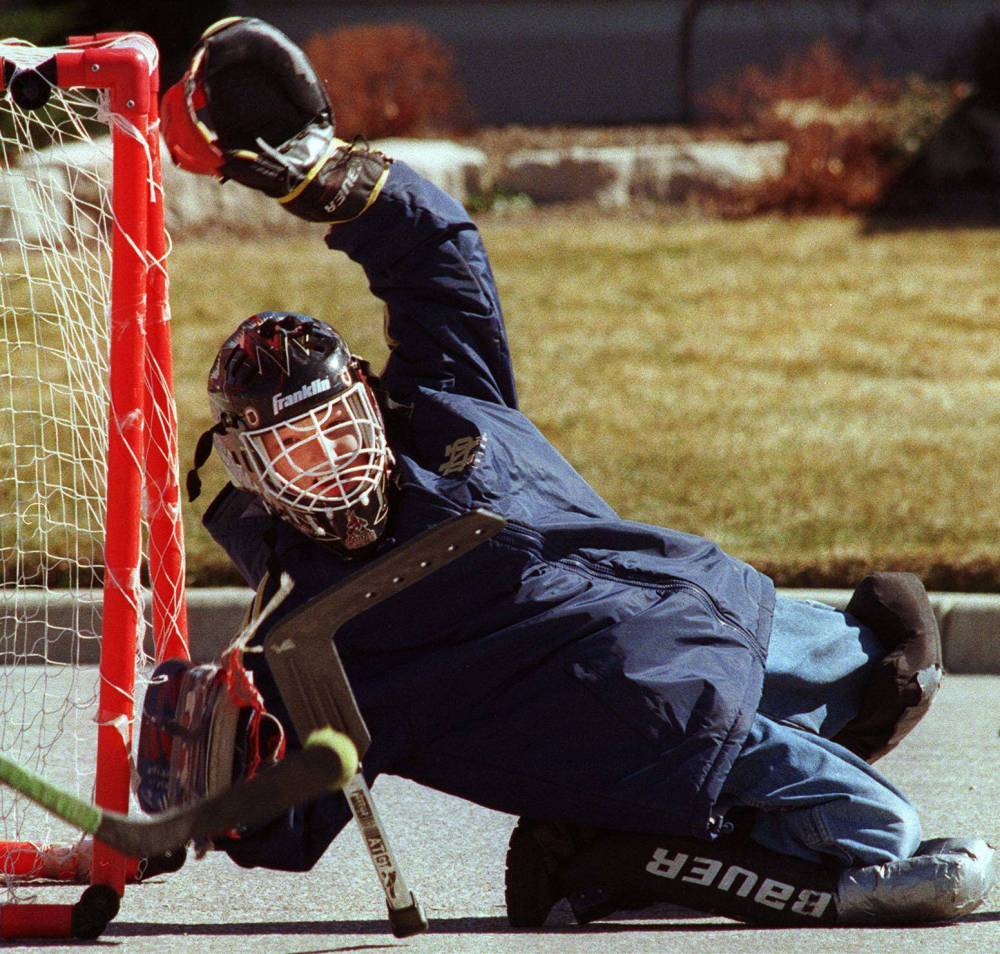
Saturdays were for street hockey during Robert Milan’s childhood.
We didn’t have much, but we, or rather I, had the rink. The community club had one glorious sheet of outdoor ice with real boards, an old streetcar converted into a clubhouse, and a pot-bellied stove that tried to keep your toes from freezing. And yet … it was magic.
I still remember waddling three blocks to that rink with my skates already on because I couldn’t tie the laces tight enough myself. That job was dad’s.
I’d skate until my feet were numb, then hobble home like some victorious frostbitten warrior. We were tough, or at least too dumb to know we weren’t.
Pretty soon I had a stick and started playing every chance I got. There was no organized hockey in Morse Place back then. We had a house league, but it was more “house” than “league.”
Equipment? Goalies had pads, sure. The rest of us? Magazines in our socks, held on with canning jar sealer rings. Eaton’s catalogues worked well.
And Sundays — oh man, Sundays — were the best. Pickup games with 15, sometimes 20 kids. Ten-on-ten chaos. The only rule was no raising the puck, and even that got ignored once in a while. You couldn’t pass anyway — the ice was too crowded — so it was every kid for himself, trying to dangle through a forest of legs. I got pretty good at stickhandling, mostly out of necessity and fear.
Christmas morning? Always a hockey stick under the tree. Usually a Hespeler. I dreamed of a Northland Pro, but Santa clearly had budget cuts. Still, that new stick was sacred. A sword from the stone. Instant swagger.
Saturdays were for “spongee.” Ever heard of spongee?
Street hockey, winter edition. We played in front of Barry’s house with big snow lumps for goals. The puck was a sponge ball — red, white, and blue — cut down to puck shape. Light, fast, didn’t bruise your shins. Barry was a victim of polio, so he played goalie. It didn’t matter, that guy was a wall.
Orville introduced the slap shot, a brand-new type of shot in the NHL. Sticks broke a lot. But every now and then, one would snap just right, creating a thin blade we called a “toothpick.” Dangerous. Deadly. Glorious. It propelled the spongee at warp speed.
I’m convinced spongee was born on our block, though an old friend swears it started in River Heights, another part of Winnipeg. He’s wrong, of course. Completely delusional.
We all had our NHL idols. Ours was a Montreal Canadiens house — Maurice Richard, Doug Harvey, Jean Béliveau. Toronto was the enemy. My dad, in his own poetic way, said: “Montreal’s the working-man’s team. Toronto’s for the big shots.” The Leafs were toxic in our household.
At 13, I made the Morse Place Bantam B team — our first real organized team. We almost made it to the city championship. We played a semifinal at the long-gone Olympic Rink. First time I ever played indoors. Felt like I’d made it.
It was one of the few indoor rinks in the city. It smelled like victory … and sweat. The next year? No Bantam A team in Morse Place. Nearest one was too far. No car. No swank SUV to take me from Tim Hortons to the rink. No hockey. End of season, just like that.
The next year I made the Bronx Park Midget team. Long commute. Cold commute. I was small, quick, and completely allergic to corners. I hated getting hit. The coach didn’t teach much — just sent us out like cannon fodder.
The other teams figured me out fast. “That one? He flinches.” I rode the fourth line, took too many elbows and cross checks and realized… maybe the NHL would survive without me.
So I hung up the dream and hit the books. But I wasn’t quite done.
Last chapter … Interfaculty hockey at the University of Manitoba. It was more beer league than league-league. But it was fun. Way more fun now that I knew that I wasn’t going to crack the Montreal Canadiens roster.
And you know what?
I loved it. Still do. My “hockey career” if you can call it that, never went anywhere, but it taught me everything I needed to know: that hockey is hard. The kind of hard that separates dreamers from the truly gifted. The kind of hard that makes you admire the game for the beauty of its skill — not just the speed or the hits.

And today? The game’s better. Less violence, more finesse, more speed. Women’s hockey is taking off. Kids have better equipment, indoor ice, and someone to tie their skates without them freezing on the walk to the rink.
But me? I’ll always remember Morse Place.
That busted streetcar. The numb toes. The spongee pucks.
And the feeling — every time I stepped on the ice — that I belonged to something bigger than myself.
Robert Milan is retired and lives in Victoria.