

Many ways to trigger Tory turmoil
Advertisement
Read this article for free:
or
Already have an account? Log in here »
To continue reading, please subscribe:

Digital Subscription
One year of digital access for only $205*
- Enjoy unlimited reading on winnipegfreepress.com
- Read the E-Edition, our digital replica newspaper
- Access News Break, our award-winning app
- Play interactive puzzles
*First annual payment billed as $205.00 + GST for one year. This annual subscription will automatically renew at $233.00 + GST every 52 weeks (10% off the regular annual price of $259.35). Offer available to new and qualified returning subscribers only. Cancel any time.
To continue reading, please subscribe:
Add Free Press access to your Brandon Sun subscription for only an additional
$1 for the first 4 weeks*
- Enjoy unlimited reading on winnipegfreepress.com
- Read the E-Edition, our digital replica newspaper
- Access News Break, our award-winning app
- Play interactive puzzles
*Your next Brandon Sun subscription payment will increase by $1.00 and you will be charged $17.95 plus GST for four weeks. After four weeks, your payment will increase to $24.95 plus GST every four weeks.
Read unlimited articles for free today:
or
Already have an account? Log in here »
Hey there, time traveller!
This article was published 11/11/2022 (1370 days ago), so information in it may no longer be current.
Rishi Sunak is now the fifth Conservative Prime Minister of the United Kingdom in the six years following the 2016 Brexit vote. Here in Canada, the Conservative Party has also had five leaders during the same six-year time frame following the Stephen Harper years, though two were interim.
And Manitoba’s Progressive Conservative Premier Heather Stefanson’s recurring lowest approval rating among her provincial counterparts continues to jeopardize her job.
The current instability of conservative leadership is no anomaly, having deep roots in the historic ideology of conservativism more generally. Ideology is a coherent set of interrelated ideas (about what is) and ideals (about what ought to be) that explain and justify the prevailing or proposed distribution of power, wealth and privilege. Several aspects of conservative ideology predispose its adherents to disunity, despite their repeated attempts to “unite the right.”
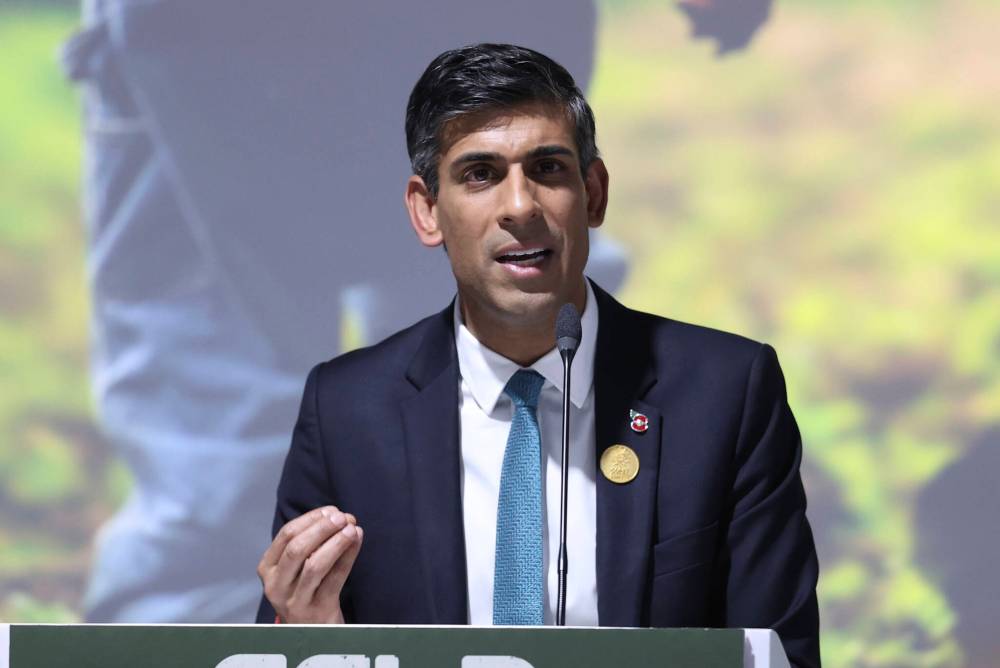
Steve Reigate / Pool / The Associated Press files
The arrival of Conservative Rishi Sunak as Britain’s prime minister — the fifth person to hold that office in the past six years — illustrates the ideological challenges facing modern-day right-of-centre parties.
First, conservative ideology is grounded in classic individualism — the concept that each person is an autonomous, self-determining entity, not primarily a member of a group for which they share responsibility. The individual is more important than the collectivity, just as personal rights and self-fulfilment are more important than social responsibility and accountability.
Equality of opportunity is all that matters, regardless of inequality of social conditions. Becoming a success or failure is entirely to the person’s own credit or blame.
Second, the individual must be free, because the best society is the product of individual freedom, even when it comes at the expense of others. There is little regard for the reality that one person’s freedom ends where the next person’s freedom begins.
Pierre Poilievre, the latest leading conservative anti-gatekeeper, fraternized with the so-called “freedom convoy” that occupied Ottawa, and promised “to make Canada the freest nation on earth,” despite having voted against the freedoms of several categories of persons in the past.
Third, the individual is free to pursue his or her short-term self-interest with no obligation for long-term collective interest, the free enterprise of the capitalist free market being the foremost example.
While the state exists to create public goods — those benefits which cannot be distributed selectively, such as highways and hospitals — the best deal for the individual is to reap the benefits without sharing the costs — in other words, to be a free rider.
Tim Bale, a British professor of politics and author of The Conservative Party After Brexit, writes: “I think (conservative) politicians continue to feed the myth that we can have Scandinavian levels of welfare on American levels of taxation.”
Today, this conservative ideology is fuelling raging populism, which divides society into allegedly corrupt, self-serving elites (political, cultural and economic) who oppress good, ordinary people. Populist leaders cast themselves as the true voice of “the people,” who hate “the enemy of the people,” however defined.
They employ simplistic black-and-white, as well as conspiracy-minded, thinking to deny the nuance and complexity of issues. They are suspicious of experts who suppress the “truth” and “freedoms” of the average person. As such, they are chronically antagonistic — anti-establishment, anti-state, anti-intellectuals, anti-science, anti-immigration, anti-pluralist and anti-globalization.
Populists are driven by the French concept of ressentiment, the deep-seated resentment, frustration and hostility exacerbated by a sense of powerlessness, the deep grievance of both envy and humiliation, of being left behind.
The great irony of contemporary conservative populism is its complete reversal of traditional Toryism. Historically, Tories were monarchists who upheld “God, King, and Country” and defended the “natural order” of social hierarchy.
For example, Thomas Hobbes, a 17th-century founder of modern conservative political philosophy, argued social order was possible only if society restrained selfish human nature with an authoritarian state. Only such a state’s ability to override individual rights could prevent society from reverting to a “war of all against all.”

Hence the current emergence of oxymoronic authoritarian populism. After using the populist politics of anger, fear and targeting out-groups to get elected, the authoritarian populist leader then uses political power in discriminating and undemocratic ways to favour the identity of their political base — its own form of identity politics.
The same seems true for internal conservative party politics as well, as evidenced by the corruption and chaos of the U.S. Republican Party. The only thing that holds a conservative party together is a charismatic and/or authoritarian “strongman” — behold Donald Trump.
And only when holding power is conservativism more stable and less prone to revolving-door leadership and constant reconfiguration of the party itself. But for British Tories, not even then.
In the end, the only thing that unites conservatives is their ideology. Paradoxically, that’s exactly what tears them apart.
Dennis Hiebert is a professor of sociology at the University of Manitoba.