

‘Absolutely needs to be transparent’
Manitoba’s move to target misleading, deceptive real estate advertising met with expressed desire for ‘clear rules’

Advertisement
Read this article for free:
or
Already have an account? Log in here »
To continue reading, please subscribe:
Digital Subscription
One year of digital access for only $1.44 a week*
- Enjoy unlimited reading on winnipegfreepress.com
- Read the E-Edition, our digital replica newspaper
- Access News Break, our award-winning app
- Play interactive puzzles
*Billed as $5.77 plus GST every four weeks. After 52 weeks, price increases to the regular rate of $19.95 plus GST every four weeks. Offer available to new and qualified returning subscribers only. Cancel any time.
To continue reading, please subscribe:
Add Free Press access to your Brandon Sun subscription for only an additional
$1 for the first 4 weeks*
- Enjoy unlimited reading on winnipegfreepress.com
- Read the E-Edition, our digital replica newspaper
- Access News Break, our award-winning app
- Play interactive puzzles
*Your next Brandon Sun subscription payment will increase by $1.00 and you will be charged $17.95 plus GST for four weeks. After four weeks, your payment will increase to $24.95 plus GST every four weeks.
Read unlimited articles for free today:
or
Already have an account? Log in here »
Couches, kitchen tables, artwork — if they are in an online home listing, there’s a good chance it’s AI generated.
The Manitoba government announced in its throne speech this week it would crack down on such artificial intelligence use.
“When you get taken for a ride and you rent a bunk apartment (and) you’re misled, you’re getting ripped off,” Premier Wab Kinew said Tuesday.
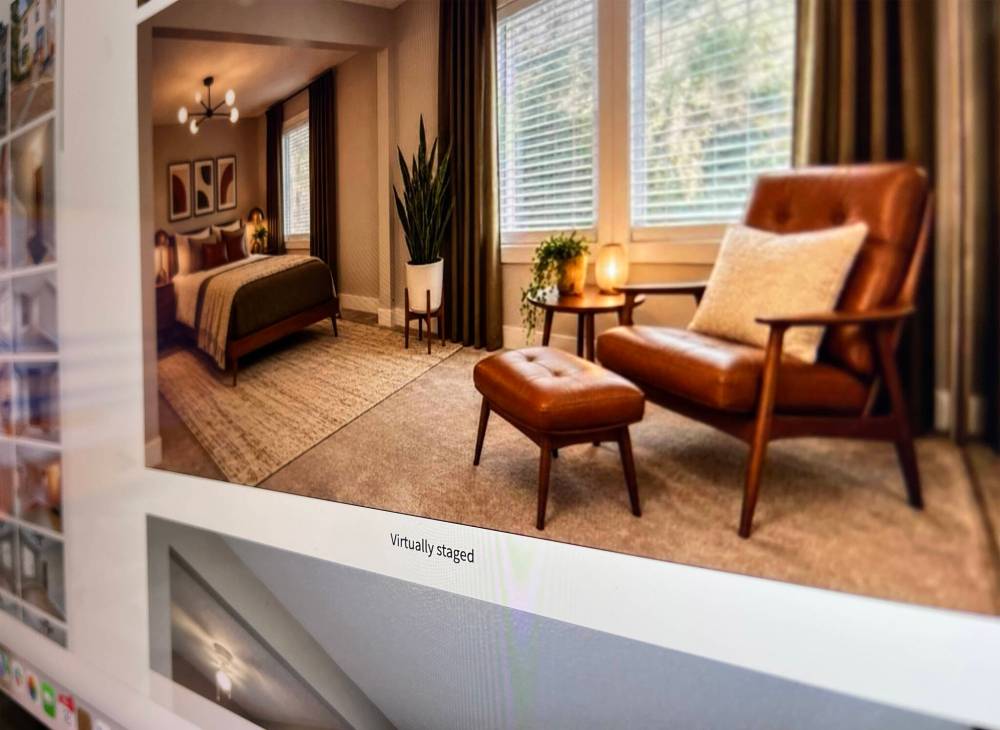
MIKE APORIUS / FREE PRESS
An image labelled as containing AI-generated staging in seen in a realtor.ca listing. The Manitoba Real Estate Association says it has received three informal complaints about AI use this year.
Manitoba will target misleading and deceptive real estate advertising — there won’t be an outright AI ban, New Technology Minister Mike Moroz said on Wednesday.
“The technology is evolving so rapidly. We want to make sure that we stay ahead of it to protect Manitobans,” Moroz said. “Nothing hinders tech adoption like public mistrust.”
He met with the Manitoba Real Estate Association on Wednesday and said he plans to continue consulting the industry. Legislation may be drafted, but “all of the possibilities need to be on the table,” he added.
MLAs are expected to introduce legislation next spring.
Real estate agents are already banned from using misleading photos under the Real Estate Services Act.
Both the Manitoba Real Estate Association and Manitoba Securities Commission have public reporting systems for improper agent behaviour.
Still, there are “over-the-top” photos being used, said Connor Njegovan, a Winnipeg real estate agent.
A listing gained attention earlier this year for fake mountains placed behind a house on Winnipeg’s Scotia Street.
“I think it’s a good thing the province is looking at (this),” Njegovan said. “It’s only going to make our industry better if we have clear rules.”
He’s used virtual furniture in pictures for the last three years. It’s easier than setting up real furniture in some cases, such as estate sales, Njegovan said.
He draws a line at altering the home, including to mask needed renovations.
AI staging can save sellers money and show how a place could look when furnished, noted David Salvatore, chief executive of the Manitoba Real Estate Association.
“It should be disclosed that this is AI generated,” Salvatore said. “At the end of the day, it absolutely needs to be transparent.”
Michael Froese, managing partner of Royal LePage Prime Real Estate, questioned who will be affected under the province’s changes. He pointed to private rentals, hotels and hospitality businesses that use AI to enhance their online photos.
“Realtors are heavily regulated already, but there might be some other places where it’s not,” Froese said.
The Manitoba Real Estate Association received three complaints about agents’ AI use this year, but none were submitted through the formal complaint process. No formal investigations or disciplinary actions occurred; brokers were notified of the complaints against them, said Kim Gandier, the association’s vice-president of public affairs.
Meantime, Faith Stangl, 25, is off-put by the AI furniture she sees in local Facebook Marketplace rental listings.
“It kind of makes you cringe,” Stangl said. “It makes you turn away from even wanting to go look at it, because it’s almost distrustful.
“It doesn’t seem real, so it’s like, why would I want to reach out?”
Viktoria Lukow was shopping at the same Walmart as Stangl on Wednesday in Winnipeg. Lukow said she’s not opposed to the AI use: “Sometimes, you want to know how it’s going to look.”

Josh Guenter, the Progressive Conservatives’ new technology critic, said the New Democrat throne speech was filled with “vague promises and self-congratulatory language.”
“That this is an issue where the Kinew government has chosen to focus their time and energy shows just how out of touch and out of ideas they are,” Guenter wrote in a statement.
The Real Estate Council of Ontario issued new AI use guidelines this month. The guidance advises to label digitally altered images and get consent from clients before putting their details into AI platforms.
The Winnipeg Regional Real Estate Board has an internal policy on AI use.
gabrielle.piche@winnipegfreepress.com
Gabby is a big fan of people, writing and learning. She graduated from Red River College’s Creative Communications program in the spring of 2020.
Our newsroom depends on a growing audience of readers to power our journalism. If you are not a paid reader, please consider becoming a subscriber.
Our newsroom depends on its audience of readers to power our journalism. Thank you for your support.
Advertisement Advertise With Us
Advertisement Advertise With Us