

Bank of Canada hikes key rate by half percentage point, signals possible pause
Advertisement
Read this article for free:
or
Already have an account? Log in here »
To continue reading, please subscribe:

Digital Subscription
One year of digital access for only $205*
- Enjoy unlimited reading on winnipegfreepress.com
- Read the E-Edition, our digital replica newspaper
- Access News Break, our award-winning app
- Play interactive puzzles
*First annual payment billed as $205.00 + GST for one year. This annual subscription will automatically renew at $233.00 + GST every 52 weeks (10% off the regular annual price of $259.35). Offer available to new and qualified returning subscribers only. Cancel any time.
To continue reading, please subscribe:
Add Free Press access to your Brandon Sun subscription for only an additional
$1 for the first 4 weeks*
- Enjoy unlimited reading on winnipegfreepress.com
- Read the E-Edition, our digital replica newspaper
- Access News Break, our award-winning app
- Play interactive puzzles
*Your next Brandon Sun subscription payment will increase by $1.00 and you will be charged $17.95 plus GST for four weeks. After four weeks, your payment will increase to $24.95 plus GST every four weeks.
Read unlimited articles for free today:
or
Already have an account? Log in here »
Hey there, time traveller!
This article was published 07/12/2022 (1390 days ago), so information in it may no longer be current.
OTTAWA – The Bank of Canada hit a turning point on Wednesday when it announced a half percentage point interest rate increase while signalling it might be ready to pause its aggressive rate hike cycle.
The central bank hiked its key interest rate to 4.25 per cent – the highest it’s been since January 2008 – and said its future rate decisions will be data-dependent, a major change from other announcements this year that have made clear the rate increases would continue.
Since March, the central bank has raised its key interest rate seven consecutive times in an effort to bring inflation down and slow the economy.
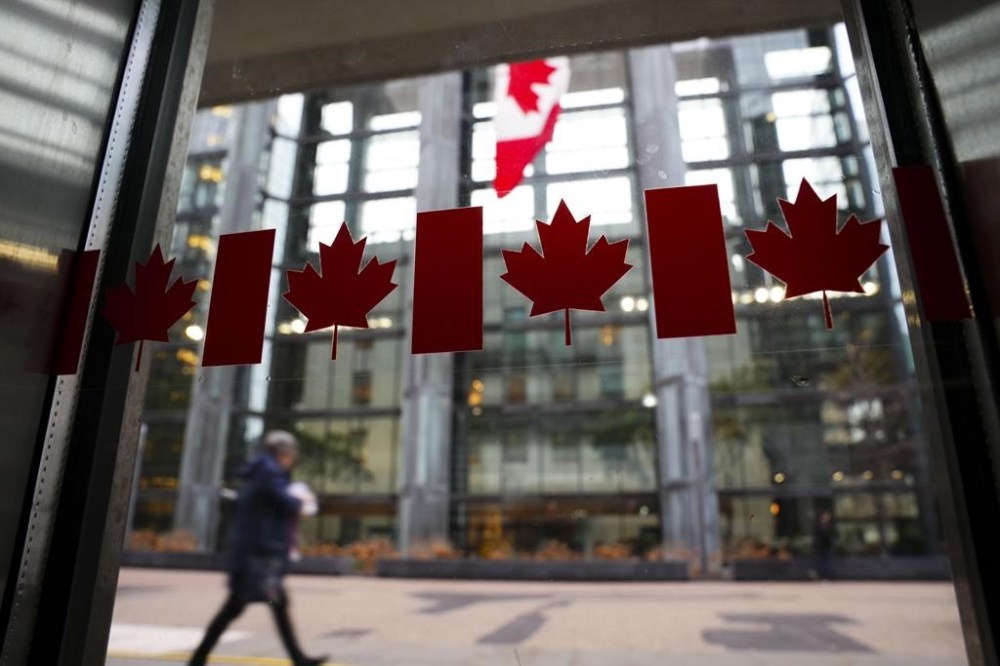
“Looking ahead, [the] governing council will be considering whether the policy interest rate needs to rise further to bring supply and demand into balance and return inflation to target,” the Bank of Canada said in a news release.
That language is a marked departure from previous announcements where the bank said more rate hikes should be expected.
In a note to clients, CIBC chief economist Avery Shenfeld said “the Bank of Canada flashed a yellow card on its rate hiking team.”
The Bank of Canada said there’s “growing evidence” that higher interest rates are restraining demand in the economy.
“Consumption moderated in the third quarter, and housing market activity continues to decline,” it said.
Economic data released since its October interest rate decision supports its forecast that growth will stall through the end of the year and into the first half of 2023, the central bank went on to say.
At the same time, it said inflation is still too high and short-term inflation expectations remain elevated.
In October, the annual inflation rate was 6.9 per cent, well above the Bank of Canada’s two per cent target. However, economists have noted the three-month annualized inflation rate has dropped to below four per cent, suggesting inflation is headed in the right direction.
Statistics Canada will release its November consumer price index report on Dec. 21, giving more insight on how inflation has evolved.
Forecasters were split on whether the Bank of Canada would opt for a quarter or half percentage point rate hike ahead of Wednesday’s decision. Market watchers were also unsure if the central bank would continue raising interest rates in the new year.
Western University economics professor Stephen Williamson said although the rate hike was larger than some anticipated, the bank signalling it’s shifting toward data-dependent decisions may be a compromise of sorts.
Instead of raising its key rate by a quarter percentage point now and then once again in January, the Bank of Canada opted for a larger rate hike and a shift in language, he said.
“If you thought of what might be going on in the governing council, maybe this was kind of a way to compromise,” Williamson said.
The economist said the Bank of Canada is trying to judge the right time to stop raising rates, which is challenging because of the delay between rate hikes and their effects on the economy.
“It’s just kind of a matter of making a decision about when to stop and it’s very tricky,” he said.
Economists generally say it takes 12 to 18 months for interest rate hikes to work their through the economy. Rate hikes first hit the most interest-sensitive parts of the economy, then begin affecting sectors more broadly.
The Bank of Canada along with other forecasters anticipate the aggressive rate hikes this year to slow economic growth significantly. In its last monetary policy report, the Bank of Canada said the economy could see a couple of quarters of slightly negative growth.
Desjardins is forecasting the Canadian economy will enter a recession in 2023, though one that will be short-lived and shallow.

“We think that we’ll see contractions in the overall economy next year, in those first couple of quarters,” said Marc Desormeaux, principal economist at Desjardins.
CIBC expects the Bank of Canada to pause its rate hikes, but to keep its key rate elevated at 4.25 per cent until 2024.
“While the tightening cycle likely has reached its zenith, we’ll need the pain of these higher rates to persist for a while to stall economic growth and thereby cool inflation,” said Shenfeld.
The Bank of Canada will announce its next interest rate decision on Jan. 25.
This report by The Canadian Press was first published Dec. 7, 2022.
Related Articles
What the latest Bank of Canada rate hike means for inflation, consumers Australia's central bank raises key interest rate to 3.1%
Advertisement Advertise With Us
Advertisement Advertise With Us