X is a cesspool of misogyny, so why is anyone still on it?

Advertisement
Read this article for free:
or
Already have an account? Log in here »
To continue reading, please subscribe:

Digital Subscription
One year of digital access for only $205*
- Enjoy unlimited reading on winnipegfreepress.com
- Read the E-Edition, our digital replica newspaper
- Access News Break, our award-winning app
- Play interactive puzzles
*First annual payment billed as $205.00 + GST for one year. This annual subscription will automatically renew at $233.00 + GST every 52 weeks (10% off the regular annual price of $259.35). Offer available to new and qualified returning subscribers only. Cancel any time.
To continue reading, please subscribe:
Add Free Press access to your Brandon Sun subscription for only an additional
$1 for the first 4 weeks*
- Enjoy unlimited reading on winnipegfreepress.com
- Read the E-Edition, our digital replica newspaper
- Access News Break, our award-winning app
- Play interactive puzzles
*Your next Brandon Sun subscription payment will increase by $1.00 and you will be charged $17.95 plus GST for four weeks. After four weeks, your payment will increase to $24.95 plus GST every four weeks.
Read unlimited articles for free today:
or
Already have an account? Log in here »
Hey there, time traveller!
This article was published 24/01/2026 (227 days ago), so information in it may no longer be current.
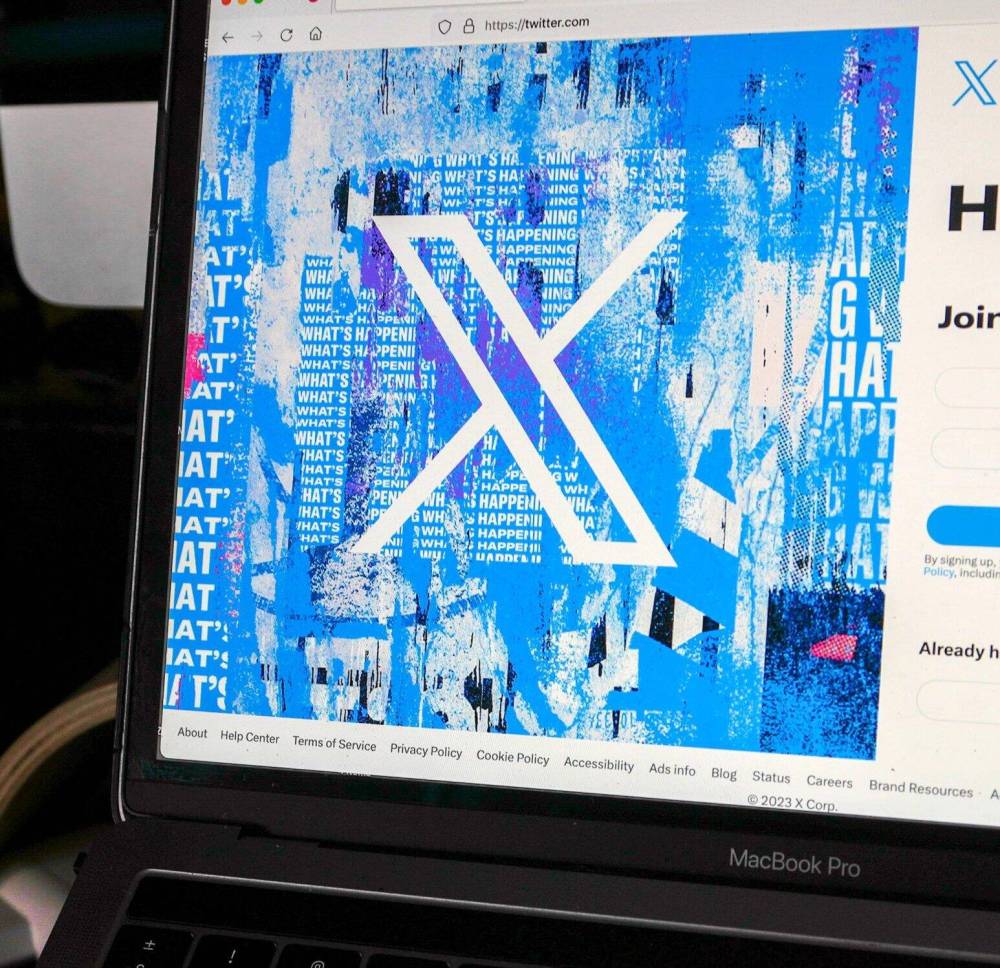
Why on earth are people still on X?
The social media platform owned by Elon Musk plunged to horrible new depths earlier this month when Grok, a chatbot integrated within X, was used to produce sexual abuse imagery of women and children — an estimated three million sexualized images in less than two weeks, according to the U.K.’s Center for Countering Digital Hate, including 23,000 images appearing to show children.
This is it, right? This is when everyone abandons X? We all know by now that years of harassment and doxxing campaigns directed at women weren’t enough to sink the cursed app formerly known as Twitter, but surely AI-generated child sexual abuse images is the line, right?
The Associated Press Files
How bad does a social media platform need to get to make people log off forever?
No one should be on X in 2026. Certainly not Canadian politicians, and yet, still they remain.
In an interview with the Free Press about the role of X in public and political life in light of Grok, Manitoba Sen. Marilou McPhedran correctly called online abuse out as “highly profitable misogyny.”
But she still uses X, as do many other Manitoban and Canadian politicians.
“As odious as it often is to even go on X, I think it remains a primary communication tool,” McPhedran said. “As a parliamentarian, I’m looking at ways, first of all, to be on social media, be as open in communication and responsive as possible, and to call out, name and work against the exploitation.”
Respectfully, a primary communication tool for whom, exactly? Who is still using it, besides bots, ragebaiters and the creators of child sexual abuse images?
There’s nothing to save, nothing to make better. It’s a social media platform run by a billionaire who allows this stuff to happen. The decision to leave should be easy.
How bad does it need to get, exactly, to make people log off forever?
● ● ●
You know times are tough when people are nostalgic for 2016.
Shortly after the calendar flipped over to 2026, I saw an influx of social media posts on platforms that are not X celebrating what many consider the Last Good Year. At least until November, I guess.
I bristled when I saw these posts, thinking: Was it actually better in 2016 or were you just very young? Sure, it was pre-pandemic and (barely) pre-Trump, but take it from an elder millennial who was 31 in 2016: things were not as rose gold as those millennial pink walls on Instagram would have you believe.
It wasn’t so much the Last Good Year as it was the Beginning of the End.
The peachy millennial vibes that gen Z is craving via these nostalgia posts were already starting to curdle. We were imprisoned in skinny jeans. What’s become known as “Obama-era optimism” was already under threat; the toxicity of girlboss feminism and hustle culture was starting to show through the Glossier sheen. #MeToo was still a year away.
And, oh yeah, women were getting harassed on Twitter.
Recall that 2016 was also the year that people were so upset about the idea of a female Ghostbusters that star Leslie Jones was subject to a barrage of sexist, racist tweets. And that’s just a single example.
One of the greatest lies ever told was that anyone “needed” to be on Twitter “for work,” particularly people in public-facing fields such as politics and journalism. It was easy to be seduced by its promise — a town square, the world at your fingertips, a chance to swap pithy one-liners or share in a cultural moment.
Back then, Twitter was at its best and most fun during televised events such as awards shows, political debates, elections, a big season finale or the Olympics.
It feels vaguely embarrassing, now, how much stock we put into live-tweeting press conferences and slinging media gossip — mostly for the benefit of other journalists.
Even at its most popular, its usage was nowhere near that of Facebook or Instagram among the general public.
It’s incredible how much harassment and misogyny women put up with as being par for the course because we “needed” to be on Twitter, and how little was ever done about it. Yes, some people wanted to be there, but eventually the question became, for what?

And then Musk bought it 2022, and now it’s an unusable cesspool of slop, abuse and propaganda.
I held on to my account for far too long, tweeting links to my Free Press articles into the abyss and being harassed by men until, finally, I obliterated it for good last year.
I don’t miss it. I don’t even think about it.
It’s beyond time for everyone who is still on it to do the same.
winnipegfreepress.com/jenzoratti
Jen Zoratti is a Winnipeg Free Press columnist and author of the newsletter, NEXT, a weekly look towards a post-pandemic future.
Our newsroom depends on a growing audience of readers to power our journalism. If you are not a paid reader, please consider becoming a subscriber.
Our newsroom depends on its audience of readers to power our journalism. Thank you for your support.
Jen Zoratti is a Winnipeg Free Press columnist and author of the newsletter, NEXT, a weekly look towards a post-pandemic future.
Our newsroom depends on a growing audience of readers to power our journalism. If you are not a paid reader, please consider becoming a subscriber.
Our newsroom depends on its audience of readers to power our journalism. Thank you for your support.
Advertisement Advertise With Us
Advertisement Advertise With Us