Learning about 9/11: Attacks part of identity, racism lesson in Canadian classrooms

Advertisement

Advertise with us

Most undergraduate students sitting in a class about Canada's military history at the University of Calgary have never known or can't remember a world before Sept. 11, 2001.

Read this article for free:


or

Already have an account? Log in here »

To continue reading, please subscribe:

Subscribe and receive a limited-edition Free Press branded hat or tote.

Digital Subscription

One year of digital access for only $205*

  • Enjoy unlimited reading on winnipegfreepress.com
  • Read the E-Edition, our digital replica newspaper
  • Access News Break, our award-winning app
  • Play interactive puzzles

*First annual payment billed as $205.00 + GST for one year. This annual subscription will automatically renew at $233.00 + GST every 52 weeks (10% off the regular annual price of $259.35). Offer available to new and qualified returning subscribers only. Cancel any time.

To continue reading, please subscribe:

Add Free Press access to your Brandon Sun subscription for only an additional

$1 for the first 4 weeks*

  • Enjoy unlimited reading on winnipegfreepress.com
  • Read the E-Edition, our digital replica newspaper
  • Access News Break, our award-winning app
  • Play interactive puzzles
Start now

*Your next Brandon Sun subscription payment will increase by $1.00 and you will be charged $17.95 plus GST for four weeks. After four weeks, your payment will increase to $24.95 plus GST every four weeks.

Hey there, time traveller!
This article was published 08/09/2021 (1813 days ago), so information in it may no longer be current.

Most undergraduate students sitting in a class about Canada’s military history at the University of Calgary have never known or can’t remember a world before Sept. 11, 2001.

David Bercuson, an associate professor in the university’s history department, says educating successive generations about events leading up to the 9/11 terrorist attacks in the United States has been odd.

“They take it in stride. But I think they think, ‘OK, well, you know, it’s just like the invasion of Normandy,” Bercuson says.
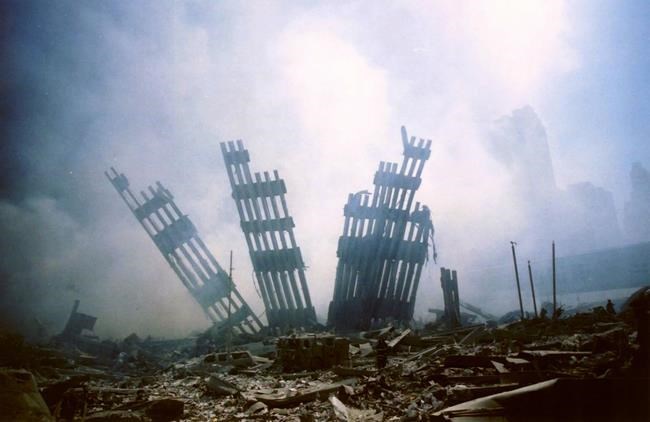
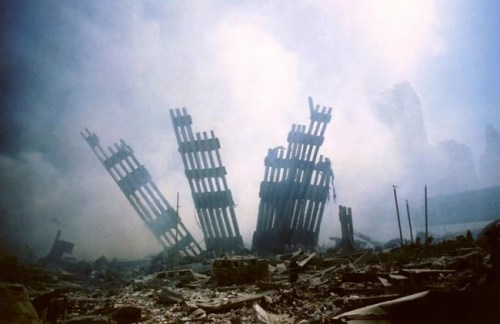
In this Sept. 11, 2001 file photo, the remains of the World Trade Center stand amid debris following the terrorist attack on the building in New York. Some undergraduate students sitting in a class about Canada's military history at the University of Calgary have never known or can't remember a world before the attack.THE CANADIAN PRESS/AP/Alexandre Fuchs

“The hardest thing about teaching students this kind of history is to get them to feel it. Books (are) something anybody could absorb. But what was it like for the people who were there?”

Bercuson says 9/11 not only transformed the way teachers educate their students, it also changed their own perspectives.

Retired Edmonton high school teacher Robert Gardner, who contributed to the Canadian Social Studies textbook, agrees.

“In the hours and days immediately following the attacks I would be pulled out of what had been a relatively comfortable and familiar teaching practice into a much more demanding and complicated circumstance,” Gardner wrote in the book.

“I found that I had to significantly expand my knowledge and understanding of the intricacies of world history, cultures and religions.”

Gardner says in the book that memories of the 9/11 hijackings and suicide attacks are vivid. And the lives of more than 2,200 students he taught after that day also changed.

Heated and divided classroom debates over the subsequent invasion of Afghanistan took place among the students from all over the world, including India, Africa and the Middle East.

“9/11 was an event of such significance that everyone had an opinion or a question,” Gardner says in the book.

“What began to transpire was a real dialogue among students of varied backgrounds about how they saw the larger world. Who were the ‘good guys’ and the ‘bad guys’? What did justice mean in a world of militarism, terrorism and oppression? What things in life were worth fighting for?”

The attacks changed high school curriculums across the country and are a key component of analysis for both high school and post-secondaryhistory and politics students.

For example, Ontario students enrolled in Grade 10 Canadian History are expected to assess how government policies following 9/11 were significant for different non-Indigenous groups in Canada.

Those students are then encouraged to write a poem or rap about the war in Afghanistan or write a blog about border security since 9/11.

As hate crimes spiked after 9/11, Ontario’s education minister has said racism has also become a component of the school curriculum.

“In June 2021, Ontario announced its intention to invest in a plan to counter Islamophobia in publicly funded schools,” says Caitlin Clark, a spokesperson for Ontario Education Minister Stephen Lecce.

“These resources will provide information about Islamic practices, values and misconceptions, root causes of Islamophobia and ways to help end Islamophobia, racism and discrimination.”

The effects of 9/11 are something Bercuson says he tries to get his students to try to figure out themselves.

“There’s a lot of noise out there all the time. People are listening to the radio, they’re watching the internet … all kinds of intelligence agencies at different times in history are trying to find out as much as they can about what’s going to happen,” Bercuson says.

“I want my students to know that governments could have known (about the attacks).

“If they had known, things would have turned out differently. It’s more of a lesson of how we deal with future conflicts.”

This report by The Canadian Press was first published Sept. 8, 2021.

This story was produced with the financial assistance of the Facebook and Canadian Press News Fellowship.

Report Error Submit a Tip

More Stories

Manitoba Ag Days takes flight with focus on drone tech advancements

Abiola Odutola 5 minute read Preview

Manitoba Ag Days takes flight with focus on drone tech advancements

Abiola Odutola 5 minute read Wednesday, Jan. 21, 2026

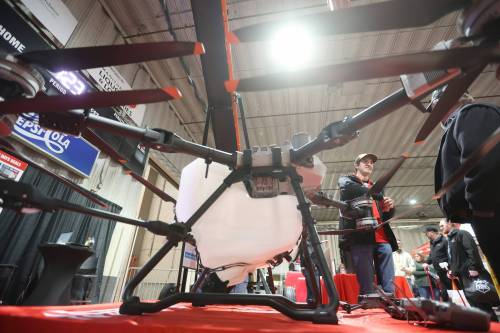
BRANDON — Manitoba Ag Days kicked off its annual event on Tuesday with a strong spotlight on innovation as the large-scale drones showcased on the trade show floor drew plenty of attention.

The Spider-i M400 agricultural spray drone marks a shift in how producers should think about the technology, Ag Drone Canada president Travis Karle said.

Karle, who has been a pilot for 35 years, said he has spent the last four years working with manufacturers to develop a proper high-capacity, high-volume, aerial spray drone. Karle described the M400 as “by far the biggest drone in the industry,” featuring a tank capacity of up to 210 litres, three batteries and extended flight time.

“Instead of thinking of that as a drone, now we’re looking at a piece of farm equipment,” he said. “We’re 100 acres per hour-plus with that drone of that size.”

Read
Wednesday, Jan. 21, 2026

Officer who shot dog dead after it bit him won’t face charges

Scott Billeck 3 minute read Preview

Officer who shot dog dead after it bit him won’t face charges

Scott Billeck 3 minute read Monday, Aug. 17, 2026

A Manitoba First Nations police officer will not face charges for fatally shooting a dog last year, despite the Crown describing the officer’s conduct as “concerning.”

The Independent Investigation Unit of Manitoba announced it would not recommend charges Monday, more than a year after the incident was reported to the police watchdog.

A Manitoba First Nations Police Service officer went to a home in Swan River First Nation to make an arrest in June 2025, the IIU said. No arrest was made as the person police were looking for was not there. As the officer was leaving, a dog chained outside bit him.

The officer later returned with a carbine rifle and shot and killed the dog.

Read
Monday, Aug. 17, 2026

City investigating false results

By Bartley Kives 4 minute read Preview

City investigating false results

By Bartley Kives 4 minute read Friday, Jan. 30, 2015

The end of Winnipeg's 46-hour boil-water advisory has led to the beginning of an investigation into how water-sample tests yielded what's now believed to be erroneous evidence of fecal contamination of the city's water supply.

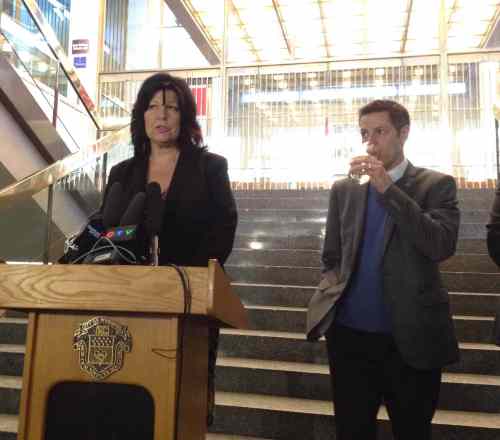
Winnipeg residents were advised to boil their water from 5:45 p.m. on Tuesday to 3:31 p.m. on Thursday, when Mayor Brian Bowman first announced the end of the advisory on Twitter and then strode up to reporters and sipped from a glass of tap water.

"We've got a clean bill of health," the mayor said in the foyer at city hall. "I know and appreciate the inconvenience we've all, in different ways, had to endure."

The precautionary boil-water advisory, unprecedented in the city's recent history, was ordered after six of 39 water samples collected on Monday tested positive for coliform bacteria, whose presence in water suggests fecal contamination and the possible presence of other, potentially more dangerous pathogens.

Read
Friday, Jan. 30, 2015

9/11 a lesson on identity in Canadian classrooms

Fakiha Baig, The Canadian Press 4 minute read Preview

9/11 a lesson on identity in Canadian classrooms

Fakiha Baig, The Canadian Press 4 minute read Wednesday, Sep. 8, 2021

Most undergraduate students sitting in a class about Canada's military history at the University of Calgary have never known or can't remember a world before Sept. 11, 2001.

David Bercuson, an associate professor in the university's history department, says educating successive generations about events leading up to the 9/11 terrorist attacks in the United States has been odd.

"They take it in stride. But I think they think, 'OK, well, you know, it's just like the invasion of Normandy," Bercuson says.

"The hardest thing about teaching students this kind of history is to get them to feel it. Books (are) something anybody could absorb. But what was it like for the people who were there?"

Read
Wednesday, Sep. 8, 2021

Aren’t there other power options?

Jules Legal 4 minute read 2:00 AM CDT

It seems like only yesterday that Manitoba Hydro was basking in the glory of what to do with all the surplus energy being generated by the newly constructed hydro generating stations along the Nelson River. And so it built a multibillion-dollar, high-voltage hydro line to export this surplus energy to the U.S. Bipole III, they called it.

Now, managers at Manitoba Hydro are telling us Manitobans could be facing a power shortage as early as 2029 and that a natural gas turbine generating station is urgently required.

Part of this looming shortfall can be attributed to our growing population and we must not ignore the fact our consumptive lifestyle keeps demanding ever more megawatts.

So what happened to cause such a dramatic turnaround?

Controversy sparked by APTN series First Contact

Niigaan Sinclair 6 minute read Preview

Controversy sparked by APTN series First Contact

Niigaan Sinclair 6 minute read Monday, Sep. 17, 2018

During the second episode of APTN’s three-episode documentary series First Contact, two distinct factions emerge about how to view Indigenous peoples.

This isn’t a spoiler by the way. This is Canada.

First Contact, for those who haven’t seen it, takes six Canadians with strong opinions about Indigenous peoples on a 28-day tour through Indigenous communities where their beliefs are challenged and contextualized.

Along their journey of education, they are fed and cared for by Indigenous communities, sleep in Indigenous homes, and hear brave stories by those who attended residential schools, lost loved ones, and struggle through poverty and substance abuse. Most episodes feature conversations with Indigenous peoples after participants toss out generalizations such as “reserves are dead-end places” and “Indians get everything for free.”

Read
Monday, Sep. 17, 2018