India unveils prototype of $35 computer, paving way for solar-powered websurfing in villages

Advertisement

Advertise with us

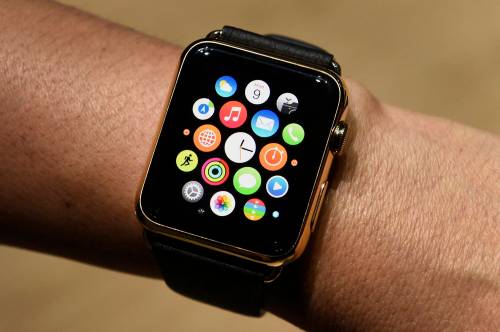
MUMBAI, India - It looks like an iPad, only it's 1/14th the cost: India has unveiled the prototype of a $35 basic touchscreen tablet aimed at students, which it hopes to bring into production by 2011.

Read this article for free:


or

Already have an account? Log in here »

To continue reading, please subscribe:

Subscribe and receive a limited-edition Free Press branded hat or tote.

Digital Subscription

One year of digital access for only $205*

  • Enjoy unlimited reading on winnipegfreepress.com
  • Read the E-Edition, our digital replica newspaper
  • Access News Break, our award-winning app
  • Play interactive puzzles

*First annual payment billed as $205.00 + GST for one year. This annual subscription will automatically renew at $233.00 + GST every 52 weeks (10% off the regular annual price of $259.35). Offer available to new and qualified returning subscribers only. Cancel any time.

To continue reading, please subscribe:

Add Free Press access to your Brandon Sun subscription for only an additional

$1 for the first 4 weeks*

  • Enjoy unlimited reading on winnipegfreepress.com
  • Read the E-Edition, our digital replica newspaper
  • Access News Break, our award-winning app
  • Play interactive puzzles
Start now

*Your next Brandon Sun subscription payment will increase by $1.00 and you will be charged $17.95 plus GST for four weeks. After four weeks, your payment will increase to $24.95 plus GST every four weeks.

Hey there, time traveller!
This article was published 23/07/2010 (5910 days ago), so information in it may no longer be current.

MUMBAI, India – It looks like an iPad, only it’s 1/14th the cost: India has unveiled the prototype of a $35 basic touchscreen tablet aimed at students, which it hopes to bring into production by 2011.

If the government can find a manufacturer, the Linux operating system-based computer would be the latest in a string of “world’s cheapest” innovations to hit the market out of India, which is home to the 100,000 rupee ($2,127) compact Nano car, the 749 rupees ($16) water purifier and the $2,000 open-heart surgery.

The tablet can be used for functions like word processing, web browsing and video-conferencing. It has a solar power option too — important for India’s energy-starved hinterlands — though that add-on costs extra.

“This is our answer to MIT’s $100 computer,” human resource development minister Kapil Sibal told the Economic Times when he unveiled the device Thursday.

In 2005, Nicholas Negroponte — co-founder of the Massachusetts Institute of Technology’s Media Lab — unveiled a prototype of a $100 laptop for children in the developing world. India rejected that as too expensive and embarked on a multiyear effort to develop a cheaper option of its own.

Negroponte’s laptop ended up costing about $200, but in May his non-profit association, One Laptop Per Child, said it plans to launch a basic tablet computer for $99.

Sibal turned to students and professors at India’s elite technical universities to develop the $35 tablet after receiving a “lukewarm” response from private sector players. He hopes to get the cost down to $10 eventually.

Mamta Varma, a ministry spokeswoman, said falling hardware costs and intelligent design make the price tag plausible. The tablet doesn’t have a hard disk, but instead uses a memory card, much like a mobile phone. The tablet design cuts hardware costs, and the use of open-source software also adds to savings, she said.

Varma said several global manufacturers, including at least one from Taiwan, have shown interest in making the low-cost device, but no manufacturing or distribution deals have been finalized. She declined to name any of the companies.

India plans to subsidize the cost of the tablet for its students, bringing the purchase price down to around $20.

“Depending on the quality of material they are using, certainly it’s plausible,” said Sarah Rotman Epps, an analyst at Forrester Research. “The question is, is it good enough for students?”

Profitability is also a question for the $35 machine.

Epps said government subsidies or dual marketing — where higher-priced sales in the developed world are used to subside low-cost sales in markets like India — could convince a manufacturer to come on board.

This and similar efforts — like the Kakai Kno and the Entourage Edge tablets — show that there is global demand for an affordable device to trim high textbook costs, she said.

If it works, Epps predicts the device could send a shiver of cost-consciousness through the industry.

“It puts pressure on all device manufacturers to keep costs down and innovate,” she said.

The project is part of an ambitious education technology initiative by the Indian government, which also aims to bring broadband connectivity to India’s 25,000 colleges and 504 universities and make study materials available online.

So far nearly 8,500 colleges have been connected and nearly 500 web and video-based courses have been uploaded on YouTube and other portals, the Ministry said.

Report Error Submit a Tip

More Stories

Time for the PUB to review Winnipeg water rates

Editorial 4 minute read Preview

Time for the PUB to review Winnipeg water rates

Editorial 4 minute read 2:01 AM CDT

We take you now to just over a month ago, to the Public Utilities Board and its decision about water and sewer rates for Russell, Binscarth, Angusville, Rossburn and Gambler First Nation.

Why? Just wait.

The area is supplied with water and sewage services by the Russell-Binscarth Water and Wastewater Utility, which has a total of 1,014 customers.

As the PUB noted in an Aug. 27, 2026 order on the utility’s rates, “The [water treatment plant] gets water from two groundwater wells that were upgraded in 2016 and the raw water main was installed in 1984. The water distribution system is primarily cast iron pipe. The raw water line will need to be upgraded in the near future to keep up with demand.”

Read
2:01 AM CDT

Prost! Raise a glass to Oktoberfest

Ben Sigurdson 4 minute read Preview

Prost! Raise a glass to Oktoberfest

Ben Sigurdson 4 minute read 2:01 AM CDT

As September comes to a close, a pair of local breweries are bringing some serious gemütlichkeit.

For the uninitiated, gemütlichkeit’s a word that doesn’t translate neatly from German to English, but which roughly means friendliness and good cheer.

Both Devil May Care Brewing Co. (155 Fort St.) and Kilter Brewing Co. (450 Rue Deschambault) are hosting Oktoberfest parties this weekend featuring food, music, games and, of course, plenty of beer.

Both breweries are rolling out special releases to coincide with their respective Oktoberfests — expect malty festbiers, marzens, rauchbiers and other German-inspired brews, served up in hefty steins alongside Bavarian-inspired fare. Devil May Care’s festivities run through to Sunday and feature eats by Freebird Kitchen, while Kilter keeps the party going through to Saturday, Oct. 3, and is offering pretzels and Oktoberfest-themed hot dogs. Lederhosen is encouraged.

Read
2:01 AM CDT

The myth of seniors’ prices

Gregory Mason 4 minute read Tuesday, Apr. 21, 2026

Seniors do not need lower movie prices.

For the first time in almost seven years, I went to a movie in a cinema recently — Project Hail Mary, if you must know. When purchasing my ticket online, the menu offered a reduced senior price, a widespread practice in the retail and service industries. My mouse hovered over the price options as I debated whether to select the lower senior’s price I qualify for, or choose the regular fee, thereby registering my principled objection to this practice.

Hypothesis No. 1 is that Cineplex is genuinely concerned about the welfare of Canadian seniors and so offers us a price break. Call this the altruistic theory. However, while I appreciate the gesture, the seniors’ discount is irritating and wrong.

First, it is unenforced. Anyone can select the option with almost zero chance of detection. The bored teens who wave their electronic readers over my phone just want to hear the confirmation beep. Even if they were to glance up and try to align the price with my age, those under 20 are notoriously bad at estimating the age of anyone over 30.

Single budget can’t — or shouldn’t — deliver promised ’generational change’

Dan Lett 5 minute read Preview

Single budget can’t — or shouldn’t — deliver promised ’generational change’

Dan Lett 5 minute read Wednesday, Nov. 5, 2025

The world, it seems, is disappointed in Prime Minister Mark Carney’s first budget, which promised “generational” change but delivered what appears to be something entirely more modest.

What does Carney’s first budget do, and not do?

It does not abandon efforts to combat climate change, but does not really advance them. It delivers a dose of austerity, particularly when it comes to the size and scope of government, but does not ruthlessly reduce the federal civil service or spending. It ramps up spending on housing, infrastructure and defence, but without a credible plan to eliminate the deficit. It provides incentives to the private sector to invest more of its money in Canada, but in a way that may not prove to be that enticing.

Put it all together and Carney is currently being hoisted on his own hyperbole.

Read
Wednesday, Nov. 5, 2025

Winnipeg author Joan Thomas wins GG fiction award

Ben MacPhee-Sigurdson 5 minute read Preview

Winnipeg author Joan Thomas wins GG fiction award

Ben MacPhee-Sigurdson 5 minute read Tuesday, Oct. 29, 2019

Winnipeg author Joan Thomas has been awarded the 2019 Governor General's English-language award for fiction for her fourth novel, Five Wives.

The winners of the Governor General's Literary Awards were announced Tuesday morning; each winner in the English and French categories receives $25,000, while each publisher receives $3,000. Five Wives was published in September by HarperCollins.

“It's incredible,” Thomas said on the phone from HarperCollins' Toronto office, where she was doing media interviews following the announcement of the win.

“I woke up this morning to my phone going crazy. I know there are a lot of people in Winnipeg who were cheering for me, and who are very happy, and that just deepens my joy about the whole thing. I was calm at first, but when I walked into the offices here I started crying.”

Read
Tuesday, Oct. 29, 2019

‘In Normandy, we remember’

Aaron Epp 4 minute read Preview

‘In Normandy, we remember’

Aaron Epp 4 minute read 9:09 PM CDT

Travelling nearly 7,000 km from his home in France to Winnipeg gave Gabriel Zaranski a new perspective on warfare.

“It’s very different to speak about war in school (than) to speak with real people who (have fought) in a war,” he said. “We can feel the emotion when they speak … The testimony has more impact when it’s real soldiers.”

Zaranski is one of 14 Grade 12 students from Bayeux, a town in France’s Normandy region, in Winnipeg this week for a learning tour.

The students, who attend Lycée Arcisse de Caumont high school, met on Saturday with veterans from the Queen’s Own Cameron Highlanders of Canada, a local military regiment, to discuss their studies and the regiment’s role in the Second World War.

Read
9:09 PM CDT