WEATHER ALERT

States are trashing troves of masks and pandemic gear as huge, costly stockpiles linger and expire

Advertisement

Advertise with us

When the coronavirus pandemic took hold in an unprepared U.S., many states like Ohio scrambled for masks and other protective gear. Supplies were so limited in 2020 that the state bought millions of medical gowns from a marketing and printing company and spent about $20 million to try to get personal protective equipment made in-state.

Read this article for free:


By clicking the button above, an account will be created and you will begin to receive some of our recommended newsletters. You may opt out of any newsletter by visiting your Email and Communication Preferences page or by clicking "unsubscribe" at the bottom of any email.

or

Already have an account? Log in here »

To continue reading, please subscribe:

Digital Subscription

One year of digital access for only $1.44 a week*

  • Enjoy unlimited reading on winnipegfreepress.com
  • Read the E-Edition, our digital replica newspaper
  • Access News Break, our award-winning app
  • Play interactive puzzles

*Billed as $5.77 plus GST every four weeks. After 52 weeks, price increases to the regular rate of $19.95 plus GST every four weeks. Offer available to new and qualified returning subscribers only. Cancel any time.

To continue reading, please subscribe:

Add Free Press access to your Brandon Sun subscription for only an additional

$1 for the first 4 weeks*

  • Enjoy unlimited reading on winnipegfreepress.com
  • Read the E-Edition, our digital replica newspaper
  • Access News Break, our award-winning app
  • Play interactive puzzles
Start now

*Your next Brandon Sun subscription payment will increase by $1.00 and you will be charged $17.95 plus GST for four weeks. After four weeks, your payment will increase to $24.95 plus GST every four weeks.

Hey there, time traveller!
This article was published 19/12/2023 (1049 days ago), so information in it may no longer be current.

When the coronavirus pandemic took hold in an unprepared U.S., many states like Ohio scrambled for masks and other protective gear. Supplies were so limited in 2020 that the state bought millions of medical gowns from a marketing and printing company and spent about $20 million to try to get personal protective equipment made in-state.

Three years later, as the grips of the pandemic have loosened, Ohio and other states are now trying to deal with an excess of protective gear, ditching their supplies in droves.

With expiration dates passing and few requests to tap into the stockpile, Ohio auctioned off 393,000 gowns for just $2,451 and ended up throwing away another 7.2 million, along with expired masks, gloves and other materials. The now expiring supplies had cost about $29 million in federal money.
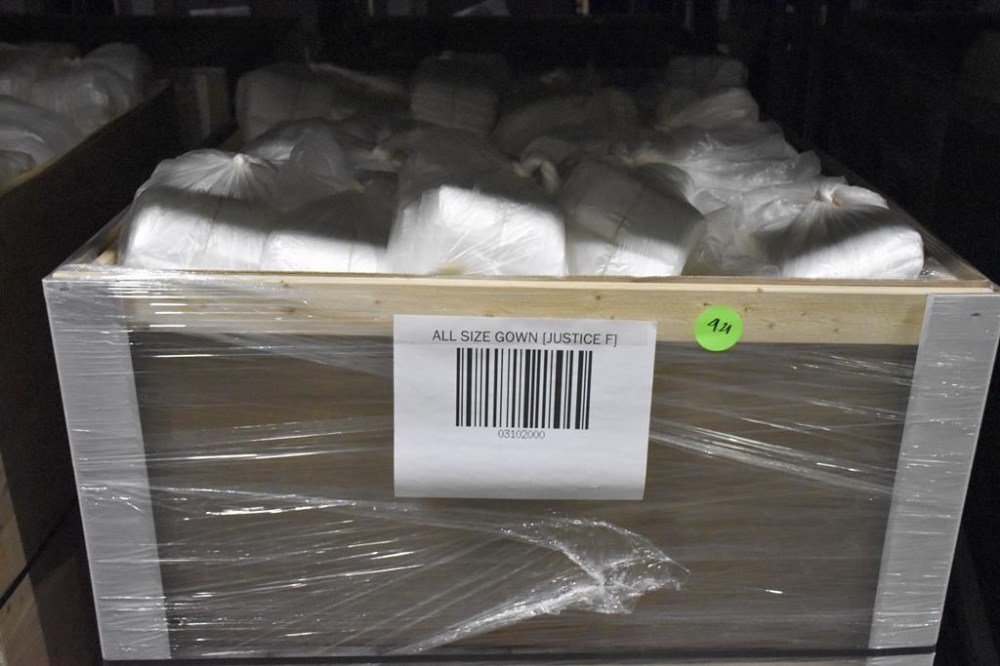
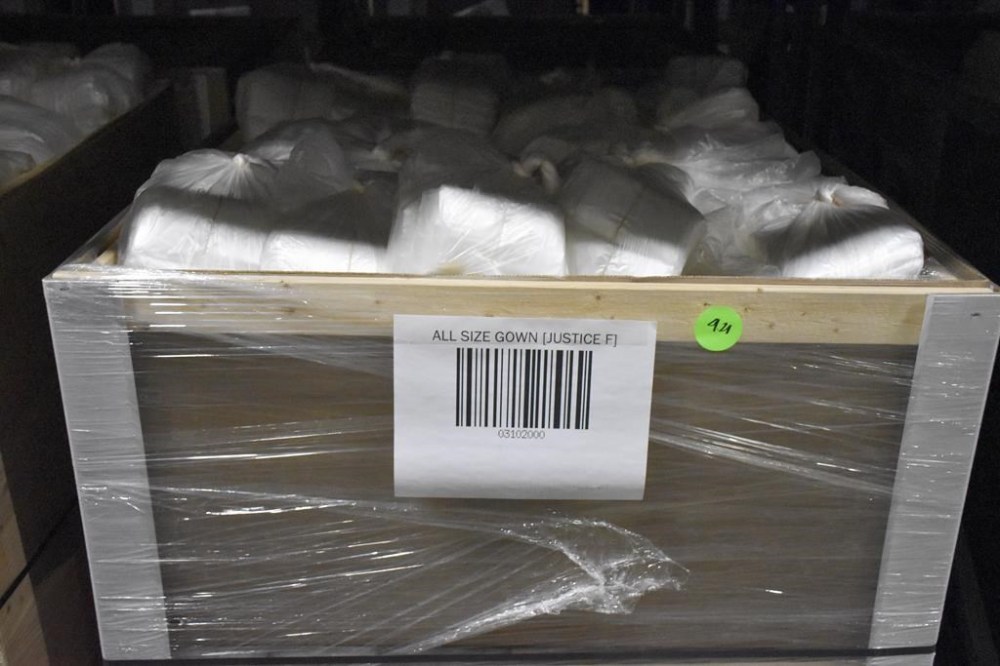
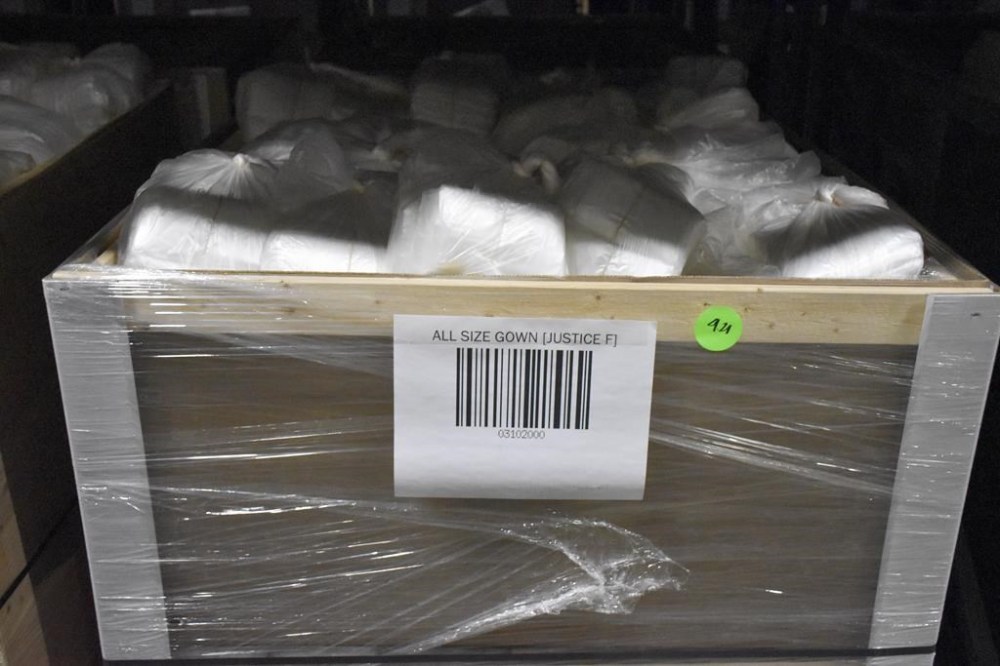
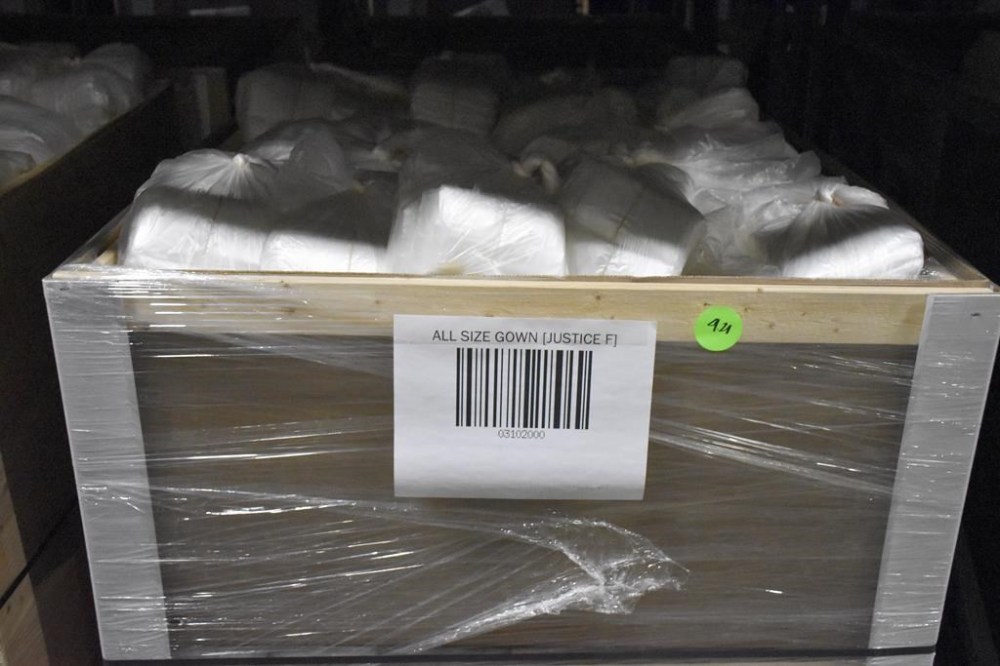
Boxes of personal protection equipment maintained by the Missouri Department of Health and Senior Services are shown stacked in a warehouse in Jefferson City, Mo., on Dec. 1, 2023. (Brad Bashore/Missouri Department of Health and Senior Services via AP)

A similar reckoning is happening around the country. Items are aging, and as a deadline to allocate federal COVID-19 cash approaches next year, states must decide how much to invest in maintaining warehouses and supply stockpiles.

An Associated Press investigation found that at least 15 states, from Alaska to Vermont, have tossed some of their trove of PPE because of expiration, surpluses and a lack of willing takers.

Into the trash went more than 18 million masks, 22 million gowns, 500,000 gloves, and more. That’s not counting states that didn’t give the AP exact figures or responded in cases or other measurements. Rhode Island said it shredded and recycled 829 tons of PPE; Maryland disposed of over $93 million in supplies.

“What a real waste. That’s what happens when you don’t prepare, when you have a bust-and-boom public health system,” where a lack of planning leads to panicked over-purchasing in emergencies, said Dr. Georges Benjamin, executive director of the American Public Health Association. “It shows that we really have to do a better job of managing our stockpiles.”

The AP sent inquiries about PPE stockpiles to all 50 states over the past several months. About half responded.
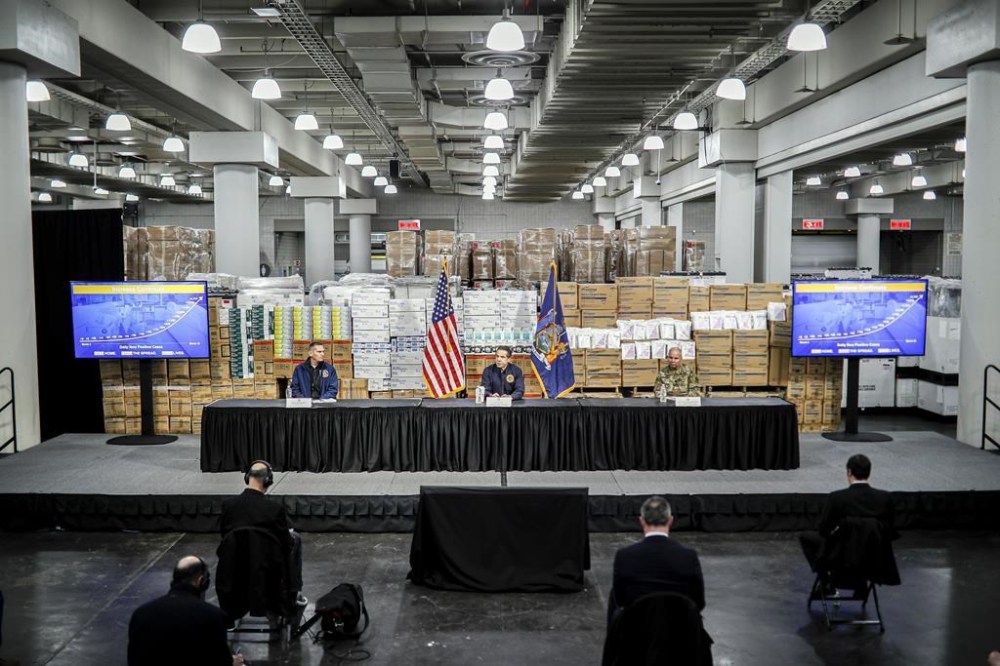
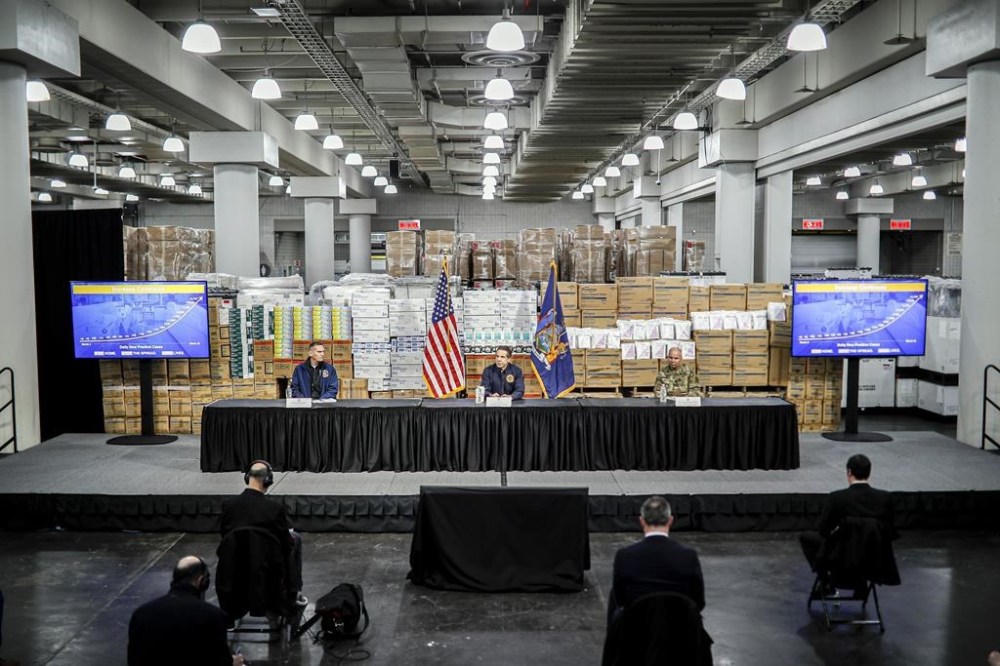
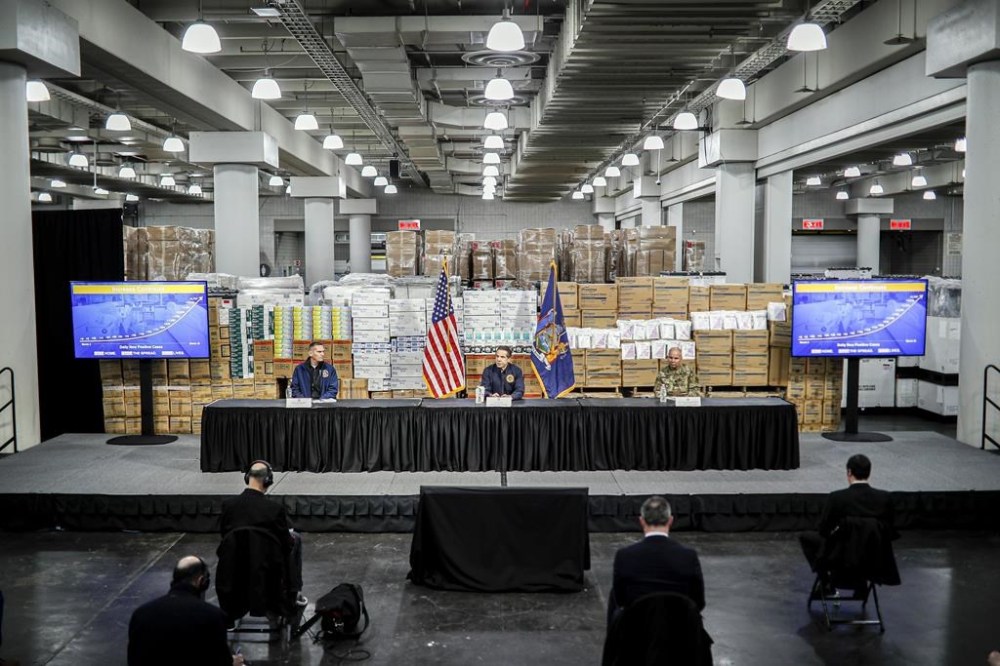
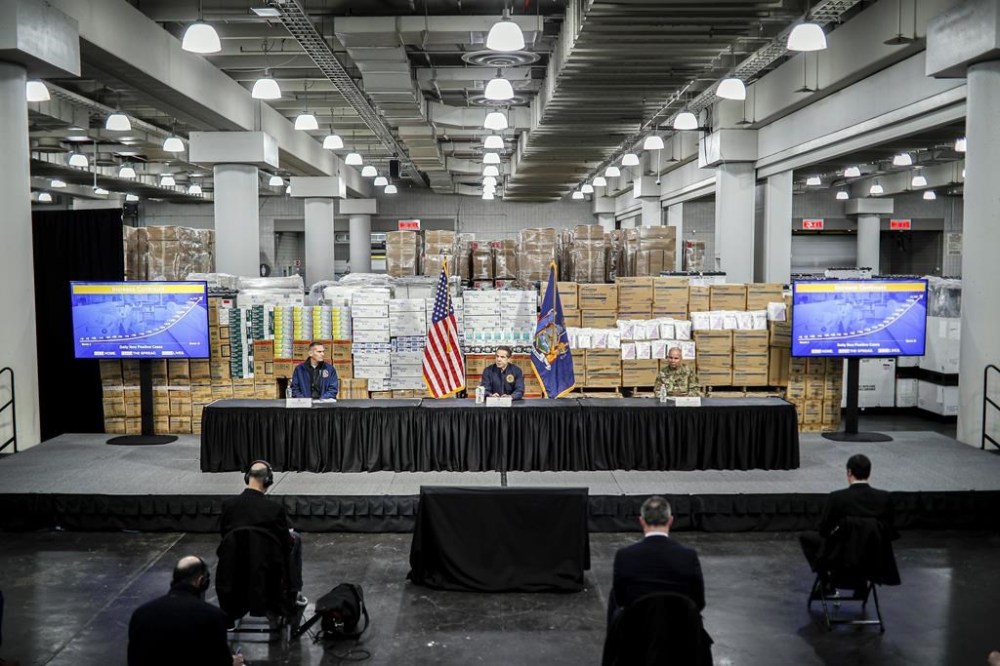
FILE - New York Gov. Andrew Cuomo, center, speaks while practicing social distancing against a backdrop of medical supplies during a news conference at the Jacob Javits Center that will house a temporary hospital in response to the COVID-19 outbreak, Tuesday, March 24, 2020, in New York. Some states that stockpiled millions of masks and other personal protective equipment during the coronavirus pandemic are now throwing the items away. (AP Photo/John Minchillo, File)

States emphasize that they distributed far more gear than they discarded and have gone to lengths to donate the leftovers. Washington state sent hundreds of thousands of supplies to the Marshall Islands last year. Pennsylvania says it offered PPE to 10,000 cities, heath facilities and more throughout the pandemic. Both states still ended up throwing out loads of expired items.

Some states found limited post-expiration uses, such as training exercises.

Many states are keeping at least a portion, and sometimes all, of their remaining protective gear. Some, such as Minnesota, even plan to update their stockpiles.

But others say the vagaries of the pandemic and the PPE supply left no choice but to acquire the items, and now to throw them out, however reluctantly. Expiration dates are set because materials can degrade and might not work as intended. The Federal Emergency Management Agency has set the fair market value of expired supplies at zero dollars.

“Anytime you’re involved in a situation where you’re recalling how difficult it was to get something in the first place, and then having to watch that go or not be used in the way it was intended to be used, certainly, there’s some frustration in that,” said Louis Eubank, who runs the South Carolina health department’s COVID-19 coordination office. The state has discarded over 650,000 expired masks.
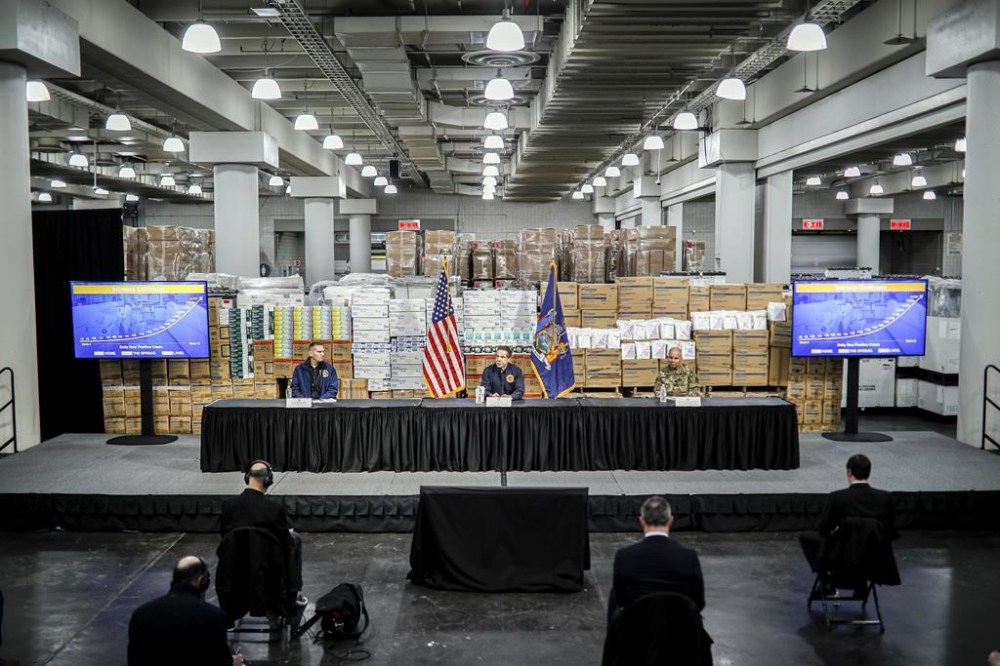
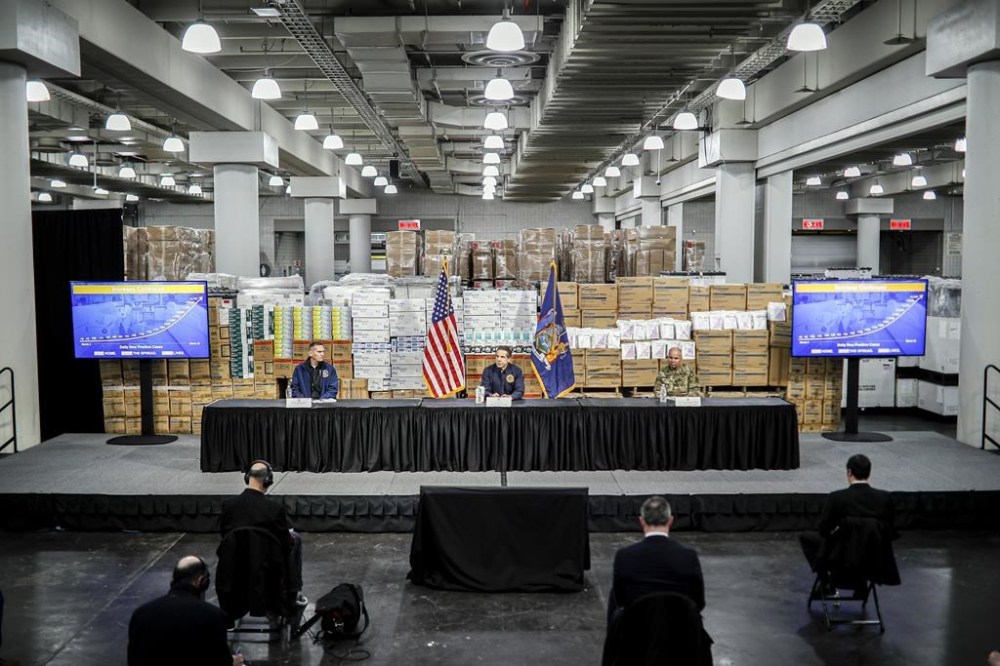
FILE - New York Gov. Andrew Cuomo, center, speaks while practicing social distancing against a backdrop of medical supplies during a news conference at the Jacob Javits Center that will house a temporary hospital in response to the COVID-19 outbreak, Tuesday, March 24, 2020, in New York. Some states that stockpiled millions of masks and other personal protective equipment during the coronavirus pandemic are now throwing the items away. (AP Photo/John Minchillo, File)

Before the coronavirus pandemic, health care product distributors typically kept 20 to 30 days of supplies. That wasn’t enough when the pandemic struck and demand skyrocketed for N95 masks, gloves and gowns. They became so scarce that some health care workers wore homemade masks and used trash bags for gowns.

Hampered by years of underfunding and expanded responsibilities, the U.S government’s Strategic National Stockpile “was not equipped to handle the COVID-19 pandemic,” according to an inspector general’s report. As the federal stockpile dwindled, states plunged into global bidding wars and anything-goes arrangements. Massachusetts even used the New England Patriots’ team plane to collect masks from China.

The explosive demand triggered a surge — and ultimately a hard crash — for American PPE manufacturers. The AP found in 2020 that states spent over $7 billion in a few months on PPE, ventilators and some other high-demand medical devices in a seller’s market. Ultimately, the federal government paid for many of the supplies.

“There was no way to know, at the time of purchase, how long the supply deficit would last or what quantities would be needed,” Ohio Department of Health spokesperson Ken Gordon said.

Ohio distributed more than 227 million pieces of protective equipment during the pandemic. But as the supply crunch and the health crisis eased, demand faded, especially for gowns.

FILE - New York Gov. Andrew Cuomo, center, speaks while practicing social distancing against a backdrop of medical supplies during a news conference at the Jacob Javits Center that will house a temporary hospital in response to the COVID-19 outbreak, Tuesday, March 24, 2020, in New York. Some states that stockpiled millions of masks and other personal protective equipment during the coronavirus pandemic are now throwing the items away. (AP Photo/John Minchillo, File)

Now, “states, hospitals, manufacturers – everybody in the whole system — has extra product,” said Linda Rouse O’Neill of the Health Industry Distributors Association.

Given the glut, stockpiled items are selling for bargain prices, if at all. Vermont got $82.50 for 105,000 boot covers and 29 cents apiece for thousands of safety goggles.

The glut extends beyond states. Georgia’s Fulton County, which encompasses Atlanta, dispensed gloves, hand sanitizer and other supplies by the dozens of boxes at a public PPE giveaway in March.

New York City said it auctioned a heap of “non-medical-grade” PPE that was expiring or supplanted by better versions. Health Commissioner Dr. Ashwin Vasan told local lawmakers in May that officials would focus on enhancing supply contracts for future emergencies, rather than prioritizing “a static stockpile of commodities.”

Missouri’s mental health department planned but scrapped an auction of thousands of extra masks, gowns and other protective items bought with federal coronavirus relief money. The agency cited a belief that federal rules barred such a sale, but the U.S. Treasury Department later told the AP that states can sell excess PPE.
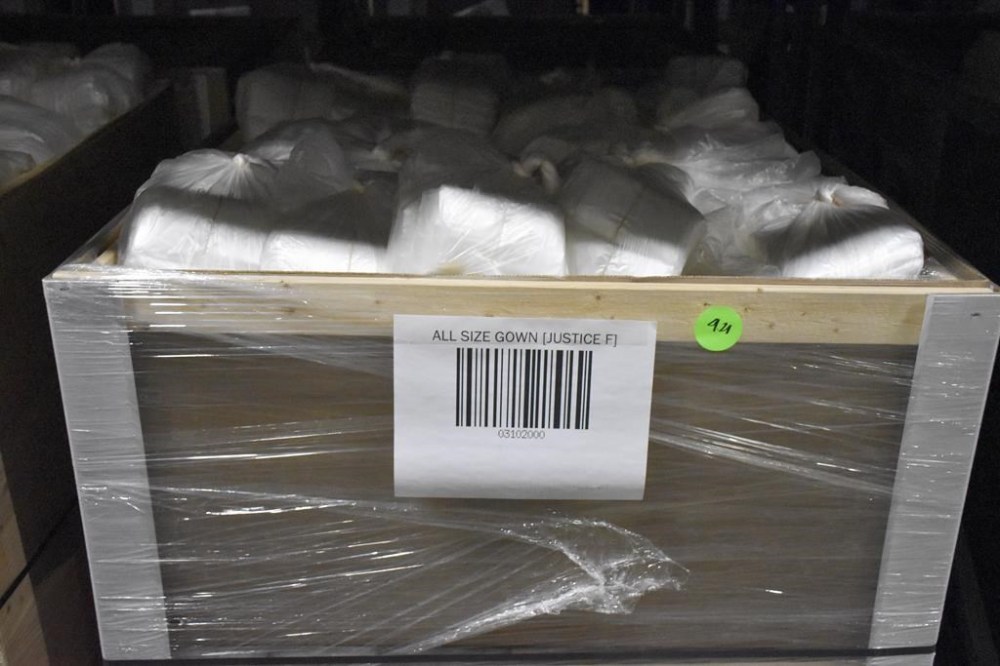
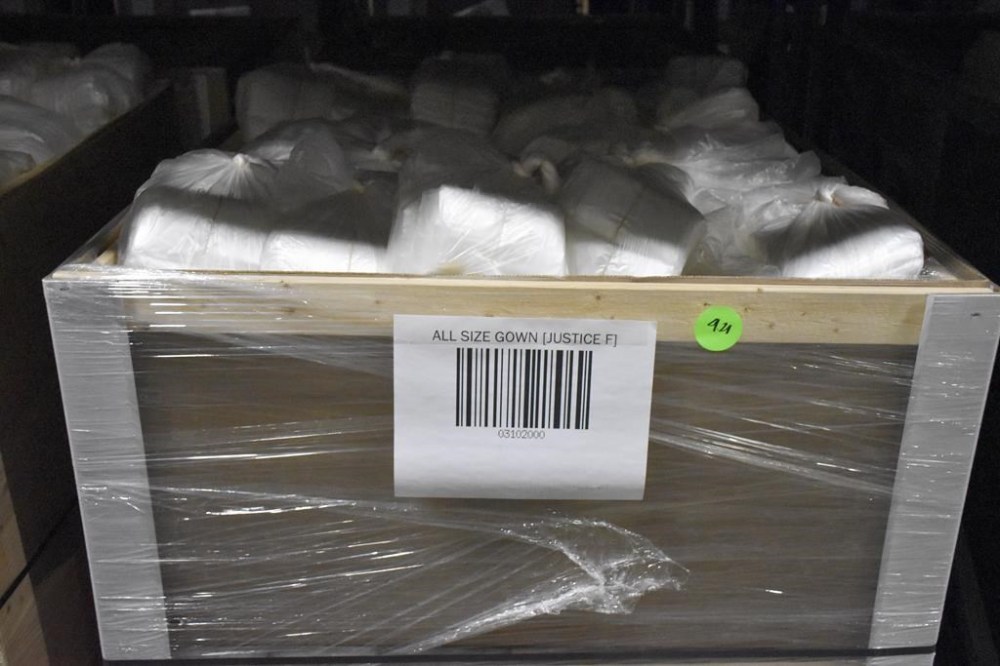
Boxes of personal protection equipment maintained by the Missouri Department of Health and Senior Services are shown stacked in a warehouse in Jefferson City, Mo., on Dec. 1, 2023. (Brad Bashore/Missouri Department of Health and Senior Services via AP)

Supply chain chaos prompted some governments to place multiple orders, resulting in surpluses when the shipments belatedly arrived.

A New York state-run veterans’ home was so deluged by PPE deliveries in early 2021 that it stashed them under tarps in a parking lot. By the time a warehouse was arranged four months later, between $560,000 and $1.6 million of supplies were too damaged to use — and cost another $21,000 to incinerate, according to a state inspector general’s office report. Another $779,000 in expired items have been discarded.

Striking a balance between preparedness and surpluses is “a major dilemma” for governments, said Scott Amey of the Project on Government Oversight, a Washington, D.C.-based watchdog group. And while politicians vowed in 2020 never to be caught off guard again, “memories are short, budgets are tight,” Amey noted.

In Wisconsin, a legislative committee axed from the budget $17.2 million that would have funded a warehouse with an ongoing 60-day supply of PPE for two years.

The state Department of Health Services said it is now “demobilizing the warehouse” and trying to donate the supplies. Already, Wisconsin has tossed nearly 1.7 million masks and almost 1 million gowns.
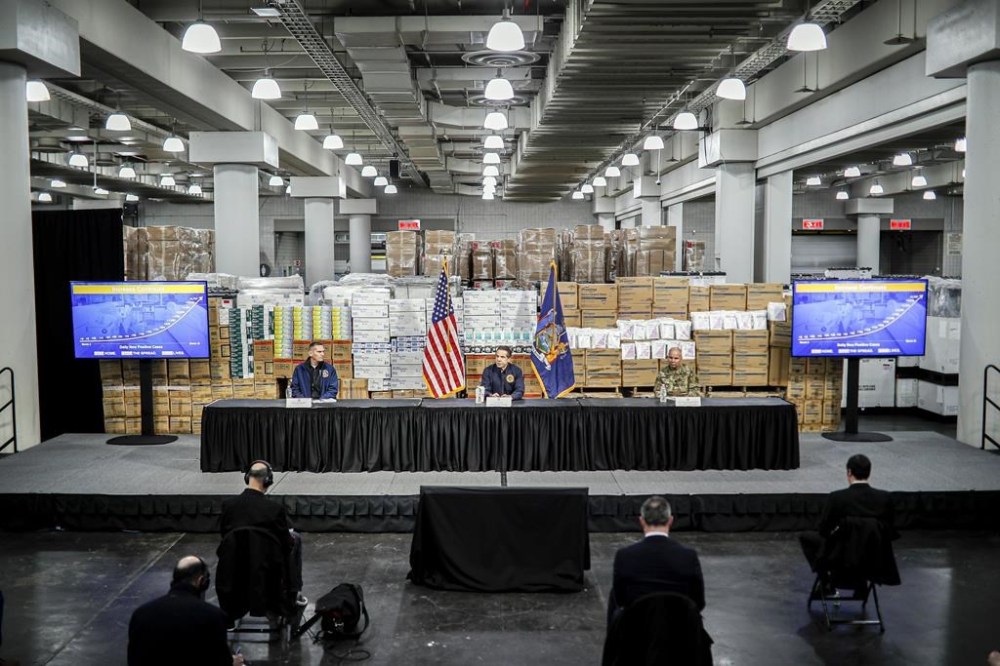
FILE - New York Gov. Andrew Cuomo, center, speaks while practicing social distancing against a backdrop of medical supplies during a news conference at the Jacob Javits Center that will house a temporary hospital in response to the COVID-19 outbreak, Tuesday, March 24, 2020, in New York. Some states that stockpiled millions of masks and other personal protective equipment during the coronavirus pandemic are now throwing the items away. (AP Photo/John Minchillo, File)

In Michigan, a 2021 state law requires the state health department to keep a stockpile of up to two months of medical supplies, and the department’s website shows more than 38 million items on hand.

But one of the law’s sponsors, Republican state Rep. John Roth, said he now thinks “we have to take another look at it,” suggesting a one-month supply might mean less waste.

The Health Industry Distributors Association recommends that product distributors maintain a 60-to-90-day supply to guard against demand spikes. But the group says it’s probably unnecessary for everyone in the system — from manufacturers to doctors’ offices — to have such a large cushion.

Some government officials concur.

“It’s not really practical for most local health departments to have a large stockpile of materials for ‘just in case,’” said Adriane Casalotti of the National Association of County and City Health Officials. “They have limited budgets. They also have limited space.”
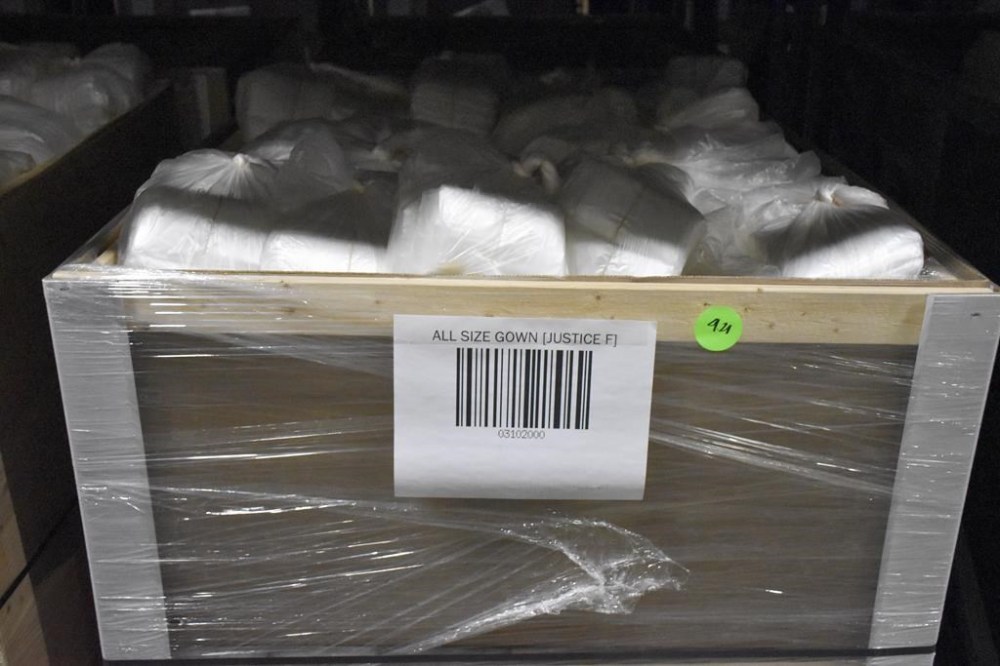
Boxes of personal protection equipment maintained by the Missouri Department of Health and Senior Services are shown stacked in a warehouse in Jefferson City, Mo., on Dec. 1, 2023. (Brad Bashore/Missouri Department of Health and Senior Services via AP)

Pennsylvania officials are aiming for a 15-day stockpile after frank conversations about what they can afford not only to keep, but to keep replacing. Tens of thousands of cases of PPE already have expired and been slated for disposal.

“If we had unlimited federal funding, or even significantly more federal funding, for public health preparedness, that 60-day stockpile or 90-day stockpile would be a fantastic idea,” said Andy Pickett, the Health Department’s emergency preparedness and response director.

Meanwhile, Missouri’s health department has maintained a 90-day supply of PPE, based on the highest-demand months of the pandemic. It’s keeping even expired materials, presuming the federal government will OK their use in an emergency as it did for COVID-19. Missouri has insured the stockpile at $19 million.

“If you don’t make the investment – and perhaps the investment that is never used – then you may not be prepared to assist the public when it’s needed,” Missouri health director Paula Nickelson said.

Minnesota’s Department of Health was allocated some money this year for retaining and restocking PPE and is figuring out how much, while trying to condense the cache. For now, emergency response official Deb Radi says the agency expects to dispose of a few expiring gowns — items once so elusive that the state bought disposable raincoats instead.
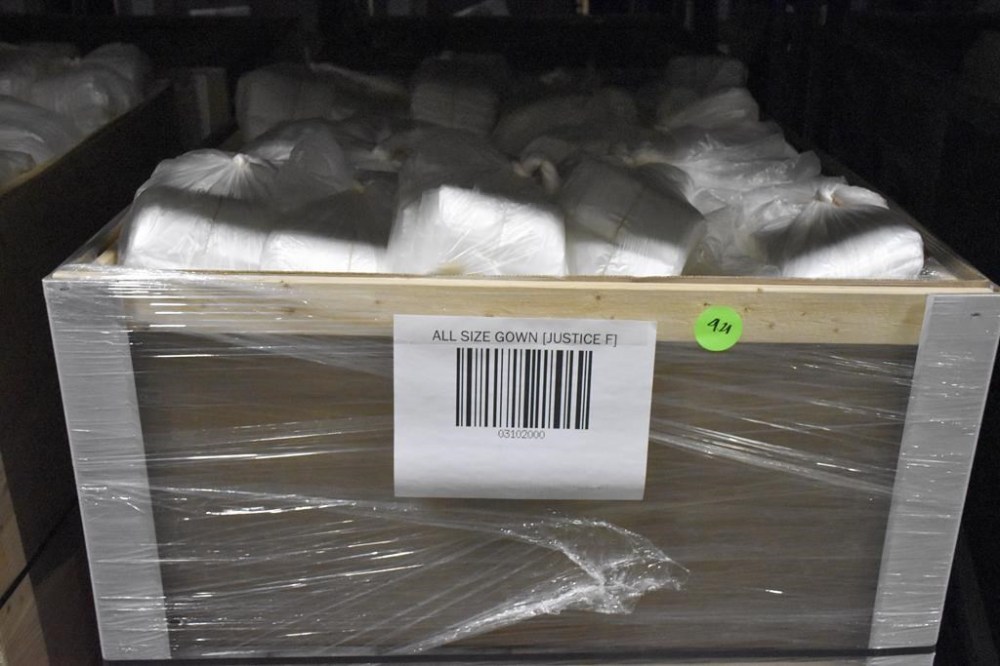
Boxes of personal protection equipment maintained by the Missouri Department of Health and Senior Services are shown stacked in a warehouse in Jefferson City, Mo., on Dec. 1, 2023. (Brad Bashore/Missouri Department of Health and Senior Services via AP)

“People might be critical that we have some excess supply right now, but they would have been way more critical if we were not trying to procure supplies at the time we needed them,” Radi said.

She hopes the federal government will examine how expiration dates are determined and whether they can be extended.

Chris Emory, who runs New Mexico’s Bureau of Health Emergency Management, suggests incentivizing suppliers to expand their stocks. Still, his state is hanging onto its PPE cache, after using masks left over from fighting the H1N1 flu when COVID-19 struck.

Nevada, meanwhile, can’t give its aging PPE away fast enough. Pallets of it are at or approaching expiration in a leased warehouse, Department of Administration Director Jack Robb lamented.

Nevada is endeavoring to shed expiring supplies safely and efficiently and not waste money, “but the bulk of this is going to end up in a landfill,” he said. Some already did.
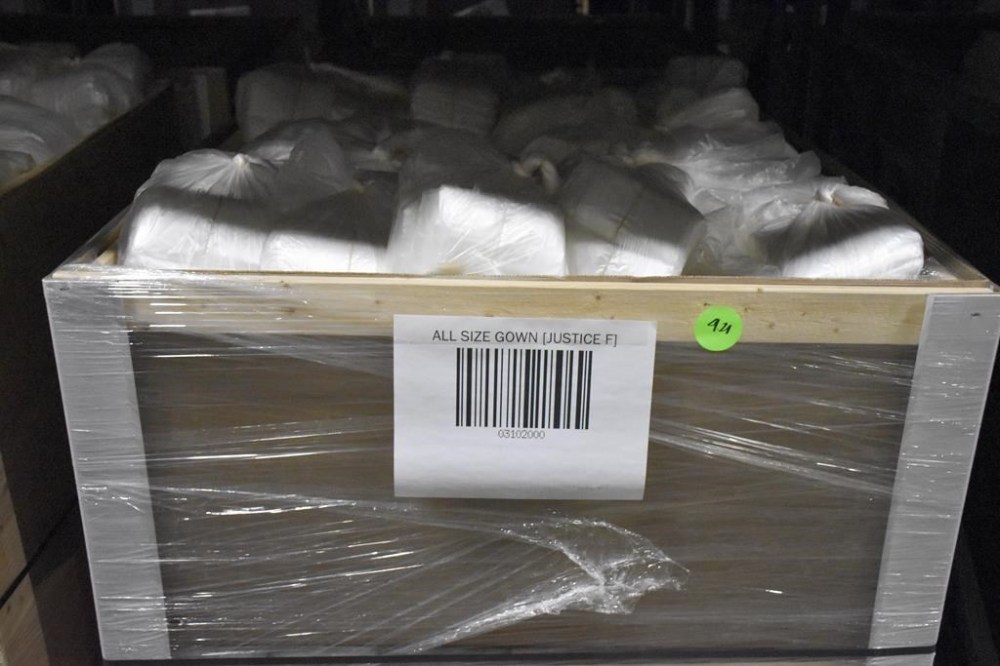
Boxes of personal protection equipment maintained by the Missouri Department of Health and Senior Services are shown stacked in a warehouse in Jefferson City, Mo., on Dec. 1, 2023. (Brad Bashore/Missouri Department of Health and Senior Services via AP)

But Robb said officials “made the best decisions that they could” when confronted with a disease that has killed nearly 7 million people worldwide, including some of his close friends.

“And I hope we never see anything like that again in our lifetime,” he said.

FILE - New York Gov. Andrew Cuomo, center, speaks while practicing social distancing against a backdrop of medical supplies during a news conference at the Jacob Javits Center that will house a temporary hospital in response to the COVID-19 outbreak, Tuesday, March 24, 2020, in New York. Some states that stockpiled millions of masks and other personal protective equipment during the coronavirus pandemic are now throwing the items away. (AP Photo/John Minchillo, File)
Boxes of personal protection equipment maintained by the Missouri Department of Health and Senior Services are shown stacked in a warehouse in Jefferson City, Mo., on Dec. 1, 2023. (Brad Bashore/Missouri Department of Health and Senior Services via AP)
FILE - New York Gov. Andrew Cuomo, center, speaks while practicing social distancing against a backdrop of medical supplies during a news conference at the Jacob Javits Center that will house a temporary hospital in response to the COVID-19 outbreak, Tuesday, March 24, 2020, in New York. Some states that stockpiled millions of masks and other personal protective equipment during the coronavirus pandemic are now throwing the items away. (AP Photo/John Minchillo, File)
Report Error Submit a Tip

More Stories

Winnipeg novelist's latest offering a riveting fictional account of missionaries' plight

Reviewed by Julienne Isaacs 5 minute read Preview

Winnipeg novelist's latest offering a riveting fictional account of missionaries' plight

Reviewed by Julienne Isaacs 5 minute read Saturday, Sep. 7, 2019

In 1955, five American missionary couples set out to evangelize the Waorani, an Indigenous people group of the Ecuadorian rainforest that had never had contact with the outside world. They dubbed their mission “Operation Auca.”

After a few months of airdropping gifts, the five men — Jim Elliot, Peter Fleming, Nate Saint, Ed McCully and Roger Youderian — opted to set up camp on a beach near a Waorani settlement. Just a few days later, they were all speared to death. Thanks to the swift arrival of a Life magazine photographer, the brutal conclusion to Operation Auca became global news.

In her new novel, Five Wives, Winnipeg writer Joan Thomas tells this story again.

“In the missionaries’ memoirs, ‘God’s leading’ explains almost every impulse,” Thomas writes in a postscript. “I set out to peer behind that, to explore in human terms actions that astonished me.”

Read
Saturday, Sep. 7, 2019

Killer pleads guilty in three-year-old daughter’s fatal stabbing

Dean Pritchard 5 minute read Preview

Killer pleads guilty in three-year-old daughter’s fatal stabbing

Dean Pritchard 5 minute read Thursday, May. 26, 2022

A Winnipeg man has pleaded guilty to second-degree murder in the shocking stabbing death of his three-year-old daughter.

Frank Nausigimana, 29, entered his plea before Queen’s Bench Justice Joan McKelvey during a brief hearing Thursday morning.

Asked if he understood he was waiving his right to a trial, Nausigimana, through an American Sign Language interpreter, told McKelvey: “ Yes, I accept the punishment and I am following the law of God.”

“I’ve decided that I am going to pray,” Nausigimana said. “I admit I am guilty.”

Read
Thursday, May. 26, 2022

Taxi and ride-hailing services receive 58 complaints since March

Jessica Botelho-Urbanski 5 minute read Preview

Taxi and ride-hailing services receive 58 complaints since March

Jessica Botelho-Urbanski 5 minute read Friday, Aug. 17, 2018

The City of Winnipeg has fielded 58 formal complaints about vehicle-for-hire operations since taking over industry oversight from the province in March.

According to freedom of information request results, the city mostly received complaints about taxi operations, and the two largest companies – Duffy’s Taxi and Unicity Taxi – were the main culprits.

From March 1, 2018 to July 13, 2018, the Winnipeg Parking Authority received 20 complaints about Duffy’s, mostly to do with driver road habits (five complaints), driver conduct (three), service refusal (three) or poor service (three), among other issues.

During the same period, Unicity had 19 complaints, five of them related to poor service and three about driver conduct, plus other misdeeds.

Read
Friday, Aug. 17, 2018

Say What?! Sports guys travel to new destination

Steve Lyons and Paul Wiecek 16 minute read Preview

Say What?! Sports guys travel to new destination

Steve Lyons and Paul Wiecek 16 minute read Thursday, Jan. 30, 2020

Say What?! is an email conversation between sports editor Steve Lyons and sports columnist Paul Wiecek. Look for us regularly but intermittently on the Free Press website.


Steve Lyons: Heya. How you doing? How’s 2020 treating you so far?

Few things to get us started:

Read
Thursday, Jan. 30, 2020

Bob Saget, beloved TV dad of 'Full House,' dead at 65

Lynn Elber, The Associated Press 7 minute read Preview

Bob Saget, beloved TV dad of 'Full House,' dead at 65

Lynn Elber, The Associated Press 7 minute read Monday, Jan. 10, 2022

LOS ANGELES (AP) — Bob Saget, the actor-comedian known for his role as beloved single dad Danny Tanner on the sitcom “Full House” and as the wisecracking host of “America’s Funniest Home Videos,” died while on a stand-up tour. He was 65.

Deputies in Orange County, Florida, were called Sunday about an “unresponsive man” in a hotel room at the Ritz-Carlton in Orlando and found Saget dead, according to a sheriff’s statement on Twitter. Detectives found “no signs of foul play or drug use in this case.”

Saget was in Florida as part of his “I Don't Do Negative Comedy Tour.” After warm audience receptions to his gigs Friday in Orlando and Saturday in the Ponte Vedra Beach resort area, he celebrated online.

“I’m back in comedy like I was when I was 26. I guess I’m finding my new voice and loving every moment of it,” he posted Saturday on Instagram.

Read
Monday, Jan. 10, 2022

A little toponder, a lot to celebrate

Erna Buffie 5 minute read Yesterday at 2:01 AM CDT

Well, another civic election season has come and gone, and I have to say it was a doozy. The most surprising event was the steady climb in support for young mayoral candidate Noah Redden, who started out with just four per cent public support in September but had reached a solid 14 per cent support in October.

On election day, Redden nearly came in second, less than one percentage point behind Kevin Klein, an experienced politician.

Indeed, the 27-year-old’s accomplishment was nothing short of astonishing. Particularly given that his shoestring campaign was given very little coverage — largely, according to one pundit, because he didn’t send out any press releases.

This when Redden’s unwritten press releases were there for everyone to see on Instagram, as he popped up in locations across the city, posting videos about what he hoped to achieve as mayor.