2 COVID-19 deaths reported in Beijing as virus surges

Advertisement

Advertise with us

BEIJING (AP) — Chinese health authorities on Monday announced two additional COVID-19 deaths, both in the capital Beijing, that were the first reported in weeks and come during an expected surge of illnesses after the nation eased its strict “zero-COVID” approach.

Read this article for free:


or

Already have an account? Log in here »

To continue reading, please subscribe:

Subscribe and receive a limited-edition Free Press branded hat or tote.

Digital Subscription

One year of digital access for only $205*

  • Enjoy unlimited reading on winnipegfreepress.com
  • Read the E-Edition, our digital replica newspaper
  • Access News Break, our award-winning app
  • Play interactive puzzles

*First annual payment billed as $205.00 + GST for one year. This annual subscription will automatically renew at $233.00 + GST every 52 weeks (10% off the regular annual price of $259.35). Offer available to new and qualified returning subscribers only. Cancel any time.

To continue reading, please subscribe:

Add Free Press access to your Brandon Sun subscription for only an additional

$1 for the first 4 weeks*

  • Enjoy unlimited reading on winnipegfreepress.com
  • Read the E-Edition, our digital replica newspaper
  • Access News Break, our award-winning app
  • Play interactive puzzles
Start now

*Your next Brandon Sun subscription payment will increase by $1.00 and you will be charged $17.95 plus GST for four weeks. After four weeks, your payment will increase to $24.95 plus GST every four weeks.

Hey there, time traveller!
This article was published 18/12/2022 (1381 days ago), so information in it may no longer be current.

BEIJING (AP) — Chinese health authorities on Monday announced two additional COVID-19 deaths, both in the capital Beijing, that were the first reported in weeks and come during an expected surge of illnesses after the nation eased its strict “zero-COVID” approach.

China had not reported a death from COVID-19 since Dec. 4, even though unofficial reports of a new wave of cases are widespread.

With the latest reported deaths, the National Health Commission raised China’s total to 5,237 deaths from COVID-19 in the past three years, out of 380,453 cases of illness — numbers that are much lower than in other major countries but also based on statistics and information-gathering methods that have come into question.
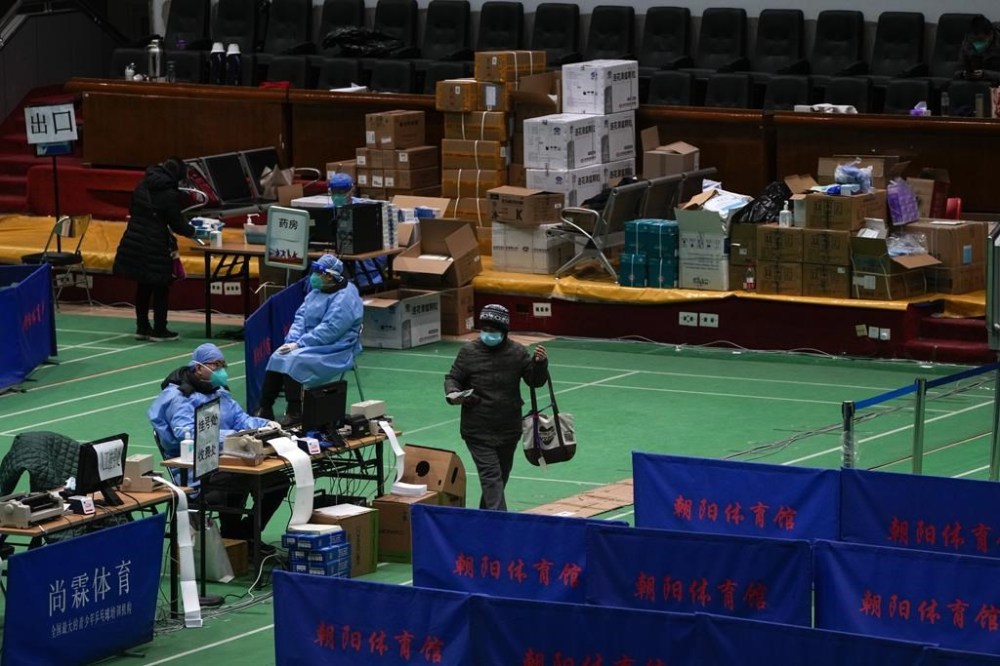
Medical workers tend to residents at a gymnasium converted into a fever clinic in Beijing, Sunday, Dec. 18, 2022. Deaths linked to the coronavirus are appearing in Beijing after weeks of China reporting no fatalities, even as the country is seeing a surge of cases. (AP Photo/Andy Wong)

Chinese health authorities count only those who died directly from COVID-19, excluding people whose underlying conditions such as diabetes and heart disease were worsened by the virus.

In many other countries, guidelines stipulate that any death where the coronavirus is a factor or contributor is counted as a COVID-19-related death.

The announcement comes amid testimony from family members and people who work in the funeral business who did not want to be identified for fear of retribution saying deaths tied to COVID-19 were increasing.

China had long hailed its hardline “zero-COVID” approach as keeping numbers of cases and deaths relatively low — comparing itself favorably to the U.S., where the death toll has topped 1.1 million.

Yet, the policy of lockdowns, travel restrictions, mandatory testing and quarantines placed China’s society and the national economy under enormous stress, apparently convincing the ruling Communist Party to heed outside advice and alter its strategy.

The easing began in November, and accelerated after Beijing and several other cities saw protests over the restrictions that grew into calls for President Xi Jinping and the Communist Party to step down — a level of public dissent not seen in decades.

On Wednesday, the government said it would stop reporting asymptomatic COVID-19 cases since they’ve become impossible to track with mass testing no longer required. Most testing is now carried out privately, with those showing only mild symptoms allowed to recuperate at home without being forced into a centralized quarantine center.
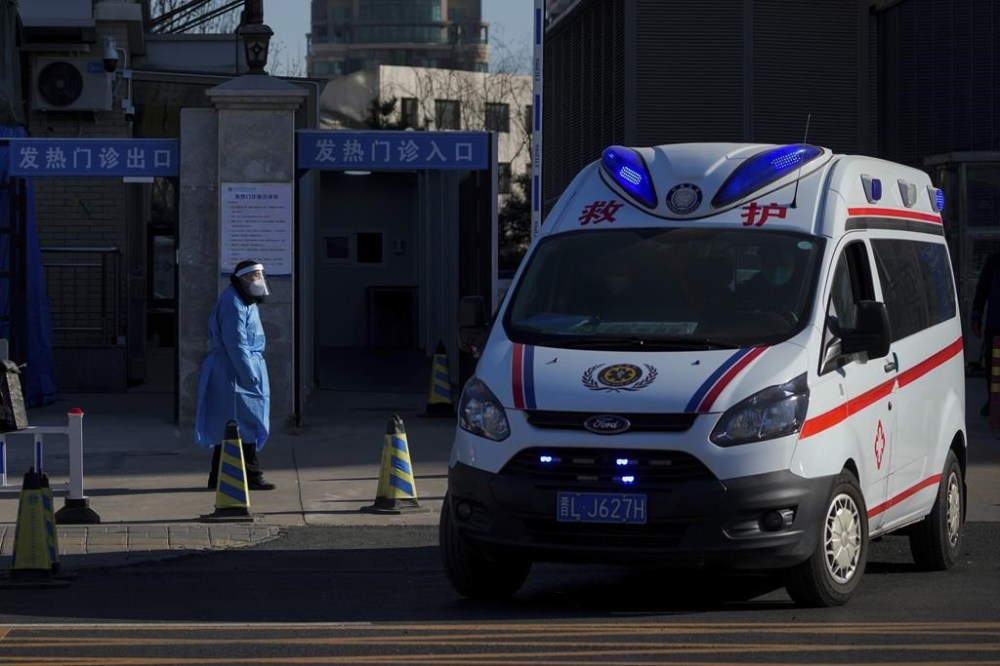
An ambulance passes a worker in protective gear outside a fever clinic in Beijing, Monday, Dec. 19, 2022. Chinese health authorities on Monday announced two additional COVID-19 deaths, both in the capital Beijing, that were the first reported in weeks and come during an expected surge of illnesses after the nation eased its strict
An ambulance passes a worker in protective gear outside a fever clinic in Beijing, Monday, Dec. 19, 2022. Chinese health authorities on Monday announced two additional COVID-19 deaths, both in the capital Beijing, that were the first reported in weeks and come during an expected surge of illnesses after the nation eased its strict "zero-COVID" approach. (AP Photo/Andy Wong)

The lack of data has made it more difficult to grasp the scale of the outbreak or its direction. However, a major drop in economic activity and anecdotal evidence of the virus’ spread point to a growing caseload, while health experts have projected a possible major wave of new infections and a spike in deaths over the next month or two, particularly among the elderly.

China is trying to persuade reluctant seniors and others at risk to get vaccinated, apparently with only moderate success. The other major concern is shoring up health resources in smaller cities and the vast rural hinterland ahead of January’s Lunar New Year travel rush, which will see migrant workers returning to their home towns.

Numbers of fever clinics have been expanded in both urban and rural areas and people have been asked to stay home unless seriously ill to preserve resources. Hospitals are also running short on staff, and reports say workers have been asked to return to their posts as long as they aren’t feverish.

Report Error Submit a Tip

More Stories

Legislation needed on vacant buildings

Editorial 4 minute read Preview

Legislation needed on vacant buildings

Editorial 4 minute read 2:00 AM CDT

There is something deeply backwards about a system that lets a property owner keep a building boarded up indefinitely while neighbours are left to live with the consequences.

In Winnipeg, as long as the owner pays the taxes, follows the city’s vacant-building rules and pays the required fees, there is no hard deadline for the building to be dealt with.

The building can remain a neighbourhood eyesore. It can attract drug use and crime. It can become a fire hazard. And the people living nearby can be left wondering how long they are expected to put up with it.

Yet when Premier Wab Kinew was asked Friday whether his government would change provincial legislation to give Winnipeg the power to impose a time limit on such properties, he declined to answer.

Read
2:00 AM CDT

State of the Nations event to highlight Indigenous mining plans

Gabrielle Piché 3 minute read Preview

State of the Nations event to highlight Indigenous mining plans

Gabrielle Piché 3 minute read Yesterday at 7:37 PM CDT

A first-ever conference aims to connect Indigenous leaders with businesses as local mining ambitions grow.

The Manitoba Prospectors and Developers Association expects to rally a half-dozen chiefs to present on their communities’ mineral development projects.

The Nov. 16 event — called the State of the Nations — comes as the province promises to triple critical mineral production.

“We want to see those minerals being developed and being able to be exported,” said Renée Greyeyes, the prospectors association’s chief executive.

Read
Yesterday at 7:37 PM CDT

AI data centres and public benefit

David Clement 4 minute read Wednesday, Jun. 10, 2026

Manitoba Premier Wab Kinew recently rejected a proposed AI data centre near Winnipeg, citing concerns over water use, noise, and a perceived lack of public benefit.

The instinct to protect communities from unwanted development is understandable. But when the objections collapse under scrutiny, and when the stakes include Canada’s standing in the global AI economy, the decision deserves a harder look.

Critics of data centres frequently invoke water consumption, and there is genuine nuance worth discussing.

Large facilities do use water for evaporative cooling. But comparison matters. A typical 18-hole golf course uses approximately 300,000 gallons of water per day during summer months.

Manitoba PC leader Khan survives confidence vote

Free Press staff 3 minute read Preview

Manitoba PC leader Khan survives confidence vote

Free Press staff 3 minute read Updated: Yesterday at 12:54 PM CDT

Manitoba Progressive Conservative Leader Obby Khan survived a confidence vote last week.

Caucus communications director Alison Sutherland confirmed the vote was held Friday and that Khan still has “the full confidence” of the PC caucus.

She did not provide further details.

The party under Khan’s leadership is floundering, a recent poll suggests.

Read
Updated: Yesterday at 12:54 PM CDT

COVID-19 vaccine Q-and-A: What you need to know

Melissa Couto Zuber, The Canadian Press 5 minute read Preview

COVID-19 vaccine Q-and-A: What you need to know

Melissa Couto Zuber, The Canadian Press 5 minute read Wednesday, Jan. 13, 2021

Canada's COVID-19 vaccine rollout hits its one-month mark on Thursday, but questions remain about the inoculations themselves, how they're being distributed and what happens next.

The Canadian Press recently spoke with experts in infectious disease, immunology and public health to help get some clarity on popular queries.

WHO'S NEXT IN LINE TO GET THE VACCINE?

Canada's provinces seem to mostly be adhering to recommendations put forward by the National Advisory Committee on Immunization (NACI), which suggests first vaccinating those most vulnerable to severe COVID outcomes, as well as those who care for them.

Read
Wednesday, Jan. 13, 2021

Plenty of losses all around

Gwynne Dyer 4 minute read Wednesday, Jul. 15, 2026

The last time oil-tankers were being shot up in the Persian Gulf, back in the 1980s, it was Saddam Hussein’s brutal tyranny in Iraq versus Ayatollah Khomeini’s revolutionary Islamist regime in Iran.

The United States backed Saddam because he was just another murderous thug, whereas the new regime in Tehran was an actual threat to American interests. It had overthrown Iran’s American-backed puppet king and wanted to spread its Islamist ideology across the region.

So, of course, Ronald Reagan’s administration chose Saddam’s side. It sent Iraq arms by clandestine means (because Congress wouldn’t authorize it) and even provided targeting information for Iraqi poison gas attacks on Iran. The Americans chose the “lesser evil,” but at least they knew it was evil.

Once in a while they would even say it out loud, quoting U.S. diplomat Henry Kissinger: “It’s a shame that both sides can’t lose.” But they never did anything about it, and after eight years of slaughter, the war ended in a no-score draw.