COVID-linked deaths seen in Beijing after virus rules eased
Advertisement
Read this article for free:
or
Already have an account? Log in here »
To continue reading, please subscribe:
Digital Subscription
One year of digital access for only $1.44 a week*
- Enjoy unlimited reading on winnipegfreepress.com
- Read the E-Edition, our digital replica newspaper
- Access News Break, our award-winning app
- Play interactive puzzles
*Billed as $5.77 plus GST every four weeks. After 52 weeks, price increases to the regular rate of $19.95 plus GST every four weeks. Offer available to new and qualified returning subscribers only. Cancel any time.
To continue reading, please subscribe:
Add Free Press access to your Brandon Sun subscription for only an additional
$1 for the first 4 weeks*
- Enjoy unlimited reading on winnipegfreepress.com
- Read the E-Edition, our digital replica newspaper
- Access News Break, our award-winning app
- Play interactive puzzles
*Your next Brandon Sun subscription payment will increase by $1.00 and you will be charged $17.95 plus GST for four weeks. After four weeks, your payment will increase to $24.95 plus GST every four weeks.
Read unlimited articles for free today:
or
Already have an account? Log in here »
Hey there, time traveller!
This article was published 16/12/2022 (1405 days ago), so information in it may no longer be current.
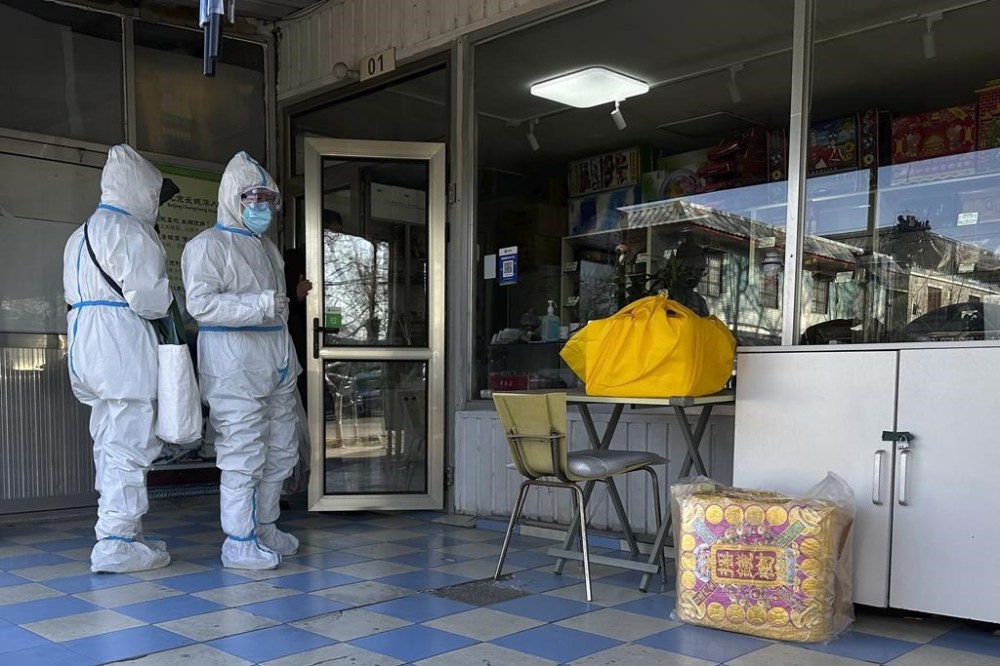
BEIJING (AP) — Outside a funeral home in eastern Beijing, dozens of people were bundled up in parkas and hats against the freezing temperatures Friday evening as workers in full protective suits wheeled out coffins one by one.
When an employee with a clipboard shouted the name of the dead, a relative trundled up to the coffin to examine the body. One of the relatives told The Associated Press their loved one had been infected with COVID-19.
Deaths linked to the coronavirus are appearing in Beijing after weeks of China reporting no fatalities, even as the country is seeing a surge of cases.
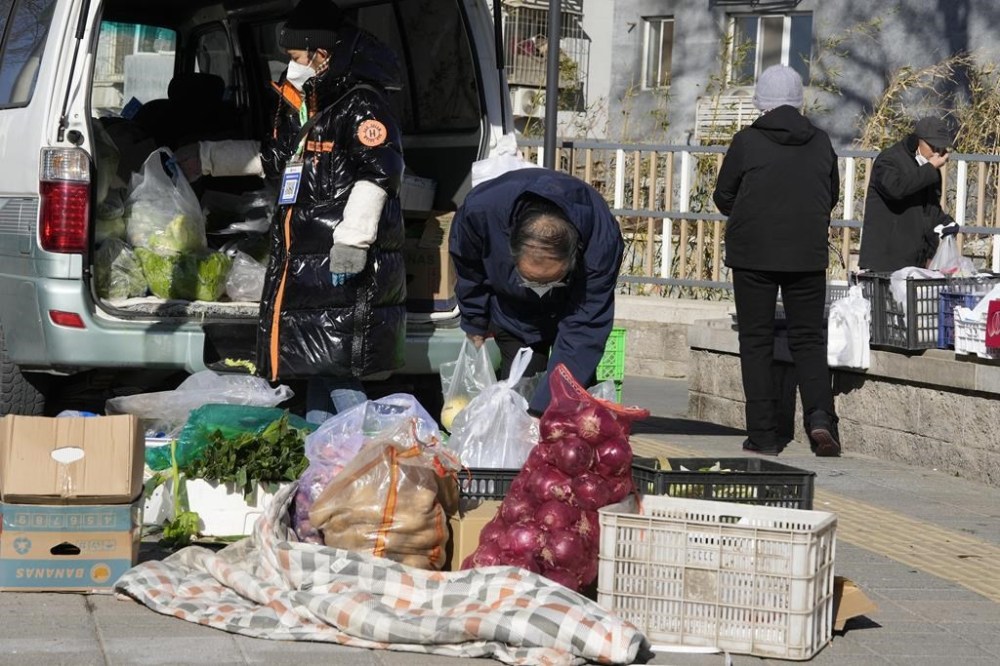
That surge comes as the government last week dramatically eased some of the world’s strictest COVID-19 containment measures. On Wednesday, the government said it would stop reporting asymptomatic COVID-19 cases since they’ve become impossible to track with mass testing no longer required.
That halt in reporting made it unclear how fast the virus is spreading. Social media posts, business closures and other anecdotal evidence suggest huge numbers of infections.
It’s also unclear how many people are dying from the virus. An AP reporter who visited the Dongjiao Funeral home was told by relatives that at least two people cremated there had died after testing positive.
Health authorities had designated Dongjiao and one other funeral home to cremate those who die after testing positive, according to a relative of one of the dead. The woman said her elderly relative had fallen ill in early December, tested positive, and died Friday morning in an emergency ward.
She said there were lots of people in the emergency ward who had tested positive for COVID-19, adding that there weren’t enough nurses to take care of them. The woman did not want to be identified for fear of retribution.
Over about an hour, an AP reporter saw about a dozen bodies wheeled from the Dongjiao funeral home.
About a half-dozen people inside described how another victim had struggled to breathe that morning before dying, and the death certificate listed “pneumonia” as the cause of death, even after a positive test for COVID-19, one of those people said. The people interviewed did not want to be identified for fear of retribution.
Three employees of shops in the complex that houses the funeral home said there had been a marked increase in the number of people going there in recent days. One estimated about 150 bodies were being cremated daily, up from what is normally a few dozen a day.
One employee attributed it to the coronavirus, although another said there are usually more deaths with the arrival of winter. The employees did not want to be identified for fear of retribution.
China has not reported a death from COVID-19 since Dec. 4.
China’s official death toll remains low, with just 5,235 deaths — compared with 1.1 million in the United States. However, public health experts caution that such statistics can’t be directly compared.
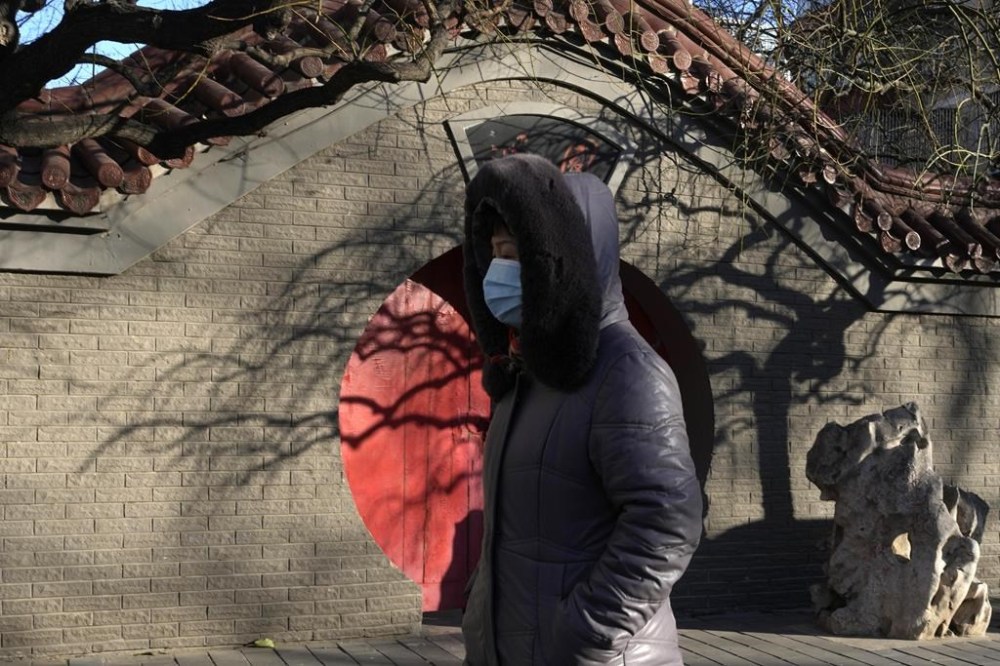
Chinese health authorities count only those who died directly from COVID-19, excluding those whose underlying conditions were worsened by the virus. In many other countries, guidelines stipulate that any death where the coronavirus is a factor or contributor is counted as a COVID-19-related death.
Experts say this has been the longstanding practice in China, but questions have been raised at times about whether officials have sought to minimize the figures.
Also on Friday, China’s Cabinet ordered rural areas to prepare for the return of migrant workers this holiday season in hopes of preventing a big surge in COVID-19 cases in communities with limited medical resources.
Returnees must wear masks and avoid contact with elderly people, and village committees must monitor their movements, the guidelines said, but didn’t mention the possibility of isolation or quarantines.
There are fears of a surge in cases around China’s winter holidays, when tens of millions take to trains, buses and planes for what may be their only trip home all year.
The upcoming Lunar New Year falls on Jan. 22, but migrants generally begin heading home two weeks or more in advance. Some Chinese universities say they will allow students to finish the semester from home to help spread out the travel rush and reduce the potential for a bigger outbreak.
Medical resources in smaller cities and rural communities, which are home to about 500 million of China’s 1.4 billion people, lag far behind those of large cities such as Beijing and Shanghai. Rural medical infrastructure includes 17,000 county-level hospitals — many of which lack even a single ICU bed — 35,000 township health centers and 599,000 village clinics.
China has been pushing to increase the number of fever clinics in rural areas to treat those with COVID-19 symptoms. Currently, about 19,400 such clinics or consulting rooms operate in communities and townships around the country, state media reported Friday.
By March 2023, about 90% of health centers at the township level will have fever clinics, Nie Chunlei, head of primary health at the National Health Commission, said Thursday.
“This will effectively enhance the capability of primary-level health care institutions to receive patients with fever,” said Nie, who also urged stockpiling of medicines and antigen test kits, many of which have become scarce even in big cities.
The lifting of some travel regulations has spurred both relief and anxiety over the level of COVID-19 preparedness.
Health experts have said China will face a peak of infections in the next month or two and is trying to persuade reluctant seniors and others at risk to get vaccinated.
The changes follow growing frustration with the “zero-COVID” policy blamed for hindering the economy and creating massive social stress. The easing began in November, and accelerated after Beijing and several other cities saw protests over the restrictions that grew into calls for President Xi Jinping and the Communist Party to step down — a level of public dissent not seen in decades.
It’s unclear what prompted the government’s shift in policy. Experts cite economic pressure, public discontent, and the difficulties of containing the extremely infectious omicron variant as factors.

China wasn’t fully prepared for opening up from a public health standpoint, and the decision was driven mainly by economic and social factors, said Zeng Guang, a health expert formerly affiliated with China’s Center for Disease Control, speaking at a conference organized by the state-run Global Times newspaper.
Under the relaxed rules, obligatory testing is no longer required and people with mild symptoms are permitted to recover at home rather than go to a quarantine center. Meanwhile, the semi-autonomous gambling enclave of Macao will scrap its mandatory hotel quarantine for arrivals from Hong Kong, Taiwan and overseas starting Saturday, the government said.
However, travelers must spend five days in home isolation and undergo testing, and are barred from entering mainland China until the 10th day upon arrival. Both Macao and Hong Kong have scrapped most anti-COVID-19 measures.
___
Associated Press reporter Kanis Leung contributed from Hong Kong.