China students return home amid fears of COVID-19 spread

Advertisement

Advertise with us

BEIJING (AP) — Some Chinese universities say they will allow students to finish the semester from home in hopes of reducing the potential for a bigger COVID-19 outbreak during the January Lunar New Year travel rush.

Read this article for free:


By clicking the button above, an account will be created and you will begin to receive some of our recommended newsletters. You may opt out of any newsletter by visiting your Email and Communication Preferences page or by clicking "unsubscribe" at the bottom of any email.

or

Already have an account? Log in here »

To continue reading, please subscribe:

Digital Subscription

One year of digital access for only $1.44 a week*

  • Enjoy unlimited reading on winnipegfreepress.com
  • Read the E-Edition, our digital replica newspaper
  • Access News Break, our award-winning app
  • Play interactive puzzles

*Billed as $5.77 plus GST every four weeks. After 52 weeks, price increases to the regular rate of $19.95 plus GST every four weeks. Offer available to new and qualified returning subscribers only. Cancel any time.

To continue reading, please subscribe:

Add Free Press access to your Brandon Sun subscription for only an additional

$1 for the first 4 weeks*

  • Enjoy unlimited reading on winnipegfreepress.com
  • Read the E-Edition, our digital replica newspaper
  • Access News Break, our award-winning app
  • Play interactive puzzles
Start now

*Your next Brandon Sun subscription payment will increase by $1.00 and you will be charged $17.95 plus GST for four weeks. After four weeks, your payment will increase to $24.95 plus GST every four weeks.

Hey there, time traveller!
This article was published 12/12/2022 (1418 days ago), so information in it may no longer be current.

BEIJING (AP) — Some Chinese universities say they will allow students to finish the semester from home in hopes of reducing the potential for a bigger COVID-19 outbreak during the January Lunar New Year travel rush.

It wasn’t clear how many schools were participating, but universities in Shanghai and nearby cities said students would be given the option of returning home early or staying on campus and undergoing testing every 48 hours. The Lunar New Year, which falls on Jan. 22, is traditionally China’s busiest travel season.

Universities have had frequent lockdowns in the past three years, occasionally leading to clashes between authorities and students confined to campus or even their dorm rooms.
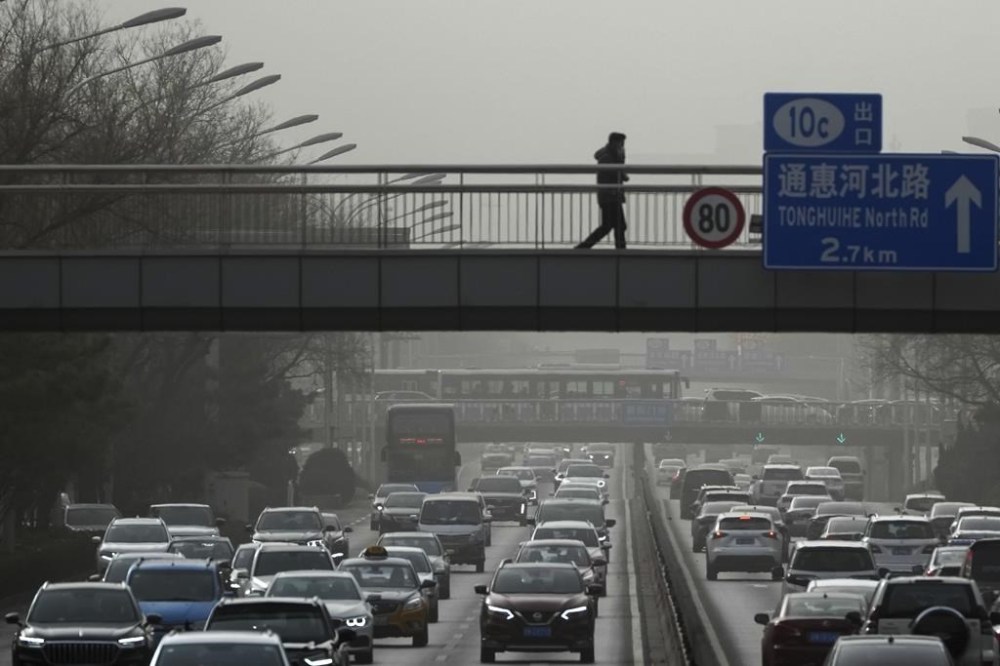
Vehicles move on a city highway in Beijing, Monday, Dec. 12, 2022, as capital city is hit by sandstorm. China will drop a travel tracing requirement as part of an uncertain exit from its strict
Vehicles move on a city highway in Beijing, Monday, Dec. 12, 2022, as capital city is hit by sandstorm. China will drop a travel tracing requirement as part of an uncertain exit from its strict "zero-COVID" policies that have elicited widespread dissatisfaction. (AP Photo/Andy Wong)

With so many people staying home, Beijing’s downtown streets were eerily quiet Tuesday, giving it the feel of a voluntary lockdown. Small lines formed outside fever clinics — which have recently increased from 94 to 303 — and at pharmacies, where cold and flu medications are harder to find.

Restaurants were mostly closed or empty, as many businesses are having difficulty finding enough staff who haven’t gotten infected. Sanlitun, one of Beijing’s most popular shopping districts, was deserted despite having its anti-COVID fences taken down in recent days.

Tuesday’s announcements came as China begins relaxing its strict “zero-COVID” policy, allowing people with mild symptoms to stay home rather than be sent to a quarantine center, among other changes that followed widespread protests.

Starting Tuesday, China stopped tracking some travel, potentially reducing the likelihood people will be forced into quarantine for visiting COVID-19 hot spots. Despite that, China’s international borders remain largely shut and there has been no word on when restrictions will be eased on inbound travelers and Chinese wanting to go overseas.

The move follows the government’s dramatic announcement last week that it was ending many of the strictest measures, following three years during which it enforced some of the world’s tightest virus restrictions.

Last month in Beijing and several other cities, protests over the restrictions grew into calls for leader Xi Jinping and the Communist Party to step down — a level of public dissent not seen in decades.

While met with relief, the relaxation also has sparked concerns about a new wave of infections potentially overwhelming health care resources in some areas.

Despite a push to boost vaccinations among the elderly, two centers set up in Beijing to administer shots were empty except for medical personnel. Despite fears of a major outbreak, there was little evidence of a surge in patient numbers.
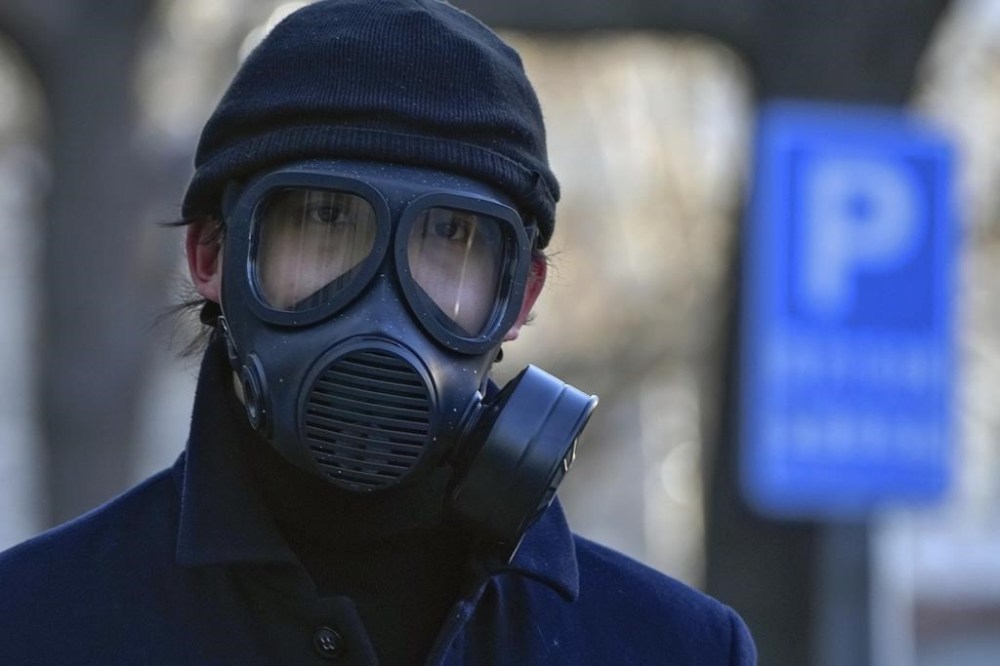
A man wearing a gas mask walks on a street in Beijing, Tuesday, Dec. 13, 2022. Some Chinese universities say they will allow students to finish the semester from home in hopes of reducing the potential of a bigger COVID-19 outbreak during the January Lunar New Year travel rush. (AP Photo/Andy Wong)

At the Beixinqiao district vaccination center, 10 nurses waiting to give shots stood in an otherwise empty auditorium. The nurses declined interviews, saying they needed official permission.

“With the emergence of new variants of the coronavirus as it spreads around the world, our country is coming under increasing pressure, and the epidemic prevention control situation is serious and complicated,” a sign outside the office said.

“The whole world agrees that getting vaccinated is the most effective way of combating the epidemic. … Please, elderly friends, get vaccinated as quickly and as early as possible!”

While first-tier cities such as Beijing, Shanghai and Guangzhou have invested heavily in their medical systems, less-developed cities and the vast rural hinterland have far fewer resources and will likely spell the difference on whether China finds itself overwhelmed.

Many residents of mainland China have taken to ordering medication from pharmacies in Hong Kong, which has already relaxed many restrictions.

The government of the semi-autonomous southern city took a further step Tuesday, saying it would remove restrictions for arriving travelers that currently prevent them from dining in restaurants or going to bars for the first three days.

It would also scrap the use of its contact-tracing app, although vaccine requirements to enter venues like restaurants will remain in place. Those going from Hong Kong to mainland China and Macao will no longer have to take a PCR test at border checkpoints, although they still face several days in quarantine on the mainland side. The new measures take effect Wednesday.
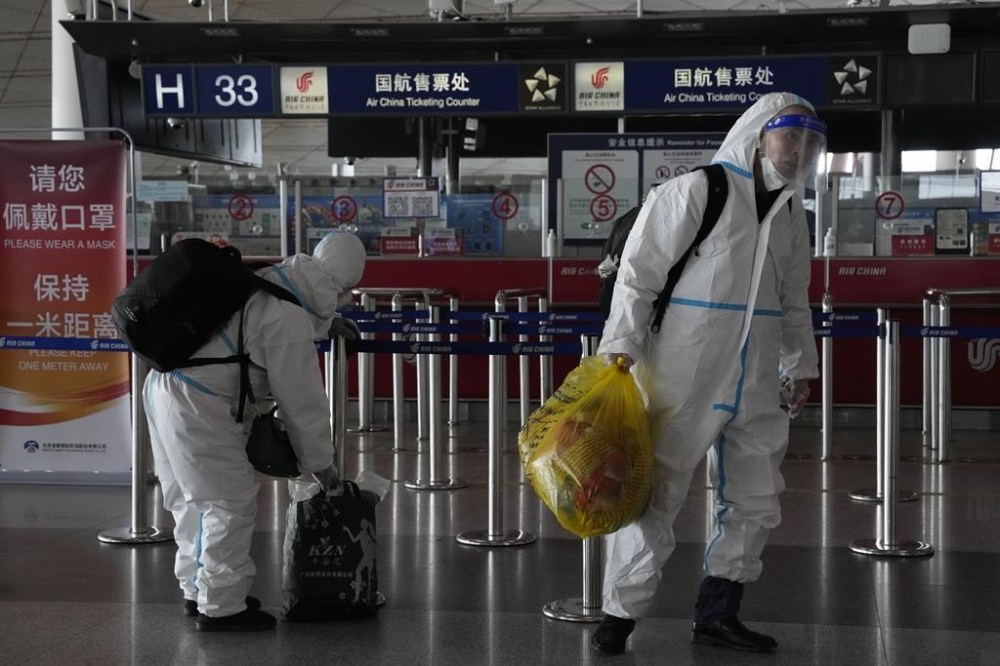
Passengers in protective gear carry their luggage in the Capital airport terminal in Beijing, Tuesday, Dec. 13, 2022. Some Chinese universities say they will allow students to finish the semester from home in hopes of reducing the potential of a bigger COVID-19 outbreak during the January Lunar New Year travel rush. (AP Photo/Ng Han Guan)

Hong Kong will gradually reduce PCR testing, including the compulsory screening notices issued to residential buildings, and more rapid test kits will be given out in the community, according to the city’s health minister.

The easing of controls on the mainland means a sharp drop in obligatory testing from which daily infections numbers are compiled, but cases appear to be rising rapidly, with many people testing themselves at home and staying away from hospitals.

China reported 7,451 new infections Monday, bringing the nation’s total to 372,763 — more than double the level on Oct. 1. It has recorded 5,235 deaths — compared with 1.1 million in the United States.

China’s government-supplied figures have not been independently verified and questions have been raised about whether the Communist Party has sought to minimize numbers of cases and deaths.

The U.S. consulates in the northeastern Chinese city of Shenyang and the central city of Wuhan will offer only emergency services from Tuesday “in response to increased number of COVID-19 cases,” the State Department said.

“Mission China makes every effort to ensure full consular services are available to U.S. citizens living in the PRC, but further disruptions are possible,” an emailed message said, using the initials for China’s official name, the People’s Republic of China.

Xi’s government is still officially committed to stopping virus transmission. But the latest moves suggest the party will tolerate more cases without quarantines or shutting down travel or businesses as it winds down its “zero-COVID” strategy.

Amid the unpredictable messaging from Beijing, experts warn there still is a chance the party might reverse course and reimpose restrictions if a large-scale outbreak ensues.
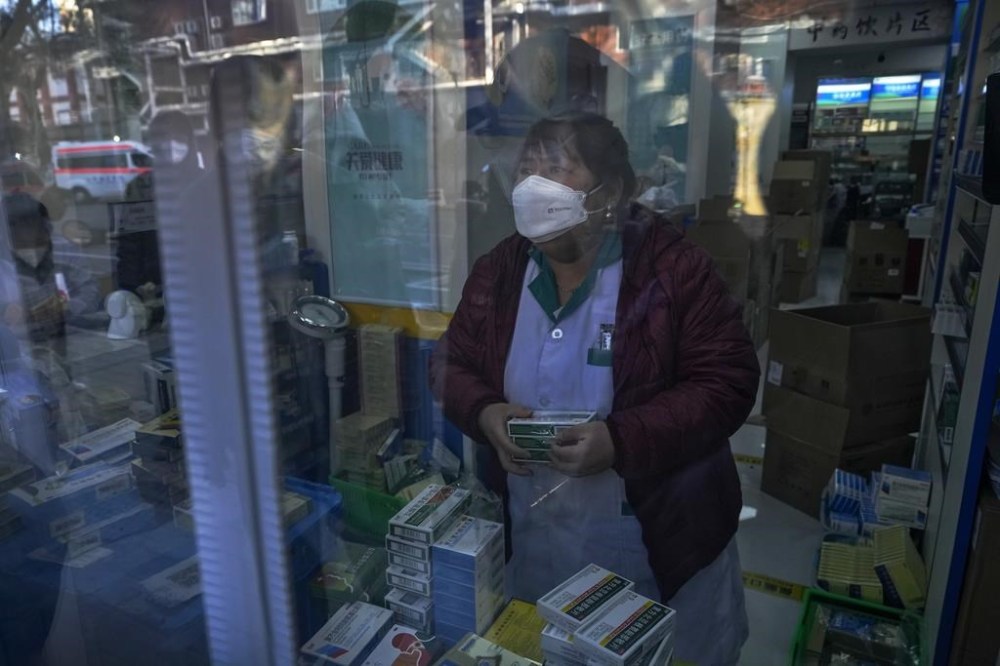
Residents are reflected on a door panel as they wait in line to buy medicine at a pharmacy in Beijing, Tuesday, Dec. 13, 2022. Some Chinese universities say they will allow students to finish the semester from home in hopes of reducing the potential of a bigger COVID-19 outbreak during the January Lunar New Year travel rush. (AP Photo/Andy Wong)

The change in policy comes after protests erupted Nov. 25 after 10 people died in a fire in the northwestern city of Urumqi. Many questioned whether COVID-19 restrictions impeded rescue efforts. Authorities denied the claims spread online, but demonstrators gave voice to longstanding frustration in cities such as Shanghai that have endured severe lockdowns.

The party responded with a massive show of force and an unknown number of people were arrested at the protests or in the days following.

___

Associated Press writers Zen Soo and Kanis Leung in Hong Kong and Dake Kang in Beijing contributed.

Report Error Submit a Tip

More Stories

Letters, Oct. 30

7 minute read 2:00 AM CDT

Embarrassed by turnout

I am ashamed by the poor turnout of voters in the recent municipal election in Winnipeg. Just 38 per cent of eligible voters is a disgrace to the thousands of men and women who gave their lives in past wars, where they were defending democracy and the right to vote.

My grandfather was an infantry soldier in the First World War, and my father-in-law flew in Avro Lancasters in the Second World War. For both I am grateful.

Maybe the 62 per cent that had a flimsy excuse for not voting will keep this mind for the next election. People died for our right to vote.

Wife’s witchy wonderment won’t spell trouble

Maureen Scurfield 6 minute read 2:00 AM CDT

DEAR MISS LONELYHEARTS: My wife believes in magic potions, which used to make me laugh. But since Halloween season started this year, she’s been acting in a way that frightens me. She seems to think she’s a modern-day “witch.” Give me a break!

Now she has three friends who think they are really casting spells when they get together! And this year on Halloween night she’s being formally accepted into their little witchy group meeting at one of their homes, and is getting a new sorceress name. It’s creepy! How do I cope? I’ve had enough of this.

— Seriously Upset, South St. Vital

Dear Upset: Don’t buy into the hocus pocus by being afraid of it and expressing any trepidation to your wife. She needs you to be strong, so she knows she has a solid anchor and can drop out of this witchy group if it becomes too scary or silly for her.

City rec facilities crumbling

Ryan Thorpe 7 minute read Preview

City rec facilities crumbling

Ryan Thorpe 7 minute read Monday, Oct. 22, 2018

Throughout Winnipeg, decades-old community assets — pools, arenas and recreation and leisure centres — are deteriorating so quickly that service disruptions are inevitable.

Meanwhile, the city’s community services department, which is responsible for managing those assets, operates with an annual deficit of roughly $80 million, meaning there are scant resources to do little more than bail water on a sinking ship.

Soon, Winnipeggers will have a choice: fewer community services or higher costs.

“It poses a huge challenge because we have very limited dollars that we have to invest in our existing facilities. We also have growing demands for new amenities in new areas. We have to be very strategic,” said Ken McKim, manager of asset management for the department.

Read
Monday, Oct. 22, 2018

Shooting, stand off net nine year prison sentence

Dean Pritchard 4 minute read Preview

Shooting, stand off net nine year prison sentence

Dean Pritchard 4 minute read 2:00 AM CDT

Daniel Larsen had been out of prison just five days when he shot up a Point Douglas house and sparked a 10-hour armed standoff with police that shut down a portion of the Disraeli Freeway.

Larsen, sentenced last week to nine years in prison, believed residents of the Grove Street home had sold fentanyl to his son, court heard.

“The speed with which Mr. Larsen was able to obtain a firearm, formulate a plan and become criminally involved is… horrifying from a public safety standpoint,” Crown attorney Amy Wood told provincial court Judge Malcolm McDonald.

Larsen, 37, pleaded guilty to reckless discharge of a firearm for the June 14, 2025, incident and two related weapons offences.

Read
2:00 AM CDT

Waiting for Cormier verdict the ‘calm before the storm’

Katie May 6 minute read Preview

Waiting for Cormier verdict the ‘calm before the storm’

Katie May 6 minute read Thursday, Feb. 22, 2018

As the jury room door closed behind the seven women and four men who are now deliberating on the evidence against Tina Fontaine’s accused killer, Thelma Favel rose from the chair she’s occupied for most of Raymond Cormier’s second-degree murder trial.

Almost every day over the past three weeks, Favel, the woman who raised 15-year-old Tina, has sat right up front, directly across from the jury box, listening, sobbing and soaking in disturbing details of the teen’s last days that have come to light over the course of Cormier’s second-degree murder trial.

On Wednesday afternoon, after Court of Queen’s Bench Chief Justice Glenn Joyal instructed the jury and sent them off to be sequestered until they decide whether 56-year-old Raymond Cormier is guilty of killing Tina, Favel got up and hugged Crown prosecutor Breta Passler. It was one of many moments, this one shielded from jurors, that have long since proven the emotional impact of the case and the lasting power of Tina’s legacy.

Tina’s death sparked a public outcry that renewed calls for a national inquiry into disproportionately high rates of missing and murdered Indigenous women and girls across Canada, and the criminal trial for the man accused of killing her hasn’t happened in a vacuum.

Read
Thursday, Feb. 22, 2018

Trump touts USMCA win in state of the union

James McCarten, The Canadian Press 6 minute read Preview

Trump touts USMCA win in state of the union

James McCarten, The Canadian Press 6 minute read Tuesday, Feb. 4, 2020

WASHINGTON - President Donald Trump declared his scorched-earth political style an unmitigated success Tuesday in a fiercely partisan, made-for-TV state of the union speech that made it clear he expects to be back in the White House next year on the strength of the U.S. economy and his trade deals with Canada, Mexico and China.

Trump, addressing a joint session of Congress in the very chamber where House Democrats voted to impeach him less than two months ago, became only the second president in American history — Bill Clinton was the first — to deliver a state of the union while standing trial in the Senate.

Unrepentant, he pointedly refused to shake the offered hand of House Speaker Nancy Pelosi on the dais before singing the praises of what he billed as "the great American comeback," pointing to strong job growth, a soaring stock market and low unemployment as evidence of his leadership. And when he was done, Pelosi ripped up the speech in full view of the television cameras.

"America's enemies are on the run, America's fortunes are on the rise, and America's future is blazing bright. The years of economic decay are over," Trump declared, taking full credit for the country's "roaring economy," including what he billed as seven million new jobs and the lowest jobless rate in half a century — a "blue-collar boom" that he's counting on to help his re-election chances in November.

Read
Tuesday, Feb. 4, 2020