Military was told to prepare to intervene in ‘Freedom Convoy’ protests: official

Advertisement

Advertise with us

OTTAWA - The Defence Department's top official says he directed the military to prepare to intervene in the "Freedom Convoy" protests earlier this year, but the resulting plans were never seriously considered — in part due to concerns about another Oka Crisis.

Read this article for free:


By clicking the button above, an account will be created and you will begin to receive some of our recommended newsletters. You may opt out of any newsletter by visiting your Email and Communication Preferences page or by clicking "unsubscribe" at the bottom of any email.

or

Already have an account? Log in here »

To continue reading, please subscribe:

Digital Subscription

One year of digital access for only $1.44 a week*

  • Enjoy unlimited reading on winnipegfreepress.com
  • Read the E-Edition, our digital replica newspaper
  • Access News Break, our award-winning app
  • Play interactive puzzles

*Billed as $5.77 plus GST every four weeks. After 52 weeks, price increases to the regular rate of $19.95 plus GST every four weeks. Offer available to new and qualified returning subscribers only. Cancel any time.

To continue reading, please subscribe:

Add Free Press access to your Brandon Sun subscription for only an additional

$1 for the first 4 weeks*

  • Enjoy unlimited reading on winnipegfreepress.com
  • Read the E-Edition, our digital replica newspaper
  • Access News Break, our award-winning app
  • Play interactive puzzles
Start now

*Your next Brandon Sun subscription payment will increase by $1.00 and you will be charged $17.95 plus GST for four weeks. After four weeks, your payment will increase to $24.95 plus GST every four weeks.

Hey there, time traveller!
This article was published 01/12/2022 (1431 days ago), so information in it may no longer be current.

OTTAWA – The Defence Department’s top official says he directed the military to prepare to intervene in the “Freedom Convoy” protests earlier this year, but the resulting plans were never seriously considered — in part due to concerns about another Oka Crisis.

Deputy minister Bill Matthews and another top defence official also said the Canadian Armed Forces was prepared to fly police officers to demonstration sites across the country, but that its tow trucks were too big ⁠— and too old ⁠— to help with the protests.

Matthews and Defence Department associate deputy minister Stefanie Beck made the comments in an August interview with lawyers for the public inquiry looking into the Liberal government’s decision to use the Emergencies Act to end the protests.
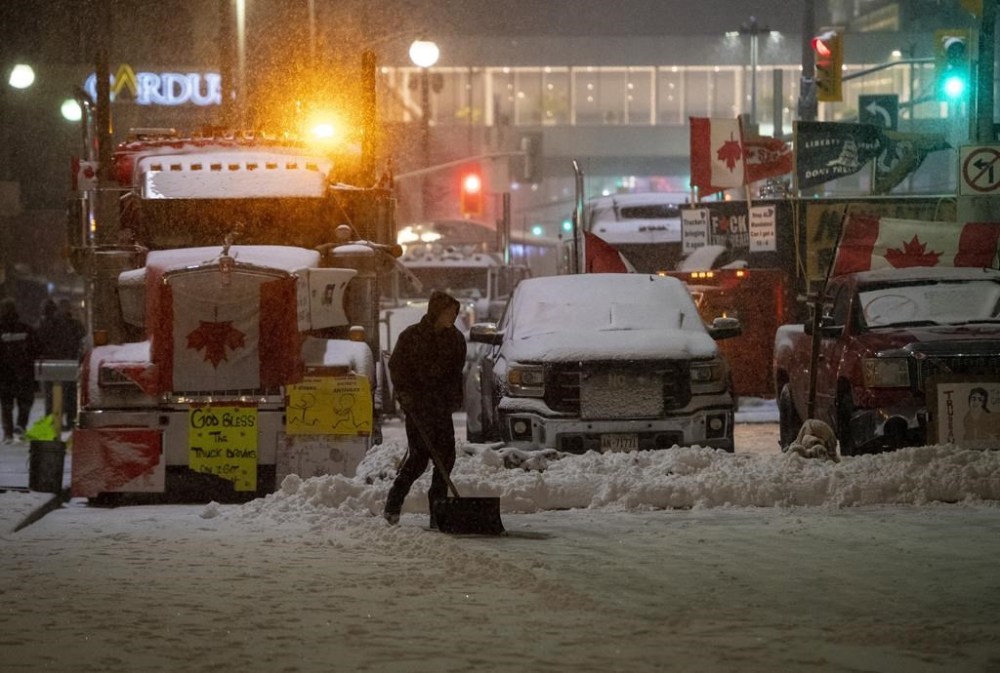
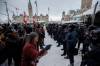
A protester shovels snow in front of parked semi-trailer and pickup trucks on Rideau Street, on the 21st day of a protest against COVID-19 measures that has grown into a broader anti-government protest, in Ottawa, on Thursday, Feb. 17, 2022. The Defence Department's top official says he told the military to prepare to intervene as
A protester shovels snow in front of parked semi-trailer and pickup trucks on Rideau Street, on the 21st day of a protest against COVID-19 measures that has grown into a broader anti-government protest, in Ottawa, on Thursday, Feb. 17, 2022. The Defence Department's top official says he told the military to prepare to intervene as "Freedom Convoy" protests gridlocked downtown Ottawa and several border crossings with the U.S. earlier this year. THE CANADIAN PRESS/Justin Tang

A summary of that interview is among thousands of documents released by the Public Order Emergency Commission, which will ultimately determine whether the government was justified in invoking the act in February.

Neither was called to publicly testify before the commission.

The Liberals faced public calls in January and February to deploy the military as thousands of protesters opposed to vaccine mandates and pandemic restrictions gridlocked Ottawa and border crossings with the United States for three weeks.

The inquiry was also shown text messages in recent weeks in which federal Justice Minister David Lametti and then-Alberta premier Jason Kenney raised the prospect of using the military alongside police to clear protesters.

In one text exchange, Lametti and Public Safety Minister Marco Mendicino raised the idea of using a tank to end the protests. Lametti told the commission last week that the exchange was a joke.

Lametti and Defence Minister Anita Anand instead told the commission that the military was always considered a last resort — a position that Matthews and Beck echoed in their interview with commission lawyers.

Both defence officials “strongly emphasized that CAF members are not police officers,” the summary reads.
“They are trained to use lethal force, not do crowd control. Indeed, the domestic use of military force is, and in their view should always be, seen as a last resort.”

Matthews did say he asked defence officials to prepare “for the possibility that the CAF might be called out to intervene in the protests,” with a number of scenarios and internal plans subsequently drawn up.

“These plans considered the use of military equipment, infrastructure and deployment of CAF members.”

Yet Matthews and Beck said it was clear throughout the planning process that the government and the minister did not want to use the military due to fears “deploying the military in any way would inflame tensions with the protesters.”

The two officials “noted that the shadow of the Oka Crisis still looms large,” reads the summary.

On July 11, 1990, Quebec provincial police moved in on a barricade near the small town, which is about 50 kilometres northwest of Montreal. The barricade was erected by Indigenous activists to protest the planned expansion of a golf course and development on ancestral land.

After a police officer was killed, the situation escalated into a tense, 78-day standoff between Mohawk and thousands of Canadian soldiers that captured the country’s attention and raised enduring concerns about using the military in protests.

Matthews and Beck told the commission lawyers that they shared their concerns about a possible repeat of the crisis with senior officials in other departments, but that the military’s actual plans were not shared with them or with Anand.

“It was a necessary planning exercise, but the option of deploying the CAF was never seriously considered.”

The military did end up providing limited support to law enforcement efforts, with Ottawa police using the Cartier Drill Hall in downtown Ottawa as a staging area. It also provided 1,200 ration packs to the Parliamentary Protective Service.

The Defence Department and Armed Forces expected and considered requests for military planes to fly police to various parts of the country, but Matthews and Beck said domestic flights ended up being adequate.

Officials also considered whether the military could be used to clear protesters’ trucks from downtown Ottawa, the border crossing in Coutts, Alta., and other places where local officials were having trouble getting local tow companies to help.

However, Matthews and Beck said that ultimately wasn’t an option as the military’s own tow trucks weren’t designed for the types of vehicles involved in the protests, and using them would damage not only those vehicles but also any roads driven upon.

There were also concerns that moving the military’s tow trucks would represent a “significant logistical effort” and could have “drawn significant attention to themselves and the CAF members operating them.”

“Third, the trucks are quite old and require frequent maintenance,” the interview summary adds. “DND has plans to replace these trucks.”

This report by The Canadian Press was first published Dec. 1, 2022.

Report Error Submit a Tip

More Stories

Province changes Thompson ‘Vaxport’ plan

Carol Sanders 5 minute read Preview

Province changes Thompson ‘Vaxport’ plan

Carol Sanders 5 minute read Thursday, Jan. 14, 2021

The Manitoba government has changed its plans for a vaccination "super site" for the North — just days after it was announced — after local officials argued the original proposal was unworkable.

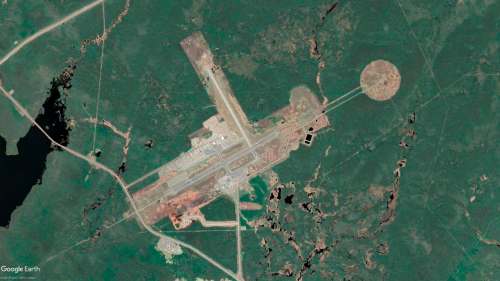
Some northern residents will still get their COVID-19 shots at Thompson's airport, but "Vaxport" will be less super than originally planned, providing injections only to residents of fly-in communities.

Most northern residents will get their shots at the Thompson Community Recreation Centre, which is centrally located in the city of about 13,000.

"This makes much more sense logistically, and for the citizens of Thompson," Mayor Colleen Smook said Thursday after touring the airport site, which is located 10 kilometres from the city and isn't serviced by public transportation.

Read
Thursday, Jan. 14, 2021

Teemu Selanne living the good life in southern California

Mike McIntyre 19 minute read Preview

Teemu Selanne living the good life in southern California

Mike McIntyre 19 minute read Friday, Oct. 15, 2021

LAGUNA BEACH — He likes his coffee black. His steak “medium rare plus.” And he’s an extremely generous pour, especially when it comes to a Moscow mule.

His left knee is giving him all sorts of trouble these days, he’s admittedly almost always running behind schedule and his biggest pride and joy are his four children, who keep him and his wife Sirpa hopping with their numerous athletic pursuits.

He is Teemu Selanne, the beloved Winnipeg Jets legend who, you’ll be happy to know, is still living the good life just a stone’s throw from the Pacific Ocean in this little piece of southern California paradise.

Despite being nearly eight years removed from the end of a Hall of Fame hockey career, the Finnish Flash remains a big deal around here. That was clear as we sat down earlier this week for an exclusive chat inside “Selanne’s Steak Tavern” — a high-end eatery he owns that sits along the stunning Pacific Coast Highway.

Read
Friday, Oct. 15, 2021

Canada tops Dominican Republic in pre-qualifier

Jason Hills, The Canadian Press 4 minute read Preview

Canada tops Dominican Republic in pre-qualifier

Jason Hills, The Canadian Press 4 minute read Sunday, Nov. 17, 2019

EDMONTON - Canada's women's basketball team put its depth on display Sunday in a dominant 110-60 victory over the Dominican Republic in the final game of the FIBA Olympic pre-qualifying tournament.

All 12 players hit the scoresheet, including six in double digits, to help the Canadians finish 3-0 at the tournament and advance to the next Olympic qualifier in February.

Sami Hill led the way with 16 points, three rebounds, two assists and three steals, while 20-year-old Shaina Pellington recorded 14 points. Bridget Carleton and Jamie Scott had 13 points each and Ruth Hamblin had 11 points and five rebounds.

"We got to roll our whole lineups through, and it was fun when we got going," said Canada's coach Lisa Thomaidis. "It was nice to see different lineup contributing and building chemistry.

Read
Sunday, Nov. 17, 2019

The long and winding road

Editorial 4 minute read Preview

The long and winding road

Editorial 4 minute read Yesterday at 2:01 AM CDT

As theatre goes, it sent a strong message.

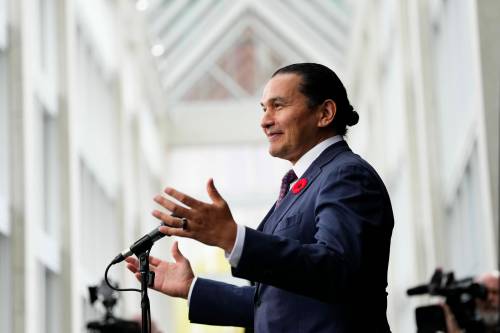
Manitoba Premier Wab Kinew, standing in front of microphones and television cameras, holding up his Indigenous status card and saying that he didn’t feel Canada should have “a race-based form of identification in this country, but that is a reality,” adding that it was time to abolish the Indian Act.

“I think it’s time to abolish the Indian Act, get rid of the Indian Act, move past the Indian Act, and it needs to be done with First Nations people and First Nations governments, of course. I think it’s long overdue that we have a relationship with Indigenous Peoples in Canada that reflects who we are as Canadians today,” he said.

The Indian Act — the name alone suggests how out-dated and out of place the law has become. Originally dating from 1876, the law was put in place to “amend and consolidate the laws respecting Indians” and gave the Minister of the Interior the responsibility to “control and management of the reserves, lands, moneys and property of Indians in Canada.”

Read
Yesterday at 2:01 AM CDT

Say What?! Sports guys travel to new destination

Steve Lyons and Paul Wiecek 16 minute read Preview

Say What?! Sports guys travel to new destination

Steve Lyons and Paul Wiecek 16 minute read Thursday, Jan. 30, 2020

Say What?! is an email conversation between sports editor Steve Lyons and sports columnist Paul Wiecek. Look for us regularly but intermittently on the Free Press website.


Steve Lyons: Heya. How you doing? How’s 2020 treating you so far?

Few things to get us started:

Read
Thursday, Jan. 30, 2020

The new normal in Canadian politics

David McLaughlin 5 minute read Preview

The new normal in Canadian politics

David McLaughlin 5 minute read Yesterday at 2:01 AM CDT

“Nothing happening, all at once.”

Welcome to the new normal of Canadian politics, where normality is the new normal. Routine and stable are in; disruptive and excessive are out. Exhibits A and B are the Alberta referendum and the British Columbia election. Voters opted for stability over volatility.

The opposite of being normal is being different from the norm. In politics that means different from where we’ve been and what we’ve come to expect. Two competing trends have dominated our politics for the past decade and a half — progressivism and populism. Think Justin Trudeau and liberal, progressive identity politics in Canada, and Donald Trump and conservative, populist MAGA politics in America. We are now experiencing a swing away from both those trends.

Representing this “new normal” are Prime Minister Mark Carney, for one, and newly elected British Columbia premier, Lorne Doerksen, for another. Both are considered normal because they talk and act like adults in a childish political world. Their political flair is to not have any political flair. They stand out for not standing out.

Read
Yesterday at 2:01 AM CDT