Military was told to prepare to intervene in ‘Freedom Convoy’ protests: official
Advertisement
Read this article for free:
or
Already have an account? Log in here »
To continue reading, please subscribe:
Digital Subscription
One year of digital access for only $1.44 a week*
- Enjoy unlimited reading on winnipegfreepress.com
- Read the E-Edition, our digital replica newspaper
- Access News Break, our award-winning app
- Play interactive puzzles
*Billed as $5.77 plus GST every four weeks. After 52 weeks, price increases to the regular rate of $19.95 plus GST every four weeks. Offer available to new and qualified returning subscribers only. Cancel any time.
To continue reading, please subscribe:
Add Free Press access to your Brandon Sun subscription for only an additional
$1 for the first 4 weeks*
- Enjoy unlimited reading on winnipegfreepress.com
- Read the E-Edition, our digital replica newspaper
- Access News Break, our award-winning app
- Play interactive puzzles
*Your next Brandon Sun subscription payment will increase by $1.00 and you will be charged $17.95 plus GST for four weeks. After four weeks, your payment will increase to $24.95 plus GST every four weeks.
Read unlimited articles for free today:
or
Already have an account? Log in here »
Hey there, time traveller!
This article was published 01/12/2022 (1432 days ago), so information in it may no longer be current.
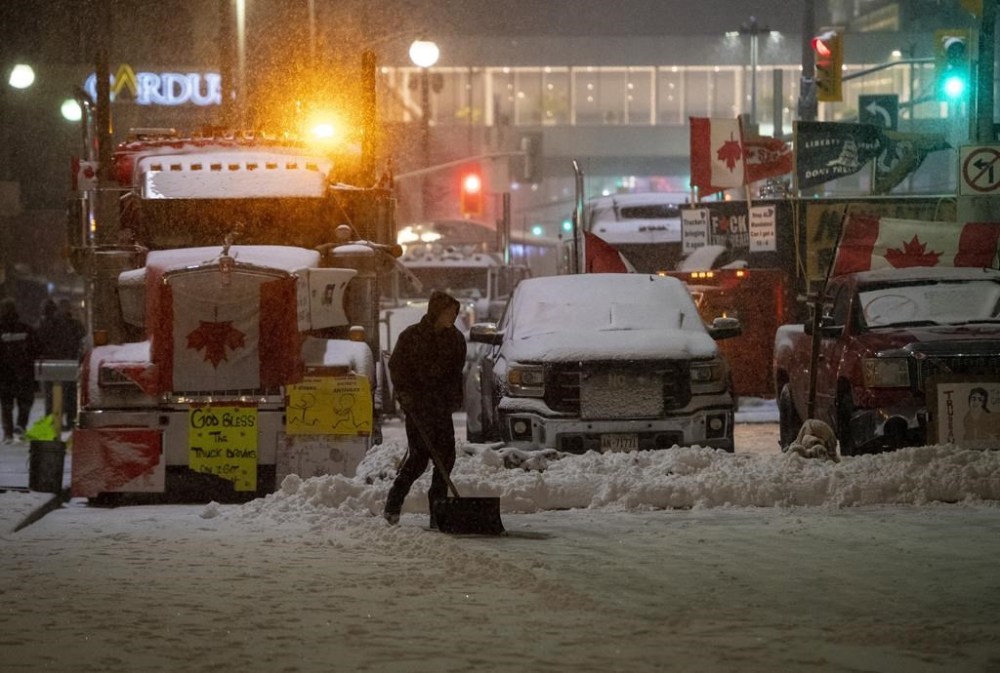
OTTAWA – The Defence Department’s top official says he directed the military to prepare to intervene in the “Freedom Convoy” protests earlier this year, but the resulting plans were never seriously considered — in part due to concerns about another Oka Crisis.
Deputy minister Bill Matthews and another top defence official also said the Canadian Armed Forces was prepared to fly police officers to demonstration sites across the country, but that its tow trucks were too big — and too old — to help with the protests.
Matthews and Defence Department associate deputy minister Stefanie Beck made the comments in an August interview with lawyers for the public inquiry looking into the Liberal government’s decision to use the Emergencies Act to end the protests.
A summary of that interview is among thousands of documents released by the Public Order Emergency Commission, which will ultimately determine whether the government was justified in invoking the act in February.
Neither was called to publicly testify before the commission.
The Liberals faced public calls in January and February to deploy the military as thousands of protesters opposed to vaccine mandates and pandemic restrictions gridlocked Ottawa and border crossings with the United States for three weeks.
The inquiry was also shown text messages in recent weeks in which federal Justice Minister David Lametti and then-Alberta premier Jason Kenney raised the prospect of using the military alongside police to clear protesters.
In one text exchange, Lametti and Public Safety Minister Marco Mendicino raised the idea of using a tank to end the protests. Lametti told the commission last week that the exchange was a joke.
Lametti and Defence Minister Anita Anand instead told the commission that the military was always considered a last resort — a position that Matthews and Beck echoed in their interview with commission lawyers.
Both defence officials “strongly emphasized that CAF members are not police officers,” the summary reads.
“They are trained to use lethal force, not do crowd control. Indeed, the domestic use of military force is, and in their view should always be, seen as a last resort.”
Matthews did say he asked defence officials to prepare “for the possibility that the CAF might be called out to intervene in the protests,” with a number of scenarios and internal plans subsequently drawn up.
“These plans considered the use of military equipment, infrastructure and deployment of CAF members.”
Yet Matthews and Beck said it was clear throughout the planning process that the government and the minister did not want to use the military due to fears “deploying the military in any way would inflame tensions with the protesters.”
The two officials “noted that the shadow of the Oka Crisis still looms large,” reads the summary.
On July 11, 1990, Quebec provincial police moved in on a barricade near the small town, which is about 50 kilometres northwest of Montreal. The barricade was erected by Indigenous activists to protest the planned expansion of a golf course and development on ancestral land.
After a police officer was killed, the situation escalated into a tense, 78-day standoff between Mohawk and thousands of Canadian soldiers that captured the country’s attention and raised enduring concerns about using the military in protests.
Matthews and Beck told the commission lawyers that they shared their concerns about a possible repeat of the crisis with senior officials in other departments, but that the military’s actual plans were not shared with them or with Anand.
“It was a necessary planning exercise, but the option of deploying the CAF was never seriously considered.”
The military did end up providing limited support to law enforcement efforts, with Ottawa police using the Cartier Drill Hall in downtown Ottawa as a staging area. It also provided 1,200 ration packs to the Parliamentary Protective Service.
The Defence Department and Armed Forces expected and considered requests for military planes to fly police to various parts of the country, but Matthews and Beck said domestic flights ended up being adequate.

Officials also considered whether the military could be used to clear protesters’ trucks from downtown Ottawa, the border crossing in Coutts, Alta., and other places where local officials were having trouble getting local tow companies to help.
However, Matthews and Beck said that ultimately wasn’t an option as the military’s own tow trucks weren’t designed for the types of vehicles involved in the protests, and using them would damage not only those vehicles but also any roads driven upon.
There were also concerns that moving the military’s tow trucks would represent a “significant logistical effort” and could have “drawn significant attention to themselves and the CAF members operating them.”
“Third, the trucks are quite old and require frequent maintenance,” the interview summary adds. “DND has plans to replace these trucks.”
This report by The Canadian Press was first published Dec. 1, 2022.
Related Articles
A small victory for public accountability
Advertisement Advertise With Us
Advertisement Advertise With Us