EXPLAINER: Why are China’s COVID rules so strict?

Advertisement

Advertise with us

BEIJING (AP) — At the outbreak of the COVID-19 pandemic, China set out its “zero-COVID” measures that were harsh, but not out of line with what many other countries were doing to try and contain the virus. While most other nations saw the health and safety regulations as temporary until vaccines were widely available, however, China has stuck steadfastly to its strategy.

Read this article for free:


or

Already have an account? Log in here »

To continue reading, please subscribe:

Subscribe and receive a limited-edition Free Press branded hat or tote.

Digital Subscription

One year of digital access for only $205*

  • Enjoy unlimited reading on winnipegfreepress.com
  • Read the E-Edition, our digital replica newspaper
  • Access News Break, our award-winning app
  • Play interactive puzzles

*First annual payment billed as $205.00 + GST for one year. This annual subscription will automatically renew at $233.00 + GST every 52 weeks (10% off the regular annual price of $259.35). Offer available to new and qualified returning subscribers only. Cancel any time.

To continue reading, please subscribe:

Add Free Press access to your Brandon Sun subscription for only an additional

$1 for the first 4 weeks*

  • Enjoy unlimited reading on winnipegfreepress.com
  • Read the E-Edition, our digital replica newspaper
  • Access News Break, our award-winning app
  • Play interactive puzzles
Start now

*Your next Brandon Sun subscription payment will increase by $1.00 and you will be charged $17.95 plus GST for four weeks. After four weeks, your payment will increase to $24.95 plus GST every four weeks.

Hey there, time traveller!
This article was published 29/11/2022 (1396 days ago), so information in it may no longer be current.

BEIJING (AP) — At the outbreak of the COVID-19 pandemic, China set out its “zero-COVID” measures that were harsh, but not out of line with what many other countries were doing to try and contain the virus. While most other nations saw the health and safety regulations as temporary until vaccines were widely available, however, China has stuck steadfastly to its strategy.

Weary of the policy that has confined millions of people to their homes in an attempt to isolate every infection, and with an eye on the freedoms now enjoyed elsewhere around the world, protests have broken out around China in recent days.

Though some anti-virus restrictions have been eased in some places, the ruling Communist Party has affirmed its “zero-COVID” strategy. Here are some of the regulations:
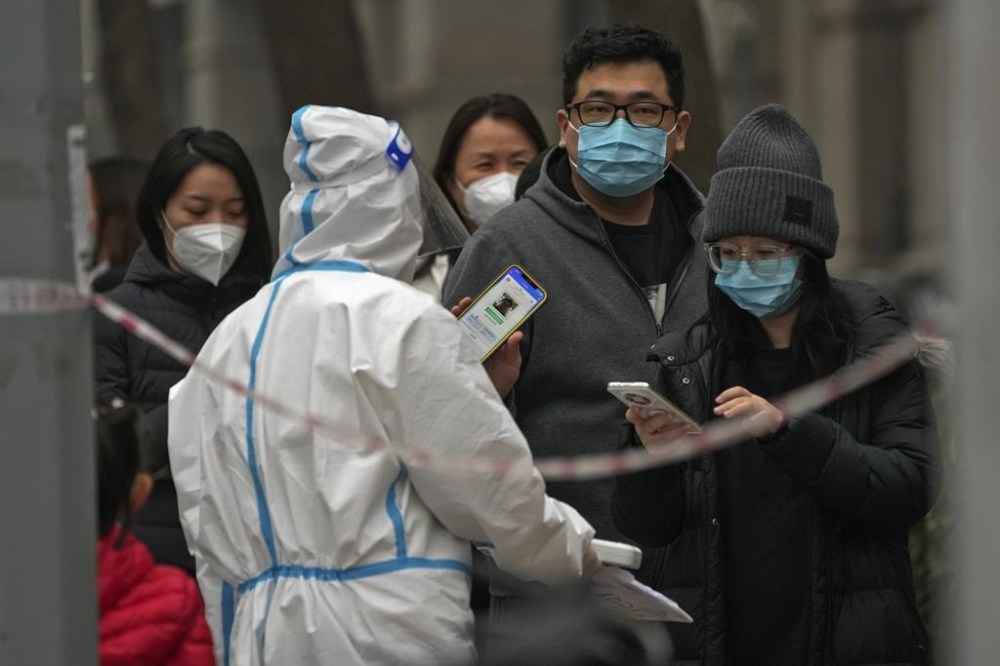
FILE - A man shows his health check QR code as he and others line up to get their routine COVID-19 throat swabs at a coronavirus testing site in Beijing, Thursday, Nov. 24, 2022. (AP Photo/Andy Wong, File)

TESTS AND QUARANTINE FOR INBOUND PASSENGERS

Inbound travelers need to take a PCR test before flying and quarantine in a hotel for five days and at home for three days upon arrival. That may seem strict, but prior to updated regulations earlier this month, travelers needed to take two PCR tests before flying and quarantine for seven days in a hotel and three days at home. Before that, the quarantine period was 14 days.

China also ended its “circuit breaker” policy of shutting down a flight for a week or two if a certain percentage of passengers aboard tested positive for COVID-19, with the length of the ban dependent upon how many had the virus.

ISOLATION ON DOMESTIC ROUTES

Travelers on domestic flights, trains or buses who are close contacts of someone with COVID-19 need to quarantine for five days at designated sites, plus three days at home. Prior to November changes, the quarantine time was longer and the close contacts of the person with close contact to someone with COVID-19 also needed to isolate. People who visited areas in China deemed “high-risk” also need to quarantine for seven days at home.

GREEN CODE

Inside China, individuals need to show their personal “green code” — indicating they are COVID-19-negative — when entering public places like shopping malls and restaurants, or when using public transit. Everyone must register with their identification papers, and the code is then displayed through a smartphone app. Staying “green” means not contracting COVID-19, not being a close contact of someone with the virus, and not visiting areas deemed to be a risk. If there is an outbreak in your area, local authorities may require regular testing to keep the code green. In Beijing at the moment, for example, residents must undergo a rapid coronavirus test at least every 48 hours at a government-approved facility.

WHO GOES INTO LOCKDOWN?

China has reacted quickly and decisively to any detection of COVID-19, and has locked down parts of, or entire cities. At the moment the central urban area of Chongqing, with about 10.3 million people, is on lockdown, as is part of Guangzhou.

The decision on what to lock down depends on the scale of the outbreak. Smaller lockdowns of buildings, building compound areas or city districts are common. Entire apartment building units are locked down if a single resident is found to have COVID-19, and people are not allowed to leave for at least five days. Food and other essential supplies can be ordered for delivery.
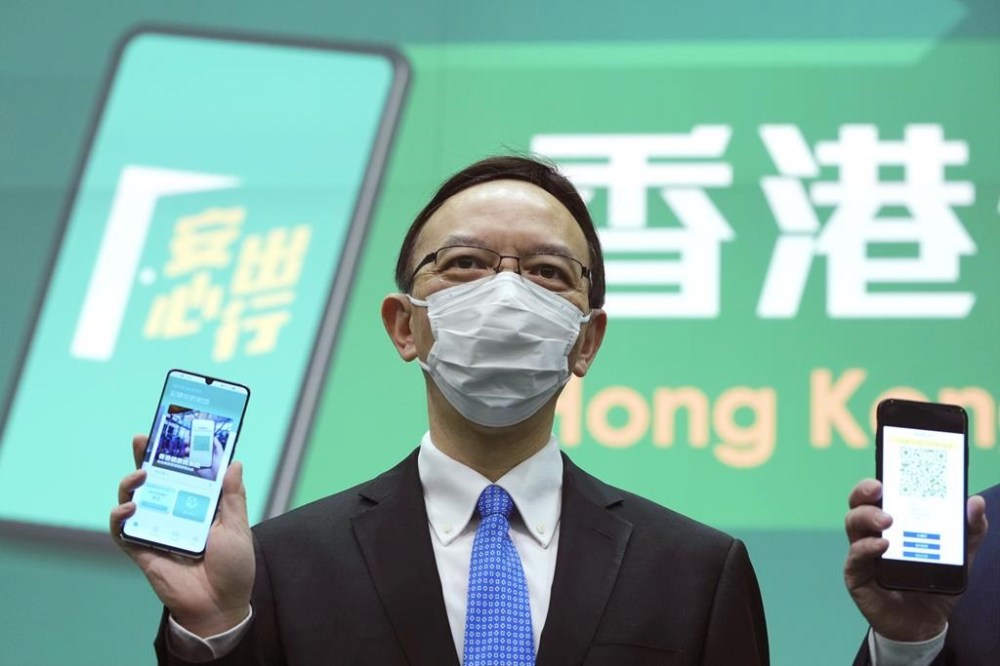
FILE - Government Chief Information Officer Victor Lam holds a mobile phone to unveil a new COVID-19 tracking health code mobile app during a news conference in Hong Kong, Thursday, Dec. 2, 2021. (AP Photo/Kin Cheung, File)

Similarly, office buildings are locked down if someone in the building tests positive for COVID-19 until the building can be disinfected, a process that usually takes several days.

OTHER RESTRICTIONS

China has in place many other regulations that would be familiar to most from the early months of the pandemic. Social distancing is encouraged, and people have to wear masks in public venues. In areas where there is believed to be a risk of transmission, there are restrictions on large gatherings, restaurants are closed for indoor dining, and enhanced disinfection measures are required at public venues.

Much like the bubble measures imposed for the 2022 Winter Olympics in Beijing, facilities where people are deemed most at risk, like nursing homes, have “closed-loop management” plans in place, under which workers live in their workplaces with no outside contacts.

___

AP news researchers Caroline Chen and Yu Bing contributed to this report.

Report Error Submit a Tip

More Stories

EXPLAINER: Why are China’s COVID rules so strict?

The Associated Press 5 minute read Preview

EXPLAINER: Why are China’s COVID rules so strict?

The Associated Press 5 minute read Tuesday, Nov. 29, 2022

BEIJING (AP) — At the outbreak of the COVID-19 pandemic, China set out its “zero-COVID” measures that were harsh, but not out of line with what many other countries were doing to try and contain the virus. While most other nations saw the health and safety regulations as temporary until vaccines were widely available, however, China has stuck steadfastly to its strategy.

Weary of the policy that has confined millions of people to their homes in an attempt to isolate every infection, and with an eye on the freedoms now enjoyed elsewhere around the world, protests have broken out around China in recent days.

Though some anti-virus restrictions have been eased in some places, the ruling Communist Party has affirmed its “zero-COVID” strategy. Here are some of the regulations:

TESTS AND QUARANTINE FOR INBOUND PASSENGERS

Read
Tuesday, Nov. 29, 2022

Changing Transit Plus drivers’ status a ‘ridiculous anti-worker provision,’ councillor says

Joyanne Pursaga 5 minute read Preview

Changing Transit Plus drivers’ status a ‘ridiculous anti-worker provision,’ councillor says

Joyanne Pursaga 5 minute read Tuesday, Sep. 22, 2026

Some fear a change of status for Winnipeg Transit Plus drivers could allow them to be paid less and receive fewer benefits.

However, council’s public works chairwoman said pay protections are now embedded in contracts and the change is needed to attract enough workers.

Three years ago, city council passed a motion that required Winnipeg Transit Plus drivers to be employees of companies the city hires to provide accessible transit service.

Coun. Brian Mayes said that clause prevents “sub-minimum wages” from being permitted for subcontracted drivers and ensures drivers can access multiple benefits.

Read
Tuesday, Sep. 22, 2026

Mayor introduces charter change motion to remove council members charged with crimes

Joyanne Pursaga 5 minute read Preview

Mayor introduces charter change motion to remove council members charged with crimes

Joyanne Pursaga 5 minute read Updated: 6:11 PM CDT

Mayor Scott Gillingham is urging council to move forward with his plan to force a paid leave of absence on elected civic officials charged with criminal offence.

The mayor introduced a new “notice of motion” at Thursday’s city council meeting that calls on the province to change the City of Winnipeg Charter to allow the process, days after Transcona Coun. Russ Wyatt registered to run for re-election despite facing sexual assault charges.

“This is about the electorate, the people of the City of Winnipeg who elect members of council, the mayor, to public office, to serve them. There should be no distraction, there should be confidence and public trust that people of Winnipeg can have for their elected officials,” said Gillingham.

Union leaders, the mayor and some councillors have publicly urged Wyatt to step aside from his council role to deal with the charges.

Read
Updated: 6:11 PM CDT

‘Anti-worker’ status change for Winnipeg Transit Plus drivers voted down

Joyanne Pursaga 2 minute read Preview

‘Anti-worker’ status change for Winnipeg Transit Plus drivers voted down

Joyanne Pursaga 2 minute read 3:10 PM CDT

A controversial change of status for Winnipeg Transit Plus drivers, which some feared could leave them with lower pay and fewer benefits, has been rejected.

On Thursday, Coun. Janice Lukes (Waverley West) raised a successful motion that called for the changes to be “received as information,” which means the city will not act on them.

Coun. Brian Mayes (St. Vital), mayoral candidate Kevin Klein and the Amalgamated Transit Union Local 1505 had all urged city councillors to reject the changes.

Mayes deemed the proposal a “ridiculous anti-worker provision.” It would have repealed a 2023 council decision that required Transit Plus drivers to be employees of companies the city hires to provide accessible transit service.

Read
3:10 PM CDT

Winnipeg's civil war: The battles waged in the General Strike continue today

Jessica Botelho-Urbanski 26 minute read Preview

Winnipeg's civil war: The battles waged in the General Strike continue today

Jessica Botelho-Urbanski 26 minute read Monday, May. 13, 2019

At about 2:20 p.m. on June 21, 1919, a lone streetcar rattled down Main Street toward Portage Avenue with a few passengers aboard.

There was nothing to suggest it would trigger events leading to monumental social and legal changes for generations to come in Winnipeg and well beyond its borders.

A horde descended to block the streetcar’s path. In their anger, they rocked it off its tracks and set it aflame.

A century later, the indelible image is a part of the city’s DNA; the defining moment of the Winnipeg General Strike, the greatest labour movement in Canadian history.

Read
Monday, May. 13, 2019

If you feel stuck on repeat, reach out for advice

Maureen Scurfield 5 minute read Yesterday at 2:01 AM CDT

DEAR MISS LONELYHEARTS: My ex-mother-in-law and I ran into each other at a political do and had a great old time. I like her much better now than when I was married to her daughter. But she enjoyed mentioning that her daughter is now much happier in her new marriage to someone other than me. That’s rude, but I was actually happy to hear it.

Then she had the nerve to ask me if I felt better-suited to my new wife, and I said, “No, because she’s a lot like your daughter.” That was an awful thing for me to finally realize fully, and in front of my ex-mother-in-law.

Is it true people keep marrying the same type of person over and over again, and just keep trying to do better each time?

— Lying Awake, Tuxedo