Virus lockdowns hit China economic powerhouse Guangzhou

Advertisement

Advertise with us

BEIJING (AP) — A surge in COVID-19 cases has spurred lockdowns in the southern Chinese manufacturing hub of Guangzhou, adding to financial pressure that has disrupted global supply chains and sharply slowed growth in the world’s second-largest economy.

Read this article for free:


By clicking the button above, an account will be created and you will begin to receive some of our recommended newsletters. You may opt out of any newsletter by visiting your Email and Communication Preferences page or by clicking "unsubscribe" at the bottom of any email.

or

Already have an account? Log in here »

To continue reading, please subscribe:

Digital Subscription

One year of digital access for only $1.44 a week*

  • Enjoy unlimited reading on winnipegfreepress.com
  • Read the E-Edition, our digital replica newspaper
  • Access News Break, our award-winning app
  • Play interactive puzzles

*Billed as $5.77 plus GST every four weeks. After 52 weeks, price increases to the regular rate of $19.95 plus GST every four weeks. Offer available to new and qualified returning subscribers only. Cancel any time.

To continue reading, please subscribe:

Add Free Press access to your Brandon Sun subscription for only an additional

$1 for the first 4 weeks*

  • Enjoy unlimited reading on winnipegfreepress.com
  • Read the E-Edition, our digital replica newspaper
  • Access News Break, our award-winning app
  • Play interactive puzzles
Start now

*Your next Brandon Sun subscription payment will increase by $1.00 and you will be charged $17.95 plus GST for four weeks. After four weeks, your payment will increase to $24.95 plus GST every four weeks.

Hey there, time traveller!
This article was published 09/11/2022 (1451 days ago), so information in it may no longer be current.

BEIJING (AP) — A surge in COVID-19 cases has spurred lockdowns in the southern Chinese manufacturing hub of Guangzhou, adding to financial pressure that has disrupted global supply chains and sharply slowed growth in the world’s second-largest economy.

Residents in districts encompassing almost 5 million people have been ordered to stay home at least through Sunday, with one member of each family allowed out once per day to purchase necessities, local authorities said Wednesday.

The order came after the densely populated city of 13 million reported more than 2,500 new cases over the previous 24 hours. Public transport has been suspended and classes halted across much of Guangzhou, while flights to Beijing and other major cities have been canceled, according to state media.
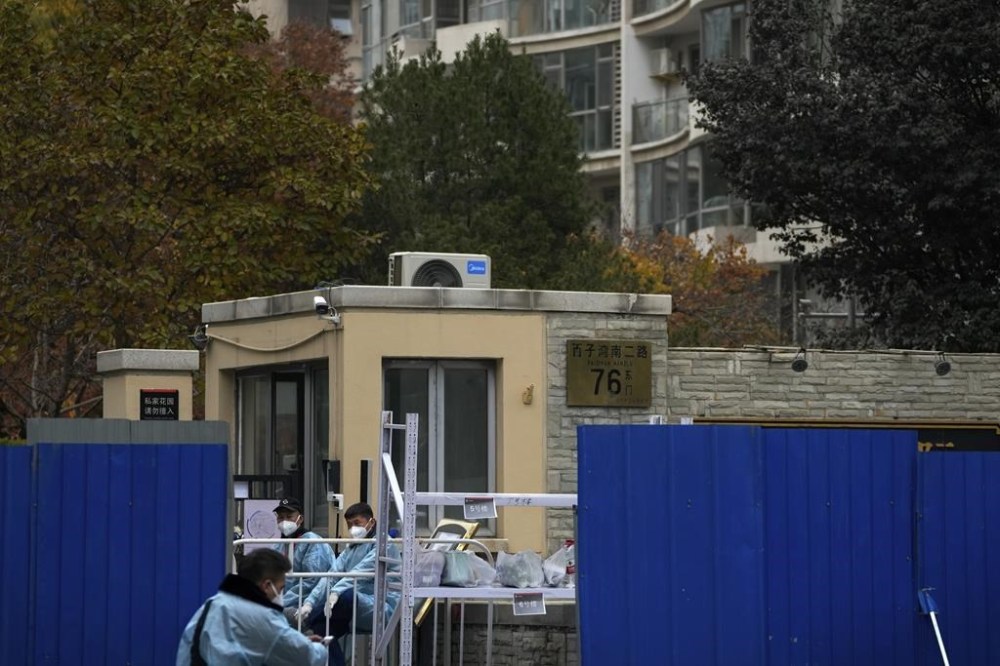
Workers in protective clothing keep watch at a barricaded neighborhood locked down area for health monitoring following a COVID-19 case detected in Beijing, Wednesday, Nov. 9, 2022. Authorities are trying to restore a sense of normalcy while sticking to a
Workers in protective clothing keep watch at a barricaded neighborhood locked down area for health monitoring following a COVID-19 case detected in Beijing, Wednesday, Nov. 9, 2022. Authorities are trying to restore a sense of normalcy while sticking to a "zero-COVID" strategy that locks down neighborhoods when any virus cases are found and quarantines everyone arriving from overseas in hotels for seven to 10 days. (AP Photo/Andy Wong)

China has retained its strict “zero-COVID” policy despite relatively low case numbers and no new deaths.

The country’s borders remain largely closed and internal travel and trade is fraught with ever-changing quarantine regulations.

The tight restrictions have sparked occasional clashes between residents and local Communist Party officials, who are threatened with punishment if reported cases in their areas of jurisdiction climb above levels deemed acceptable.

The party under the leadership of President Xi Jinping has dismissed calls from the United Nations’ World Health Organization to ease regulations, refused to import foreign vaccines and defied requests to release more information about the source of the virus, which was first detected in the central Chinese city of Wuhan in late 2019.
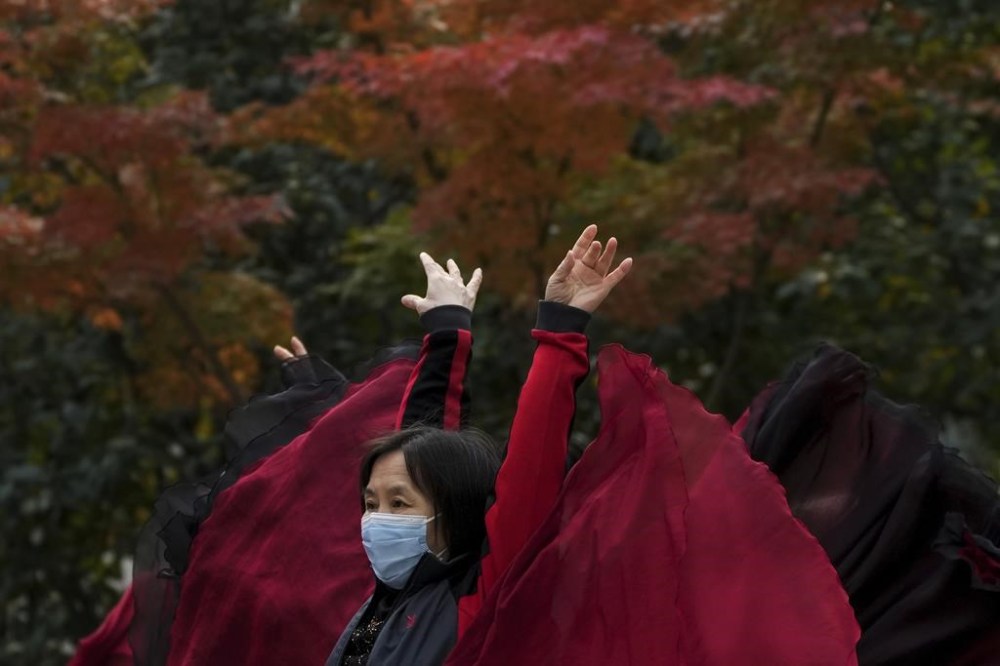
A woman wearing a face mask takes part in a dance at a public park in Beijing, Wednesday, Nov. 9, 2022. (AP Photo/Andy Wong)
Report Error Submit a Tip

More Stories

Waiting for Cormier verdict the ‘calm before the storm’

Katie May 6 minute read Preview

Waiting for Cormier verdict the ‘calm before the storm’

Katie May 6 minute read Thursday, Feb. 22, 2018

As the jury room door closed behind the seven women and four men who are now deliberating on the evidence against Tina Fontaine’s accused killer, Thelma Favel rose from the chair she’s occupied for most of Raymond Cormier’s second-degree murder trial.

Almost every day over the past three weeks, Favel, the woman who raised 15-year-old Tina, has sat right up front, directly across from the jury box, listening, sobbing and soaking in disturbing details of the teen’s last days that have come to light over the course of Cormier’s second-degree murder trial.

On Wednesday afternoon, after Court of Queen’s Bench Chief Justice Glenn Joyal instructed the jury and sent them off to be sequestered until they decide whether 56-year-old Raymond Cormier is guilty of killing Tina, Favel got up and hugged Crown prosecutor Breta Passler. It was one of many moments, this one shielded from jurors, that have long since proven the emotional impact of the case and the lasting power of Tina’s legacy.

Tina’s death sparked a public outcry that renewed calls for a national inquiry into disproportionately high rates of missing and murdered Indigenous women and girls across Canada, and the criminal trial for the man accused of killing her hasn’t happened in a vacuum.

Read
Thursday, Feb. 22, 2018

Building healthier Canadians

Jason M. Sutherland 4 minute read 2:00 AM CDT

Ottawa is betting that billions of taxpayer dollars spent on steel, asphalt and concrete will secure Canada’s economic future and prosperity. Through the $51 billion Build Communities Strong fund, the federal government is paying for roads, bridges, water systems and transit to boost productivity and attract capital from Europe and Asia.

As the shovels hit the ground from Halifax to Vancouver, Canadians should be asking themselves: What good does it do to build a stronger country if we are not building healthier Canadians?

The fund’s $5 billion allocation for health infrastructure is welcome news, as many of our hospitals and long-term care homes across the country are showing severe signs of aging, and modern care centres are much needed. But pouring concrete for new facilities is not the same as building a healthy population.

A ribbon-cutting at a modern hospital does not guarantee you see a family doctor when you need one, keep a rural emergency department open overnight, or shorten the wait for a knee replacement keeping someone off the job or robbing a retiree of independence.

Kinew will listen to city request for new taxes — but no promises

Nicole Buffie 5 minute read Preview

Kinew will listen to city request for new taxes — but no promises

Nicole Buffie 5 minute read Friday, Nov. 1, 2024

Premier Wab Kinew remained coy about whether he would support a new municipal tax in Winnipeg as the city struggles to maintain services.

Kinew dodged questions on the matter Friday afternoon.

“We want to see services strong, we want to see roads getting fixed,” Kinew said. “Affordability is really top of mind … we got to keep life affordable for the average person out there.”

Some of the items being considered for a new tax are: alcohol, online deliveries, vehicle registration, vacant homes, commercial parking and land transfers with an exemption for first-time homebuyers.

Read
Friday, Nov. 1, 2024

Regulator urged to force MPI to lower rates, tackle claims costs

Nicole Buffie 4 minute read Preview

Regulator urged to force MPI to lower rates, tackle claims costs

Nicole Buffie 4 minute read Updated: 5:01 PM CDT

A citizen-led coalition has urged the Public Utilities Board to order Manitoba Public Insurance to lower its rates, which it says would force the Crown corporation to tackle rising claims costs.

The Consumers Coalition described MPI as “risk-averse,” at a hearing this week to discuss its application for a rate increase.

“The last three (general rate applications) have demonstrated that the corporation is running out of ideas and tools to mitigate rate increases and are executing a strategic plan grounded in their legacy business model,” said Katrine Dilay, a lawyer for the Public Interest Law Centre who spoke on behalf of the coalition.

Dilay said the coalition believes MPI is riding out the cost pressures and passing them on to ratepayers rather than preparing for the future.

Read
Updated: 5:01 PM CDT

Wife’s witchy wonderment won’t spell trouble

Maureen Scurfield 6 minute read 2:00 AM CDT

DEAR MISS LONELYHEARTS: My wife believes in magic potions, which used to make me laugh. But since Halloween season started this year, she’s been acting in a way that frightens me. She seems to think she’s a modern-day “witch.” Give me a break!

Now she has three friends who think they are really casting spells when they get together! And this year on Halloween night she’s being formally accepted into their little witchy group meeting at one of their homes, and is getting a new sorceress name. It’s creepy! How do I cope? I’ve had enough of this.

— Seriously Upset, South St. Vital

Dear Upset: Don’t buy into the hocus pocus by being afraid of it and expressing any trepidation to your wife. She needs you to be strong, so she knows she has a solid anchor and can drop out of this witchy group if it becomes too scary or silly for her.

Meteorologist behind Rob’s Obs is moving weather station to Ontario

Ben Waldman 7 minute read Preview

Meteorologist behind Rob’s Obs is moving weather station to Ontario

Ben Waldman 7 minute read Monday, Jun. 13, 2022

In a Winnipeg winter, there are always at least two certainties: it will be cold, and it will snow. A third certainty: the people will talk endlessly about how frigid the temperature is, and argue about how much snow is cloaking their driveways. Is it colder than it ever has been? Is there more snow today than the same time last year?

Rob Paola likely knows the answers to those questions.

Paola possesses no super powers. He is but a man with a metre stick and 40 years of professional meteorological experience, in the midst of a lifelong love affair with Mother Nature, a most turbulent mistress who rarely, if ever, reciprocates.

Each year when snow begins to fall, Paola heads outside his Charleswood home to figure out how much. He sticks his ruler in the ground, grabs his clipboard, and clicks his pen. In neat script, he records the temperature, what time precipitation began, how deep the powder is stacked. Then, he shares his data and insights online with thousands of followers who want a clear answer to the eternal questions: Why is this happening? When will it stop? How much snow has fallen in the city of Winnipeg?

Read
Monday, Jun. 13, 2022