Provinces and territories need details on federal money for health care: minister

Advertisement

Advertise with us

VANCOUVER - Canada's health ministers are hoping for "serious engagement" by the federal government after an announcement that it's ready to increase funding for health care, British Columbia's health minister says.

Read this article for free:


By clicking the button above, an account will be created and you will begin to receive some of our recommended newsletters. You may opt out of any newsletter by visiting your Email and Communication Preferences page or by clicking "unsubscribe" at the bottom of any email.

or

Already have an account? Log in here »

To continue reading, please subscribe:

Digital Subscription

One year of digital access for only $1.44 a week*

  • Enjoy unlimited reading on winnipegfreepress.com
  • Read the E-Edition, our digital replica newspaper
  • Access News Break, our award-winning app
  • Play interactive puzzles

*Billed as $5.77 plus GST every four weeks. After 52 weeks, price increases to the regular rate of $19.95 plus GST every four weeks. Offer available to new and qualified returning subscribers only. Cancel any time.

To continue reading, please subscribe:

Add Free Press access to your Brandon Sun subscription for only an additional

$1 for the first 4 weeks*

  • Enjoy unlimited reading on winnipegfreepress.com
  • Read the E-Edition, our digital replica newspaper
  • Access News Break, our award-winning app
  • Play interactive puzzles
Start now

*Your next Brandon Sun subscription payment will increase by $1.00 and you will be charged $17.95 plus GST for four weeks. After four weeks, your payment will increase to $24.95 plus GST every four weeks.

Hey there, time traveller!
This article was published 07/11/2022 (1455 days ago), so information in it may no longer be current.

VANCOUVER – Canada’s health ministers are hoping for “serious engagement” by the federal government after an announcement that it’s ready to increase funding for health care, British Columbia’s health minister says.

Adrian Dix, who is hosting a two-day meeting of his counterparts, said positive comments by the prime minister and the federal health minister earlier Monday are good news after nearly a year of “radio silence” on money matters.

However, federal Health Minister Jean-Yves Duclos provided no specifics about whether provinces and territories would get what they’re asking for — a hike to 35 per cent of funding, from the current 22 per cent, through the Canada Health Transfer.
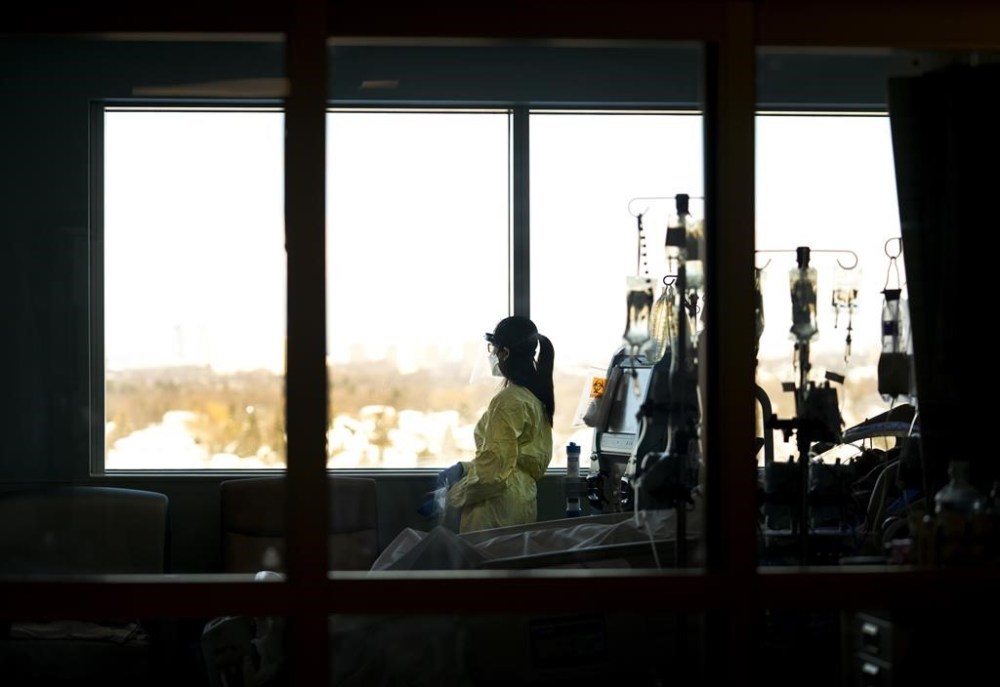
A registered nurse takes a moment to look outside while attending to a ventilated COVID-19 patient in the intensive care unit at the Humber River Hospital, in Toronto, Jan. 25, 2022. Canada's health ministers are set to meet in British Columbia this week, four months after premiers from across the country converged on Victoria to show a united front of frustration over what they called a
A registered nurse takes a moment to look outside while attending to a ventilated COVID-19 patient in the intensive care unit at the Humber River Hospital, in Toronto, Jan. 25, 2022. Canada's health ministers are set to meet in British Columbia this week, four months after premiers from across the country converged on Victoria to show a united front of frustration over what they called a "crumbling" health-care system. THE CANADIAN PRESS/Nathan Denette

Duclos said before the ministers held a news conference that the jurisdictions must commit to expanding the use of common key health indicators and to building a “world-class” health data system for the country.

Prime Minister Justin Trudeau said earlier in Montreal that the government has committed to investing “significantly more” in health care, but it wants assurances that Canadians have access to a family doctor and to mental health services.

Dix said health ministers would be asking Duclos for details on funding when they meet with him Tuesday.

“I prefer to take a positive view of the remarks by both the prime minister and the federal health minister, but also to say that the provinces are united in our response and also united in the dramatic expenditures that we are making right now to address the current and future health human resources in the country,” he said.

“We’re delivering resources to the front lines, and I hope the federal government is going to support us in delivering even more.”

Dix said given what the territories and provinces have been through with the pandemic, a national conference is needed on the health transfer, the federal money doled out to all jurisdictions, to reach a funding agreement.

The promise of such a gathering was made by Trudeau in 2015 when he formed government, Dix said.

The current strain on the health-care system demands urgency because “this is going to be a difficult winter,” he said, referring to an expected spike in respiratory illnesses “including but not limited to COVID-19.”

All provinces and territories have forged ahead with changes to try and secure more health professionals, but they face significant challenges without more funding, he said during a break from the first in-person meetings of health ministers since 2018.

“It is unprecedented, the degree of action in systems that have already faced two years of some of the most profound pressure,” he said, adding every jurisdiction has been in a state of crisis.

However, Dix declined to say whether he and his counterparts would agree to any conditions before a funding boost.
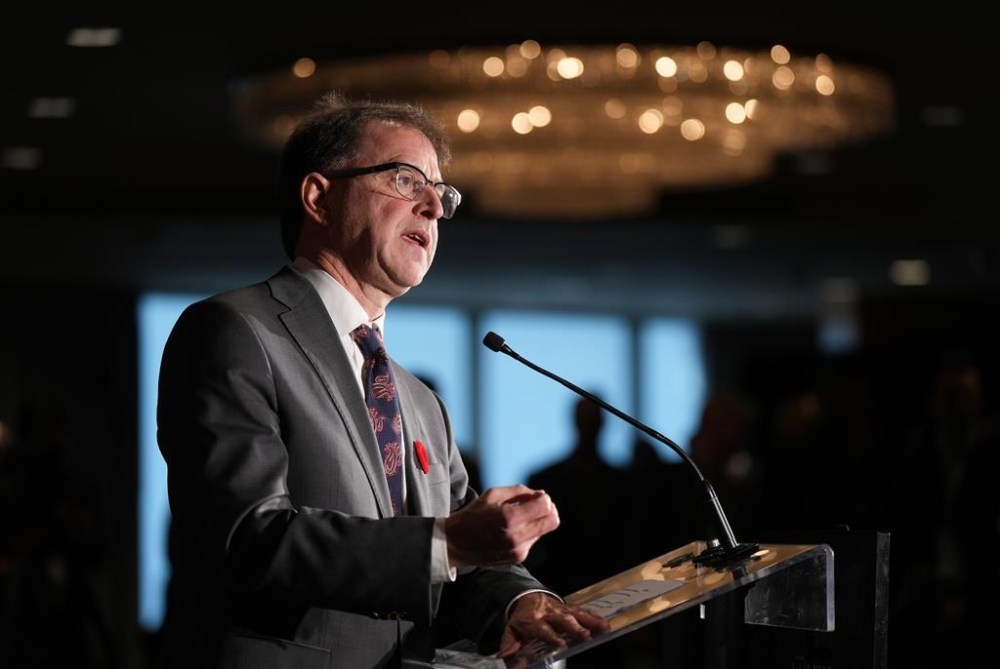
B.C. Health Minister Adrian Dix responds to questions during a news conference with his provincial counterparts after the first of two days of meetings, in Vancouver, on Monday, November 7, 2022. THE CANADIAN PRESS/Darryl Dyck

The federal government provided a total of $2 billion to all jurisdictions in July in order to reduce backlogs of surgeries and other procedures during the pandemic.

It said the one-time top-up would build on the $45 billion provinces and territories will receive this year through the Canada Health Transfer, which increases by about three per cent a year, down from a high of six per cent.

Along with that infusion of cash, the federal government has also struck decade-long bilateral deals with every jurisdiction, with a total of $11 billion specifically targeted to improve home care and mental health, along with performance objectives that would have to be met.

Dr. Alika Lafontaine, president of the Canadian Medical Association, said he’s glad more money will be going to provinces and territories to make a difference for patients, but he too was waiting for details on the expected hike in funding.

It’s important for all the health ministers to come to an agreement for the sake of the country’s health-care system and rising costs, said Lafontaine, an anesthesiologist in Grand Prairie, Alta.

“The pressures are so heavy on systems right now that we don’t have a choice but to accept and move forward together. The real question is, is it going to happen right now or is it going to happen weeks or months from now?” he said.

“I think what’s really concerning for patients and providers is that it will take longer than it needs to because we can’t lean in and actually work out these things right now.”

This report by The Canadian Press was first published Nov. 7, 2022.

Report Error Submit a Tip

More Stories

Province’s first female dentist took skill, insight wherever needed

David Sanderson    25 minute read Preview

Province’s first female dentist took skill, insight wherever needed

David Sanderson    25 minute read Saturday, Apr. 3, 2021

Some stories take longer to get around to than others.

In the fall of 2011 I hooked up with Fiona Odlum at an Academy Road Starbucks for a lighthearted feature about people who report on traffic for a living. Odlum, currently a contributor at CBC Saskatchewan, was working for 680 CJOB at the time, clueing rush-hour commuters in on stalls, lane closures and fender-benders they’d be wise to avoid.

Odlum turned the tables at one point by asking a few questions of her own including, “So, what’s your main beat?”

I don’t really have one, I told her, but if pressed, I would probably go with human-interest pieces.

Read
Saturday, Apr. 3, 2021

Fact Check

1 minute read Thursday, Nov. 30, 2023

Fact Check

Having problems with the form?Contact Us Directly |

The new normal in Canadian politics

David McLaughlin 5 minute read Preview

The new normal in Canadian politics

David McLaughlin 5 minute read 2:01 AM CDT

“Nothing happening, all at once.”

Welcome to the new normal of Canadian politics, where normality is the new normal. Routine and stable are in; disruptive and excessive are out. Exhibits A and B are the Alberta referendum and the British Columbia election. Voters opted for stability over volatility.

The opposite of being normal is being different from the norm. In politics that means different from where we’ve been and what we’ve come to expect. Two competing trends have dominated our politics for the past decade and a half — progressivism and populism. Think Justin Trudeau and liberal, progressive identity politics in Canada, and Donald Trump and conservative, populist MAGA politics in America. We are now experiencing a swing away from both those trends.

Representing this “new normal” are Prime Minister Mark Carney, for one, and newly elected British Columbia premier, Lorne Doerksen, for another. Both are considered normal because they talk and act like adults in a childish political world. Their political flair is to not have any political flair. They stand out for not standing out.

Read
2:01 AM CDT

Court ruling concludes Canadian Wheat Board saga

Laura Rance-Unger 4 minute read Preview

Court ruling concludes Canadian Wheat Board saga

Laura Rance-Unger 4 minute read 2:01 AM CDT

It remains to be seen whether the recent court ruling in a lawsuit filed after Canadian Wheat Board’s dissolution in 2012 puts the whole debate to rest, as some no doubt hope.

But either way, the dust has settled on the post-CWB world. The sun still rises and a new generation of farmers on the land only knows by name an institution that for generations influenced every aspect of Prairie grain farming.

The first Rural Revival column I wrote for this newspaper more than 30 years ago was about a thousand farmers from Western Canada demonstrating in support of the Wheat Board. It was in the aftermath of the Western Grain Marketing Panel report, one of several efforts that eventually included a plebiscite to help the federal government decide what to do about a vocal minority of farmers who wanted marketing “freedom.”

The polls at the time suggested about two-thirds of farmers were comfortable enough with the single-desk system for food wheat and barley to keep it around. It served as a counterbalance to canola, which they sold on the open market. They essentially had a dual market.

Read
2:01 AM CDT

Provincial budget fails to chart new course

Editorial 4 minute read Preview

Provincial budget fails to chart new course

Editorial 4 minute read Wednesday, Apr. 13, 2022

If the 2022 Manitoba budget was intended to provide a lifeline for the Progressive Conservative government, it must surely be considered a failure.

Prior to the budget’s release, Premier Heather Stefanson and her government were teetering on the edge of the political abyss. Manitobans are profoundly unhappy with the government’s performance on most issues, including pandemic management. National polls show Ms. Stefanson is Canada’s least popular premier.

That political context made this budget a high-priority project for the Tories. It was, simply put, their best chance to shed the lingering burden left by former premier Brian Pallister, and rebuild the party brand under a new leader.

Unfortunately, Ms. Stefanson’s first budget remains shackled to the deeply flawed fiscal and political logic that defined the Pallister years. And no single budgetary measure embodies that failure more than the premier’s decision to continue cutting education property taxes.

Read
Wednesday, Apr. 13, 2022

Human rights museum responds to reopening backlash

Julia-Simone Rutgers 4 minute read Preview

Human rights museum responds to reopening backlash

Julia-Simone Rutgers 4 minute read Thursday, Jul. 29, 2021

The Canadian Museum for Human Rights reopened to fully vaccinated members of the public this week, drawing cries of discrimination from those who have chosen not to get vaccinated against COVID-19.

While the some of the backlash has been “disturbing,” museum CEO Isha Khan said the conflict has opened room for a conversation about human rights during the pandemic.

“We made the decision to open in compliance with that law, really because we’re a public institution and we saw it as our responsibility to open as soon as we could to the public — within the restrictions as they currently are,” Khan said Thursday.

“But it’s really important to us, as the Canadian Museum for Human Rights we have a mandate for human rights education, that we’re trying to ground the conversation in human rights principles.”

Read
Thursday, Jul. 29, 2021