US declares public health emergency over monkeypox outbreak

Advertisement

Advertise with us

WASHINGTON (AP) — The federal government declared a public health emergency Thursday to bolster the response to the monkeypoxoutbreak that has infected more than 7,100 Americans.

Read this article for free:


or

Already have an account? Log in here »

To continue reading, please subscribe:

Subscribe and receive a limited-edition Free Press branded hat or tote.

Digital Subscription

One year of digital access for only $205*

  • Enjoy unlimited reading on winnipegfreepress.com
  • Read the E-Edition, our digital replica newspaper
  • Access News Break, our award-winning app
  • Play interactive puzzles

*First annual payment billed as $205.00 + GST for one year. This annual subscription will automatically renew at $233.00 + GST every 52 weeks (10% off the regular annual price of $259.35). Offer available to new and qualified returning subscribers only. Cancel any time.

To continue reading, please subscribe:

Add Free Press access to your Brandon Sun subscription for only an additional

$1 for the first 4 weeks*

  • Enjoy unlimited reading on winnipegfreepress.com
  • Read the E-Edition, our digital replica newspaper
  • Access News Break, our award-winning app
  • Play interactive puzzles
Start now

*Your next Brandon Sun subscription payment will increase by $1.00 and you will be charged $17.95 plus GST for four weeks. After four weeks, your payment will increase to $24.95 plus GST every four weeks.

Hey there, time traveller!
This article was published 04/08/2022 (1526 days ago), so information in it may no longer be current.

WASHINGTON (AP) — The federal government declared a public health emergency Thursday to bolster the response to the monkeypoxoutbreak that has infected more than 7,100 Americans.

The announcement will free up money and other resources to fight the virus, which may cause fever, body aches, chills, fatigue and pimple-like bumps on many parts of the body.

“We are prepared to take our response to the next level in addressing this virus, and we urge every American to take monkeypox seriously,” said Xavier Becerra, head of the U.S. Department of Health and Human Services.
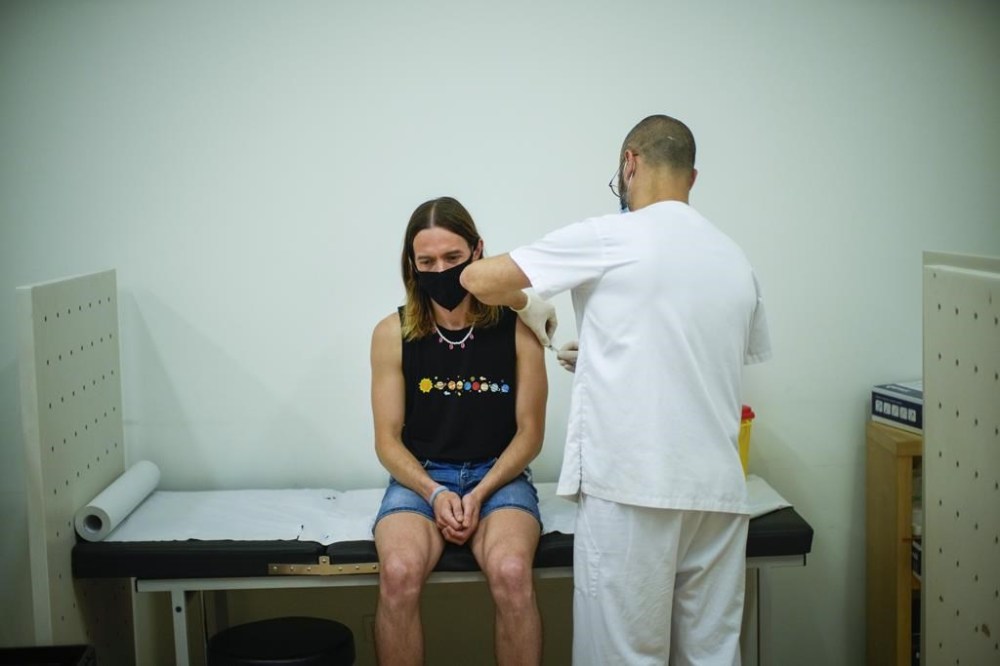
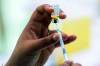
FILE - Daniel Rofin, 41, receives a vaccine against Monkeypox from a health professional in medical center in Barcelona, Spain, Tuesday, July 26, 2022. Public health officials warn that moves by rich countries to buy large quantities of monkeypox vaccine, while declining to share doses with Africa, could leave millions of people unprotected against a more dangerous version of the disease and risk continued spillovers of the virus into humans. (AP Photo/Francisco Seco, File)

The declaration by HHS comes as the Biden administration has faced criticism over monkeypox vaccine availability. Clinics in major cities such as New York and San Francisco say they haven’t received enough of the two-shot vaccine to meet demand, and some have had to stop offering the second dose to ensure supply of first doses.

The White House said it has made more than 1.1 million doses available and has helped to boost domestic diagnostic capacity to 80,000 tests per week.

The monkeypox virus spreads through prolonged skin-to-skin contact, including hugging, cuddling and kissing, as well as sharing bedding, towels and clothing. The people who have gotten sick so far have been primarily men who have sex with men. But health officials emphasize that the virus can infect anyone.

No one in the United States has died. A few deaths have been reported in other countries.

Earlier this week, the Biden administration named top officials from the Federal Emergency Management Agency and the Centers for Disease Control and Prevention to serve as the White House coordinators to combat monkeypox.

Thursday’s declaration is an important — and overdue — step, said Lawrence Gostin, a public health law expert at Georgetown University.

“It signals the U.S. government’s seriousness and purpose, and sounds a global alarm,” he said.

Under the declaration, HHS can draw from emergency funds, hire or reassign staff to deal with the outbreak and take other steps to control the virus.

For example, the announcement should help the federal government to seek more information from state and local health officials about who is becoming infected and who is being vaccinated. That information can be used to better understand how the outbreak is unfolding and how well the vaccine works.

Gostin said the U.S. government has been too cautious and should have declared a nationwide emergency earlier. Public health measures to control outbreaks have increasingly faced legal challenges in recent years, but Gostin didn’t expect that to happen with monkeypox.

“It is a textbook case of a public health emergency,” Gostin said. “It’s not a red or a blue state issue. There is no political opposition to fighting monkeypox.”

A public health emergency can be extended, similar to what happened during the COVID-19 pandemic, he noted.

The urgency in the current response stems from the rapid spread of the virus coupled with the limited availability of the two-dose vaccine called Jynneos, which is considered the main medical weapon against the disease.

The doses, given 28 days apart, are currently being given to people soon after they think they were exposed, as a measure to prevent symptoms.

Becerra announced the emergency declaration during a call with reporters. During the call, Food and Drug Administration Commissioner Robert Califf said regulators are reviewing an approach that would stretch supplies by allowing health professionals to vaccinate up to five people — instead of one — with each vial of Jynneos.

Under this so-called “dose-sparing” approach, physicians and others would use a shallower injection under the skin, instead of the subcutaneous injection currently recommended in the vaccine’s labeling.
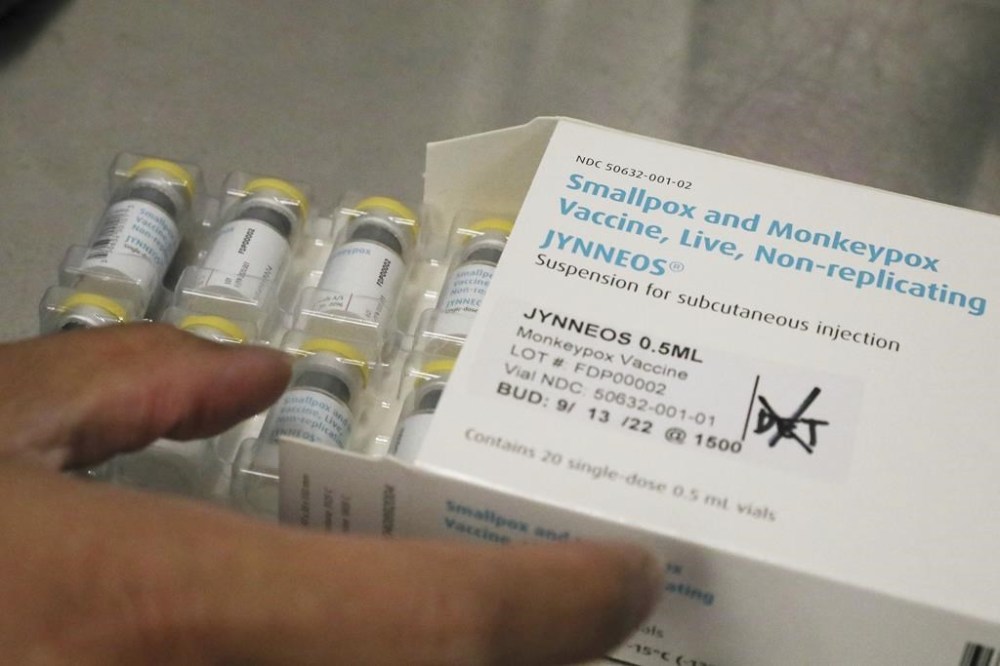
FILE - Jonathan Parducho, a pharmacist, removes a tray of vials of of the Jynneos vaccine for monkeypox from a box containing 20 doses, in the vaccine hub at Zuckerberg San Francisco General Hospital, July 29, 2022, in San Francisco. The U.S. will declare a public health emergency to bolster the federal response to the outbreak of monkeypox that already has infected more than 6,600 Americans. That's according to two people familiar with the matter said. (Lea Suzuki/San Francisco Chronicle via AP)

Califf said a decision authorizing that approach could come “within days.”

That would require another declaration, to allow the government to alter its guidelines on how to administer the vaccine, officials said.

Health officials pointed to a study published in 2015 that found that Jynneos vaccine administered that way was as effective at stimulating the immune system as when the needle plunger deeper into other tissue.

But experts also have acknowledged they are still gathering information on how well the conventional administration of one or two full doses works against the outbreak.

Others health organizations have made declarations similar to the one issued by HHS.

Last week, the World Health Organization called monkeypox a public health emergency, with cases in more than 70 countries. A global emergency is WHO’s highest level of alert, but the designation does not necessarily mean a disease is particularly transmissible or lethal.

California, Illinois and New York have all made declarations in the last week, as have New York City, San Francisco and San Diego County.

The declaration of a national public health emergency and the naming of a monkeypox czar are “symbolic actions,” said Gregg Gonsalves, a Yale University infectious diseases expert.

What’s important is that the government is taking the necessary steps to control the outbreak and — if it comes to that — to have a plan for how to deal with monkeypox if it becomes endemic, he said.

Monkeypox is endemic in parts of Africa, where people have been infected through bites from rodents or small animals. It does not usually spread easily among people.

But in May, a wave of unexpected cases began emerging in Europe and the United States. Now more than 26,000 cases have been reported in countries that traditionally have not seen monkeypox.

___

Stobbe reported from New York City. Associated Press Health Writer Matthew Perrone contributed to this report.

Report Error Submit a Tip

More Stories

Alzheimer’s has sent my mother back in time

Pam Frampton 5 minute read Preview

Alzheimer’s has sent my mother back in time

Pam Frampton 5 minute read Yesterday at 2:01 AM CDT

My mother does a lot of time-travelling — time-shifting, the Alzheimer’s Society calls it.

I wonder how it feels to be in the present at one moment and then suddenly catapulted deep into the past. Is it a jolting experience or a smooth transition to go back and forth in time?

Mom will never be able to tell me. There is so much she can never tell me now.

She can still recite her children’s names when prompted, but she doesn’t ask us about our lives. Instead, she talks about her younger siblings, their grandfather who was hard of hearing, the isolated place where they used to live whose inhabitants were resettled nearly 60 years ago.

Read
Yesterday at 2:01 AM CDT

More time at work is not always more productive work

Tory McNally 5 minute read Preview

More time at work is not always more productive work

Tory McNally 5 minute read Saturday, May. 2, 2026

There is a quiet assumption built into many workplaces that more time equals more value.

The employee who answers emails late into the evening is seen as committed. The manager who skips lunch and powers through 12-hour days is admired for their work ethic. The team that keeps stretching to absorb one more vacancy, one more project, one more urgent ask is praised for stepping up.

It feels productive. It looks productive. But often, it is not.

Canada’s productivity conversation has increasingly focused on a simple but important measure: output per hour worked. In other words, what are we actually producing for the time we are putting in?

Read
Saturday, May. 2, 2026

Time for true count of COVID-related deaths

Dan Lett 5 minute read Preview

Time for true count of COVID-related deaths

Dan Lett 5 minute read Thursday, May. 5, 2022

It has often been said the first step in solving a problem is to admit you have one. If that’s true, governments around the world are moving further and further away from finding a solution to the challenge of global pandemics.

How can we both assess the response to date and plan the response to future pandemics if we cannot agree on how many people have died from COVID-19?

The death toll has been one of the stickier points of contention between medical and scientific experts, political leaders and governments — and that segment of the population that disputes the idea COVID-19 poses any significant threat.

The expert group tends to believe deaths are under-reported; governments that seek to evade accountability for their shortcomings and the COVID-19 deniers say they are overstated.

Read
Thursday, May. 5, 2022

Youth centre library cancellation baffles

Editorial 4 minute read Preview

Youth centre library cancellation baffles

Editorial 4 minute read Yesterday at 2:00 AM CDT

It’s difficult to understand why Manitoba Corrections would shut down a library program that cost taxpayers nothing, was popular with young inmates and was designed to help them learn.

But that is what happened at the Manitoba Youth Centre, where a volunteer-run pop-up library has been cancelled by the province.

The Prison Libraries Committee, part of the Manitoba Library Association, provided the program at no cost to Corrections. Once a month, volunteer librarians brought books into the youth centre, helped young people find reading material, assisted with school research and provided something that can be in short supply in a correctional institution — positive interaction with people from outside its walls.

The program became so popular that the youth centre asked for it to be offered more frequently.

Read
Yesterday at 2:00 AM CDT

All sideshow, little substance

Editorial 4 minute read Preview

All sideshow, little substance

Editorial 4 minute read 2:00 AM CDT

Well, there’s one thing that can be said about Winnipeg’s 2026 mayoral race that sets it apart from most previous campaigns for city council’s top position:

It isn’t boring.

In most civic elections, the power of incumbency and/or familiarity gives one mayoral candidate such a profound advantage that the outcome is all but a foregone conclusion and the lead-up to voting day becomes both uninteresting and largely irrelevant.

This year’s race, to the contrary, has been noteworthy for the unusual level of friction, controversy and mud-slinging that has been injected into the early part of the campaign.

Read
2:00 AM CDT

Manitoba spends, what comes next?

Rafiq Andani 4 minute read 2:00 AM CDT

Whatever Manitobans think of this government’s health-care record, its willingness to spend is impressive. The promise to rebuild care has inspired a massive mobilization of public money.

Health, Seniors and Long-Term Care spending reached $9.66 billion in 2025-26. Next year’s budget allocates $10.59 billion, an almost 10 per cent increase above last year’s actual spending, following increases of approximately 5.6 and 6.8 per cent in the preceding years. The government has found room for another $931 million in a single year.

That allocation stands roughly $2 billion above spending in 2023-24, the year the government changed, and represents an increase of nearly one-quarter. At $10.59 billion, the budget amounts to approximately $29 million a day.

Let’s consider the province’s reported additions and funding commitments: