Ottawa’s share of health-care funding to be top concern at premiers’ meeting in B.C.
Advertisement
Read this article for free:
or
Already have an account? Log in here »
To continue reading, please subscribe:
Digital Subscription
One year of digital access for only $1.44 a week*
- Enjoy unlimited reading on winnipegfreepress.com
- Read the E-Edition, our digital replica newspaper
- Access News Break, our award-winning app
- Play interactive puzzles
*Billed as $5.77 plus GST every four weeks. After 52 weeks, price increases to the regular rate of $19.95 plus GST every four weeks. Offer available to new and qualified returning subscribers only. Cancel any time.
To continue reading, please subscribe:
Add Free Press access to your Brandon Sun subscription for only an additional
$1 for the first 4 weeks*
- Enjoy unlimited reading on winnipegfreepress.com
- Read the E-Edition, our digital replica newspaper
- Access News Break, our award-winning app
- Play interactive puzzles
*Your next Brandon Sun subscription payment will increase by $1.00 and you will be charged $17.95 plus GST for four weeks. After four weeks, your payment will increase to $24.95 plus GST every four weeks.
Read unlimited articles for free today:
or
Already have an account? Log in here »
Hey there, time traveller!
This article was published 10/07/2022 (1577 days ago), so information in it may no longer be current.
A group representing emergency room doctors across the country has a message for Canada’s premiers: come up with a co-ordinated plan to prevent their workplaces from being closed due to staffing shortages that are creating an unprecedented crisis in health care.
Dr. Atul Kapur, a spokesman for the Canadian Association of Emergency Physicians, said premiers gathering at a meeting in Victoria on Monday and Tuesday need to prioritize the recruitment and retention of health-care professionals, and not just in the short-term.
“We’ve been sounding the alarm about shortages of physicians and nurses for quite some time,” Kapur said, adding the temporary closure of emergency rooms is particularly troubling in rural areas because the next closest ER is often far away.
One of the biggest gaps in the health-care system is the lack of nurses, said Kapur, an ER doctor in Ottawa.
“We recognize that our nursing colleagues are vital, that in (emergency) especially, the stresses on them are even more than they are on us because they bear more of the brunt of patient and family anger than we do.”
A lack of nurses on wards means patients who have been admitted to hospital languish in emergency departments, leaving fewer beds available for those stuck in waiting rooms, including people who don’t have a family doctor, Kapur said.
Data from the Canadian Institute for Health Information shows admitted patients across Canada waited 38.3 hours in emergency rooms in 2019-2020, up from 29.3 hours five years earlier. The total number of visits spiked to nearly 1.6 million during that time, up from just over 1.1 million.
The figures apply to 90 per cent of patients, and Kapur said 10 per cent waited even longer.
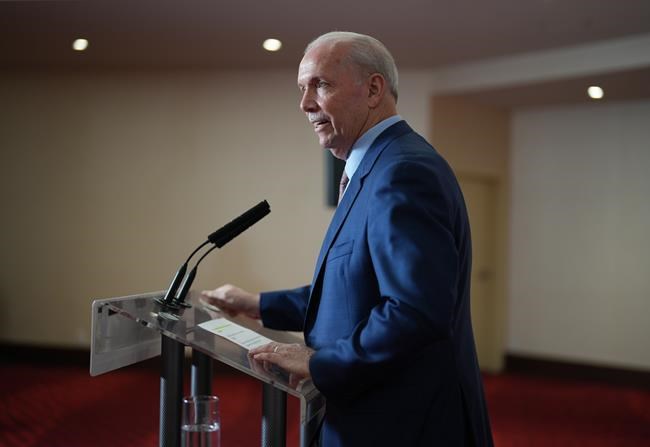
British Columbia Premier John Horgan, chair of the Council of the Federation made up of the country’s 13 premiers, has joined his colleagues to call on the federal government to increase its share of health-care spending from 22 to 35 per cent as they try to implement initiatives aimed at improving the system.
Horgan said he met with Justin Trudeau last November when the prime minister visited British Columbia following catastrophic floods. He said he told Trudeau about the premiers’ concerns regarding health costs, which will be discussed at their first in-person meeting in three years.
Trudeau committed to assembling a team to work on health funding, but that has not yet materialized, Horgan said in an interview.
“Eight months of what I thought was going to be a concerted effort has produced nothing other than a meeting in Victoria where all of us will gather to express our profound disappointment at the lack of leadership from Ottawa,” he said.
Trudeau has said the federal share of spending on health-care transfers would be negotiated after the COVID-19 pandemic winds down.
Horgan, who criticized April’s federal budget for not including health funding, said he and his colleagues are ready to address Ottawa’s expectations of any accountability measures that would come with more money.
But premiers first need to know what types of “strings” will be attached to it, he said, adding national solutions are needed to deal with problems plaguing provinces and territories.
But Horgan suggested he was not in favour of jurisdictions working together to nationally license health-care professionals, allowing them to work anywhere in the country, because that would amount to “poaching” people after their training has been paid for.
Ontario Premier Doug Ford said his province has an ambitious plan to rebuild its health-care system, and the federal government can help by paying its fair share of health funding.
“The premiers have been asking the federal government to come to the table and be a true funding partner,” he said in a written statement.
Alberta Premier Jason Kenney said that when universal health care was implemented in Canada, it was envisioned as a 50-per-cent split between the federal and provincial governments.
“COVID-19 showed the weaknesses in Canada’s health-care system, and we need to address those weaknesses for Canadians,” he said in a statement.
Dr. Katharine Smart, president of the Canadian Medical Association, said enabling health workers to be mobile would “alleviate pressure points” as part of one solution to increase resources where they’re needed.
“When a universal health system is not able to provide basic health care needs to Canadians, we must accept that it has failed and work together to fix it,” she said in a release. “This will take more than simply investing more money.”
Linda Silas, president of the Canadian Federation of Nurses Unions, said some emergency and intensive care departments that would have been staffed by 20 nurses now have half that number.
Legislation in Ontario restricting wages has meant many nurses are leaving to work for agencies so they have flexible hours and a choice of employers, or they’re quitting the profession because of poor working conditions, Silas said.
“So, the message I’m trying to give to premiers is: I have never, in 30 years of union work, seen nurses so angry. And they’re a tough bunch.”
Some premiers have indicated they will focus on other priorities at the meeting.
Saskatchewan Premier Scott Moe said during a recent news conference he wants to address issues with Canada’s energy supply.
“The No. 1 ask would be to have a very serious look at the policy positions that the government of Canada is taking that are preventing … production of some of the most sustainable energy in the world,” Moe said.

Kenney said the premiers will also be discussing internal trade and how they can address the tens of billions of dollars in economic activity lost every year due to barriers put up by provinces.
Canada’s “historic labour shortage” is also a concern for Ford. Manitoba Premier Heather Stefanson echoed the sentiment, saying lower immigration during the pandemic has contributed to the problem.
“We need the federal government to work with us to tackle the labour shortfall to help ensure our economy remains strong during these challenging times,” Ford said in a statement.
This report by The Canadian Press was first published July 10, 2022.
— With files from Steve Lambert in Winnipeg and Colette Derworiz in Edmonton
Related Articles
Premiers meeting with First Nations leaders

Advertisement Advertise With Us
Advertisement Advertise With Us