NDP expects phased-in approach to national pharmacare promise in deal with Liberals
Advertisement
Read this article for free:
or
Already have an account? Log in here »
To continue reading, please subscribe:
Digital Subscription
One year of digital access for only $1.44 a week*
- Enjoy unlimited reading on winnipegfreepress.com
- Read the E-Edition, our digital replica newspaper
- Access News Break, our award-winning app
- Play interactive puzzles
*Billed as $5.77 plus GST every four weeks. After 52 weeks, price increases to the regular rate of $19.95 plus GST every four weeks. Offer available to new and qualified returning subscribers only. Cancel any time.
To continue reading, please subscribe:
Add Free Press access to your Brandon Sun subscription for only an additional
$1 for the first 4 weeks*
- Enjoy unlimited reading on winnipegfreepress.com
- Read the E-Edition, our digital replica newspaper
- Access News Break, our award-winning app
- Play interactive puzzles
*Your next Brandon Sun subscription payment will increase by $1.00 and you will be charged $17.95 plus GST for four weeks. After four weeks, your payment will increase to $24.95 plus GST every four weeks.
Read unlimited articles for free today:
or
Already have an account? Log in here »
Hey there, time traveller!
This article was published 23/03/2022 (1683 days ago), so information in it may no longer be current.
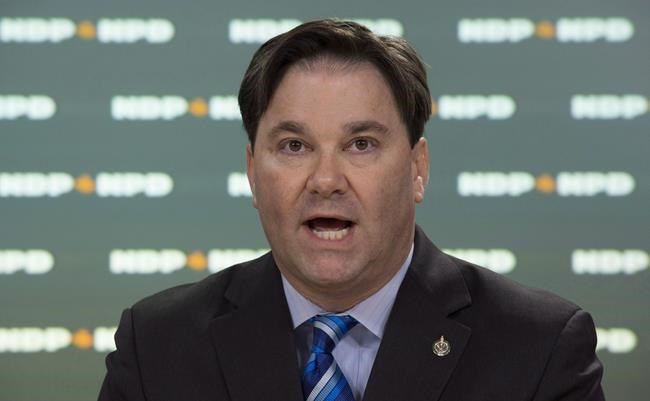
OTTAWA – NDP health critic Don Davies says he expects the Liberal government to fulfil its renewed promise to deliver national pharmacare, but perhaps not all at once.
The Liberals have promised in their new confidence and supply agreement with the NDP that they will pass a Canada Pharmacare Act by the end of next year.
They have also agreed to task the National Drug Agency with the development of a national formulary of essential medicines and bulk purchasing plan by the time the deal ends in 2025.
In exchange for movement on pharmacare and a host of other NDP priorities, the opposition party has agreed to support the minority Liberal government through confidence votes, which means they would remain in power for three more years.
The Liberals made universal pharmacare a core part of their 2019 election platform, but by the 2021 campaign they gave it barely a mention. Pharmacare was also missing from the last throne speech.
Davies said he doesn’t necessarily expect to see a universal, national program tabled as part of the legislation, but rather see it built up over many years.
He compared the NDP’s progress on pharmacare to Tommy Douglas — dubbed the father of medicare — and his road to establishing public health care in Canada in the 1960s.
“You get it started, and then you build on it,” Davies said in an interview.
The Liberals’ deal with the NDP lays out a specific approach to dental care, starting with kids under the age of 12 in families with an annual income of less than $90,000. But the approach to pharmacare is significantly more vague.
There is no telling what could be included in the promised pharmacare law, and Health Minister Jean-Yves Duclos was tight lipped about how he plans to approach it.
“How exactly it will look like, that is going to be seen,” Duclos said at a press conference Wednesday. “There is a lot more to do and we look forward to doing it with the assistance and the collaboration of the NDP.”
While the government did not run on pharmacare in the last election, Prime Minister Justin Trudeau’s mandate letter to Duclos suggested he work toward pharmacare on a province-by-province basis.
The Liberals launched a $35-million pilot project with Prince Edward Island in 2021 to add to the list of drugs covered by the provincial drug cost assistance program and lower costs for people covered under other public plans.
NDP Leader Jagmeet Singh said Tuesday he believes pharmacare should be universal, but added it could start small.
“We might start by covering medication that is needed for people living with diabetes, or people that need heart medication,” he said at a press conference Tuesday, suggesting the formulary, or list of covered medications, could grow over time.
Duclos said the government has made steady progress toward pharmacare, with the ongoing establishment of the Canadian Drug Agency and investment in a national strategy for drugs to treat rare diseases.
A report on national dialogue around pharmacare commissioned by the Liberals in 2018 strongly suggested a universal, single-payer, public pharmacare system.
Major questions remain about how the program will work, once established. The biggest question remains, who will pay for it?
In 2017, the Parliamentary Budget Officer pegged the cost of a full-fledged pharmacare plan with a comprehensive list of covered drugs at about $23.7 billion for 2020-2021.
It would be unsustainable for the federal government to take on that cost alone without taking the money from elsewhere or raising taxes, a 2018 analysis by the Institute of Fiscal Studies and Democracy suggested.
But it also found that sharing the cost with provinces would make for a tougher sell.
Dental care may be, in some ways, easier to implement because it is a standalone federal policy while drug plans will need provincial buy-in.
Quebec Premier Francois Legault already has his back up about the Liberal and NDP alliance and any possible moves to wade into provincial jurisdiction.
“There is going to be a confrontation,” Legault told reporters Wednesday.
Ontario Premier Doug Ford is on the same wavelength, he said, and warned the federal leaders that the provinces would put up a “very strong common front” to block their way.
Quebec is the only Canadian jurisdiction that has achieved universal drug coverage by making drug insurance mandatory for all residents.

One of the challenges will be navigating the various co-pay and deductible policies across provincial and territorial governments, said Randall Bartlett, former chief economist at the Institute of Fiscal Studies and Democracy and co-author of the institute’s analysis.
“What are going to be some of the basic requirements that are going to need to be satisfied in order for provinces to qualify for the funding? Co-pays (are) part of that discussion,” Bartlett said in an interview Wednesday.
He said there are many moving pieces that must be worked out, but the program can be adjusted to fit the government’s fiscal comfort level.
The government may even wish to offer provinces a per capita transfer of funds to handle the delivery, as it has with provincial childcare agreements.
This report by The Canadian Press was first published March 23, 2022.
Related Articles
Parliamentary deal poses risk to the NDP: experts
Advertisement Advertise With Us
Advertisement Advertise With Us