More provinces preparing to loosen COVID-19 restrictions in coming weeks

Advertisement

Advertise with us

More provinces are loosening COVID-19 restrictions as hospitalizations in some parts of the country appear to plateau, but health officials caution that eased measures could lead to increased infections in the coming weeks.

Read this article for free:


By clicking the button above, an account will be created and you will begin to receive some of our recommended newsletters. You may opt out of any newsletter by visiting your Email and Communication Preferences page or by clicking "unsubscribe" at the bottom of any email.

or

Already have an account? Log in here »

To continue reading, please subscribe:

Digital Subscription

One year of digital access for only $1.44 a week*

  • Enjoy unlimited reading on winnipegfreepress.com
  • Read the E-Edition, our digital replica newspaper
  • Access News Break, our award-winning app
  • Play interactive puzzles

*Billed as $5.77 plus GST every four weeks. After 52 weeks, price increases to the regular rate of $19.95 plus GST every four weeks. Offer available to new and qualified returning subscribers only. Cancel any time.

To continue reading, please subscribe:

Add Free Press access to your Brandon Sun subscription for only an additional

$1 for the first 4 weeks*

  • Enjoy unlimited reading on winnipegfreepress.com
  • Read the E-Edition, our digital replica newspaper
  • Access News Break, our award-winning app
  • Play interactive puzzles
Start now

*Your next Brandon Sun subscription payment will increase by $1.00 and you will be charged $17.95 plus GST for four weeks. After four weeks, your payment will increase to $24.95 plus GST every four weeks.

Hey there, time traveller!
This article was published 02/02/2022 (1730 days ago), so information in it may no longer be current.

More provinces are loosening COVID-19 restrictions as hospitalizations in some parts of the country appear to plateau, but health officials caution that eased measures could lead to increased infections in the coming weeks.

“We really certainly hope that we will not have to get back (to restrictions) in any way, but there’s a risk,” said Dr. Luc Boileau, Quebec’s interim director of public health.

COVID-19 hospitalizations in Quebec dropped Wednesday by 122 to 2,730, and the number of people in intensive care decreased by 14 to 204.

Quebec released modelling that showed the decrease may not last long. Boileau said the number of infections, and ultimately hospitalizations, is likely to rise again with children going back to school and the softening of health measures.

Quebec restaurant dining rooms opened Monday at 50 per cent capacity. Restrictions are to continue to loosen in the coming weeks, including reopening places of worship, sports venues and gyms.

Boileau said the next two to three weeks will be pivotal in the pandemic’s course. He urged people to get a COVID-19 booster shot and to be diligent in wearing masks.

“It depends on the population and if they want to participate,” he said.

Ontario also saw a slight decrease in COVID-19 hospitalizations to 2,939 people, a drop of 152. There were 555 patients in intensive care.

Long-Term Care Minister Paul Calandra said he was reviewing a policy restricting social visits. Just over half the care homes in the province are experiencing outbreaks — a slight dip from previous weeks.

Ontario is also moving forward with its timeline to ease restrictions, despite warnings from the province’s scientific advisory panel. Scientists warned earlier this week that infections, hospitalizations and intensive care admissions are likely to rise after the move and that modelling shows prolonged pressure on health care.

Dr. Theresa Tam, Canada’s chief public health officer, said the daily number of people with COVID-19 in hospitals is dipping slightly at the national level. But, she added, it remains high and is still rising in some jurisdictions.

“Where some public health measures are easing, layers of personal protective practices remain crucial for reducing spread and preventing resurgence,” she said in a social media post.

Alberta and Saskatchewan reported record numbers of people in hospital with COVID-19 this week as both provinces announced plans to remove vaccine passport requirements by the end of the month.

Dr. Eben Strydom, president of the Saskatchewan Medical Association, advised that governments shouldn’t pick arbitrary dates to change health orders.

“It is too soon to loosen, or remove, public health measures,” he said in a news release this week.

“Why take that chance now? Why further strain the health-care system and those who work in it?”

Manitoba’s chief public health officer announced the province will join others in relaxing public health measures. Restrictions on gathering sizes and people allowed at sports events are to be loosened starting Tuesday.

“The data and modelling show that we are stabilizing and may have in fact passed the peak we expected from (the) Omicron (variant),” said Dr. Brent Roussin.

“The next few weeks will be critical as we monitor these trends and determine if it is appropriate to reduce additional restrictions over the longer term.”

Premier Heather Stefanson pointed out that Manitoba has often been the first to shut down and the last to reopen throughout the pandemic. She said she hopes there will be no restrictions by spring.

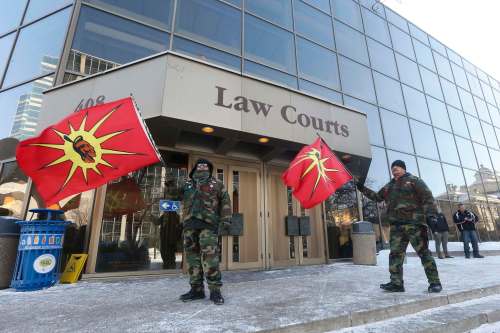
Meanwhile, Dr. Katharine Smart, president of the Canadian Medical Association, cautioned that protests in Ottawa against public health orders have a risk of being a superspreader event. She said it has “essentially become an occupation on our capital.”

“It’s been incredibly distressing,” Smart said during a news conference. She called on Canada to do more to support COVAX, the global vaccine-sharing alliance.

This report by The Canadian Press was first published Feb. 2, 2022.

— With files from Morgan Lowrie in Montreal

Report Error Submit a Tip

More Stories

No Christmas trees, no Christmas trees — the lots are empty as can be

Doug Speirs  3 minute read Preview

No Christmas trees, no Christmas trees — the lots are empty as can be

Doug Speirs  3 minute read Monday, Dec. 7, 2020

It might take a Christmas miracle to get your hands on even a scraggly Charlie Brown-style tree this holiday season.

Winnipeg garden centre owners interviewed Monday morning said they are totally sold out and they’ve never seen stock vanish this quickly in all their years in the business.

They likened it to the holiday version of panicked shoppers binge-buying toilet paper when the COVID-19 pandemic first arrived in the province back in March.

“I’m sold out,” declared Ray DuBois, owner of Ron Paul Garden Centre on St. Mary’s Road. “I could see it coming back in August. When we placed our order, I bumped it up by 10 per cent.”

Read
Monday, Dec. 7, 2020

‘Women were shortchanged.’ Why bobsledding’s idea of equality doesn’t add up

Kerry Gillespie - Sports Reporter, Toronto Star 7 minute read Preview

‘Women were shortchanged.’ Why bobsledding’s idea of equality doesn’t add up

Kerry Gillespie - Sports Reporter, Toronto Star 7 minute read Saturday, Dec. 4, 2021

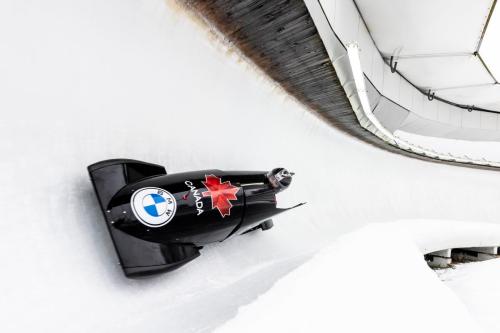
When female bobsledders pushed for an Olympic four-woman event, they got a solo discipline instead: monobob. Now they’ll race for the same number of medals as men, but with fewer sledders. Not the progress they were looking for.

Read
Saturday, Dec. 4, 2021

Waiting for Cormier verdict the ‘calm before the storm’

Katie May 6 minute read Preview

Waiting for Cormier verdict the ‘calm before the storm’

Katie May 6 minute read Thursday, Feb. 22, 2018

As the jury room door closed behind the seven women and four men who are now deliberating on the evidence against Tina Fontaine’s accused killer, Thelma Favel rose from the chair she’s occupied for most of Raymond Cormier’s second-degree murder trial.

Almost every day over the past three weeks, Favel, the woman who raised 15-year-old Tina, has sat right up front, directly across from the jury box, listening, sobbing and soaking in disturbing details of the teen’s last days that have come to light over the course of Cormier’s second-degree murder trial.

On Wednesday afternoon, after Court of Queen’s Bench Chief Justice Glenn Joyal instructed the jury and sent them off to be sequestered until they decide whether 56-year-old Raymond Cormier is guilty of killing Tina, Favel got up and hugged Crown prosecutor Breta Passler. It was one of many moments, this one shielded from jurors, that have long since proven the emotional impact of the case and the lasting power of Tina’s legacy.

Tina’s death sparked a public outcry that renewed calls for a national inquiry into disproportionately high rates of missing and murdered Indigenous women and girls across Canada, and the criminal trial for the man accused of killing her hasn’t happened in a vacuum.

Read
Thursday, Feb. 22, 2018

More provinces to loosen COVID-19 restrictions

Kelly Geraldine Malone, The Canadian Press 4 minute read Wednesday, Feb. 2, 2022

Leave the holiday greetings to Hallmark. Valentine’s Day and fast food are as incompatible as Labour Day and foreign sweatshops.

World Indigenous Business Forum comes home to Winnipeg for first time, ponders questions for future prosperity

Aaron Epp 5 minute read Preview

World Indigenous Business Forum comes home to Winnipeg for first time, ponders questions for future prosperity

Aaron Epp 5 minute read Tuesday, Oct. 27, 2026

When Nicola Shirley-Phillips imagines what the Indigenous economy in her country might look like 100 years from now, she doesn’t mention social media or artificial intelligence. Instead, she envisions a holistic way of life where people work alongside each other in a way that cares for the planet.

“I see community (and) I see us being more respectful of all the energies around us — our water energy, our climate (and) the soil,” she said. “In all of that, there are opportunities for us to create businesses and opportunities to provide our services.”

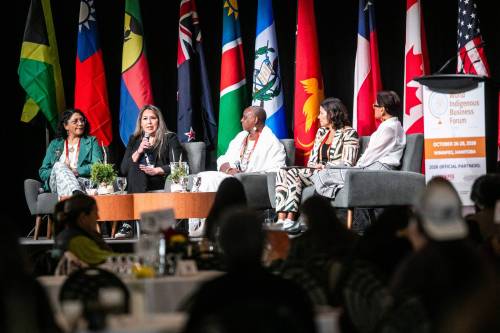
Shirley-Phillips, a serial entrepreneur, organic farmer and community economic development specialist from Jamaica, shared her vision Tuesday morning during a panel discussion focused on Indigenous women and prosperity.

The discussion was one of the first items on the schedule during the first full day of the World Indigenous Business Forum at the RBC Convention Centre in Winnipeg.

Read
Tuesday, Oct. 27, 2026

The landscape that taught us to see

Stephen Borys 6 minute read Preview

The landscape that taught us to see

Stephen Borys 6 minute read 2:01 AM CDT

The white pine stood at the edge of the lake, leaning out over the water, its branches bent by years of wind and weather. Beyond it stretched an expanse of blue water beneath a clear sky, a distant tree line and other pines rising along the rocky shoreline. From the deck above, the landscape seemed both expansive and remarkably still.

I had been looking at it for only a few moments when Tom Thomson and the Group of Seven entered the picture. Not literally, of course. But once the association appeared, I could not unsee it. The pine became The Jack Pine and The West Wind. The surrounding rocks, water and sky called up A.Y. Jackson, Arthur Lismer, Franklin Carmichael and Lawren Harris. A landscape I had been looking at all weekend suddenly became part of a visual history Canadians have carried with them for more than a century.

Perhaps that is the Group of Seven’s greatest achievement. They did not simply paint the Canadian landscape. They changed the way we see it.

I was at the lake for a quiet weekend, reflecting on the cultural, community and development projects that occupy much of my work through Civic Muse. Increasingly, I see these pursuits as part of the same conversation — place and identity, how we understand it, care for it and decide what is worth carrying forward.

Read
2:01 AM CDT