Auditor criticizes pandemic border measure enforcement, other COVID-19 responses
Advertisement
Read this article for free:
or
Already have an account? Log in here »
To continue reading, please subscribe:

Digital Subscription
One year of digital access for only $205*
- Enjoy unlimited reading on winnipegfreepress.com
- Read the E-Edition, our digital replica newspaper
- Access News Break, our award-winning app
- Play interactive puzzles
*First annual payment billed as $205.00 + GST for one year. This annual subscription will automatically renew at $233.00 + GST every 52 weeks (10% off the regular annual price of $259.35). Offer available to new and qualified returning subscribers only. Cancel any time.
To continue reading, please subscribe:
Add Free Press access to your Brandon Sun subscription for only an additional
$1 for the first 4 weeks*
- Enjoy unlimited reading on winnipegfreepress.com
- Read the E-Edition, our digital replica newspaper
- Access News Break, our award-winning app
- Play interactive puzzles
*Your next Brandon Sun subscription payment will increase by $1.00 and you will be charged $17.95 plus GST for four weeks. After four weeks, your payment will increase to $24.95 plus GST every four weeks.
Read unlimited articles for free today:
or
Already have an account? Log in here »
Hey there, time traveller!
This article was published 09/12/2021 (1763 days ago), so information in it may no longer be current.
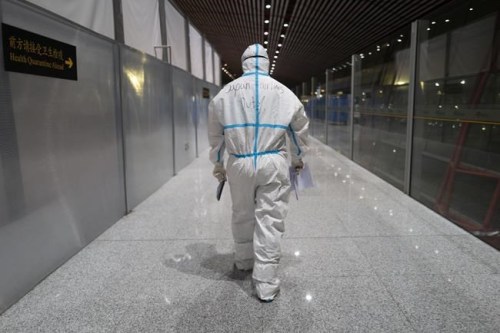
OTTAWA – The auditor general has found Canada failed to adequately enforce border measures designed to keep international travellers from importing cases of COVID-19 into the country, just as the government reintroduces several stringent rules in response to the spreading Omicron variant.
The auditor’s report was tabled in the House of Commons Thursday afternoon, along with several other critical reports on Canada’s pandemic response.
While auditor general Karen Hogan gave the agency credit for improving its systems since the early days of the pandemic with the introduction of the ArriveCan app, there were still notable gaps in tracking COVID-19 test results and compliance with quarantine orders.
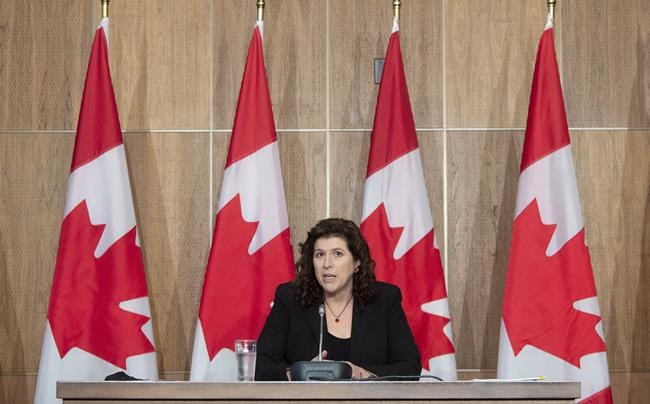
Her assessment of Canada’s poor enforcement of quarantine and COVID-19 test mandates examined the period between July 1, 2020 to June 30, 2021.
“This is not a success story,” Hogan said at a media briefing Thursday.
Earlier in the pandemic, the Public Health Agency of Canada had no idea whether 66 per cent of incoming travellers followed quarantine orders. This latest audit revealed the government still could not verify whether 37 per cent of travellers obeyed the rules.
“The agency’s inability to confirm whether more than one third of travellers complied with quarantine orders remains a significant problem,” the auditor general said.
The agency struggled to keep track of people who were supposed to wait for test results in so called “quarantine hotels.”
While agents would check that travellers had made reservations at a hotel, the Public Health Agency of Canada only had records to verify 25 per cent of those people actually checked in.
“If they’re going to put in a requirement, they really do need to have worked through how to monitor and enforce that requirement,” Hogan said.
Public health officials were also supposed to get in touch with travellers who tested positive for COVID-19 to confirm they got their test results and self-isolated, but the auditor found of the 8,071 who tested positive, 11 per cent, or about 1,156 of them, were never contacted.
As well, PHAC was missing or unable to match 30 per cent of COVID-19 test results to incoming travellers during the audit period.
The labs contracted to process the tests were also required to let people know about their results, but the auditor didn’t examine whether or not that happened.
“All we can tell you is that they didn’t monitor and enforce the requirements properly,” the auditor explained.
As for rule breakers, punishment has been meted out very differently depending on where people live — if there was any punishment at all.
Take travellers ordered to report to designated quarantine facilities, for example. Of the 71 who refused to go and 45 that left without permission, only 13 received tickets.
In general, the government has no idea what became of 59 per cent of travellers suspected of flouting quarantine orders, after the agency referred their suspicions to law enforcement.
Most provinces have not issued a single ticket related to federal quarantine and test rules. Alberta, Saskatchewan and the territories have not even adopted the ticketing regime under the Contraventions Act.
British Columbia issued 917 during the audit period, Manitoba issued 139, and Ontario handed out a whopping 5,281.
The agency doesn’t know how many tickets were issued in Quebec because only provincial prosecutors have the authority to issue these tickets and they are not required to report the information.
Health Minister Jean-Yves Duclos said the Public Health Agency of Canada made seven million compliance verification calls, and 500,000 visits to confirm people were quarantined as required.
But he said the government makes no excuses for gaps that persist.
“The government’s work was certainly not perfect,” Duclos said at a news conference Thursday. “We can and we must do better.”
He said the government is taking further action to continue to improve compliance and bridge those gaps. PHAC has now automated the process to authenticate check-in at quarantine hotels, for example.
Duclos warned even with the new process, it won’t be 100 per cent effective.
“The findings in the auditor general’s report reveal a pattern of incompetence, with severe gaps in the application of policies,” Conservative health critic Luc Berthold said in a statement. “The report that makes clear that this Liberal government has once again failed to take action on lessons learned.”
NDP critic Don Davies charged that the government may have put Canadians at risk of getting COVID-19.
Meanwhile the auditor had scathing words about the inspections intended to ensure agricultural producers are properly protecting migrant workers from COVID-19, following numerous outbreaks among temporary foreign workers at farms since the start of the pandemic.
The Liberal government promised new requirements for agricultural producers as well as tens of millions in new funding last year to protect from COVID-19 the roughly 50,000 people who come to Canada as seasonal farm workers each year.
Yet while government inspectors deemed virtually all farms compliant with those regulations, Hogan says the vast majority of those passing grades came without proper inspections.
And in some cases, inspectors overlooked or ignored evidence suggesting employers were violating requirements, leaving workers at greater risk of getting sick.

“These findings point to a systemic problem in Employment and Social Development Canada’s inspection regime that needs immediate attention,” Hogan said.
In a separate report, the auditor found that Canada failed to develop a national emergency response plan for a crisis affecting Canadians’ food security, though departments and agencies managed to swiftly create new emergency food programs, using mechanisms already in place.
And while she did commend the government for its quick rollout of a regional relief and recovery fund to alleviate financial burdens on businesses and organizations during the pandemic, she found regional agencies were not consistent in their requirements for applicants, and interpreted the eligibility criteria differently.
This report by The Canadian Press was first published Dec. 9, 2021.
— With files from Lee Berthiaume, Erika Ibrahim and Marie Woolf
Related Articles
United in disdain for outdated ArriveCAN app
Advertisement Advertise With Us
Advertisement Advertise With Us