Liberals, NDP pass motion to resume hybrid format in House of Commons
Advertisement
Read this article for free:
or
Already have an account? Log in here »
To continue reading, please subscribe:
Digital Subscription
One year of digital access for only $1.44 a week*
- Enjoy unlimited reading on winnipegfreepress.com
- Read the E-Edition, our digital replica newspaper
- Access News Break, our award-winning app
- Play interactive puzzles
*Billed as $5.77 plus GST every four weeks. After 52 weeks, price increases to the regular rate of $19.95 plus GST every four weeks. Offer available to new and qualified returning subscribers only. Cancel any time.
To continue reading, please subscribe:
Add Free Press access to your Brandon Sun subscription for only an additional
$1 for the first 4 weeks*
- Enjoy unlimited reading on winnipegfreepress.com
- Read the E-Edition, our digital replica newspaper
- Access News Break, our award-winning app
- Play interactive puzzles
*Your next Brandon Sun subscription payment will increase by $1.00 and you will be charged $17.95 plus GST for four weeks. After four weeks, your payment will increase to $24.95 plus GST every four weeks.
Read unlimited articles for free today:
or
Already have an account? Log in here »
Hey there, time traveller!
This article was published 25/11/2021 (1785 days ago), so information in it may no longer be current.
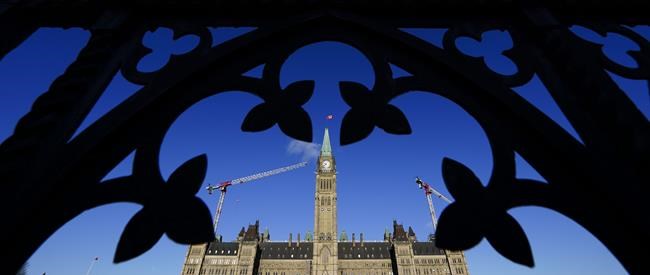
OTTAWA – Members of Parliament are able to work from home again after passing a motion Thursday to resume hybrid sittings of the House of Commons.
Liberals and New Democrats joined forces to pass the motion over the objections of Conservative and Bloc Quebecois MPs who had wanted to fully return to normal, in-person operations.
The motion gives MPs the option of participating virtually in proceedings, including votes and debates in the Commons and its committees, starting Friday and continuing until the House breaks for the summer in June.
It passed late Thursday by a vote of 180-140 after the NDP supported the Liberals in putting an end to two days of debate on the matter.
MPs first adopted the hybrid format a year ago, aimed at limiting the number of members in the Commons to avoid spreading COVID-19. But the all-party agreement to allow that format expired last June.
Since Parliament resumed Monday after a five-month hiatus, all but one of the country’s 338 MPs have been in the Commons because there was no unanimous agreement to return to hybrid sittings.
The missing MP — Conservative Richard Lehoux — tested positive for COVID-19 on Saturday, two days after attending an in-person Tory caucus retreat.
Government House leader Mark Holland welcomed the return of the hybrid format, saying it will allow Lehoux and anyone else who falls ill or has to isolate due to exposure to the virus to continue working remotely.
In an interview after the vote, he said he hopes unvaccinated Conservative MPs also opt to work from home “and not cause an issue around public health.”
“I still would like to know how many there are and I would like the assurance from the leader that he’s not going to allow these unvaccinated individuals in the chamber.”
Conservative Leader Erin O’Toole has said all his 118 MPs are either fully vaccinated or have a medical exemption. He has refused to say how many are exempt and Holland has questioned the statistical probability that multiple MPs would have valid medical reasons to not be immunized.
The motion specifies that MPs who choose to participate in person must be fully vaccinated or have a medical exemption based on the limited exceptions spelled out by the Ontario health ministry and the National Advisory Committee on Immunization.
Earlier Thursday, O’Toole accused the “Liberal-NDP coalition” of “shutting down” Parliament.
He argued that Prime Minister Justin Trudeau and his fellow Liberals were content to call an election and attend campaign events in September and to gather “with thousands of people” at the United Nations climate summit in Glasgow a few weeks ago.
While they were willing to do those things “because it suited them,” he said they are “today shutting down debate and limiting democratic accountability because it bothers them.”
It is “hypocrisy of the highest order,” O’Toole charged.
But Holland countered that there’s a big difference between people choosing whether to attend events and requiring all MPs, regardless of their health circumstances, to be physically present in the Commons if they want to participate in proceedings.
“This is a very different situation. We have people flying in from every corner of the country, spending a week together, commingling in a very, very small space and then going back to every part of the country,” he said.
Holland said he’s heard from some MPs who are immunocompromised and are afraid to be in the chamber, particularly when the Conservatives refuse to say how many of their members are unvaccinated or whether those members are self-isolating after being exposed to Lehoux last week.
“That is absolutely unacceptable in a pandemic to put people who are in a vulnerable health circumstance, to force them to be in a situation where their health is at risk,” he said.
During debate on the motion Thursday, Conservative and Bloc Quebecois MPs argued that virtual proceedings allow the government to avoid scrutiny. They noted that in the last session, cabinet ministers frequently didn’t turn up in the Commons even though they were in their Parliament Hill offices.
Holland promised that a majority of ministers, including the prime minister, will be in the House in the future.
New Democrat MP Laurel Collins spoke in the chamber while holding her seven-month-old daughter in her arms. She said travelling back and forth from her Victoria B.C., riding with an infant is never easy but it’s “nerve-racking” during the pandemic.

Should her daughter catch a mild cold or have a teething fever, Collins said she wouldn’t be allowed to board a plane with her. And should that prevent her from travelling to Ottawa, Collins said she’d be denied the right to participate in proceedings if there is no hybrid format.
“Women deserve the choice to participate,” she told the Commons, adding that the chamber “was built by men, for men and we have a long way to go if we want equal access.”
But Conservative MP Raquel Dancho countered that during the last session there was frequently only one Liberal MP in the chamber, the rest participating virtually.
“Not all the other ones had COVID or were having babies,” she said.
This report by The Canadian Press was first published Nov. 25, 2021.
Related Articles
Parliament on bitter, dysfunctional path
Advertisement Advertise With Us
Advertisement Advertise With Us