Still have questions about kids and the COVID vaccine? We’ve got you covered
Advertisement
Read this article for free:
or
Already have an account? Log in here »
To continue reading, please subscribe:
Digital Subscription
One year of digital access for only $1.44 a week*
- Enjoy unlimited reading on winnipegfreepress.com
- Read the E-Edition, our digital replica newspaper
- Access News Break, our award-winning app
- Play interactive puzzles
*Billed as $5.77 plus GST every four weeks. After 52 weeks, price increases to the regular rate of $19.95 plus GST every four weeks. Offer available to new and qualified returning subscribers only. Cancel any time.
To continue reading, please subscribe:
Add Free Press access to your Brandon Sun subscription for only an additional
$1 for the first 4 weeks*
- Enjoy unlimited reading on winnipegfreepress.com
- Read the E-Edition, our digital replica newspaper
- Access News Break, our award-winning app
- Play interactive puzzles
*Your next Brandon Sun subscription payment will increase by $1.00 and you will be charged $17.95 plus GST for four weeks. After four weeks, your payment will increase to $24.95 plus GST every four weeks.
Read unlimited articles for free today:
or
Already have an account? Log in here »
Hey there, time traveller!
This article was published 22/11/2021 (1803 days ago), so information in it may no longer be current.
Millions of parents across Canada cheered then let out a deep sigh of relief on Friday after Health Canada announced it had approved the country’s first COVID-19 vaccine for young children.
Though many parents are eager to get their kids aged five to 11 vaccinated, with some racing to the front of the line for protection from the virus, there’s still lots to know about the vaccine, how it works and why the benefits outweigh the risks.
With the online provincial portal opening up appointments Tuesday, and with little sleeves soon being rolled up for first COVID-19 shots, the Star reviewed the data and talked to the experts to provide answers to parents’ most pressing questions.
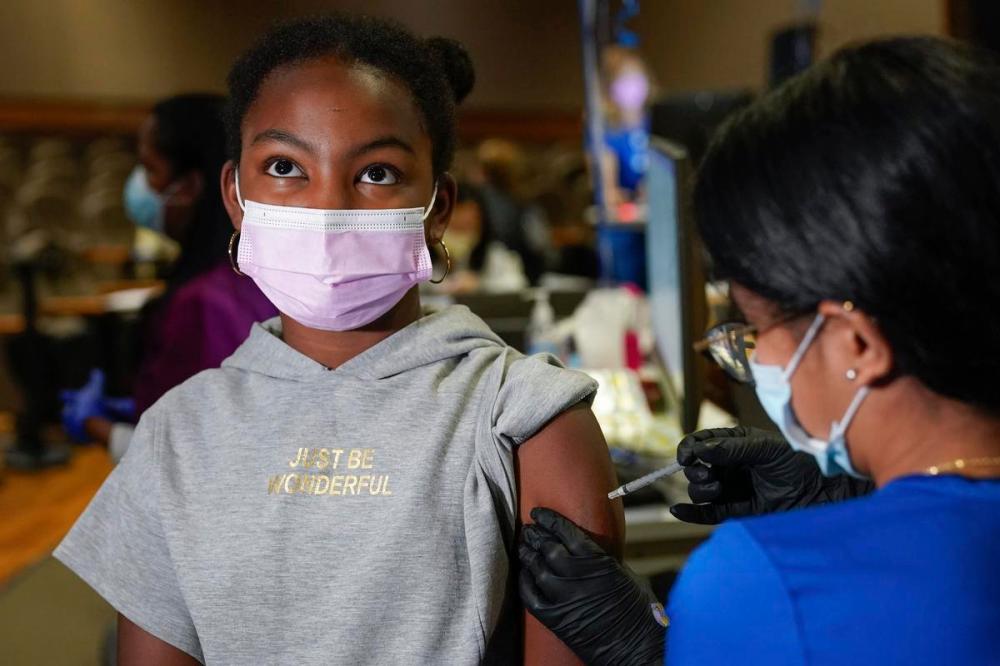
I’ve heard kids don’t get that sick with COVID. Do I still need to vaccinate my young child?
While children are less likely than adults to get very sick with COVID, some do get acutely ill with the infection. Currently, children have the highest rates of infection in the country, said Dr. Theresa Tam, Canada’s chief public health officer, at a press conference Friday.
So far during the pandemic, there have been 123,379 cases in the five-to-11 age group, with 300 of those kids being hospitalized, eight needing ICU care, she said.
The COVID vaccine not only protects against the infection — from mild and moderate symptoms to severe disease — it also protects against post-COVID syndromes, such as long COVID and multisystem inflammatory syndrome in children (MIS-C), said Dr. Upton Allen, head of infectious diseases at the Hospital for Sick Children.
“For children, overwhelmingly, most COVID outcomes are mild. But there are still severe outcomes that can happen, so we need to protect children. Once a child is eligible, I’d encourage them to be vaccinated.”
How is the kids’ vaccine different from the one approved for teens and older adults?
The dose for five-to-11-year-olds is smaller than the one for teens and adults at 10 micrograms instead of 30, and comes in different vials, Health Canada officials told reporters Friday.
Dr. Anne Wormsbecker, a pediatrician based at St. Michael’s Hospital, said Pfizer’s safety trials determined what dose gets children to a “sweet spot of a great immune system response” with minimal side effects.
Why is the National Advisory Committee on Immunization (NACI) recommending at least eight weeks between two doses?
Studies of adults who have received the COVID-19 vaccine suggest that a longer interval between the first and second dose produces not only a stronger immune response, but also longer-lasting vaccine efficacy and a possible association with a lower risk of inflammation of the heart (known as myocarditis), or inflammation of the outer lining of the heart (pericarditis), in adolescents and young adults.
“What we’re seeing in the literature, the evidence, is that the longer the interval between dose one and dose two, the better your immune response,” said Dr. Julia Orkin, a pediatrician and Sick Kids’ medical officer of integrated community partnerships.
When will my child be considered fully vaccinated?
Fully vaccinated children will be those who receive two pediatric doses of the Pfizer-BioNTech COVID-19 vaccine administered at least eight weeks apart, and 14 days have passed since the second dose.
I’m worried about side effects from the vaccine. What does the data say?
As with most vaccines, some minor side effects were reported in the Pfizer trial, such as sore arms, but “very reassuringly in the study, there were no serious side effects related to the COVID-19 vaccine in kids aged five-11 years,” said Wormsbecker.
Orkin points out that many children in the trial had no side effects whatsoever. She added that more than two million children in the U.S. have received the vaccine to date and there have been no reports of serious side effects.
What about myocarditis or pericarditis? I’ve heard that the risk is higher in younger adults. Should I be worried about this serious side effect?
Dr. Supriya Sharma, chief medical adviser to the deputy minister at Health Canada, said at a press conference Friday that there were no incidences of myocarditis or pericarditis in Pfizer’s vaccine trial for kids five to 11. She noted that the risk of myocarditis with COVID infection is about 20 times higher than with the vaccine.
There were also no severe allergic reactions in Pfizer’s trial. There were four adverse events reported, but it was determined that they were not related to the vaccine, she added.
What about other possible long-term side effects?
Orkin said there is no expectation for any long-term side effects. “In fact, we know there is much more risk of long-term side effects from COVID-19 itself.”
Wormsbecker describes the mRNA vaccines as providing “an instruction manual or recipe that shows our body how to make the spike protein of the COVID virus, and then our body mounts that immune response.”
“When the instructions are used, they’re gone, as if you tore them up and threw them out; that mRNA does not stay in your body.”
What did Health Canada consider in approving this vaccine for kids?
The agency reviews clinical trial data before authorizing any vaccine, including the Pfizer COVID-19 vaccine. The results of the trial conducted by Pfizer suggest the vaccine for kids aged five to 11 produces an immune response similar to that seen in young adults 16-25 who received the adult formulation of 30 micrograms.
The vaccine regime for children five to 11 is estimated to have an efficacy of 90.7 per cent against symptomatic COVID, seven days after the second dose.
Health Canada, the Public Health Agency of Canada and NACI will continue to rigorously monitor the vaccine.
My child is 11 but will soon turn 12. Should we get the child-size vaccine or the one for teens and adults?
Right now in Canada, kids turning 12 this year (born in 2009) are recommended to get the adult dose of 30 micrograms. And experts say 11-year-olds should get the pediatric dose when able, rather than waiting a few weeks or months for their 12th birthday to get the adult dose.
Dr. Allan Grill, chief of family medicine at Markham Stouffville Hospital, wants parents to know vaccines are designed for a person’s age, not their height or weight, and that the data shows the pediatric dose kickstarts a good immune response while minimizing the chance of side effects.
If a child gets the pediatric vaccine (10 mcg) as their first dose but turns 12 ahead of their second dose, NACI says that child may receive the adult formulation (30 mcg) to complete the vaccine series. However, a second dose of the pediatric vaccine will also be considered a complete series.
I’m thinking about waiting to get my child vaccinated to see what happens. Is this a risk?
With COVID cases rising in Canada— especially in school-aged children — and more opportunities for the virus to spread as people move indoors, experts don’t recommend waiting.
“You can see that the wave is worsening and there’s more cases in the community,” Grill said. “The quicker you get the shot, the less risk you have for that exposure. I’m going to encourage my parents in my practice to not wait; if you’re ready, go now.”
Orkin recommends parents who are unsure about the vaccine sit down with a doctor or nurse practitioner to get their questions answered.
“What we do know, based on the research to date for children and from the U.S. experience, is that there’s a very, very, very low risk associated with the vaccination itself and that a wait-and-see approach is potentially risky because the risk of COVID-19 is still there.”
What if my child has already had COVID? Do they still need a vaccine?
Just as for teens and adults, it’s recommended children with a previous COVID infection get vaccinated.
“The goal for immunization is to provide your body with enough of an immune response to fight against COVID,” Orkin said. “We do not know, based on an individual’s infection history, what their body’s immune response was or is, based on infection. Therefore, in order to provide a standardized immune response or consistent immune response, we are currently following the guidance … so there’s no reduction in vaccination recommendation at this point in time in Ontario.”
Everyone in my family is already vaccinated and we feel protected. Do I still need to get my young child vaccinated?
When parents ask Grill this question, he reminds them their child goes out of the house — to school, to extracurricular activities, to play dates with other kids.
“Unless you are keeping them in a bubble — what we don’t want to do with kids — the risk is out there,” he said, noting others in the family, including children too young to be vaccinated and older grandparents, need those around them to be vaccinated to boost their protection. “The higher percentage of eligible people we immunize, the better protected we will be.”
I also want to get my child the flu shot, can I give them the COVID vaccine on the same day?

Health Canada recommends that your child does not get any other vaccine two weeks before or after their COVID vaccinations, because if your child has a rare side effect, officials will want to know which vaccine it’s from.
But Wormsbecker does encourage parents and children to get flu shots, which are available to kids six months and up.
Megan Ogilvie is a Toronto-based health reporter for the Star. Follow her on Twitter: @megan_ogilvie
May Warren is a Toronto-based breaking news reporter for the Star. Follow her on Twitter: @maywarren11
Kenyon Wallace is a Toronto-based investigative reporter for the Star. Follow him on Twitter: @KenyonWallace or reach him via email: kwallace@thestar.ca
Related Articles
Provinces detail COVID vaccine plans for children
Advertisement Advertise With Us
Advertisement Advertise With Us