As trade bottlenecks weigh on economy, Liberals urged to help reshape supply chains

Advertisement

Advertise with us

OTTAWA - For most of his years in manufacturing, Dennis Darby remembers sourcing goods from a single supplier and things arriving just on time.

Read this article for free:


By clicking the button above, an account will be created and you will begin to receive some of our recommended newsletters. You may opt out of any newsletter by visiting your Email and Communication Preferences page or by clicking "unsubscribe" at the bottom of any email.

or

Already have an account? Log in here »

To continue reading, please subscribe:

Digital Subscription

One year of digital access for only $1.44 a week*

  • Enjoy unlimited reading on winnipegfreepress.com
  • Read the E-Edition, our digital replica newspaper
  • Access News Break, our award-winning app
  • Play interactive puzzles

*Billed as $5.77 plus GST every four weeks. After 52 weeks, price increases to the regular rate of $19.95 plus GST every four weeks. Offer available to new and qualified returning subscribers only. Cancel any time.

To continue reading, please subscribe:

Add Free Press access to your Brandon Sun subscription for only an additional

$1 for the first 4 weeks*

  • Enjoy unlimited reading on winnipegfreepress.com
  • Read the E-Edition, our digital replica newspaper
  • Access News Break, our award-winning app
  • Play interactive puzzles
Start now

*Your next Brandon Sun subscription payment will increase by $1.00 and you will be charged $17.95 plus GST for four weeks. After four weeks, your payment will increase to $24.95 plus GST every four weeks.

Hey there, time traveller!
This article was published 02/11/2021 (1823 days ago), so information in it may no longer be current.

OTTAWA – For most of his years in manufacturing, Dennis Darby remembers sourcing goods from a single supplier and things arriving just on time.

The system worked well until the pandemic, which now has throttled the movement of goods globally, pushed up costs for shippers and helped fuel higher inflation rates.

As just one example, the cost of a shipping container has gone from just under $2,000 in 2019 to about $10,000 now, said Darby, president of Canadian Manufacturers and Exporters, a national industry association. That extra cost has to be passed on, ultimately to the consumer.

The container ship CMA CGM Marco Polo unloads cargo at the PSA Halifax container berth in Halifax on May 18, 2021. THE CANADIAN PRESS/Andrew Vaughan

The situation is leading to calls on the federal government to use the current snarl in global supply chains to become more active in rethinking and reshaping the country’s reliance on foreign suppliers.

The idea has been before the government for some time: Supply Chain Canada in a submission to senior federal officials last year proposed a concerted effort to modernize the country’s supply-chain system and make sure it could easily adapt to demand changes and reduce latency times in the future. The organization has put the idea to multiple cabinet ministers in recent days.

Still, opposition critics and experts say there is much out of the reach of the government and backlogs will simply have to work themselves out over the coming months, such as the high cost of shipping containers.

In the meantime, efforts to produce more goods domestically, such as masks, will take time to ramp up, Carolyn Wilkins, the former second-in-command at the Bank of Canada said in a speech last week where she also said it may not be practical or advisable to try to become completely self-sufficient.

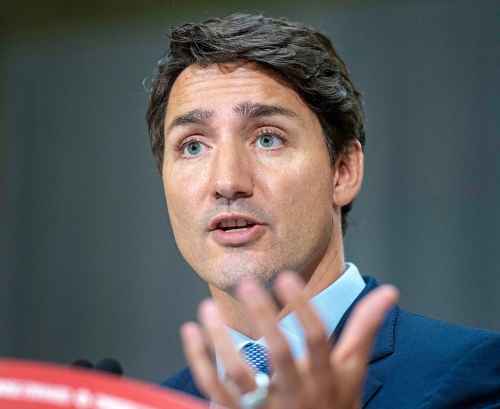
For now, Conservative critic Ed Fast said the Trudeau Liberals should prioritize investments in trade corridors and ports to improve the movement of goods through and out of the country.

He added that there should equally be a focus on shoring up North American supply chains and pushing the White House to work on a continental plan to rely on more reliable and like-minded trading partners.

“This is a big, broad issue that has no easy immediate fixes, but I haven’t seen the government actually even pay much attention to it, which is unfortunate,” said Fast, a former trade minister in the previous Conservative government.

On Tuesday, Industry Minister François-Philippe Champagne arrived in Washington, D.C., ahead of meeting with U.S. Commerce Secretary Gina Raimondo and White House officials where supply-chain issues will be top of mind.

At this weekend’s G20 summit in Rome, U.S. President Joe Biden organized a meeting of 14 countries, including Canada, aimed at seeking solutions to the current bottlenecks, which have sprung up as production tries to catch up with the rebound in consumer demand as COVID-19 outbreaks force lockdowns in other parts of the world.

NDP critic Daniel Blaikie said a continental supply-chain plan might be appropriate for critical goods for public health or manufacturing. Any plan should involve government planning with the private sector, he said, including for items critical for lowering greenhouse gas emissions like batteries for electric vehicles.

“We’re at a time where we need a government that’s prepared to show far more leadership, and in organizing how certain things that we deem are very important to our future get produced,” Blaikie said.

The Bank of Canada has warned that problems are likely to get worse towards the end of the calendar year, before improving in 2022, and help push high inflation rates even higher. Blaikie pointed to the rising cost of consumer goods as a reason why the Liberals shouldn’t have cut emergency benefits to workers last month.

Also acting as a hurdle is finding enough workers, such as truckers, to move goods across the country, Darby said.

The most recent jobs data from Statistics Canada noted that manufacturing in September remained 0.8 per cent below pre-pandemic employment levels, while transportation and warehousing was still 2.5 per cent below levels recorded in February 2020.

“That affects companies’ ability to sell more, and so their capacity restrained because of labour,” Darby said.

This report by The Canadian Press was first published Nov. 2, 2021.

Report Error Submit a Tip

More Stories

City rec facilities crumbling

Ryan Thorpe 6 minute read Preview

City rec facilities crumbling

Ryan Thorpe 6 minute read Monday, Oct. 22, 2018

Throughout Winnipeg, decades-old community assets — pools, arenas and recreation and leisure centres — are deteriorating so quickly that service disruptions are inevitable.

Meanwhile, the city’s community services department, which is responsible for managing those assets, operates with an annual deficit of roughly $80 million, meaning there are scant resources to do little more than bail water on a sinking ship.

Soon, Winnipeggers will have a choice: fewer community services or higher costs.

“It poses a huge challenge because we have very limited dollars that we have to invest in our existing facilities. We also have growing demands for new amenities in new areas. We have to be very strategic,” said Ken McKim, manager of asset management for the department.

Read
Monday, Oct. 22, 2018

Must-see Folk Fest workshops

16 minute read Preview

Must-see Folk Fest workshops

16 minute read Thursday, Jul. 5, 2018

Workshops have always been an integral part of the Winnipeg Folk Festival.

They are magic-moment makers; a curated group of musicians — sometimes friends, sometimes strangers — on one stage playing together, supporting each other, creating something that will only exist for an hour or two. No one knows what will come out of the collaboration, but usually it’s something special.

When the Free Press spoke to Winnipeg Folk Festival artistic director Chris Frayer ahead of the lineup release in early March, he noted he would be paying some extra attention to workshops this year, as some of the special projects occurring during the past couple of festivals had pulled some of his attention away.

And with 37 workshops on the books, it would seem he followed through on his promise.

Read
Thursday, Jul. 5, 2018

Just say no (to deficits during good economic times)

Tom Brodbeck 5 minute read Preview

Just say no (to deficits during good economic times)

Tom Brodbeck 5 minute read Wednesday, Oct. 2, 2019

When a political party pledges to run small, “manageable” deficits if elected, it almost always means it will go deeper into the red if it wins government.

It’s human nature.

After all, as a government, if you get the blessing of the public to spend beyond your means, what’s a few billion more a year in overspending?

The problem is, it doesn’t usually end there. When those same politicians seek re-election, they often want permission to post even larger deficits. In some cases, they’ve abandoned the idea of balancing the books altogether, arguing perpetual deficit financing is acceptable, as long as the debt doesn’t exceed a certain percentage of the economy.

Read
Wednesday, Oct. 2, 2019

Brian Bowman wins mayoral battle

Aldo Santin and Mary Agnes Welch 6 minute read Preview

Brian Bowman wins mayoral battle

Aldo Santin and Mary Agnes Welch 6 minute read Thursday, Oct. 23, 2014

In the end, it wasn’t even close.

A mayoral race that was supposed to be a head-to-head battle between privacy lawyer Brian Bowman and former NDP MP and MLA Judy Wasylycia-Leis turned into a rout on election night. Wasylycia-Leis, the experienced politician, had held what looked like an unassailable lead for months, but Bowman, the outsider who promised Winnipeggers a better, prosperous future, chipped doggedly away at it.

“I’m excited to tell you that positive change is coming to city hall,” Bowman told roaring supporters at the Inn At The Forks after making his way into the small ballroom accompanied by his wife and two young sons.

He said he hadn’t expecting such a landslide victory, but had believed that the campaign was building momentum.

Read
Thursday, Oct. 23, 2014

Notable quotes from 2020 Tokyo Olympics

The Canadian Press 4 minute read Sunday, Jul. 25, 2021

Correctional Services Canada is reopening prison farms. But in B.C., where it has no such programs, a wife and her late husband, who killed a man in a botched holdup, started Emma’s Acres, a unique prison farm she hopes to see expanded.

Meteorologist behind Rob’s Obs is moving weather station to Ontario

Ben Waldman 7 minute read Preview

Meteorologist behind Rob’s Obs is moving weather station to Ontario

Ben Waldman 7 minute read Monday, Jun. 13, 2022

In a Winnipeg winter, there are always at least two certainties: it will be cold, and it will snow. A third certainty: the people will talk endlessly about how frigid the temperature is, and argue about how much snow is cloaking their driveways. Is it colder than it ever has been? Is there more snow today than the same time last year?

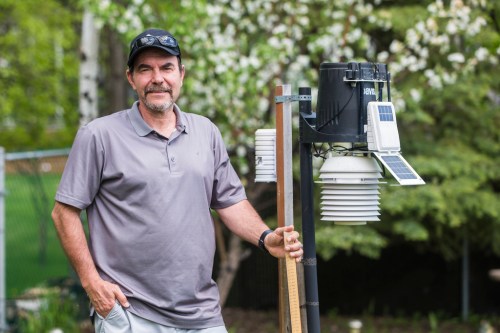
Rob Paola likely knows the answers to those questions.

Paola possesses no super powers. He is but a man with a metre stick and 40 years of professional meteorological experience, in the midst of a lifelong love affair with Mother Nature, a most turbulent mistress who rarely, if ever, reciprocates.

Each year when snow begins to fall, Paola heads outside his Charleswood home to figure out how much. He sticks his ruler in the ground, grabs his clipboard, and clicks his pen. In neat script, he records the temperature, what time precipitation began, how deep the powder is stacked. Then, he shares his data and insights online with thousands of followers who want a clear answer to the eternal questions: Why is this happening? When will it stop? How much snow has fallen in the city of Winnipeg?

Read
Monday, Jun. 13, 2022