‘The end of years of struggles’: Decades-old water advisory lifted for First Nation

Advertisement

Advertise with us

SHOAL LAKE, ONTARIO, CANADA - Angelina McLeod spent most of her life in Shoal Lake 40 First Nation watching her uncles and her father, Alfred Redsky, a former chief, fight for clean drinking water and a better way of life.

Read this article for free:


By clicking the button above, an account will be created and you will begin to receive some of our recommended newsletters. You may opt out of any newsletter by visiting your Email and Communication Preferences page or by clicking "unsubscribe" at the bottom of any email.

or

Already have an account? Log in here »

To continue reading, please subscribe:

Digital Subscription

One year of digital access for only $1.44 a week*

  • Enjoy unlimited reading on winnipegfreepress.com
  • Read the E-Edition, our digital replica newspaper
  • Access News Break, our award-winning app
  • Play interactive puzzles

*Billed as $5.77 plus GST every four weeks. After 52 weeks, price increases to the regular rate of $19.95 plus GST every four weeks. Offer available to new and qualified returning subscribers only. Cancel any time.

To continue reading, please subscribe:

Add Free Press access to your Brandon Sun subscription for only an additional

$1 for the first 4 weeks*

  • Enjoy unlimited reading on winnipegfreepress.com
  • Read the E-Edition, our digital replica newspaper
  • Access News Break, our award-winning app
  • Play interactive puzzles
Start now

*Your next Brandon Sun subscription payment will increase by $1.00 and you will be charged $17.95 plus GST for four weeks. After four weeks, your payment will increase to $24.95 plus GST every four weeks.

Hey there, time traveller!
This article was published 15/09/2021 (1855 days ago), so information in it may no longer be current.

SHOAL LAKE, ONTARIO, CANADA – Angelina McLeod spent most of her life in Shoal Lake 40 First Nation watching her uncles and her father, Alfred Redsky, a former chief, fight for clean drinking water and a better way of life.

The moment came Wednesday when, for the first time in nearly 25 years, the water flowing through the community’s taps was deemed safe to drink.

“It was like I was there seeing it for them,” McLeod said in a phone interview.
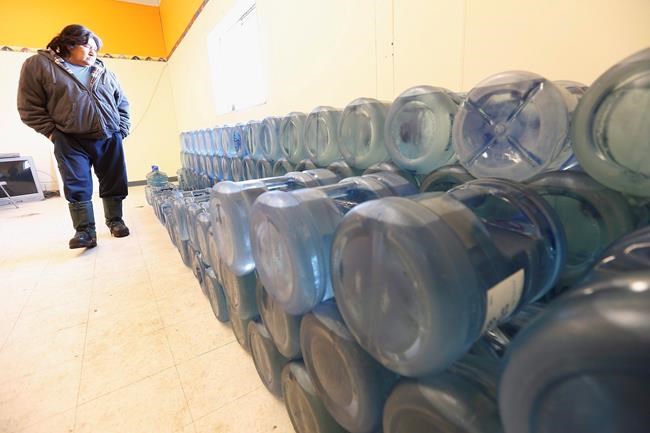
Stewart Redsky, former chief of Shoal Lake 40 First Nation, walks past one week's worth of 20 litre water bottles in the community's water storage room on Feb. 25, 2015. The First Nation is now welcoming clean, running water for the first time in nearly 25 years. THE CANADIAN PRESS/John Woods

McLeod’s father died in 2013. She kept up his fight as a documentarian and eventual councillor for the Anishinaabe community on the Manitoba-Ontario boundary.

On Wednesday, the First Nation celebrated the opening of its long-anticipated water treatment plant with a special event, which included a tour of the facility.

A long-term boil-water advisory for the community, which was issued in 1998 and was one of the longest in Canada, was also lifted.

“It’s the end of years of struggles trying to get the basic necessities of life, clean drinking water,” said McLeod.

Shoal Lake 40 was cut off from the outside world more than a century ago during the construction of an aqueduct that supplies Winnipeg with its drinking water. The community’s land became a man-made island, only accessible by a ferry in the summer and a dangerous ice road in the winter.

McLeod’s mother died when a canoe she was in capsized as she was trying to get back home on the island.

McLeod, 43, said her family’s home didn’t have running water and many households had to rely on bottled water. It wasn’t until she left the community that she realized it wasn’t normal.

She said being isolated on the island without clean drinking water took a toll on her mental health.

“When I started learning about the outside world, when I was growing up, I started feeling less than who I was,” McLeod recalled.

She said some members also began to experience health problems due to what they believe was the water.

The community advocated for years for an all-season transportation link and, in 2019, what became known as “Freedom Road” was completed. Construction on the water treatment plant began soon after.

Federal Indigenous Services Minister Marc Miller was in the community Wednesday for the celebration.

“The people of Shoal Lake 40 have fought hard for this day,” Miller said on Twitter.

Miller and Chief Vernon Redsky were the first to test the water when they toasted at the opening, McLeod added.

“They said it tasted good,” she said with a laugh.

Federal Liberal Leader Justin Trudeau spoke on the election campaign trail Tuesday about the advisory being lifted. He said his government is still committed to ending long-term boil water advisories, a promise the Liberals first made during the 2015 election campaign.

“Indigenous people who have lived on that land for generations and millennia can’t drink the water. We’re fixing that,” Trudeau said.

Numbers from Indigenous Services Canada from Aug. 28 show there were 51 long-term drinking water advisories in 32 communities. Some 109 advisories had been lifted since November 2015.

The community also celebrated the opening of the brand new Harvey Redsky Memorial School, a kindergarten to Grade 8 school, named after a beloved band member and former custodian in the community.

McLeod spearheaded the project. She said she also has her sights set on building its first high school, and with the new water treatment plant finally in place, she believes it’s just the beginning.

“Everybody has hope for the future.”

This report by The Canadian Press was first published Sept. 15, 2021.

— By Brittany Hobson in Winnipeg

___

This story was produced with the financial assistance of the Facebook and Canadian Press News Fellowship.

Report Error Submit a Tip

More Stories

Predict the future of a historical museum

Ben Waldman 3 minute read Preview

Predict the future of a historical museum

Ben Waldman 3 minute read Monday, Jun. 6, 2022

Psst: the Manitoba Museum wants to listen to you.

Founded in 1972, the vaunted emporium of historical fact and scientific enlightenment is opening the floor to the public to help strategize for its next 50 years and beyond, says museum CEO Dorota Blumczynska.

Until July 31, the museum is collecting responses to a survey about the museum’s future and the priorities of its guests at manitobamuseumtomorrow.ca. The short survey will be an essential tool in gauging what the public wants out of the museum, where it is doing good work, and where it needs some realignment or improvement of its approach to curating the history of the province and the land.

Every visitor to the museum is looking for a specific experience, Blumczynska says. Some want to learn. Some want to be entertained. Some want to be propelled to action. Others may need a productive way to spend an afternoon. Regardless, it’s important for the museum to engage with guests about how those experiences can each be enhanced or adapted to fit modern expectations.

Read
Monday, Jun. 6, 2022

Canadians donated most to convoy: alleged leak

Erika Ibrahim, The Canadian Press 5 minute read Preview

Canadians donated most to convoy: alleged leak

Erika Ibrahim, The Canadian Press 5 minute read Monday, Feb. 14, 2022

OTTAWA - A transparency group says it has received information on donors to antigovernment protests after a major fundraising platform was reportedly hacked, and an analysis of the data suggests Canadians contributed the largest amount of money to the cause.

Distributed Denial of Secrets, which has a history of obtaining leaked information from right-wing organizations and providing it to media, says it has received over 30 megabytes of donor information from Christian crowdfunding site GiveSendGo.

The group provided a data set to The Canadian Press and it suggests significant Canadian involvement on top of much-publicized money flowing from the United States.

More than 36,000 donations, or 39 per cent, came from Canada, while 56 per cent came from the United States. Two per cent came from the United Kingdom and the remaining three per cent came from more than 100 other countries.

Read
Monday, Feb. 14, 2022

Elder day care closure frustrates families

Carol Sanders 5 minute read 2:01 AM CDT

A day program that helps older adults in Charleswood stay connected to their community is closing at the end of the month, causing concern for participants and their families now trying to fill the void.

Kathy Brett James said her elderly mom was on a wait list for more than a year before getting into the Charleswood Adult Day Program this summer and said she looks forward to attending every week.

“It has been great for her,” James said. “She’s having conversations instead of being by herself all day.”

For more than 30 years, the program provided a welcoming place for connection, companionship and support for older adults and their families. It helped participants remain active, engaged and connected to their community while also providing respite and support for caregivers.

Running for others’ lives from coast to coast in oppressive heat, smoke-filled air

Zoe Pierce 5 minute read Preview

Running for others’ lives from coast to coast in oppressive heat, smoke-filled air

Zoe Pierce 5 minute read Thursday, Jul. 30, 2026

Some 4,976 kilometres down, 2,524 to go.

James Newman, a 22-year-old from Oakville, Ont., is attempting to complete a 7,500-kilometre run across Canada in fewer than 100 days.

Now on day 73 of his run from St. John’s, N.L., to Victoria, B.C., Newman’s journey will take him through Winnipeg this week.

Since leaving Newfoundland on May 18, Newman has burned thousands of calories, managed injuries and poor air quality and gone through countless pairs of running shoes while trying to stay on pace for a crossing that only three people have completed before the 100-day mark.

Read
Thursday, Jul. 30, 2026

Manitoba pushes tighter self-isolation rules

Danielle Da Silva 6 minute read Preview

Manitoba pushes tighter self-isolation rules

Danielle Da Silva 6 minute read Monday, Nov. 2, 2020

Long-standing advice to stay home when sick now means any roommates, spouses, children and family members will have to hunker down, too, as the province attempts to control the spread of COVID-19.

Manitoba’s top doctor reported 241 new cases of COVID-19 and a five-day test positivity rate of nine per cent Monday — Winnipeg’s first day of city-wide critical (red) restrictions, while the rest of the province was elevated to the orange (restricted) risk level.

Chief provincial public health officer Dr. Brent Roussin said the total number of confirmed COVID-19 cases in Manitoba has hit 6,275 — 3,455 are considered active, though there is a backlog in reporting pandemic recoveries.

With more people sick with the virus, Roussin said Manitobans must now stay at home if someone in their home is symptomatic, pending the results of a COVID-19 test.

Read
Monday, Nov. 2, 2020

short head Ottawa expands student loan

Kevin Rollason 4 minute read Preview

short head Ottawa expands student loan

Kevin Rollason 4 minute read Thursday, Mar. 30, 2023

The federal government is hoping forgiving part of their student loans will encourage more doctors and nurses to work and practice in rural communities.

Read
Thursday, Mar. 30, 2023