Biden blasts high court failure to block Texas abortion curb

Advertisement

Advertise with us

WASHINGTON (AP) — President Joe Biden on Thursday blasted the Supreme Court's decision not to block a new Texas law banning most abortions in the state and directed federal agencies to do what they can to “insulate women and providers” from the impact.

Read this article for free:


By clicking the button above, an account will be created and you will begin to receive some of our recommended newsletters. You may opt out of any newsletter by visiting your Email and Communication Preferences page or by clicking "unsubscribe" at the bottom of any email.

or

Already have an account? Log in here »

To continue reading, please subscribe:

Digital Subscription

One year of digital access for only $1.44 a week*

  • Enjoy unlimited reading on winnipegfreepress.com
  • Read the E-Edition, our digital replica newspaper
  • Access News Break, our award-winning app
  • Play interactive puzzles

*Billed as $5.77 plus GST every four weeks. After 52 weeks, price increases to the regular rate of $19.95 plus GST every four weeks. Offer available to new and qualified returning subscribers only. Cancel any time.

To continue reading, please subscribe:

Add Free Press access to your Brandon Sun subscription for only an additional

$1 for the first 4 weeks*

  • Enjoy unlimited reading on winnipegfreepress.com
  • Read the E-Edition, our digital replica newspaper
  • Access News Break, our award-winning app
  • Play interactive puzzles
Start now

*Your next Brandon Sun subscription payment will increase by $1.00 and you will be charged $17.95 plus GST for four weeks. After four weeks, your payment will increase to $24.95 plus GST every four weeks.

Hey there, time traveller!
This article was published 02/09/2021 (1883 days ago), so information in it may no longer be current.

WASHINGTON (AP) — President Joe Biden on Thursday blasted the Supreme Court’s decision not to block a new Texas law banning most abortions in the state and directed federal agencies to do what they can to “insulate women and providers” from the impact.

Hours earlier, in the middle of the night, a deeply divided high court allowed the law to remain in force. It is the nation’s biggest curb to abortion rights since the court announced in its landmark 1973 Roe v. Wade decision that women have a constitutional right to abortion.

The court voted 5-4 to deny an emergency appeal from abortion providers and others but also suggested that their order likely wasn’t the last word and other challenges can be brought.

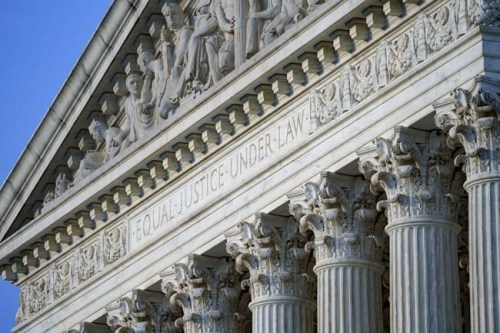
FILE - In this June 30, 2021, file photo the Supreme Court is seen in Washington. A deeply divided Supreme Court is allowing a Texas law that bans most abortions to remain in force, stripping most women of the right to an abortion in the nation’s second-largest state. The court voted 5-4 to deny an emergency appeal from abortion providers and others that sought to block enforcement of the law that went into effect Wednesday, Sept. 1. (AP Photo/J. Scott Applewhite, File)

Biden said in a statement that his administration will launch a “whole-of-government effort to respond to this decision” and look at “what steps the federal government can take to ensure that women in Texas have access to safe and legal abortions as protected by Roe.”

Attorney General Merrick Garland said in a statement that the Justice Department was “deeply concerned” about the Texas law and “evaluating all options to protect the constitutional rights of women, including access to an abortion.”

Biden, who has come under pressure from Democrats to expand the size of the Supreme Court, has ordered a review of the court that is due next month.

The Texas law, signed by Republican Gov. Greg Abbott in May, prohibits abortions once medical professionals can detect cardiac activity, usually around six weeks and before many women know they’re pregnant.

The law is part of a broader push by Republicans nationwide to impose new restrictions on abortion. At least 12 other states have enacted bans early in pregnancy, but all have been blocked from going into effect.

The high court’s order declining to halt the Texas law came just before midnight Wednesday. The majority said those bringing the case had not met the high burden required for a stay of the law.

“In reaching this conclusion, we stress that we do not purport to resolve definitively any jurisdictional or substantive claim in the applicants’ lawsuit. In particular, this order is not based on any conclusion about the constitutionality of Texas’s law, and in no way limits other procedurally proper challenges to the Texas law, including in Texas state courts,” the unsigned order said.

Chief Justice John Roberts dissented along with the court’s three liberal justices. Each of the four wrote a statement expressing disagreement with the majority.

Roberts noted that while the majority denied the request for emergency relief “the court’s order is emphatic in making clear that it cannot be understood as sustaining the constitutionality of the law at issue.”

Separately, the justices are planning to tackle the issue in a major case when they begin hearing arguments again in the fall. That case involves the state of Mississippi, which is asking to be allowed to enforce an abortion ban after 15 weeks of pregnancy.

The vote in the Texas case underscores the impact of the death of the liberal Justice Ruth Bader Ginsburg last year and then-president Donald Trump’s replacement of her with conservative Justice Amy Coney Barrett. Had Ginsburg remained on the court there would have been five votes to halt the Texas law.

Justice Sonia Sotomayor called her conservative colleagues’ decision “stunning.”

“Presented with an application to enjoin a flagrantly unconstitutional law engineered to prohibit women from exercising their constitutional rights and evade judicial scrutiny, a majority of Justices have opted to bury their heads in the sand,” she wrote.

Texas lawmakers wrote the law to evade federal court review by allowing private citizens to bring lawsuits in state court against anyone involved in an abortion, other than the patient. Other abortion laws are enforced by state and local officials, with criminal sanctions possible.

In contrast, Texas’ law allows private citizens to sue abortion providers and anyone involved in facilitating abortions. Among other situations, that could include anyone who drives a woman to a clinic to get an abortion. Under the law, anyone who successfully sues another person would be entitled to at least $10,000.

Justice Elena Kagan wrote that the law was “patently unconstitutional,” and Justice Stephen Breyer said a “woman has a federal constitutional right to obtain an abortion during” the first stage of pregnancy.

However, anti-abortion groups cheered the court’s action.

“This is the most significant accomplishment for the pro-life movement in Texas since Roe v. Wade,” said John Seago, legislative director for Texas Right to Life, the state’s largest anti-abortion group. “We had the Supreme Court that is allowing the strongest bill we’ve ever passed to go into effect. And that is unheard of.”

Kristan Hawkins, the president of Students for Life of America, said in a statement that her group was “celebrating this decision for what it is, baby steps in the right direction toward the obvious conclusion that Roe is fatally flawed and must go.”

But Nancy Northup, the head of the Center for Reproductive Rights, which represents abortion providers challenging the law, vowed to keep fighting it.

“Right now, people seeking abortion across Texas are panicking — they have no idea where or when they will be able to get an abortion, if ever,” she said.

Texas has long had some of the nation’s toughest abortion restrictions, including a sweeping law passed in 2013. The Supreme Court eventually struck down that law, but not before more than half of the state’s 40-plus clinics closed.

___

Associated Press writer Paul J. Weber in Austin, Texas, contributed to this report.

Report Error Submit a Tip

More Stories

Election results: School trustees 2026

Staff 1 minute read Preview

Election results: School trustees 2026

Staff 1 minute read Friday, Oct. 23, 2026

Below you’ll find live 2026 election results for school trustees in Winnipeg divisions.

We can display results only for wards in which Winnipeg voters cast a ballot; we do not have access to live results reporting for school boards outside of Winnipeg.


Read
Friday, Oct. 23, 2026

Biden blasts high court failure to block Texas abortion curb

Jessica Gresko, The Associated Press 6 minute read Preview

Biden blasts high court failure to block Texas abortion curb

Jessica Gresko, The Associated Press 6 minute read Thursday, Sep. 2, 2021

WASHINGTON (AP) — President Joe Biden on Thursday blasted the Supreme Court's decision not to block a new Texas law banning most abortions in the state and directed federal agencies to do what they can to “insulate women and providers” from the impact.

Hours earlier, in the middle of the night, a deeply divided high court allowed the law to remain in force. It is the nation's biggest curb to abortion rights since the court announced in its landmark 1973 Roe v. Wade decision that women have a constitutional right to abortion.

The court voted 5-4 to deny an emergency appeal from abortion providers and others but also suggested that their order likely wasn't the last word and other challenges can be brought.

Biden said in a statement that his administration will launch a “whole-of-government effort to respond to this decision” and look at “what steps the federal government can take to ensure that women in Texas have access to safe and legal abortions as protected by Roe."

Read
Thursday, Sep. 2, 2021

Waiting for Cormier verdict the ‘calm before the storm’

Katie May 6 minute read Preview

Waiting for Cormier verdict the ‘calm before the storm’

Katie May 6 minute read Thursday, Feb. 22, 2018

As the jury room door closed behind the seven women and four men who are now deliberating on the evidence against Tina Fontaine’s accused killer, Thelma Favel rose from the chair she’s occupied for most of Raymond Cormier’s second-degree murder trial.

Almost every day over the past three weeks, Favel, the woman who raised 15-year-old Tina, has sat right up front, directly across from the jury box, listening, sobbing and soaking in disturbing details of the teen’s last days that have come to light over the course of Cormier’s second-degree murder trial.

On Wednesday afternoon, after Court of Queen’s Bench Chief Justice Glenn Joyal instructed the jury and sent them off to be sequestered until they decide whether 56-year-old Raymond Cormier is guilty of killing Tina, Favel got up and hugged Crown prosecutor Breta Passler. It was one of many moments, this one shielded from jurors, that have long since proven the emotional impact of the case and the lasting power of Tina’s legacy.

Tina’s death sparked a public outcry that renewed calls for a national inquiry into disproportionately high rates of missing and murdered Indigenous women and girls across Canada, and the criminal trial for the man accused of killing her hasn’t happened in a vacuum.

Read
Thursday, Feb. 22, 2018

World Indigenous Business Forum comes home to Winnipeg for first time, ponders questions for future prosperity

Aaron Epp 5 minute read Preview

World Indigenous Business Forum comes home to Winnipeg for first time, ponders questions for future prosperity

Aaron Epp 5 minute read Tuesday, Oct. 27, 2026

When Nicola Shirley-Phillips imagines what the Indigenous economy in her country might look like 100 years from now, she doesn’t mention social media or artificial intelligence. Instead, she envisions a holistic way of life where people work alongside each other in a way that cares for the planet.

“I see community (and) I see us being more respectful of all the energies around us — our water energy, our climate (and) the soil,” she said. “In all of that, there are opportunities for us to create businesses and opportunities to provide our services.”

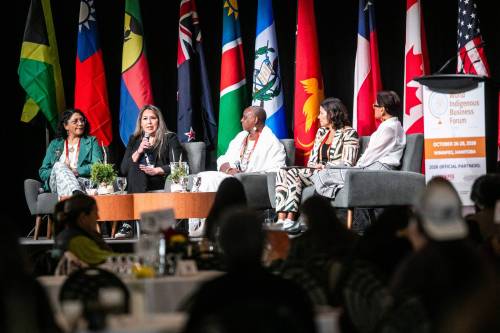
Shirley-Phillips, a serial entrepreneur, organic farmer and community economic development specialist from Jamaica, shared her vision Tuesday morning during a panel discussion focused on Indigenous women and prosperity.

The discussion was one of the first items on the schedule during the first full day of the World Indigenous Business Forum at the RBC Convention Centre in Winnipeg.

Read
Tuesday, Oct. 27, 2026

Opera singer David Daniels no longer in singers’ union following sexual assault guilty plea

The Associated Press 2 minute read Preview

Opera singer David Daniels no longer in singers’ union following sexual assault guilty plea

The Associated Press 2 minute read Thursday, Dec. 21, 2023

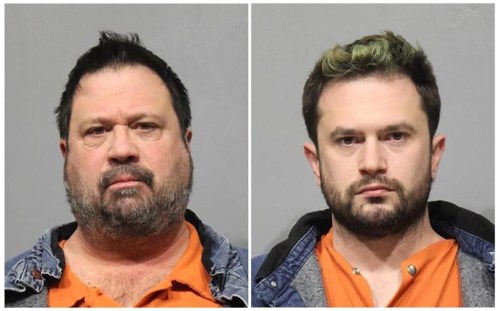
NEW YORK (AP) — Countertenor David Daniels is no longer a member of the union for singers following his guilty plea to a charge of sexual assault.

The 57-year-old and his husband, Scott Walters, pleaded guilty to sexual assault of an adult, a second-degree felony, in Houston's Harris County District Court on Aug. 4. Their accuser was aspiring opera singer Sam Schultz.

They both were sentenced to eight years’ probation and required to register as sex offenders.

American Guild of Musical Artists spokesperson Alicia Cook said Wednesday that Daniels is no longer a member of the union.

Read
Thursday, Dec. 21, 2023

The landscape that taught us to see

Stephen Borys 6 minute read Preview

The landscape that taught us to see

Stephen Borys 6 minute read 2:01 AM CDT

The white pine stood at the edge of the lake, leaning out over the water, its branches bent by years of wind and weather. Beyond it stretched an expanse of blue water beneath a clear sky, a distant tree line and other pines rising along the rocky shoreline. From the deck above, the landscape seemed both expansive and remarkably still.

I had been looking at it for only a few moments when Tom Thomson and the Group of Seven entered the picture. Not literally, of course. But once the association appeared, I could not unsee it. The pine became The Jack Pine and The West Wind. The surrounding rocks, water and sky called up A.Y. Jackson, Arthur Lismer, Franklin Carmichael and Lawren Harris. A landscape I had been looking at all weekend suddenly became part of a visual history Canadians have carried with them for more than a century.

Perhaps that is the Group of Seven’s greatest achievement. They did not simply paint the Canadian landscape. They changed the way we see it.

I was at the lake for a quiet weekend, reflecting on the cultural, community and development projects that occupy much of my work through Civic Muse. Increasingly, I see these pursuits as part of the same conversation — place and identity, how we understand it, care for it and decide what is worth carrying forward.

Read
2:01 AM CDT