1st Paralympic gold medal goes to Paige Greco of Australia

Advertisement

Advertise with us

TOKYO (AP) — Australian cyclist Paige Greco earned the first gold medal of the Tokyo Paralympics, winning the 3,000-meter pursuit on Wednesday on the track at the velodrome.

Read this article for free:


By clicking the button above, an account will be created and you will begin to receive some of our recommended newsletters. You may opt out of any newsletter by visiting your Email and Communication Preferences page or by clicking "unsubscribe" at the bottom of any email.

or

Already have an account? Log in here »

To continue reading, please subscribe:

Digital Subscription

One year of digital access for only $1.44 a week*

  • Enjoy unlimited reading on winnipegfreepress.com
  • Read the E-Edition, our digital replica newspaper
  • Access News Break, our award-winning app
  • Play interactive puzzles

*Billed as $5.77 plus GST every four weeks. After 52 weeks, price increases to the regular rate of $19.95 plus GST every four weeks. Offer available to new and qualified returning subscribers only. Cancel any time.

To continue reading, please subscribe:

Add Free Press access to your Brandon Sun subscription for only an additional

$1 for the first 4 weeks*

  • Enjoy unlimited reading on winnipegfreepress.com
  • Read the E-Edition, our digital replica newspaper
  • Access News Break, our award-winning app
  • Play interactive puzzles
Start now

*Your next Brandon Sun subscription payment will increase by $1.00 and you will be charged $17.95 plus GST for four weeks. After four weeks, your payment will increase to $24.95 plus GST every four weeks.

Hey there, time traveller!
This article was published 25/08/2021 (1893 days ago), so information in it may no longer be current.

TOKYO (AP) — Australian cyclist Paige Greco earned the first gold medal of the Tokyo Paralympics, winning the 3,000-meter pursuit on Wednesday on the track at the velodrome.

It was the first of 24 gold medals up for grabs on Wednesday as the Paralympics got underway in the middle of a pandemic that has seen new cases in Tokyo soar since the Olympics opened just over a month ago.

Medals were also contested in swimming and wheelchair fencing on Wednesday.

Australia's Paige Greco wins the Gold Medal in the Track Cycling Womens C3 3000m Individual Pursuit at the Izu Velodrome in Tokyo 2020 Paralympic Games in Tokyo, Wednesday, August 25, 2021. (Thomas Lovelock for OIS via AP)

Greco was born with cerebral palsy, which mostly affects the right side of her body. It was her first Paralympic Games medal, winning her race in 3 minutes, 50.815 seconds.

“It feels amazing,” Greco said. “I still can’t believe it. I keep looking down and seeing (the gold medal). It’s not really sunk in yet.”

Wang Xiaomei of China was second and bronze went to Denise Schindler of Germany.

Greco took up cycling just over three years ago after competing in track and field for seven years.

Australian teammate William Martin also won gold in the first swimming final of the Paralympics, taking the 400-meter freestyle in the S9 class in 4:10.25 seconds. Ugo Didier of France took silver and Alex Tuckfield of Australia won bronze.

In the first wheelchair fencing final, Li Hao of China won gold in the men’s individual saber. He defeated Artem Manko of Ukraine 15-12 in the final.

Away from the competition, organizers confirmed Wednesday that two more athletes have tested positive for COVID-19 in the Paralympic Village. That brings to three the total of positive tests by athletes in the village over the last two days.

Organizers have confirmed nine positive tests in the village over the last three days. The additional six, who are not athletes, are described as “Games-related personnel.”

Organizing committee spokesman Masa Takaya said the athletes were “from different sports and different countries.” But he gave few details and said the athletes have been placed in isolation.

He was asked if there was a COVID-19 cluster in the village.

“Whether or not there is a cluster should be based on the advice from specialists,” he said.

Japan is expanding its coronavirus state of emergency for a second week in a row, adding several more prefectures as a surge in infections fueled by the delta variant strains the country’s health care system.

The Japanese capital has been under the emergency since July 12, but new daily cases have increased more than tenfold since then to about 5,000 in Tokyo and 25,000 nationwide. Hospital beds are quickly filling and many people must now recover at home, including some who require supplemental oxygen.

Japan has weathered the pandemic better than many other countries, with around 15,600 deaths nationwide since the start, but its vaccination efforts lag behind other wealthy nations. About 40% of the population has been fully vaccinated, mainly elderly people.

Dr. Shigeru Omi, a medical advisor for the government, criticized International Olympic Committee President Thomas Bach for returning to Tokyo to attend Tuesday’s opening of the Paralympics.

“Right now, the government is requesting people to telework and (Bach) is coming back just for that,” Omi said, responding to a question from an opposition lawmaker in parliament.

“When the government is making those requests to the people, why is the Olympic leader, President Bach, coming all the way to Tokyo. Anyone with normal, common sense should be able to think that he has already come once and even visited Ginza.”

International Paralympic Committee spokesman Craig Spence confirmed the IPC is in contact with two Paralympic athletes from Afghanistan who have left the country. He declined to speculate whether they might eventually reach Tokyo for the Paralympics.

“There’s a lot of speculation going on where these Afghan athletes are,” Spence said. “I’m not going to tell you where they are because this isn’t about sport, this is about human rights and keeping people safe.”

He added they were in a “safe place.”

Several reports say the two athletes — Hossain Rosouli and Zakia Khudadadi — may have arrived in Australia.

___

Associated Press writer Mari Yamaguchi contributed to this report.

___

More AP Olympics: https://apnews.com/hub/2020-tokyo-olympics and https://twitter.com/AP_Sports

Report Error Submit a Tip

More Stories

Doctor’s departure stressful for teen

Kevin Rollason 6 minute read Preview

Doctor’s departure stressful for teen

Kevin Rollason 6 minute read Sunday, Oct. 24, 2021

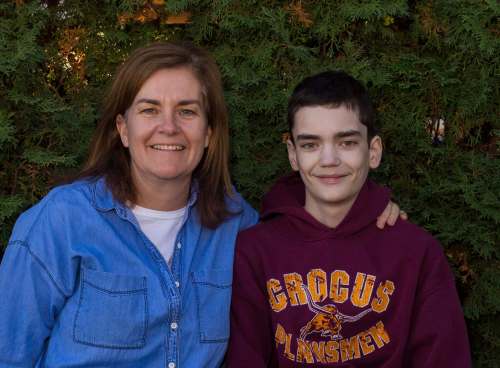
Morgan Walker is a typical teen — but only because a piece of his brain the size of a deck of cards was removed four years ago.

Walker, who had seizures multiple times a day before his surgery, fears other people might not be so lucky.

That’s because his surgeon, Dr. Demitre Serletis, is leaving the province and Health Sciences Centre. Serletis will start practising at the Cleveland Clinic in the new year.

“I was kind of shocked, but I understood why,” Walker said from his home in Brandon. “The government really hasn’t been respecting doctors.”

Read
Sunday, Oct. 24, 2021

Letters, Oct. 31

6 minute read 2:01 AM CDT

Civic election a missed opportunity

The outcome of the latest municipal election in Winnipeg is nothing short of baffling. The decline of what was once a proud, beautiful prairie hub is impossible to ignore.

Winnipeg is rapidly sliding into a state of structural and social dilapidation, yet voters have inexplicably chosen to hand incumbent Mayor Scott Gillingham a second term. The decision smells of complacency, and sadly, it represents a massive missed opportunity for real urban renewal.

Walking through downtown Winnipeg today is an exercise in heartbreak. A city centre that should be a bustling economic and cultural core has instead transformed into an absolute eyesore. Encampments and tents are permitted to dot the heart of the city. Streets that used to thrive are now dominated by the tragic, visible reality of severe addiction, with individuals wandering and staggering through public spaces without adequate intervention or care.

Defunding police ‘illogical step’: Pallister

Carol Sanders 6 minute read Preview

Defunding police ‘illogical step’: Pallister

Carol Sanders 6 minute read Tuesday, Jun. 9, 2020

Manitoba Premier Brian Pallister says he’s open to channelling justice funding to preventive programs, but questions whether defunding police is the best approach — warning there will always be criminals taking advantage of vulnerable people.

“I think the motivation that lies in frustrations of the actions of some police services — not necessarily here in Winnipeg exclusively, but elsewhere — is justifiable and understandable, and I get it,” Pallister said Tuesday, when asked to comment on the 30,000 signatures collected for a Justice 4 Black Lives Winnipeg petition calling for the abolition of the city police.

“But then moving to defunding police is, to me, an illogical step from that one. Don’t let your frustration lose your common sense... There’s a lot of people out there in vulnerable communities who depend on the police to protect them and make sure they’re safe from the action of criminals.”

There has been a widespread call to restructure police funding in the wake of George Floyd’s death May 25 in Minneapolis.

Read
Tuesday, Jun. 9, 2020

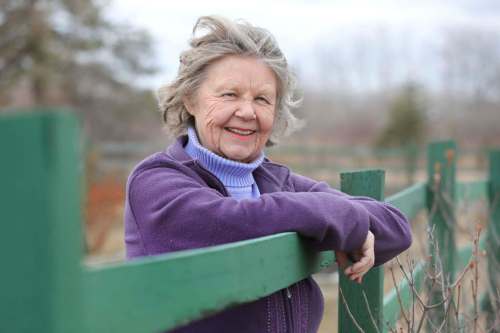
Province’s first female dentist took skill, insight wherever needed

David Sanderson    25 minute read Preview

Province’s first female dentist took skill, insight wherever needed

David Sanderson    25 minute read Saturday, Apr. 3, 2021

Some stories take longer to get around to than others.

In the fall of 2011 I hooked up with Fiona Odlum at an Academy Road Starbucks for a lighthearted feature about people who report on traffic for a living. Odlum, currently a contributor at CBC Saskatchewan, was working for 680 CJOB at the time, clueing rush-hour commuters in on stalls, lane closures and fender-benders they’d be wise to avoid.

Odlum turned the tables at one point by asking a few questions of her own including, “So, what’s your main beat?”

I don’t really have one, I told her, but if pressed, I would probably go with human-interest pieces.

Read
Saturday, Apr. 3, 2021

Court ruling concludes Canadian Wheat Board saga

Laura Rance-Unger 4 minute read Preview

Court ruling concludes Canadian Wheat Board saga

Laura Rance-Unger 4 minute read 2:01 AM CDT

It remains to be seen whether the recent court ruling in a lawsuit filed after Canadian Wheat Board’s dissolution in 2012 puts the whole debate to rest, as some no doubt hope.

But either way, the dust has settled on the post-CWB world. The sun still rises and a new generation of farmers on the land only knows by name an institution that for generations influenced every aspect of Prairie grain farming.

The first Rural Revival column I wrote for this newspaper more than 30 years ago was about a thousand farmers from Western Canada demonstrating in support of the Wheat Board. It was in the aftermath of the Western Grain Marketing Panel report, one of several efforts that eventually included a plebiscite to help the federal government decide what to do about a vocal minority of farmers who wanted marketing “freedom.”

The polls at the time suggested about two-thirds of farmers were comfortable enough with the single-desk system for food wheat and barley to keep it around. It served as a counterbalance to canola, which they sold on the open market. They essentially had a dual market.

Read
2:01 AM CDT

The new normal in Canadian politics

David McLaughlin 5 minute read Preview

The new normal in Canadian politics

David McLaughlin 5 minute read 2:01 AM CDT

“Nothing happening, all at once.”

Welcome to the new normal of Canadian politics, where normality is the new normal. Routine and stable are in; disruptive and excessive are out. Exhibits A and B are the Alberta referendum and the British Columbia election. Voters opted for stability over volatility.

The opposite of being normal is being different from the norm. In politics that means different from where we’ve been and what we’ve come to expect. Two competing trends have dominated our politics for the past decade and a half — progressivism and populism. Think Justin Trudeau and liberal, progressive identity politics in Canada, and Donald Trump and conservative, populist MAGA politics in America. We are now experiencing a swing away from both those trends.

Representing this “new normal” are Prime Minister Mark Carney, for one, and newly elected British Columbia premier, Lorne Doerksen, for another. Both are considered normal because they talk and act like adults in a childish political world. Their political flair is to not have any political flair. They stand out for not standing out.

Read
2:01 AM CDT