Mandatory vaccinations emerge as first big wedge issue in pandemic election race
Advertisement
Read this article for free:
or
Already have an account? Log in here »
To continue reading, please subscribe:
Digital Subscription
One year of digital access for only $1.44 a week*
- Enjoy unlimited reading on winnipegfreepress.com
- Read the E-Edition, our digital replica newspaper
- Access News Break, our award-winning app
- Play interactive puzzles
*Billed as $5.77 plus GST every four weeks. After 52 weeks, price increases to the regular rate of $19.95 plus GST every four weeks. Offer available to new and qualified returning subscribers only. Cancel any time.
To continue reading, please subscribe:
Add Free Press access to your Brandon Sun subscription for only an additional
$1 for the first 4 weeks*
- Enjoy unlimited reading on winnipegfreepress.com
- Read the E-Edition, our digital replica newspaper
- Access News Break, our award-winning app
- Play interactive puzzles
*Your next Brandon Sun subscription payment will increase by $1.00 and you will be charged $17.95 plus GST for four weeks. After four weeks, your payment will increase to $24.95 plus GST every four weeks.
Read unlimited articles for free today:
or
Already have an account? Log in here »
Hey there, time traveller!
This article was published 16/08/2021 (1900 days ago), so information in it may no longer be current.
OTTAWA – Not even 24 hours had passed on the federal election trail before it became obvious what the first wedge issue of the race would be: mandatory vaccinations.
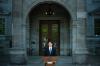
Liberal Leader Justin Trudeau named it on Sunday as the first issue he believed Canadians deserve to have a say on, standing outside Rideau Hall where he asked the Governor General to pull the plug on his minority government, plunging the country into an election to take place Sept. 20.
Days earlier, his government unveiled a plan to mandate vaccinations for federal employees, workers in federally regulated industries like transportation and banking, as well as many domestic travellers.
That demonstrated a marked shift in the Liberals’ approach to the question of whether people should need to show some proof of vaccination outside of international travel, with Trudeau earlier in the year warning such a policy could be “divisive.”
The topic is now top of mind as the country finds itself in a fourth wave of the COVID-19 pandemic, with provinces and businesses searching for ways to avoid another lockdown and boost vaccination rates.
Trudeau said Sunday not every political party agrees with his government’s latest move and singled out the Conservatives for comments made by an Alberta MP who called the idea “tyrannical.”
The issue is a delicate one for Conservative Leader Erin O’Toole, who speaks for a base focused on personal freedoms.
At first, he avoided directly answering on Sunday what he thinks about the new mandate.
Hours later, he issued a statement clarifying he believes people want a “balanced approach that protects their right to make personal health decisions,” and favours requiring unvaccinated travellers and federal workers to be tested for COVID-19 as an alternative to having to get a shot.
“Rapid testing in particular on a daily basis can be very effective to make sure we reduce the spread,” O’Toole told reporters from the stage of a hotel ballroom-based broadcast studio for the party in downtown Ottawa.
“We have a reasonable and effective approach that respects Canadians and keeps people safe. It’s not the time to divide.”
The daylight between O’Toole’s approach and the Liberal mandate actually appears somewhat narrow, given that the federal government is planning to make exceptions for those who can’t get vaccinated for medical reasons or other protected grounds.
The Liberals also haven’t yet said what will happen to civil servants or federally regulated workers who refuse to get vaccinated.
However, Conservatives pounced on an Aug. 13 message from the chief human resources officer to government employees, posted on the government’s website, which said alternative measures, like testing and screening, will need to be considered for those not wanting to get vaccinated.
The Conservatives issued a statement Monday evening pointing to this advice as evidence Trudeau is trying to mislead Canadians.
“Justin Trudeau’s plan for federal employees is the same as Erin O’Toole’s. If Justin Trudeau is willing to mislead Canadians about his vaccine policy, then he’ll mislead them about anything,” the party said.
The message disappeared shortly thereafter from the government website. A Treasury Board spokesperson said later that the message was “inaccurate” and was “taken down to avoid confusion.”
Genevieve Sicard said the government’s policy is that “vaccinations are our best line of defence” and that accommodation or alternative measures such as testing and screening would be considered only “for those few who are unable to be vaccinated.”
Earlier on Monday, Trudeau was asked whether he thinks those employees who refuse to get vaccinated should be fired and said, “That’s a question we’re working on very closely with the public service unions.”
“We know that the goal is not to punish people who don’t want to get vaccinated, but it is to protect Canadians from being infected by people who are unvaccinated,” the Liberal leader said, speaking at a campaign stop in Longueuil, Que.
He framed the issue as a choice for votersbetween a Liberal party “doing everything we can to protect Canadians” in the pandemic and Conservatives he accused of wanting to roll back such protections.
“It’s obviously a political move to wedge Conservatives and have Erin O’Toole respond,” said Shakir Chambers, a political strategist who has worked for Conservatives and is a principal at Earnscliffe Strategy Group.
“I don’t think the position Erin O’Toole actually adopted is going to rub a lot of Canadians the wrong way.”
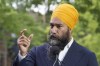
New Democratic Party Leader Jagmeet Singh also seized on the mandatory vaccination issue on the first full day of the campaign, pressing Trudeau to set a deadline of Sept. 6 for when federal public servants and workers in federally regulated industries need to be vaccinated.
He also called for Trudeau to offer paid leave for workers still needing a shot.
“If Justin Trudeau really wants to protect Canadians, he needs to set real deadlines for vaccine passports and mandatory vaccinations for federal industries,” Singh said in a statement.
Nazeem Muhajarine, a professor of community health and epidemiology at the University of Saskatchewan, said vaccination numbers have stalled, and he believes it’s the right time to bring in mandatory policies to incentivize those feeling hesitant to take a shot.

Most recently, it was reported nearly 82 per cent of Canadians 12 and older had at least one dose of vaccine, while 70 per cent had been fully vaccinated.
Muhajarine added accommodations must be made for those unable to be vaccinated, but noted that is a “very small number of people” compared to those who don’t want one.
For the federal policy to have its desired effect, which is to get more people vaccinated, Muhajarine agreed Ottawa needs to provide fixed dates so federal workers and others can schedule appointments and make their plans.
Ottawa has said vaccination requirements for the federal public service could come as early as the end of September and no later than the end of October for those working in federally regulated industries.
This report by The Canadian Press was first published Aug. 16, 2021.
Related Articles
Early election unlikely to generate excitement


Advertisement Advertise With Us
Advertisement Advertise With Us