Hashimoto: ‘No spectators’ still possible for Tokyo Olympics
Advertisement
Read this article for free:
or
Already have an account? Log in here »
To continue reading, please subscribe:

Digital Subscription
One year of digital access for only $205*
- Enjoy unlimited reading on winnipegfreepress.com
- Read the E-Edition, our digital replica newspaper
- Access News Break, our award-winning app
- Play interactive puzzles
*First annual payment billed as $205.00 + GST for one year. This annual subscription will automatically renew at $233.00 + GST every 52 weeks (10% off the regular annual price of $259.35). Offer available to new and qualified returning subscribers only. Cancel any time.
To continue reading, please subscribe:
Add Free Press access to your Brandon Sun subscription for only an additional
$1 for the first 4 weeks*
- Enjoy unlimited reading on winnipegfreepress.com
- Read the E-Edition, our digital replica newspaper
- Access News Break, our award-winning app
- Play interactive puzzles
*Your next Brandon Sun subscription payment will increase by $1.00 and you will be charged $17.95 plus GST for four weeks. After four weeks, your payment will increase to $24.95 plus GST every four weeks.
Read unlimited articles for free today:
or
Already have an account? Log in here »
Hey there, time traveller!
This article was published 25/06/2021 (1917 days ago), so information in it may no longer be current.
TOKYO (AP) — A “no-spectator games” remains an option for the Tokyo Olympics, which open officially in just four weeks, the president of the Tokyo Olympic organizing committee said Friday.
The admission by Seiko Hashimoto comes only four days after she announced on Monday that up to 10,000 local fans would be allowed into venues — with numbers not to exceed 50% of venue capacity regardless of indoor or outdoor events.
Organizers put off the decision on local fans for several months, and fans from abroad were banned months ago. The move to allow fans went against many medical experts who have said the safest Olympics would be with no fans due to coronavirus.
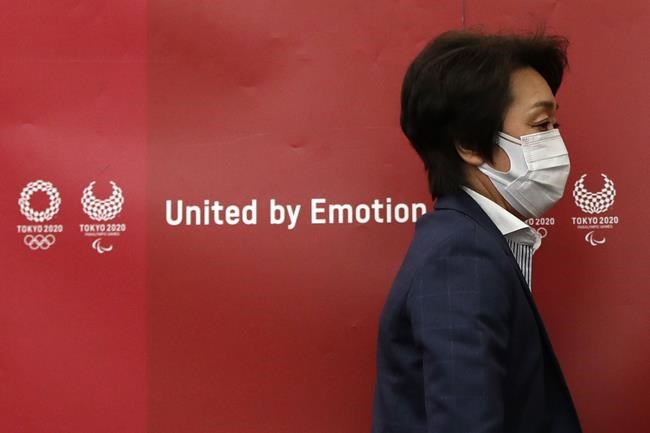
“What I feel is that no spectating should remain an option for us as we look into things,” Hashimoto said at a news conference. “The situation is changing from time to time so that is why we need to remain flexible and prompt in responding to any change. A no-spectator games is one of our options.”
Organizers seemed to back down slightly on fans after a COVID-19 panel for the Tokyo Metropolitan Government reported on Thursday that “there’s a sign of resurgence” of infections in Tokyo.
The panel said infections grew by 11% in the last week — based on the seven-day average — with more of the contagious Delta variant cases being detected. Organizers say they will take another look at fans after the current “quasi-state of emergency” ends on July 11.
Olympic Minister Tamayo Marukawa delivered another wake-up call on Friday when she confirmed that a member of the Ugandan team who tested positive for the coronavirus upon entry to Japan last week was infected with the Delta variant.
Later in the day a second Ugandan also tested positive for the Delta variant, Osaka Gov. Hirofumi Yoshimura said.
Despite extensive testing before and upon entry, cases like these seem certain to happen with 11,000 Olympic athletes and 4,400 Paralympic athletes entering Tokyo, along with tens of thousands of added staff, coaches, judges, and IOC and sports federations officials.
The first Ugandan member, reportedly a coach, was detected positive last Saturday at the Narita airport near Tokyo and quarantined. But the Japanese authorities allowed the remainder of the nine-person team to travel more than 500 kilometers (300 miles) on a chartered bus to their pre-game camp in Izumisano, in the western prefecture of Osaka.
“They all carried certificates showing their negative test results,” Izumisano Mayor Hiroyasu Chiyomatsu said. “We never imagined they could be infected.”
The team members were quarantining at a hotel there.
“The Olympic organizing committee is very much interested in finding out more from this (Uganda) example,” Hashimoto said. “We will pay detailed attention to get information as much as possible from this experience,” with operations refined accordingly.
She added: “We cannot say everything is 100%. We will make a bubble as close to 100% as possible.”
The head of Imperial Household Agency on Thursday said Emperor Naruhito is “extremely worried” about the health risks presented by the Olympics. It was a rare move for the ceremonial figure who stays away from politics.
He was under no obligation to speak up about the Olympics, and the fact he did is more significant than what he said.
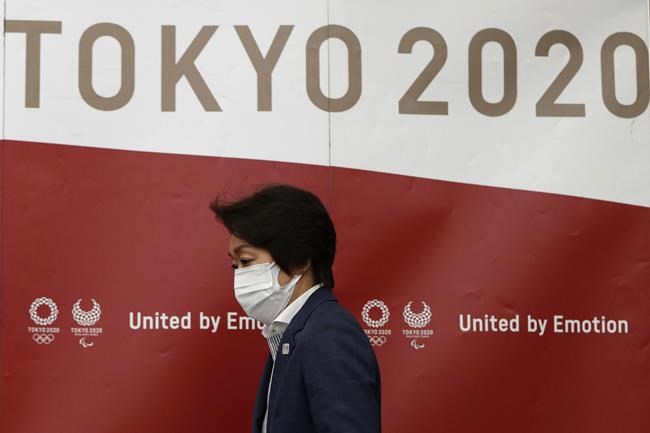
Hashimoto was asked at least three times about the Emperor’s comments, but did not mention his name and gave vague replies.
“We need to remove anxiety and concerns from all the Japanese people,” she said. “We need to really ensure a safe and secure operation of the games. So we will need to put in more effort in doing that.”
The IOC is pushing ahead with the Olympics, partly because it derives almost 75% of its income from selling broadcast rights. Estimates suggest $3 billion to $4 billion in broadcast money is on the line in Tokyo.
The official cost of the Olympics is $15.4 billion, though several government audits say it’s much larger. All but $6.7 billion is public money. The IOC contributes about $1.5 billion.

Japan has reported about 780,000 coronavirus cases and has attributed about 14,500 deaths to COVID-19. About 9% of Japanese have been fully vaccinated as the government steps up its inoculation drive.
___
Associated Press writers Kantaro Komiya and Mari Yamaguchi contributed to this report.
___
More AP Olympics: https://apnews.com/hub/olympic-games and https://twitter.com/AP_Sports
Related Articles
Penny Oleksiak, Canadian swim relay team set the tone at Tokyo Olympics pool with clutch silver medal







Advertisement Advertise With Us
Advertisement Advertise With Us