Rafael Nadal uncertain about playing in Tokyo Olympics

Advertisement

Advertise with us

ROME (AP) — Rafael Nadal joined the growing number of tennis players expressing doubts about competing in the Tokyo Olympics.

Read this article for free:


By clicking the button above, an account will be created and you will begin to receive some of our recommended newsletters. You may opt out of any newsletter by visiting your Email and Communication Preferences page or by clicking "unsubscribe" at the bottom of any email.

or

Already have an account? Log in here »

To continue reading, please subscribe:

Digital Subscription

One year of digital access for only $1.44 a week*

  • Enjoy unlimited reading on winnipegfreepress.com
  • Read the E-Edition, our digital replica newspaper
  • Access News Break, our award-winning app
  • Play interactive puzzles

*Billed as $5.77 plus GST every four weeks. After 52 weeks, price increases to the regular rate of $19.95 plus GST every four weeks. Offer available to new and qualified returning subscribers only. Cancel any time.

To continue reading, please subscribe:

Add Free Press access to your Brandon Sun subscription for only an additional

$1 for the first 4 weeks*

  • Enjoy unlimited reading on winnipegfreepress.com
  • Read the E-Edition, our digital replica newspaper
  • Access News Break, our award-winning app
  • Play interactive puzzles
Start now

*Your next Brandon Sun subscription payment will increase by $1.00 and you will be charged $17.95 plus GST for four weeks. After four weeks, your payment will increase to $24.95 plus GST every four weeks.

Hey there, time traveller!
This article was published 11/05/2021 (1996 days ago), so information in it may no longer be current.

ROME (AP) — Rafael Nadal joined the growing number of tennis players expressing doubts about competing in the Tokyo Olympics.

The third-ranked Nadal, in Rome for the Italian Open, said Tuesday that his status for the Tokyo games is uncertain.

“I don’t know yet. Honestly, I can’t give you a clear answer because I don’t know,” Nadal said when asked whether he would be at the rescheduled Olympics. “I don’t know my calendar.

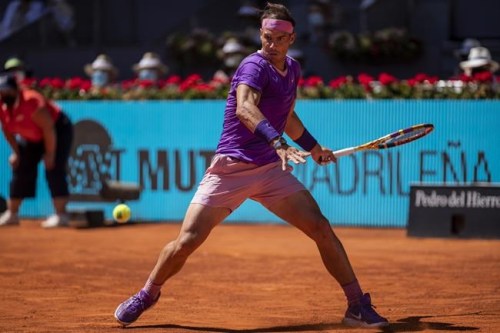
Spain's Rafael Nadal returns the ball to Germany's Alexander Zverev during their match at the Mutua Madrid Open tennis tournament in Madrid, Spain, Friday, May 7, 2021. (AP Photo/Bernat Armangue)

“In a normal world, I will never see about missing Olympics, of course. Is no doubt about that. Everybody knows how important have been for me (to) always play Olympics.”

The Tokyo Olympics were postponed from 2020 because of the coronavirus pandemic.

“Under these circumstances, I don’t know. Let’s see what’s going on in the next couple of months. But I need to organize my schedule,” the 34-year-old Spaniard continued. “My schedule in a normal year, I normally know my schedule almost 100% since 1st of January till the end of the season.

“This year is something a little bit different, no? We need to be flexible. We need to adapt about the things that are happening.”

Nadal won the singles gold medal at the Beijing Olympics in 2008 and claimed gold in doubles five years ago at the Rio de Janeiro Olympics.

Nadal is attempting to win a 10th Italian Open to complete his buildup for a 14th French Open trophy.

He is the latest top tennis player to voice his uncertainty about the games, which open July 23.

Kei Nishikori and Naomi Osaka have raised concerns about whether the games should even go ahead at all.

Osaka said. “But I think that there’s so much important stuff going on, and especially the past year.”

Japan has attributed 11,000 deaths to COVID-19, better than many countries, but poor for Asia. The virus and its spreading variants are taxing Japan’s health-care system with only 2% of the population vaccinated.

Public sentiment in Japan continues to run against holding the Olympics in the middle of a pandemic. Between 60-80% of Japanese people in polls have said the Olympics should be canceled or postponed.

But local organizers and the International Olympic Committee insist the games will open as planned.

___

More AP Olympics: https://apnews.com/hub/olympic-games and https://twitter.com/AP_Sports

Report Error Submit a Tip

More Stories

Rafael Nadal uncertain about playing in Tokyo Olympics

The Associated Press 3 minute read Preview

Rafael Nadal uncertain about playing in Tokyo Olympics

The Associated Press 3 minute read Tuesday, May. 11, 2021

ROME (AP) — Rafael Nadal joined the growing number of tennis players expressing doubts about competing in the Tokyo Olympics.

The third-ranked Nadal, in Rome for the Italian Open, said Tuesday that his status for the Tokyo games is uncertain.

"I don’t know yet. Honestly, I can’t give you a clear answer because I don’t know,” Nadal said when asked whether he would be at the rescheduled Olympics. "I don’t know my calendar.

"In a normal world, I will never see about missing Olympics, of course. Is no doubt about that. Everybody knows how important have been for me (to) always play Olympics.”

Read
Tuesday, May. 11, 2021

One-day conference for health-care technology

Free Press staff 1 minute read Yesterday at 2:01 AM CDT

Indigenous leaders and bioscience professionals are gathering this week to promote health-care technology in northern communities.

Bioscience Association Manitoba is hosting its second annual Indigenous Health Innovations conference on Thursday, a day after the World Indigenous Business Forum ends its Winnipeg tenure.

“We fly a lot of people in the North to get access for care for things that technology can actually give them,” said Andrea Ladouceur, Bioscience Association Manitoba’s president.

For example, Manitobans may hop on a plane for a strep throat test when they don’t need to, she said.

Election results: School trustees 2026

Staff 1 minute read Preview

Election results: School trustees 2026

Staff 1 minute read Friday, Oct. 23, 2026

Below you’ll find live 2026 election results for school trustees in Winnipeg divisions.

We can display results only for wards in which Winnipeg voters cast a ballot; we do not have access to live results reporting for school boards outside of Winnipeg.


Read
Friday, Oct. 23, 2026

La lang di Michif ta-pashipiikan

By Melissa Martin and Ruth Bonneville 24 minute read Preview

La lang di Michif ta-pashipiikan

By Melissa Martin and Ruth Bonneville 24 minute read Saturday, Sep. 25, 2010

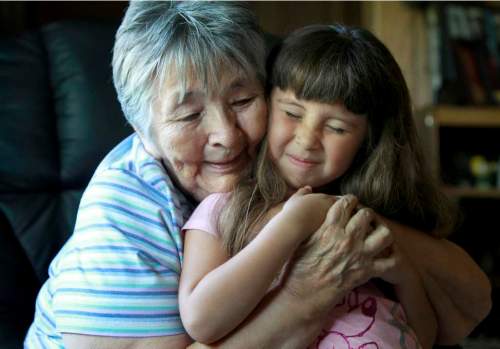
CAMPERVILLE, MAN. -- Seated in the living room of her tiny, impeccably ordered house, Grace Zoldy takes a little girl's hand and begins a language lesson.

"La viande," the woman says, her hazel eyes dancing under a fringe of silver bangs. "That means meat."

"Deux poisson," she says next, a nod to the goldfish circling a nearby tank. The little girl likes to come watch them. "Two fish."

The sounds are familiar to anyone who took elementary-school French. But Zoldy is not French, and her words aren't either: they are something rare, something studied in universities in countries that Grace, when she was learning these words as a toddler in Camperville, didn't know existed.

Read
Saturday, Sep. 25, 2010

Lula’s historic Brazilian election victory

Peter McKenna 5 minute read Preview

Lula’s historic Brazilian election victory

Peter McKenna 5 minute read Yesterday at 2:01 AM CDT

This was supposed to go down as one of the closest presidential elections in Brazilian history — until it wasn’t. In the end, 80-year-old leftist President Luiz Inácio (Lula) da Silva of the Workers Party bested (by some four million votes) Flávio Bolsonaro, the hard-right Liberal Party leader and senator, by a lopsided 3.5 per cent of the popular vote.

Speaking of Brazilian history, it rarely happens that the second-place finisher in the first round ends up winning the second, run-off contest in such a decisive manner. More significant, Lula has now won an unprecedented (non-consecutive) fourth term as an elected Brazilian president.

While Bolsonaro has waffled on making a concession speech (like his father in 2022), the writing on the wall shows clearly that he lost badly. He has evidently taken issue with a ruling by a justice of the Supreme Court that extended polling hours country-wide by an additional two hours in light of high voter turnout and other interruptions.

Flávio’s supporters, many galvanized around the “never Lula” camp, were desperate for change — even if it meant the kind of change that could turn Brazil on its head. So Lula resorted to one of the oldest political tricks in the campaign handbook — namely, using fear of an anti-democratic Bolsonaro to swing voters to his side (along with a host of last-minute announcements involving financial incentives to Brazilians). With a right-leaning Congress, voters were understandably worried that Flávio would go about systematically dismantling Brazil’s democratic ethos and institutions.

Read
Yesterday at 2:01 AM CDT

AI and the quiet erosion of human judgment

Rod Lastra 5 minute read 2:00 AM CDT

In 1986, Paul Simon sang of “days of miracle and wonder” in the song The Boy in the Bubble, from his Graceland album. It was hardly a hymn to progress. Scientific ingenuity coexisted with violence and vulnerability. The world was becoming more technologically capable but not necessarily wiser.

Four decades later, I find the sentiment difficult to improve upon. Since ChatGPT’s release in November 2022, predictions about AI have arrived in rapid succession. Sam Altman, Dario Amodei, Elon Musk and others in the tech industry’s so-called “broligarchy” have fuelled recent headlines about approaching “superintelligence” and futures ranging from human flourishing to catastrophe. The advances are real but the predictions often carry more confidence than evidence. The future, it seems, is permanently scheduled for an upgrade.

Yet a more immediate question risks being lost — as AI systems become more capable and we delegate increasingly complex work to them, will our capacity to understand, question and oversee their outputs keep pace?

That question begins with understanding what we are delegating. AI is not a single technology. Specialized systems have helped scientists predict protein structures. ChatGPT relies on general-purpose language models trained on vast datasets. The most advanced systems are often called “frontier models”. They can write, translate, analyze and converse across subjects, but fluency does not guarantee accuracy. Success at one task does not establish competence at another.