Pfizer COVID-19 vaccine allocations to Canada already assuming six doses per vial
Advertisement
Read this article for free:
or
Already have an account? Log in here »
To continue reading, please subscribe:
Digital Subscription
One year of digital access for only $1.44 a week*
- Enjoy unlimited reading on winnipegfreepress.com
- Read the E-Edition, our digital replica newspaper
- Access News Break, our award-winning app
- Play interactive puzzles
*Billed as $5.77 plus GST every four weeks. After 52 weeks, price increases to the regular rate of $19.95 plus GST every four weeks. Offer available to new and qualified returning subscribers only. Cancel any time.
To continue reading, please subscribe:
Add Free Press access to your Brandon Sun subscription for only an additional
$1 for the first 4 weeks*
- Enjoy unlimited reading on winnipegfreepress.com
- Read the E-Edition, our digital replica newspaper
- Access News Break, our award-winning app
- Play interactive puzzles
*Your next Brandon Sun subscription payment will increase by $1.00 and you will be charged $17.95 plus GST for four weeks. After four weeks, your payment will increase to $24.95 plus GST every four weeks.
Read unlimited articles for free today:
or
Already have an account? Log in here »
Hey there, time traveller!
This article was published 28/01/2021 (2088 days ago), so information in it may no longer be current.
OTTAWA – Pfizer and BioNTech are already assuming Canada will agree their COVID-19 vaccine vials contain six doses instead of five and are using that to project how many vials they will send Canada in the coming weeks.
Several provinces say efforts to get that sixth dose are extremely hit or miss, even with the special syringes needed to do it.
Pfizer only formally requested on Jan. 22 that Canada join the United States and Europe in changing the vaccine’s authorization to reflect that the vials contained enough vaccine to get six doses rather than five.
That would mean they could ship fewer vials of vaccine to Canada and still meet their contract to ship four million doses by March 31, and 40 million by the fall.
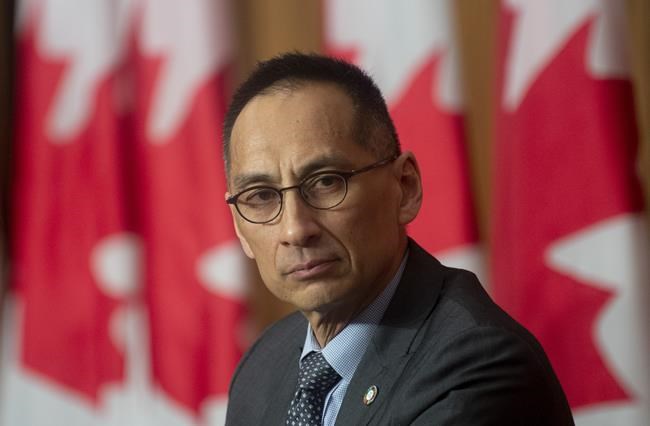
Deputy chief public health officer Dr. Howard Njoo said Thursday that Health Canada is still reviewing the request to formally change the label and is examining whether that sixth dose can be extracted consistently enough to warrant a formal adjustment.
But Pfizer is already using the six doses as it calculates how much vaccine Canada is going to get for all shipments after Feb. 8.
A document distributed to the provinces Thursday shows they will be getting 2,722 vials of vaccine between Feb. 8 and March 31. By Pfizer’s math, those vials contain 3.2 million doses of vaccine. But using Canada’s math, at five doses per vial, there are only 2.7 million doses currently allocated for Canada in that time frame, which would leave Pfizer half a million doses shy of its contract.
“Pfizer is using a different calculation than my team is currently using,” said Maj.-Gen. Dany Fortin, the military commander brought in to manage logistics for the federal vaccine rollout.
But Fortin said Pfizer is still committed to four million doses by the end of March, “full stop.” If Canada rejects the change, Pfizer would send more vials to account for it, he said.
The differing numbers left provincial governments confused and angry Thursday. While the chart they were given clearly lays out that Canada and Pfizer are using two different calculations, provincial leaders professed exasperation.
“We can’t vaccinate people when we aren’t getting vaccines and when we aren’t getting accurate information from the federal government,” said Saskatchewan Premier Scott Moe.
Getting a sixth dose from a vial consistently requires the use of a special syringe known as a low-dead-volume syringe, which traps less vaccine between the stopper and the needle when a vaccine is extracted from the vial and injected.
The syringes are less common than the high-dead-volume versions, but Canada did have some in stock in some jurisdictions that have already been used to try to get the sixth dose when possible. Canada ordered another 37.5 million of the special syringes in the fall, and the first two million are set to arrive next week.
The rest will arrive in multiple shipments before the middle of April.
Dr. Deena Hinshaw, Alberta’s chief medical officer, said health officials are getting the sixth dose when they can, but it can’t be guaranteed from each vial and has only been achieved in about half the vials of Pfizer vaccine used in Alberta to date.
Hinshaw said it’s not always possible to get six doses for many reasons, including a global shortage of a specialized type of syringe needed to get the extra dose, and that even with that needle, professionals have only been about successful at doing it in about 75 per cent of the time.
A spokesman for Moe’s government said Saskatchewan has also gotten a sixth dose from about half of its vials but it isn’t a given.
“Due to this inconsistency, health officials view the ability to draw additional vaccine as a surplus benefit, not a benchmark to plan for,” said Moe’s communications director Jim Billington.
A spokesman for the Quebec government said Thursday that vaccinators there have sometimes been able to get sixth doses but only in a minority of vials used.
Ontario Health Minister Christine Elliott said her province has asked workers to do what they can to get that sixth dose but didn’t indicate the success rate.
“It really, really helps us when we have the shortage of vaccines coming in right now from Pfizer,” she said.
Provinces have already had to pause parts of their vaccination campaigns because Pfizer stopped sending vaccines to Canada entirely this week while it expands its plant in Belgium. Initially, the company said the production delay was going to cut Canada’s deliveries in half over four weeks.
But the cuts were far deeper, with fewer than 340,000 doses arriving or planned to arrive between Jan. 18 and Feb. 14, instead of almost 1.2 million. Shipments stopped entirely this week, but are to resume with small batches in the next two weeks before bigger shipments start the week of Feb. 15.

Pfizer was going to catch up by sending more than previously expected in the last part of February and throughout March, but now, with the change to the doses per vial, it barely has to increase the previously planned shipments at all.
Fortin agreed the slowdown isn’t ideal but he is “cautiously optimistic” that Pfizer will live up to its contract.
Seven weeks after vaccinations began in Canada, more than 800,000 people have had at least one shot, and almost 91,000 have received both of the required doses of either Pfizer-BioNTech or Moderna vaccines. Moderna’s vaccine has not had the same extra-dose situation as Pfizer.
This report by The Canadian Press was first published Jan. 28, 2021.
—With files from Stephanie Taylor in Regina, Shawn Jeffords in Toronto and Dean Bennett and Chris Purdy in Edmonton
Related Articles
New vaccine approvals expected soon
Advertisement Advertise With Us
Advertisement Advertise With Us