Heated Rivalry scores on so many levels

Advertisement
Read this article for free:
or
Already have an account? Log in here »
To continue reading, please subscribe:
Digital Subscription
One year of digital access for only $1.44 a week*
- Enjoy unlimited reading on winnipegfreepress.com
- Read the E-Edition, our digital replica newspaper
- Access News Break, our award-winning app
- Play interactive puzzles
*Billed as $5.77 plus GST every four weeks. After 52 weeks, price increases to the regular rate of $19.95 plus GST every four weeks. Offer available to new and qualified returning subscribers only. Cancel any time.
To continue reading, please subscribe:
Add Free Press access to your Brandon Sun subscription for only an additional
$1 for the first 4 weeks*
- Enjoy unlimited reading on winnipegfreepress.com
- Read the E-Edition, our digital replica newspaper
- Access News Break, our award-winning app
- Play interactive puzzles
*Your next Brandon Sun subscription payment will increase by $1.00 and you will be charged $17.95 plus GST for four weeks. After four weeks, your payment will increase to $24.95 plus GST every four weeks.
Read unlimited articles for free today:
or
Already have an account? Log in here »
Hey there, time traveller!
This article was published 17/01/2026 (276 days ago), so information in it may no longer be current.
Heated Rivalry’s current cultural moment looks improbable on paper: how did a little six-episode Canadian show with no stars, from a Canadian director, based on a Canadian gay hockey romance series, released on a Canadian streaming platform set the world on fire?
Jacob Tierney’s (Letterkenny) sports romance, based on Rachel Reid’s Game Changers novels, about the long-simmering — and secret — love between on-ice hockey rivals Shane Hollander (Hudson Williams) and Ilya Rozanov (Conner Storrie, who is Patrick Swayze incarnate) more than lives up to the hype.
It does so much so well: the white-hot chemistry between two charismatic leads, the storytelling (you will weep), the cinematography, the tension, the payoff.
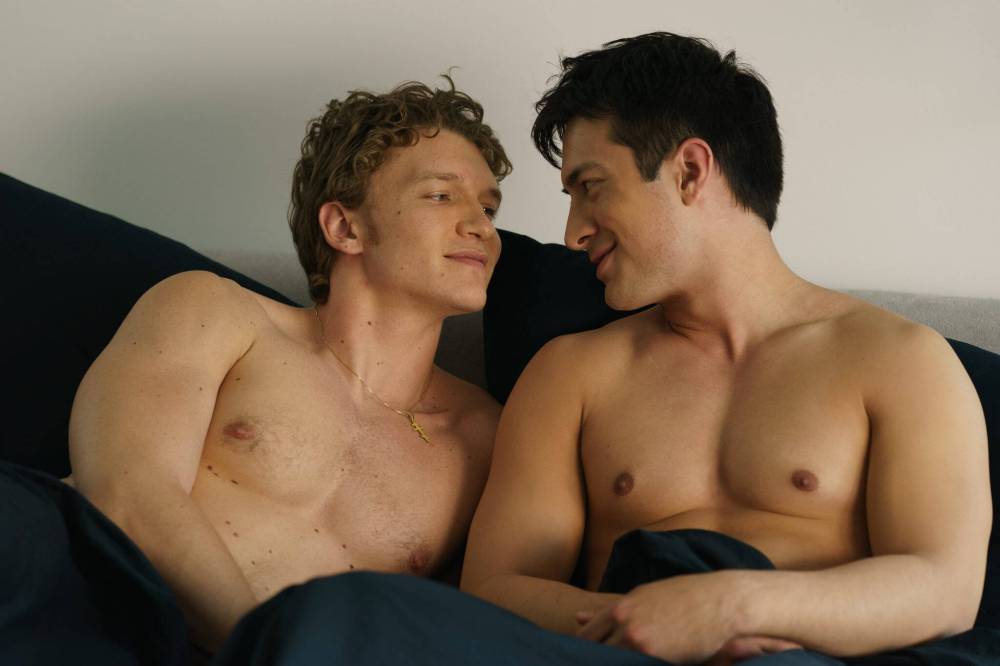
Bell Media
Connor Storrie (left) and Hudson Williams have become stars thanks to the series.
But lots of shows are excellent and even era-defining. What is it about this show that has led to a frenzied fandom that rivals Swifties in obsession and intensity, specifically among women? Some of my friends are on their third rewatch of the first season (it’s been picked up by HBO, of course) which was released in November and ended late last month.
The “no stars” part is no longer true, either: Storrie and Williams are the hottest names in the biz right now. People are making fanfic, art, memes and videos.
Heated Rivalry isn’t just having a moment. It is the moment.
The answer, I suspect, has a lot to do with the sex on the show. Even if you haven’t seen it (which, what are you waiting for?), you’ve probably heard tell of the steamy scenes which, yes, are extremely hot and, uh, vivid. We just don’t see these kinds of scenes on TV between two men, and certainly not between two masculine men who play pro hockey.
I am not a gay man, so I cannot speak for its appeal to gay men, but I can speak to the female gaze. In addition to featuring two very attractive men, the sex scenes also boast another critical element: nobody is the secretary.
So much of sex on TV and in movies is staid heterosexual sex that centres the male gaze, and a lot of it is… not sexy. If I see another woman gasp with rapturous pleasure after two thrusts and zero foreplay, so help me.
Sometimes, bad sex is the point. The sex scenes on HBO’s Girls, for one example, were often cringingly uncomfortable to watch because they were making a comment on how awkward (and occasionally violent) sex could be for 20-something millennials who were the first generation to take a lot of their bedroom cues from internet porn.
The hallmarks of Heated Rivalry’s sex scenes are pleasure, tenderness, intimacy, passion, romance, vulnerability and fun — all qualities that are shockingly rare or absent in a large majority of mainstream male/female sex scenes, which often fall back on tropes rooted in power imbalances (see: the business man and the secretary).
As Julia Carrie Wong writes in The Guardian: “The fervent popularity of Heated Rivalry suggests that for many, the real romantasy is not sex and romance with dragons and fairies, but sex and romance without misogyny and gendered hierarchy.”
But perhaps the most powerful (and honestly, hot) thing about these scenes is the way they depict consent. Ilya has been dubbed The Consent King online, and with good reason: he’s always asking Shane if things are OK, if they feel good. It feels natural, and serves as proof positive that ongoing, enthusiastic consent is not only deeply sexy, but the site of mutual pleasure.

The hockey of it all is important context, too. This is a notoriously heteronormative, hypermasculine culture that rewards conformity and aggression and domination. There has never been an out gay player in the NHL. Heated Rivalry arrived on Crave a few months after five former players for Canada’s world junior team were acquitted in a high-profile sexual assault case, and a couple of years after Pride jerseys were banned by the NHL.
The hockey culture in the show is oppressive, too, to be clear. Shane and Ilya are not out. They have each other saved under women’s names in each other’s phones. No one knows about their relationship.
But, in Heated Rivalry, we get to see a way forward. We get to see a different kind of masculinity. We get to see men in love. We get to see queer joy. We get to see men expressing vulnerability and emotion. We get to see men who don’t hurt women.
And when you get to see that, everyone scores.
winnipegfreepress.com/jenzoratti
Jen Zoratti is a Winnipeg Free Press columnist and author of the newsletter, NEXT, a weekly look towards a post-pandemic future.
Our newsroom depends on a growing audience of readers to power our journalism. If you are not a paid reader, please consider becoming a subscriber.
Our newsroom depends on its audience of readers to power our journalism. Thank you for your support.
Advertisement Advertise With Us
Advertisement Advertise With Us