Seven residents at Montreal care home get COVID despite receiving first vaccine dose

Advertisement

Advertise with us

MONTREAL - Quebec health authorities are examining how seven residents of a Montreal long-term care centre contracted COVID-19 despite being among the first to receive the Pfizer-BioNTech vaccine in the province.

Read this article for free:


By clicking the button above, an account will be created and you will begin to receive some of our recommended newsletters. You may opt out of any newsletter by visiting your Email and Communication Preferences page or by clicking "unsubscribe" at the bottom of any email.

or

Already have an account? Log in here »

To continue reading, please subscribe:

Digital Subscription

One year of digital access for only $1.44 a week*

  • Enjoy unlimited reading on winnipegfreepress.com
  • Read the E-Edition, our digital replica newspaper
  • Access News Break, our award-winning app
  • Play interactive puzzles

*Billed as $5.77 plus GST every four weeks. After 52 weeks, price increases to the regular rate of $19.95 plus GST every four weeks. Offer available to new and qualified returning subscribers only. Cancel any time.

To continue reading, please subscribe:

Add Free Press access to your Brandon Sun subscription for only an additional

$1 for the first 4 weeks*

  • Enjoy unlimited reading on winnipegfreepress.com
  • Read the E-Edition, our digital replica newspaper
  • Access News Break, our award-winning app
  • Play interactive puzzles
Start now

*Your next Brandon Sun subscription payment will increase by $1.00 and you will be charged $17.95 plus GST for four weeks. After four weeks, your payment will increase to $24.95 plus GST every four weeks.

Hey there, time traveller!
This article was published 13/01/2021 (2116 days ago), so information in it may no longer be current.

MONTREAL – Quebec health authorities are examining how seven residents of a Montreal long-term care centre contracted COVID-19 despite being among the first to receive the Pfizer-BioNTech vaccine in the province.

Management at the Maimonides Geriatric Centre informed residents of the cases in a notice Tuesday, noting that residents were infected within 28 days of receiving the first of two vaccine doses.

Dr. Mylene Drouin, Montreal’s director of public health, said Wednesday that authorities were looking at the cases identified at Maimonides as well as at St-Antoine long-term care home in Quebec City — the other location to receive the first vaccines in the province.

An ambulance leaves the Maimonides Geriatric Center in Montreal, Sunday, Nov. 29, 2020. Seven residents of the Montreal long-term care centre who received a first dose of the Pfizer-BioNTech vaccine have contracted COVID-19. THE CANADIAN PRESS/Graham Hughes

“It is a small number to draw a conclusion,” Drouin said of Maimonides, but she added health experts were looking at possible reasons and whether any recommendations need to be changed as a result.

Quebec has decided to delay administering second doses to patients and has instead chosen to give a first dose to as many people as possible. Last week, a dozen Maimonides residents sued the province to obtain a second dose within 21 days of their first dose — the time frame set by the vaccine manufacturer.

Lawyer Vanessa Paliotti said residents had consented to be vaccinated subject to receiving two doses of the Pfizer-BioNTech vaccine in the 21-day time frame. “They would not have agreed to receive a single dose,” Paliotti said in an interview.

She said residents feared contracting the coronavirus if the wait for the second dose was extended for an indefinite period.

News of the COVID-19 infections at Maimonides did not surprise Dr. Donald Vinh, microbiologist and infectious disease specialist at the McGill University Health Center.

He said it takes about 12 to 14 days after vaccination for the body to build enough immunity to be protected against the novel coronavirus. Vinh said it is possible to be vaccinated and contract the coronavirus afterwards, as with any other vaccine. He noted the flu vaccine does not provide 100 per cent protection, but people who get the flu after being vaccinated have less severe symptoms.

At the St-Antoine facility in Quebec City, an outbreak four days before the inoculation campaign began on Dec. 14 is believed to be a factor in the cases among those who were vaccinated.

Mathieu Boivin, a spokesman for the health authority serving Quebec City, said that an unspecified number of residents developed COVID-19 after receiving the vaccine, but he could not say if any of them died, citing confidentiality surrounding medical records.

“Analyses are underway to fully understand the situation at the (long-term care home), but it is likely that several of these users were infected before receiving the vaccine and did not begin to develop symptoms until after receiving the vaccine,” Boivin said in an email. “In these cases, the immune response was not complete and instantaneous.”

Because the immune system needs two weeks to develop antibodies to resist infection, some users may have also been exposed after being inoculated and before their bodies had produced sufficient immune defence.

“It is likely that several of these users were infected before receiving the vaccine and did not begin to develop symptoms until after receiving the vaccine.”–Mathieu Boivin, Quebec City health authority

As of Tuesday, there were 73 active cases of COVID-19 at St-Antoine and 35 deaths linked to the virus.

None of it should call into question the efficacy of the vaccines, Boivin said.

“They have all demonstrated their effect in a scientifically convincing manner, and we wholeheartedly encourage all citizens to receive it as soon as their turn comes,” Boivin said.

This report by The Canadian Press was first published Jan. 13, 2021.

———

This story was produced with the financial assistance of the Facebook and Canadian Press News Fellowship.

Report Error Submit a Tip

More Stories

Trump touts USMCA win in state of the union

James McCarten, The Canadian Press 6 minute read Preview

Trump touts USMCA win in state of the union

James McCarten, The Canadian Press 6 minute read Tuesday, Feb. 4, 2020

WASHINGTON - President Donald Trump declared his scorched-earth political style an unmitigated success Tuesday in a fiercely partisan, made-for-TV state of the union speech that made it clear he expects to be back in the White House next year on the strength of the U.S. economy and his trade deals with Canada, Mexico and China.

Trump, addressing a joint session of Congress in the very chamber where House Democrats voted to impeach him less than two months ago, became only the second president in American history — Bill Clinton was the first — to deliver a state of the union while standing trial in the Senate.

Unrepentant, he pointedly refused to shake the offered hand of House Speaker Nancy Pelosi on the dais before singing the praises of what he billed as "the great American comeback," pointing to strong job growth, a soaring stock market and low unemployment as evidence of his leadership. And when he was done, Pelosi ripped up the speech in full view of the television cameras.

"America's enemies are on the run, America's fortunes are on the rise, and America's future is blazing bright. The years of economic decay are over," Trump declared, taking full credit for the country's "roaring economy," including what he billed as seven million new jobs and the lowest jobless rate in half a century — a "blue-collar boom" that he's counting on to help his re-election chances in November.

Read
Tuesday, Feb. 4, 2020

Waiting for Cormier verdict the ‘calm before the storm’

Katie May 6 minute read Preview

Waiting for Cormier verdict the ‘calm before the storm’

Katie May 6 minute read Thursday, Feb. 22, 2018

As the jury room door closed behind the seven women and four men who are now deliberating on the evidence against Tina Fontaine’s accused killer, Thelma Favel rose from the chair she’s occupied for most of Raymond Cormier’s second-degree murder trial.

Almost every day over the past three weeks, Favel, the woman who raised 15-year-old Tina, has sat right up front, directly across from the jury box, listening, sobbing and soaking in disturbing details of the teen’s last days that have come to light over the course of Cormier’s second-degree murder trial.

On Wednesday afternoon, after Court of Queen’s Bench Chief Justice Glenn Joyal instructed the jury and sent them off to be sequestered until they decide whether 56-year-old Raymond Cormier is guilty of killing Tina, Favel got up and hugged Crown prosecutor Breta Passler. It was one of many moments, this one shielded from jurors, that have long since proven the emotional impact of the case and the lasting power of Tina’s legacy.

Tina’s death sparked a public outcry that renewed calls for a national inquiry into disproportionately high rates of missing and murdered Indigenous women and girls across Canada, and the criminal trial for the man accused of killing her hasn’t happened in a vacuum.

Read
Thursday, Feb. 22, 2018

Meteorologist behind Rob’s Obs is moving weather station to Ontario

Ben Waldman 7 minute read Preview

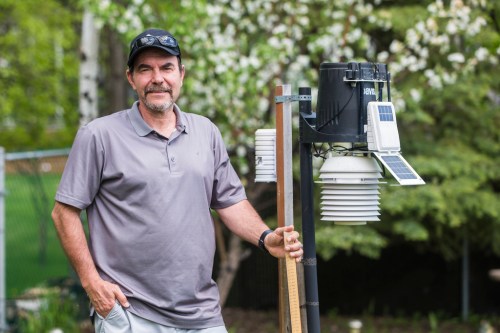
Meteorologist behind Rob’s Obs is moving weather station to Ontario

Ben Waldman 7 minute read Monday, Jun. 13, 2022

In a Winnipeg winter, there are always at least two certainties: it will be cold, and it will snow. A third certainty: the people will talk endlessly about how frigid the temperature is, and argue about how much snow is cloaking their driveways. Is it colder than it ever has been? Is there more snow today than the same time last year?

Rob Paola likely knows the answers to those questions.

Paola possesses no super powers. He is but a man with a metre stick and 40 years of professional meteorological experience, in the midst of a lifelong love affair with Mother Nature, a most turbulent mistress who rarely, if ever, reciprocates.

Each year when snow begins to fall, Paola heads outside his Charleswood home to figure out how much. He sticks his ruler in the ground, grabs his clipboard, and clicks his pen. In neat script, he records the temperature, what time precipitation began, how deep the powder is stacked. Then, he shares his data and insights online with thousands of followers who want a clear answer to the eternal questions: Why is this happening? When will it stop? How much snow has fallen in the city of Winnipeg?

Read
Monday, Jun. 13, 2022

Shocking development

Kelly Taylor 6 minute read Preview

Shocking development

Kelly Taylor 6 minute read 2:00 AM CDT

HOCKLEY VALLEY, Ont. — It’s not too often you get into a new vehicle, look at the interior, and say to yourself, “Wow, this is different… in a good way.”

Automakers tend to stick pretty close to defined norms, and when they differ, it’s not always successful. I’m looking at you, Toyota Yaris and Nissan X-Trail.

So, stepping into the 2027 BMW iX3 was refreshing. A bright parallelogram of a main touchscreen is closer to the driver than most, aided in no small part by pushing the instrument cluster to a narrow band just under the windscreen.

The effect is to clean up the look of the dash but without moving to a centre-mount instrument panel like the Yaris and X-Trail. The most valuable information (speed, battery charge, range) is right in front of the driver, visible above the top rim of the steering wheel.

Read
2:00 AM CDT

Notable quotes from 2020 Tokyo Olympics

The Canadian Press 4 minute read Sunday, Jul. 25, 2021

Correctional Services Canada is reopening prison farms. But in B.C., where it has no such programs, a wife and her late husband, who killed a man in a botched holdup, started Emma’s Acres, a unique prison farm she hopes to see expanded.

Just say no (to deficits during good economic times)

Tom Brodbeck 5 minute read Preview

Just say no (to deficits during good economic times)

Tom Brodbeck 5 minute read Wednesday, Oct. 2, 2019

When a political party pledges to run small, “manageable” deficits if elected, it almost always means it will go deeper into the red if it wins government.

It’s human nature.

After all, as a government, if you get the blessing of the public to spend beyond your means, what’s a few billion more a year in overspending?

The problem is, it doesn’t usually end there. When those same politicians seek re-election, they often want permission to post even larger deficits. In some cases, they’ve abandoned the idea of balancing the books altogether, arguing perpetual deficit financing is acceptable, as long as the debt doesn’t exceed a certain percentage of the economy.

Read
Wednesday, Oct. 2, 2019