Feds secure 500K vaccine doses for January as lockdown calls grow

Advertisement

Advertise with us

Federal officials say they're pushing manufacturers to accelerate shipments of more COVID-19 vaccine doses as calls grow to lock down more parts of the country for the holidays.

Read this article for free:


By clicking the button above, an account will be created and you will begin to receive some of our recommended newsletters. You may opt out of any newsletter by visiting your Email and Communication Preferences page or by clicking "unsubscribe" at the bottom of any email.

or

Already have an account? Log in here »

To continue reading, please subscribe:

Digital Subscription

One year of digital access for only $1.44 a week*

  • Enjoy unlimited reading on winnipegfreepress.com
  • Read the E-Edition, our digital replica newspaper
  • Access News Break, our award-winning app
  • Play interactive puzzles

*Billed as $5.77 plus GST every four weeks. After 52 weeks, price increases to the regular rate of $19.95 plus GST every four weeks. Offer available to new and qualified returning subscribers only. Cancel any time.

To continue reading, please subscribe:

Add Free Press access to your Brandon Sun subscription for only an additional

$1 for the first 4 weeks*

  • Enjoy unlimited reading on winnipegfreepress.com
  • Read the E-Edition, our digital replica newspaper
  • Access News Break, our award-winning app
  • Play interactive puzzles
Start now

*Your next Brandon Sun subscription payment will increase by $1.00 and you will be charged $17.95 plus GST for four weeks. After four weeks, your payment will increase to $24.95 plus GST every four weeks.

Hey there, time traveller!
This article was published 18/12/2020 (2141 days ago), so information in it may no longer be current.

Federal officials say they’re pushing manufacturers to accelerate shipments of more COVID-19 vaccine doses as calls grow to lock down more parts of the country for the holidays.

Prime Minister Justin Trudeau said Canada is running ahead of schedule in its vaccine rollout, which is set to ramp up next month with scheduled deliveries of 125,000 Pfizer-BioNTech doses per week, for a total of 500,000 doses in January.

Trudeau told reporters that 200,000 doses of the Pfizer-BioNTech vaccine will arrive next week. And pending Health Canada approval, he said 168,000 doses of Moderna’s vaccine candidate will be shipped by the end of the year.

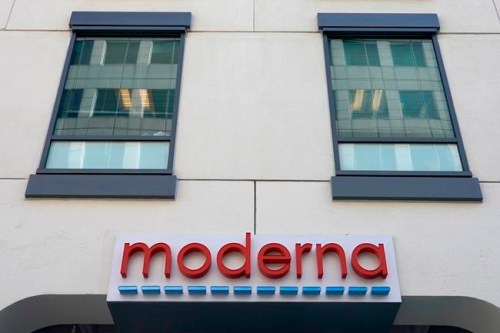
The facade of Moderna, Inc. headquarters is seen, Tuesday, Dec. 15, 2020, in Cambridge, Mass. U.S. biotech firm Moderna says its COVID-19 vaccine can now be shipped locally without requiring it to be frozen at all. THE CANADIAN PRESS/AP/Elise Amendola

The federal government is also investing about $9 million through the National Research Council of Canada to support the development of treatments for COVID-19 and other viral infections, Trudeau said. The funding will go to four Canadian companies working on therapies, including two in Montreal and two in Vancouver.

But even as Canada’s immunization campaign steams ahead, Trudeau warned that vaccines won’t reach the broader population fast enough for a Christmas miracle, urging Canadians to limit the size of their holiday celebrations.

“As much as many of us want to see our loved ones this Christmas … we also want to be able to see them and give them big hugs next Christmas.”

Procurement Minister Anita Anand said Friday that Canada is on track to receive 255,000 doses from Pfizer-BioNTech in December, up from an expected 249,000 doses.

“In the last two weeks, Canada has aggressively pursued, negotiated, received and administered early doses of the very first COVID-19 vaccine in this country,” Anand told a news conference.

“We are in constant contact with our suppliers, and these increased numbers reflect our negotiations.”

Massachusetts-based biotech firm Moderna also revealed that its COVID-19 vaccine candidate, which is expected to soon be authorized in Canada and the U.S., can now be shipped without it needing to be frozen.

The development looks to ease the logistics of getting the vaccine to remote locations, a Moderna spokeswoman said.

Previously, it was believed the vaccine had to remain frozen to at least -20 C until shortly before use, but the company said it can now safely transport liquid doses as refrigerated at between 2 C and 8 C.

But Anand noted that the new requirements don’t apply to vaccine storage, saying the government is still working to procure freezers to store them once they arrive at their destination, when Health Canada gives the regulatory all-clear.

Dr. Theresa Tam, Canada’s chief public health officer, also said Friday that health-care workers should check Pfizer-BioNTech vaccine vials for extra doses before throwing them out.

Tam said the manufacturer has confirmed that some vials contain more than the five doses of 0.3 ml indicated on the label.

She said this excess provides a “buffer zone” to account for potential losses that can occur during storage, preparation and injection of the vaccine.

“I haven’t got on-the-ground information as to whether someone is able to get six versus five doses,” she said. “But the bottom line is don’t throw it away after five doses … check to see if there’s another dose.”

Tam said Canada’s COVID-19 caseload continues to rise, with an average of more than 6,650 infections reported daily over the past seven days.

The number of people experiencing severe illness is also on the rise, she said, with an average of 4,000 patients being treated in hospital over the past week, including 650 in critical care and 115 deaths reported each day.

Prime Minister Justin Trudeau delivers his opening remarks during a news conference outside Rideau Cottage in Ottawa, Friday, December 18, 2020. THE CANADIAN PRESS/Adrian Wyld

Tam said the rapid spread of the virus continues apace in many parts of the country, and she worries the holiday season will only accelerate that trajectory.

“I believe that in many areas of the country, stricter measures should be put in place as soon as possible,” she said.

Ontario is set to reveal new measures Monday as the province extended its lockdowns in two COVID-19 hot spots.

Premier Doug Ford said Friday that restrictions set to expire next week in Toronto and Peel Region will remain in place, and his government will contemplate new measures during emergency talks on COVID-19 this weekend.

Ontario reported 2,290 new cases of COVID-19 on Friday and 40 new deaths due to the virus.

Alberta, the province with the highest daily infection rate, announced 1,413 new cases and 25 additional deaths.

The province’s chief medical health officer, Dr. Deena Hinshaw, however, had some positive news. She said there were 19,607 active cases, the lowest the figure has been in two weeks.

Manitoba, with the second-highest daily case rate, reported 350 new infections and 10 more deaths.

Quebec had 1,773 new cases and 36 new deaths.

— with files from Mia Rabson

This report by The Canadian Press was first published Dec. 18, 2020.

Note to readers: This is a corrected story. A previous version erroneously reported the federal government is spending about $9 billion toward research into treatments for COVID-19. In fact, they’re spending about $9 million.

Report Error Submit a Tip

More Stories

Multi-year budget to force councillors, bureaucrats to focus on the big picture

Aldo Santin 12 minute read Preview

Multi-year budget to force councillors, bureaucrats to focus on the big picture

Aldo Santin 12 minute read Tuesday, Feb. 26, 2019

City hall is putting the final touches on the 2019 preliminary budget -- but the real tough job will start after that.

The city is committed to developing a four-year budget beginning with 2020, and having it in place by the end of this year.

It's a process that is filled with uncertainties, trying to balance four successive annual budgets at the same time, using assumptions on revenues and expenses that can change without notice: a provincial government that has frozen funding to city hall at 2016 levels and is reluctant to disclose annual funding commitments or share in unexpected revenues; erratic fuel prices; a possible change in government in Ottawa, which could bring new spending priorities. And in the middle of that four-year span, another civic election where new members of council may have other priorities than those laid out by the current crop of office holders.

Municipal governments across Manitoba are required to approve their annual operating and capital budgets by the end of March each year. But the criticism of decision-making at city hall has been that all the decisions are made on a year-to-year basis, keeping voters happy with an eye on the next election.

Read
Tuesday, Feb. 26, 2019

NDP introduces last-minute rent-hike bill, Tories say it will cause administrative nightmare

Carol Sanders 4 minute read Preview

NDP introduces last-minute rent-hike bill, Tories say it will cause administrative nightmare

Carol Sanders 4 minute read Yesterday at 7:29 PM CDT

A day before the legislative session ends, the NDP government introduced a bill to ensure landlords can’t charge tenants backpay for approved above-guideline rent increases.

Bill 59, the Residential Tenancies Amendment Act (2), would prohibit a landlord who has applied for a rent increase above the maximum permitted by regulation from charging tenants the new rate until it is approved.

Premier Wab Kinew announced earlier this month that renters would not have to pay the increases until the provincial Residential Tenancies Branch hears landlords’ arguments and issues its decisions.

“We recently passed legislation in the house to make sure life will be more affordable,” Kinew said at a news conference on Oct. 20, referring to a new rent bill introduced in March and expected to become law before the session ends on Oct. 29. He was flanked by Winnipeg tenants facing rent increases of more than 50 per cent.

Read
Yesterday at 7:29 PM CDT

Manitoba trucker vows to stay in Ottawa

Dylan Robertson 7 minute read Preview

Manitoba trucker vows to stay in Ottawa

Dylan Robertson 7 minute read Wednesday, Feb. 16, 2022

OTTAWA — Manitoba trucker Clarence Penner was unfazed Wednesday as Ottawa police started handing out notices, urging his peers to drive their big rigs off Parliament Hill or risk arrest.

“This has got nothing to do with vaxxed and unvaxxed, not at all. It’s about freedom of choice,” Penner told the Free Press.

The unvaccinated trucker drove from his St. Andrews home to protest COVID-19 immunization mandates, arriving in Ottawa on Jan. 29, as a rally of thousands made national headlines.

That month, he’d lost most of his ability to work in hauling heavy equipment to the United States, after Canadian and American officials both required truckers to get vaccinated in order to avoid a two-week quarantine.

Read
Wednesday, Feb. 16, 2022

Feds secure 500K vaccine doses for January

Adina Bresge, The Canadian Press 5 minute read Preview

Feds secure 500K vaccine doses for January

Adina Bresge, The Canadian Press 5 minute read Friday, Dec. 18, 2020

Federal officials say they're pushing manufacturers to accelerate shipments of more COVID-19 vaccine doses as calls grow to lock down more parts of the country for the holidays.

Prime Minister Justin Trudeau said Canada is running ahead of schedule in its vaccine rollout, which is set to ramp up next month with scheduled deliveries of 125,000 Pfizer-BioNTech doses per week, for a total of 500,000 doses in January.

Trudeau told reporters that 200,000 doses of the Pfizer-BioNTech vaccine will arrive next week. And pending Health Canada approval, he said 168,000 doses of Moderna's vaccine candidate will be shipped by the end of the year.

The federal government is also investing about $9 million through the National Research Council of Canada to support the development of treatments for COVID-19 and other viral infections, Trudeau said. The funding will go to four Canadian companies working on therapies, including two in Montreal and two in Vancouver.

Read
Friday, Dec. 18, 2020

Wheat City mayoral candidates hit streets

Alex Lambert 4 minute read Preview

Wheat City mayoral candidates hit streets

Alex Lambert 4 minute read Updated: Yesterday at 7:31 AM CDT

BRANDON — The two mayoral candidates made their final pushes Tuesday to woo voters in Manitoba’s second-largest city.

Incumbent Jeff Fawcett said he and his team have been to nearly every doorstep in the city, while challenger Len Isleifson, a former Tory MLA, said he has covered most parts of Brandon and was even on a second go-round in some areas.

“I’m working my tail off to try to make sure that people do get out to vote, and the people I speak to, I feel fairly optimistic,” said Fawcett, who is running for his second term. “But people have to vote.”

The Brandon Sun joined both Fawcett and Isleifson as they went door knocking one day before Manitoba’s elect new municipal councils.

Read
Updated: Yesterday at 7:31 AM CDT

World Indigenous Business Forum comes home to Winnipeg for first time, ponders questions for future prosperity

Aaron Epp 5 minute read Preview

World Indigenous Business Forum comes home to Winnipeg for first time, ponders questions for future prosperity

Aaron Epp 5 minute read Tuesday, Oct. 27, 2026

When Nicola Shirley-Phillips imagines what the Indigenous economy in her country might look like 100 years from now, she doesn’t mention social media or artificial intelligence. Instead, she envisions a holistic way of life where people work alongside each other in a way that cares for the planet.

“I see community (and) I see us being more respectful of all the energies around us — our water energy, our climate (and) the soil,” she said. “In all of that, there are opportunities for us to create businesses and opportunities to provide our services.”

Shirley-Phillips, a serial entrepreneur, organic farmer and community economic development specialist from Jamaica, shared her vision Tuesday morning during a panel discussion focused on Indigenous women and prosperity.

The discussion was one of the first items on the schedule during the first full day of the World Indigenous Business Forum at the RBC Convention Centre in Winnipeg.

Read
Tuesday, Oct. 27, 2026