Ontario could see 6,500 new daily cases of COVID-19 in December, new modelling shows

Advertisement

Advertise with us

TORONTO - Ontario could see as many as 6,500 new daily cases of COVID-19 by mid-December unless steps are taken to limit the spread of the virus, newly released projections showed Thursday as the province marked another record for new infections.

Read this article for free:


By clicking the button above, an account will be created and you will begin to receive some of our recommended newsletters. You may opt out of any newsletter by visiting your Email and Communication Preferences page or by clicking "unsubscribe" at the bottom of any email.

or

Already have an account? Log in here »

To continue reading, please subscribe:

Digital Subscription

One year of digital access for only $1.44 a week*

  • Enjoy unlimited reading on winnipegfreepress.com
  • Read the E-Edition, our digital replica newspaper
  • Access News Break, our award-winning app
  • Play interactive puzzles

*Billed as $5.77 plus GST every four weeks. After 52 weeks, price increases to the regular rate of $19.95 plus GST every four weeks. Offer available to new and qualified returning subscribers only. Cancel any time.

To continue reading, please subscribe:

Add Free Press access to your Brandon Sun subscription for only an additional

$1 for the first 4 weeks*

  • Enjoy unlimited reading on winnipegfreepress.com
  • Read the E-Edition, our digital replica newspaper
  • Access News Break, our award-winning app
  • Play interactive puzzles
Start now

*Your next Brandon Sun subscription payment will increase by $1.00 and you will be charged $17.95 plus GST for four weeks. After four weeks, your payment will increase to $24.95 plus GST every four weeks.

Hey there, time traveller!
This article was published 12/11/2020 (2177 days ago), so information in it may no longer be current.

TORONTO – Ontario could see as many as 6,500 new daily cases of COVID-19 by mid-December unless steps are taken to limit the spread of the virus, newly released projections showed Thursday as the province marked another record for new infections.

The new modelling predicts the province will reach 2,500 new daily cases by that time if the growth rate is at three per cent, or 6,500 if growth is at five per cent.

Dr. Adalsteinn Brown, one of the experts behind the projections, said a five per cent growth rate is in line with the current situation, or even “slightly optimistic.” The growth rate over the last three days was six per cent, he said.

Ontario Chief Medical Officer of Health Dr. David Williams speaks at a press conference at Queen's Park during the COVID-19 pandemic in Toronto on Tuesday, November 3, 2020. Ontario is set to release new COVID-19 projections today. THE CANADIAN PRESS/Nathan Denette

Brown said more restrictions should be put in place in some of the hot spot areas in order to reduce cases and the impact on the health-care system. Otherwise, the case count in Ontario will surpass that in several European jurisdictions that have implemented some form of lockdown, he said.

“If we continue on with the current level of restrictions, I would not expect to see any deviation from the current results, you’d continue to see growth,” he said Thursday.

“I do not believe that there’s a way that the cases will change without action.”

Even if new measures are imposed, it will take a while for improvements to appear, he said.

The new projections for how the virus might spread in Ontario come as the province has reported daily case increases above 1,000 for the past week, and a record 1,575 on Thursday.

They also come amid ongoing criticism of the province’s new tiered system for managing COVID-19 measures, which places local health units in green, yellow, orange, red, or lockdown categories based on metrics such as the number of cases per 100,000 people.

A group representing tens of thousands of Ontario physicians called Thursday for the government to lower the thresholds for imposing stricter measures, saying the framework is too lax, particularly at a time when case counts are surging.

The Ontario Medical Association said the criteria to move from one alert level to the other should be much lower – as much as 50 per cent lower in some cases – and the higher levels should include a ban on indoor dining in restaurants and bars.

Meanwhile, a report in the Toronto Star said the provincial government ignored the advice of its own public health agency in designing the system introduced last week.

The newspaper reported that while Health Minister Christine Elliott said the framework was created after consulting with two health-care advisory groups, one group said it wasn’t consulted and a member of the other said she never saw the final plan before its release.

Ontario Premier Doug Ford said Thursday the report was “totally inaccurate” and defended the colour-coded system, maintaining it is meant to serve as a baseline for local health authorities to build on with additional measures.

Ford said the framework was proposed by Ontario’s chief medical officer of health, Dr. David Williams, and dismissed the criticism as simply a difference of opinion within the medical community.

As the new projections were announced, Williams stressed the numbers reflect infections that took place before the new system took effect, but didn’t rule out any future amendments.

“The framework has not been out for a week yet and we have to see what’s going to happen with that,” he said.

A woman wearing a protective mask walks past a face mask mural during the COVID-19 pandemic in Toronto on Thursday, November 12, 2020. THE CANADIAN PRESS/Nathan Denette

The modelling shows key indicators for the pandemic continue to worsen, though the impact varies from region to region.

The percentage of COVID-19 tests coming back positive at the end of last week ranged from 1.3 in the Eastern Ontario public health unit to just over 10 in Peel Region, one of the provincial hot spots.

Cases and deaths in long-term care homes continued to rise, the document shows. Out of the 196 resident deaths since Aug. 10, 71 took place over the last seven days.

The document lays out projections for a growth rate in cases of three and five per cent, but Brown said either scenario will see the strain on intensive care units pass the threshold for cancelling surgeries within the next two weeks.

The province also reported 18 new deaths related to the novel coronavirus on Thursday.

Health Minister Christine Elliott said there were 472 new cases in Toronto, 448 in Peel Region, 155 in York Region and 91 in Ottawa.

The province said 917 more cases are considered resolved, and the nearly 39,600 tests have been completed since the last daily report.

In total, 431 people are hospitalized in Ontario due to COVID-19, including 98 in intensive care.

Ninety-four long-term care homes are currently experiencing an outbreak of COVID-19, with 695 active cases among residents and 435 among staff.

The latest figures bring the total of COVID-19 cases in Ontario to 89,784, with 3,293 deaths, and 75,228 cases resolved.

This report by The Canadian Press was first published Nov. 12, 2020.

Report Error Submit a Tip

More Stories

Carrying a torch for tiki

Eva Wasney 5 minute read Preview

Carrying a torch for tiki

Eva Wasney 5 minute read Monday, Nov. 15, 2021

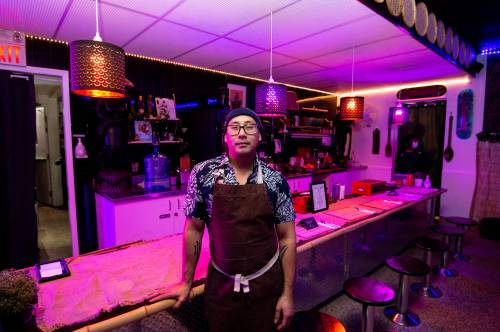
A paper tiki mask is the only indication that the door it’s affixed to leads somewhere other than a dive bar. Ring the doorbell and walk through the kitchen, however, and you’ll be transported to an island-themed lounge that’s equal parts kitschy and comfortable.

“This is just from people’s houses, like my mom’s,” says Allan Pineda, pointing to the wood carvings, water-buffalo horns and rattan furniture decorating the room. “A lot of the stuff you see in here, you’d see in a Filipino’s house back in the day — like second-wave immigrants in the ‘60s and ‘70s, they’d bring this stuff home (from the Philippines).”

Pineda is a local chef and part of the team behind the Bahay Kubo Tiki Bar, a pop-up Filipino drinking and dining experience hosted weekly at an undisclosed Winnipeg establishment.

The details are hush-hush because the temporary eatery is meant to operate like a speakeasy. The dinners are an offshoot of Baon Manila Nights, which Pineda started as a way to highlight Winnipeg’s Filipino culinary scene.

Read
Monday, Nov. 15, 2021

NDP introduces last-minute rent-hike bill, Tories say it will cause administrative nightmare

Carol Sanders 4 minute read Preview

NDP introduces last-minute rent-hike bill, Tories say it will cause administrative nightmare

Carol Sanders 4 minute read Yesterday at 7:29 PM CDT

A day before the legislative session ends, the NDP government introduced a bill to ensure landlords can’t charge tenants backpay for approved above-guideline rent increases.

Bill 59, the Residential Tenancies Amendment Act (2), would prohibit a landlord who has applied for a rent increase above the maximum permitted by regulation from charging tenants the new rate until it is approved.

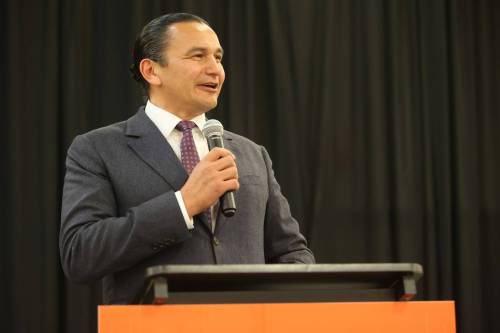
Premier Wab Kinew announced earlier this month that renters would not have to pay the increases until the provincial Residential Tenancies Branch hears landlords’ arguments and issues its decisions.

“We recently passed legislation in the house to make sure life will be more affordable,” Kinew said at a news conference on Oct. 20, referring to a new rent bill introduced in March and expected to become law before the session ends on Oct. 29. He was flanked by Winnipeg tenants facing rent increases of more than 50 per cent.

Read
Yesterday at 7:29 PM CDT

Railways report more accidents with dangerous goods

Dylan Robertson 6 minute read Preview

Railways report more accidents with dangerous goods

Dylan Robertson 6 minute read Monday, Jan. 20, 2020

OTTAWA — The number of rail accidents involving dangerous goods more than doubled in Canada in 2018.

There were 25 accidents involving dangerous goods in 2018, involving one death, according to Transport Canada data published Monday.

There were 11 accidents recorded a year prior, and five in 2016.

These accidents involve dangerous goods — flammable or corrosive substances — that either exploded or leaked.

Read
Monday, Jan. 20, 2020

The landscape that taught us to see

Stephen Borys 6 minute read Preview

The landscape that taught us to see

Stephen Borys 6 minute read 2:01 AM CDT

The white pine stood at the edge of the lake, leaning out over the water, its branches bent by years of wind and weather. Beyond it stretched an expanse of blue water beneath a clear sky, a distant tree line and other pines rising along the rocky shoreline. From the deck above, the landscape seemed both expansive and remarkably still.

I had been looking at it for only a few moments when Tom Thomson and the Group of Seven entered the picture. Not literally, of course. But once the association appeared, I could not unsee it. The pine became The Jack Pine and The West Wind. The surrounding rocks, water and sky called up A.Y. Jackson, Arthur Lismer, Franklin Carmichael and Lawren Harris. A landscape I had been looking at all weekend suddenly became part of a visual history Canadians have carried with them for more than a century.

Perhaps that is the Group of Seven’s greatest achievement. They did not simply paint the Canadian landscape. They changed the way we see it.

I was at the lake for a quiet weekend, reflecting on the cultural, community and development projects that occupy much of my work through Civic Muse. Increasingly, I see these pursuits as part of the same conversation — place and identity, how we understand it, care for it and decide what is worth carrying forward.

Read
2:01 AM CDT

Ont. could see 6,500 daily COVID cases in December

Paola Loriggio, The Canadian Press 5 minute read Preview

Ont. could see 6,500 daily COVID cases in December

Paola Loriggio, The Canadian Press 5 minute read Thursday, Nov. 12, 2020

TORONTO - Ontario could see as many as 6,500 new daily cases of COVID-19 by mid-December unless steps are taken to limit the spread of the virus, newly released projections showed Thursday as the province marked another record for new infections.

The new modelling predicts the province will reach 2,500 new daily cases by that time if the growth rate is at three per cent, or 6,500 if growth is at five per cent.

Dr. Adalsteinn Brown, one of the experts behind the projections, said a five per cent growth rate is in line with the current situation, or even "slightly optimistic." The growth rate over the last three days was six per cent, he said.

Brown said more restrictions should be put in place in some of the hot spot areas in order to reduce cases and the impact on the health-care system. Otherwise, the case count in Ontario will surpass that in several European jurisdictions that have implemented some form of lockdown, he said.

Read
Thursday, Nov. 12, 2020

‘Thank you, Winnipeg’: Gillingham wins second term as city’s mayor

Chris Kitching, Joyanne Pursaga, Malak Abas, Matthew Frank and Nicole Buffie 8 minute read Preview

‘Thank you, Winnipeg’: Gillingham wins second term as city’s mayor

Chris Kitching, Joyanne Pursaga, Malak Abas, Matthew Frank and Nicole Buffie 8 minute read Updated: Yesterday at 9:16 PM CDT

Scott Gillingham won a second term as Winnipeg mayor in Wednesday’s municipal election, while Noah Redden surged to a top-three finish and more than half of the city’s 15 councillors seats were claimed by political newcomers.

Unofficial results gave Gillingham 39.82 per cent of the vote, followed by Kevin Klein (20.71 per cent), Noah Redden (19.84 per cent) and Mike Vogiatzakis (9.66 per cent) in a field of 12 candidates — the most since 1992.

“Tonight, you have given me the honour of serving as your mayor once again,” Gillingham, joined by his wife Marla and other family members, said in front of more than 100 cheering supporters who waved blue and orange pompoms at the Birchwood Inn in St. James. 

“I have to tell you, it means even more to me this second time. Thank you, Winnipeg. I will never take your trust for granted. I still believe our city’s best days are ahead of us.”

Read
Updated: Yesterday at 9:16 PM CDT