Ontario rejects TDSB pitch to cut class size, wants to maintain full-day

Advertisement

Advertise with us

TORONTO - Talks between Canada's largest school board and the Ontario government to cut elementary class sizes and address pandemic safety concerns continue after the province rejected a board plan that would have shortened daily class time for students.

Read this article for free:


By clicking the button above, an account will be created and you will begin to receive some of our recommended newsletters. You may opt out of any newsletter by visiting your Email and Communication Preferences page or by clicking "unsubscribe" at the bottom of any email.

or

Already have an account? Log in here »

To continue reading, please subscribe:

Digital Subscription

One year of digital access for only $1.44 a week*

  • Enjoy unlimited reading on winnipegfreepress.com
  • Read the E-Edition, our digital replica newspaper
  • Access News Break, our award-winning app
  • Play interactive puzzles

*Billed as $5.77 plus GST every four weeks. After 52 weeks, price increases to the regular rate of $19.95 plus GST every four weeks. Offer available to new and qualified returning subscribers only. Cancel any time.

To continue reading, please subscribe:

Add Free Press access to your Brandon Sun subscription for only an additional

$1 for the first 4 weeks*

  • Enjoy unlimited reading on winnipegfreepress.com
  • Read the E-Edition, our digital replica newspaper
  • Access News Break, our award-winning app
  • Play interactive puzzles
Start now

*Your next Brandon Sun subscription payment will increase by $1.00 and you will be charged $17.95 plus GST for four weeks. After four weeks, your payment will increase to $24.95 plus GST every four weeks.

Hey there, time traveller!
This article was published 17/08/2020 (2265 days ago), so information in it may no longer be current.

TORONTO – Talks between Canada’s largest school board and the Ontario government to cut elementary class sizes and address pandemic safety concerns continue after the province rejected a board plan that would have shortened daily class time for students.

Education Minister Stephen Lecce said Monday that the government and Toronto District School Board officials are meeting to discuss back-to-school plans after the province rejected the board’s initial proposal on Friday.

It would have seen the board spend $20 million to hire more teachers and cut elementary class sizes to between 15 and 20 students depending on the grade.

An employee disinfects a public chair in the Byward Market in downtown Ottawa on Monday, Aug. 17, 2020. THE CANADIAN PRESS/Sean Kilpatrick

The plan would have also required a change in the daily school schedule, cutting 48 minutes of classroom time to include teacher prep which is mandated by contract.

A typical class day has 300 minutes and anything less is not the preferred option, Lecce said.

“My hope is to work with the school board to … maximize the amount of time a student has in front of their teachers while, yes, keeping classroom sizes low,” he said. “It’s not an either or proposition.”

The board did not immediately respond to a request for comment, but will meet Tuesday to discuss next steps.

The inclusion of teacher prep time in the day was a major sticking point for the government and Premier Doug Ford appealed to union leaders to work with the government on the issue.

“I’m begging the teachers’ union, just work with us,” he said. “We want just a little bit more, and you shoot it down, it’s just not fair.”

The Elementary Teachers Federation of Ontario said Monday afternoon it has not engaged in discussions about preparation time with the ministry or the province’s school boards.

The talks come just weeks ahead of the start of school in September as teachers’ unions and some parents continue to raise concerns about class sizes during the pandemic.

They have asked the government to mandate school boards to lower class sizes to maintain physical distancing and provide funding to ensure space can be leased and more teachers hired.

Last week, the government announced a plan that would see boards access $500 million of their own savings to achieve physical distancing in classrooms.

School boards have said they are concerned and frustrated by that decision.

Green Party Leader Mike Schreiner said Monday the government needs to be flexible in its approach to the TDSB plan and it’s effectively asking for unpaid work from teachers.

“If kids need a shorter day to stay safe, then the Premier has to stop saying he has the best plan in Canada and actually listen to what teachers, educators and hundreds of thousands of parents are asking for,” he said in a statement.

NDP education critic Marit Stiles said the government should adopt the TDSB’s plan without delay instead of “creating chaos” in the school system.

“On one hand, Doug Ford says we shouldn’t send kids back to overcrowded classrooms,” she said. “But this government is refusing to work with the board to make that happen.”

Meanwhile, Toronto Public Health announced Monday that it has created a team of 70 nurses to provide education and training sessions to school staff, parents and caregivers aimed a bolstering infection control and prevention.

The board of health has previously called for smaller class sizes to accommodate physical distancing, expanded use of masks and an enhanced testing strategy.

The city said it is working with both the TDSB and the Toronto Catholic District School Board to identify city real estate and spaces which can be used to support physical distancing.

“These proactive and responsible actions will help to reduce transmission in schools and ensure an effective response,” board of health chairman Joe Cressy said in a statement.

Meanwhile, Ontario is reporting 99 new cases of COVID-19, with 83 more resolved cases of the virus on Monday.

The total number of cases now stands at 40,745, which includes 2,789 deaths and 37,036 cases marked as resolved.

Health Minister Christine Elliott said 31 of Ontario’s 34 public health regions reported five or fewer cases.

This report by The Canadian Press was first published Aug. 17, 2020.

Report Error Submit a Tip

More Stories

Just say no (to deficits during good economic times)

Tom Brodbeck 5 minute read Preview

Just say no (to deficits during good economic times)

Tom Brodbeck 5 minute read Wednesday, Oct. 2, 2019

When a political party pledges to run small, “manageable” deficits if elected, it almost always means it will go deeper into the red if it wins government.

It’s human nature.

After all, as a government, if you get the blessing of the public to spend beyond your means, what’s a few billion more a year in overspending?

The problem is, it doesn’t usually end there. When those same politicians seek re-election, they often want permission to post even larger deficits. In some cases, they’ve abandoned the idea of balancing the books altogether, arguing perpetual deficit financing is acceptable, as long as the debt doesn’t exceed a certain percentage of the economy.

Read
Wednesday, Oct. 2, 2019

Health officials ponder next steps as COVID cases surge in Southern Health region

Katie May 5 minute read Preview

Health officials ponder next steps as COVID cases surge in Southern Health region

Katie May 5 minute read Wednesday, Nov. 3, 2021

Public-health officials say they're trying to avoid ordering another lockdown in southern Manitoba, where COVID-19 infection rates are surging.

Deputy chief provincial public health officer Dr. Jazz Atwal told a news conference Wednesday he doesn't anticipate more lockdowns and suggested he will prioritize keeping schools open when considering future restrictions.

But he couldn't say what the next step will be in an area of the province where hospitalizations among unvaccinated residents are on the rise.

Average daily case counts in the southern part of the province are higher now than they were before lockdown measures went into effect last November, and officials are still figuring out what to do.

Read
Wednesday, Nov. 3, 2021

Brian Bowman wins mayoral battle

Aldo Santin and Mary Agnes Welch 6 minute read Preview

Brian Bowman wins mayoral battle

Aldo Santin and Mary Agnes Welch 6 minute read Thursday, Oct. 23, 2014

In the end, it wasn’t even close.

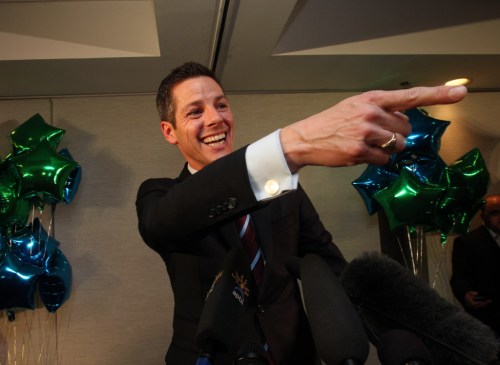
A mayoral race that was supposed to be a head-to-head battle between privacy lawyer Brian Bowman and former NDP MP and MLA Judy Wasylycia-Leis turned into a rout on election night. Wasylycia-Leis, the experienced politician, had held what looked like an unassailable lead for months, but Bowman, the outsider who promised Winnipeggers a better, prosperous future, chipped doggedly away at it.

“I’m excited to tell you that positive change is coming to city hall,” Bowman told roaring supporters at the Inn At The Forks after making his way into the small ballroom accompanied by his wife and two young sons.

He said he hadn’t expecting such a landslide victory, but had believed that the campaign was building momentum.

Read
Thursday, Oct. 23, 2014

Science-art collaboration injects dose of emotion into cold, hard truths

Sarah Lawrynuik 5 minute read Preview

Science-art collaboration injects dose of emotion into cold, hard truths

Sarah Lawrynuik 5 minute read Wednesday, Apr. 28, 2021

Looking at spreadsheets and map plots of trees is far beyond Rhian Brynjolson’s typical day as a visual artist, but she became entranced and inspired by data collected by Canadian scientists for a new art project.

Her hope is to try and bring the numbers, map dots and statistics to life in a new way to help the public better connect to climate science.

Falcon Lake’s Brynjolson is one of 12 Canadian artists who participated in an art-science collaboration exhibit, co-ordinated by the Global Water Futures program out of the University of Saskatchewan. The project saw the artists paired with researchers and scientists across the country who then engaged in conversations to try to inspire a new angle to their art.

“The whole idea behind it is: water is life,” says Louise Arnal, the project lead, and a post-doctoral fellow at the Centre for Hydrology and Coldwater Laboratory.

Read
Wednesday, Apr. 28, 2021

Transit driver killed in knife attack on U of M campus

8 minute read Preview

Transit driver killed in knife attack on U of M campus

8 minute read Tuesday, Feb. 14, 2017

A Winnipeg Transit driver was killed early this morning after he was stabbed by the only passenger on his bus at the University of Manitoba campus.

Irvine Jubal Fraser, 58, was rushed to hospital in critical condition but later died, police said.

The attack occurred at about 2 a.m. in the area of Dafoe Road West and Gillson Street.

Witnesses pointed officers led by the canine unit in the direction of the Red River, where a 22-year-old suspect trying to cross to the St. Vital side was arrested and taken into custody.

Read
Tuesday, Feb. 14, 2017

Kinew will listen to city request for new taxes — but no promises

Nicole Buffie 5 minute read Preview

Kinew will listen to city request for new taxes — but no promises

Nicole Buffie 5 minute read Friday, Nov. 1, 2024

Premier Wab Kinew remained coy about whether he would support a new municipal tax in Winnipeg as the city struggles to maintain services.

Kinew dodged questions on the matter Friday afternoon.

“We want to see services strong, we want to see roads getting fixed,” Kinew said. “Affordability is really top of mind … we got to keep life affordable for the average person out there.”

Some of the items being considered for a new tax are: alcohol, online deliveries, vehicle registration, vacant homes, commercial parking and land transfers with an exemption for first-time homebuyers.

Read
Friday, Nov. 1, 2024