Toronto Public Health criticizes public school board’s reopening plan

Advertisement

Advertise with us

Toronto's public health agency is calling on the local public school board to reduce class sizes in September, suggesting the province's back-to-school plan doesn't go far enough to prevent the spread of COVID-19.

Read this article for free:


By clicking the button above, an account will be created and you will begin to receive some of our recommended newsletters. You may opt out of any newsletter by visiting your Email and Communication Preferences page or by clicking "unsubscribe" at the bottom of any email.

or

Already have an account? Log in here »

To continue reading, please subscribe:

Digital Subscription

One year of digital access for only $1.44 a week*

  • Enjoy unlimited reading on winnipegfreepress.com
  • Read the E-Edition, our digital replica newspaper
  • Access News Break, our award-winning app
  • Play interactive puzzles

*Billed as $5.77 plus GST every four weeks. After 52 weeks, price increases to the regular rate of $19.95 plus GST every four weeks. Offer available to new and qualified returning subscribers only. Cancel any time.

To continue reading, please subscribe:

Add Free Press access to your Brandon Sun subscription for only an additional

$1 for the first 4 weeks*

  • Enjoy unlimited reading on winnipegfreepress.com
  • Read the E-Edition, our digital replica newspaper
  • Access News Break, our award-winning app
  • Play interactive puzzles
Start now

*Your next Brandon Sun subscription payment will increase by $1.00 and you will be charged $17.95 plus GST for four weeks. After four weeks, your payment will increase to $24.95 plus GST every four weeks.

Hey there, time traveller!
This article was published 07/08/2020 (2279 days ago), so information in it may no longer be current.

Toronto’s public health agency is calling on the local public school board to reduce class sizes in September, suggesting the province’s back-to-school plan doesn’t go far enough to prevent the spread of COVID-19.

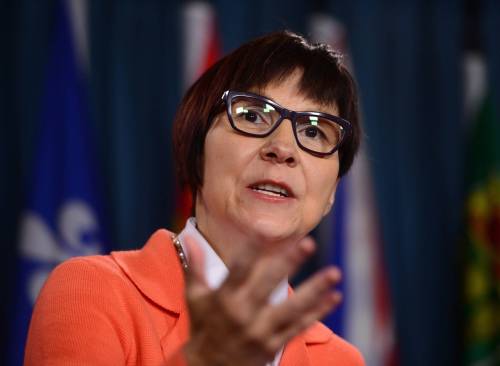
In a letter to the Toronto District School Board, associate medical officer of health Dr. Vinita Dubey said Toronto Public Health is worried about the risk of COVID-19 spreading if class sizes remain the same.

“In elementary classes (junior kindergarten to Grade 3) where masks are not required, smaller class sizes will particularly be important to ensure students can be spaced out to reduce transmission,” Dubey wrote.

She said teachers will also be able to better control classes and prevent crowding in hallways if class sizes are reduced.

And importantly, she said, reducing class sizes will make physical distancing easier.

“Scientifically, it has been shown that keeping a distance of two metres from others works well to prevent the spread of respiratory droplets from one person to another,” she wrote, noting that desks should be spaced out accordingly.

Toronto Public Health did not respond to a request for further comment on Friday.

In a written statement, TDSB spokesman Ryan Bird said the board has been working with the public health agency since the beginning of the pandemic and has incorporated many of its suggestions.

He said the board has also been speaking with the Ministry of Education about how it could lower class sizes, but that option may not be economically feasible for all schools.

“Other strategies may have to be considered, such as shortening the school day, reassigning teachers from non-classroom roles and lowering class sizes only in areas deemed at risk by Toronto Public Health,” Bird said.

He noted funding provided by the province wouldn’t cover the costs of hiring enough teachers to reduce classes in the TDSB, “let alone the entire province.”

Ontario’s school reopening plan, which was released last week, does not mandate the reduction of class sizes for students from kindergarten to Grade 8, but says they should be prevented from interacting with peers in other classes.

High school class sizes in all but two dozen school boards are to remain the same as well.

In those 24 boards — the TDSB among them — high schoolers will attend class only half the time in cohorts of 15. The rest of the time, they’ll do school work remotely.

Parents can also choose to keep their kids out of school and have them learn at home.

Premier Doug Ford and Education Minister Stephen Lecce have spent much of the past week fending off critics of the plan who argue it is underfunded and unsafe.

The Opposition NDP and the province’s four major teachers’ unions have said they feel students should be in class full time, but with reduced class sizes. They also argue that $309 million in new funding doesn’t go far enough to make that happen.

Of that money, $30 million is earmarked to hire more educators — a figure opponents say is too low.

On Friday, Ford argued against mandating smaller class sizes across the province, noting the case load is different in different regions.

“One size doesn’t fit all,” he said during his daily news conference.

Ford’s comments came the same day that the Public Health Agency of Canada released its own guidance for reopening schools across the country.

The document outlines general best practices for staff and students, including promoting physical distancing where possible and mandating mask use for those over the age of 10. The document also suggests that schools consider reducing class sizes, if it’s feasible.

In issuing the guidance, chief medical officer Dr. Theresa Tam cautioned schools to also consider “local epidemiology” when crafting their own reopening plans.

“This guidance document should be used alongside guidance from provincial and territorial health authorities, ministries of education and Indigenous community governance structures,” she said.

This report by The Canadian Press was first published Aug. 7, 2020.

Report Error Submit a Tip

More Stories

Another embarrassing loss: Arniel

Mike McIntyre 7 minute read Preview

Another embarrassing loss: Arniel

Mike McIntyre 7 minute read Sunday, Nov. 1, 2026

RALEIGH — No sticks were smashed. No walls punched. And nary a naughty word was uttered.

Instead, the Winnipeg Jets filed off the ice here at Lenovo Center on Sunday afternoon much like they’d just played the preceding game against the Carolina Hurricanes — with no emotion, no passion, no urgency.

You’d have thought yet another loss, this one in truly humiliating fashion and a ninth consecutive overall, might have triggered something.

Anything.

Read
Sunday, Nov. 1, 2026

‘Mom and dad’ Pereira and Michaud lead Team Canada at Kelowna Grand Prix

Laurie Nealin 5 minute read Preview

‘Mom and dad’ Pereira and Michaud lead Team Canada at Kelowna Grand Prix

Laurie Nealin 5 minute read Wednesday, Oct. 28, 2026

Lia Pereira and Trennt Michaud’s spirits couldn’t be higher as they begin their fourth ISU Grand Prix season this weekend at Skate Canada International as Team Canada’s top medal prospects.

Fresh off a decisive victory at Nebelhorn Trophy in Germany last month, the reigning world pair skating bronze medallists were riding a wave of confidence and excitement — and feeling “a mom and dad energy” — as they contemplated the assignment ahead in Kelowna, B.C.

“To go out and win our first Challenger (event) was a great confidence boost in our back pocket,” said Pereira, who admitted to a case of jitters before taking the ice in Oberstdorf.

“No matter how many years you do this, you still always get the first competition nerves. We’re just glad we were able to remind ourselves how to handle that and put out two great skates.”

Read
Wednesday, Oct. 28, 2026

NDP should heed own advice, bring back 50-50 funding

Mark Hudson 5 minute read 2:01 AM EST

Transit riders have a love-hate relationship with our “people’s limousine.” For many, it’s their only means of mobility. Others ride because they believe urban life is better when people use public transit rather than choking the roads with single-occupancy cars.

At the same time, one of life’s mid-sized stressors is peering into the distance on a cold, snowy Winnipeg morning to see whether your late bus is yet on the horizon and, when it appears, whether it’s full to capacity and going to roll past. It’s the kind of thing that pushes you back into the car, if you have access to one.

We could make a big dent in this daily anxiety, help pay transit workers fairly and do our part to stave off climate disaster by restoring a tried-and-true funding scheme: the 50-50 model. This shared-cost model, in which the provincial government pays half of transit operating costs over and above service revenues, was brought in when I was a kid waiting to board the bus with my parents in the 1970s.

The Progressive Conservative government of Gary Filmon initially ditched it in 1993. New Democrats reinstalled it in 2007, with then-Lt.-Gov. John Harvard announcing in the 2006 throne speech: “Manitoba is committed to increased provincial funding for transit operating costs in Thompson, Flin Flon, Brandon and Winnipeg, restoring the 50-50 funding partnership that was in place prior to the cutbacks of the 1990s.”

First Nations child welfare deal victim of politics

Niigaan Sinclair 4 minute read Preview

First Nations child welfare deal victim of politics

Niigaan Sinclair 4 minute read Friday, Oct. 18, 2024

It was inevitable the proposed $47.8-billion deal — struck by the federal government, the Chiefs of Ontario, Nishnawbe Aski Nation and the Assembly of First Nations — to rectify the underfunding of on-reserve child welfare services, would be rejected.

If passed, it would have been the largest financial compensation and program allocation for First Nations in Canadian history, to address the needless suffering and apprehension of tens of thousands of children.

On Thursday, however, in a vote of 267-147, the majority of chiefs in Canada rejected the deal in a special meeting of the assembly in Calgary.

The Agreement on Long-Term Reform of the First Nations Child and Family Services Program was a deal forced by multiple decisions over two decades by the Canadian Human Rights Tribunal. After it ruled the experience of on-reserve First Nations children was discriminatory, it ordered the federal government to fix the system and compensate families and children forced into foster care.

Read
Friday, Oct. 18, 2024

Track records keep falling in fast Tokyo Games

Jim Vertuno, The Associated Press 4 minute read Preview

Track records keep falling in fast Tokyo Games

Jim Vertuno, The Associated Press 4 minute read Wednesday, Aug. 4, 2021

Sweden’s Madelene Sagstrom grabbed the first-round lead with a five-under-par round of 66, the conversation mostly revolved around the 42 C conditions in Tokyo.

Read
Wednesday, Aug. 4, 2021

Toronto Public Health criticizes TDSB plan

Nicole Thompson, The Canadian Press 4 minute read Friday, Aug. 7, 2020

Toronto's public health agency is calling on the local public school board to reduce class sizes in September, suggesting the province's back-to-school plan doesn't go far enough to prevent the spread of COVID-19.

In a letter to the Toronto District School Board, associate medical officer of health Dr. Vinita Dubey said Toronto Public Health is worried about the risk of COVID-19 spreading if class sizes remain the same.

"In elementary classes (junior kindergarten to Grade 3) where masks are not required, smaller class sizes will particularly be important to ensure students can be spaced out to reduce transmission," Dubey wrote.

She said teachers will also be able to better control classes and prevent crowding in hallways if class sizes are reduced.