Quebec’s COVID-19 numbers continue to rise with 180 new cases, one death

Advertisement

Advertise with us

MONTREAL - Quebec posted its highest number of confirmed COVID-19 infections in more than a month on Tuesday as the provincial government said it was watching the situation closely.

Read this article for free:


By clicking the button above, an account will be created and you will begin to receive some of our recommended newsletters. You may opt out of any newsletter by visiting your Email and Communication Preferences page or by clicking "unsubscribe" at the bottom of any email.

or

Already have an account? Log in here »

To continue reading, please subscribe:

Digital Subscription

One year of digital access for only $1.44 a week*

  • Enjoy unlimited reading on winnipegfreepress.com
  • Read the E-Edition, our digital replica newspaper
  • Access News Break, our award-winning app
  • Play interactive puzzles

*Billed as $5.77 plus GST every four weeks. After 52 weeks, price increases to the regular rate of $19.95 plus GST every four weeks. Offer available to new and qualified returning subscribers only. Cancel any time.

To continue reading, please subscribe:

Add Free Press access to your Brandon Sun subscription for only an additional

$1 for the first 4 weeks*

  • Enjoy unlimited reading on winnipegfreepress.com
  • Read the E-Edition, our digital replica newspaper
  • Access News Break, our award-winning app
  • Play interactive puzzles
Start now

*Your next Brandon Sun subscription payment will increase by $1.00 and you will be charged $17.95 plus GST for four weeks. After four weeks, your payment will increase to $24.95 plus GST every four weeks.

Hey there, time traveller!
This article was published 21/07/2020 (2294 days ago), so information in it may no longer be current.

MONTREAL – Quebec posted its highest number of confirmed COVID-19 infections in more than a month on Tuesday as the provincial government said it was watching the situation closely.

The 180 new confirmed cases were the most the province has seen in a single day since June 12, when it reported 181 infections.

“More screening may lead to more cases,” Health Minister Christian Dube tweeted alongside the daily tally. “We are monitoring the situation closely, especially in Montreal.”
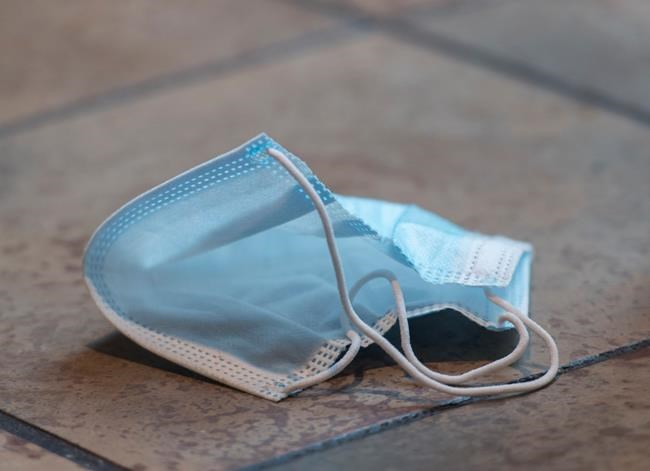
A discarded face mask is shown on the floor of a food court in a shopping mall in Montreal, Saturday, July 18, 2020, as the COVID-19 pandemic continues in Canada and around the world THE CANADIAN PRESS/Graham Hughes

On Monday, the province’s deputy premier said the pandemic in Quebec was under control and that increased tests were likely to bring about more positive cases, adding the percentage of positive results remained stable at about two per cent.

Dr. Matthew Oughton, assistant professor of medicine at McGill University, said it might not be shocking that more testing is revealing more positive cases, but, he added, it’s important to dig deeper into what the numbers mean.

“If you take a step back and look at what’s happening across Canada, it’s certainly notable that Quebec is not the only province that’s having increased numbers of new cases,” said Oughton, who is also an infectious disease specialist at Montreal’s Jewish General Hospital.

“The common thread in all of these is that, by and large, a much higher proportion now of these new cases are happening in people that are younger and not only younger, but they appear to be connected to higher-risk activities,” he said in an interview Tuesday.

Quebec has ramped up testing, reaching about 15,000 tests for three consecutive days last week. On Sunday, the last day for which data is available, the province conducted 10,501 tests.

The spike in tests came after health authorities in Montreal on July 11 urged anyone who had worked or visited a bar since July 1 to get tested. More recently, authorities said community spread is occurring through house parties as opposed to bars.

“In terms of the bigger picture, what this is telling me is we need to be careful about relaxing too much and engaging in these activities,” Oughton said. “As we’ve seen time and time again with this pandemic, what happens is you get the disease into one segment of society.”

In Quebec, the virus started with returning travellers from spring break, spread to long-term care residents and then to health-care workers. Those infected workers brought the virus home to their families and neighbourhoods.

“If we’re seeing more and more cases in young people — they don’t live in a vacuum,” said Oughton. “They will have contact with all other segments and this is just the next step in how this could spread.”

Slightly more than half the cases reported Tuesday were registered in Montreal, and the majority of the rest of the were in surrounding regions such as the Laurentians, Lanaudiere, Laval and Monteregie. The province has reported a total of 57,796 confirmed COVID-19 cases, 50,298 of which are considered recovered.

Other indicators have remained stable: authorities reported one new death for a total of 5,658, while hospitalizations declined by four to 247, with 15 people treated in intensive care, a reduction of two.

And while bars were initially identified by public health authorities as a concern, contract tracing led them to conclude spread is happening elsewhere. The government has also tightened rules for bars, limiting operating hours and the number of people allowed in an establishment.

On Monday, authorities said out of 924 bars on the island of Montreal, only three were identified as having had COVID-19 cases, in addition to one other establishment on the city’s south shore.

“Maybe what’s happening is at bars, there are still rules,” Oughton said. “Maybe people who don’t want to wear a mask, perhaps they are doing this in a private setting rather than a bar because the rules aren’t enforced.”

Quebec’s public health department and Montreal’s regional health department did not have anyone available to comment on Tuesday’s numbers.

This report by The Canadian Press was first published July 21, 2020.

Report Error Submit a Tip

More Stories

US rolls to women's hoops gold medal in Bird's last Olympics

Doug Feinberg, The Associated Press 6 minute read Preview

US rolls to women's hoops gold medal in Bird's last Olympics

Doug Feinberg, The Associated Press 6 minute read Sunday, Aug. 8, 2021

SAITAMA, Japan (AP) — Sue Bird and Diana Taurasi walked off the basketball court together, arm-in-arm, one last time at the Tokyo Games.

They started their journey together five Olympics ago and ended it in the same fashion as always — with gold medals hanging around their necks.

“All of what we’ve done for USA Basketball, we’ve done together. It’s fitting,” Bird said after the 90-75 win over Japan on Sunday.

And now it's over — at least for the 40-year-old Bird.

Read
Sunday, Aug. 8, 2021

RRC Polytech program cuts take bite out of hospitality, tourism sector

Maggie Macintosh 4 minute read Preview

RRC Polytech program cuts take bite out of hospitality, tourism sector

Maggie Macintosh 4 minute read Saturday, May. 2, 2026

Manitoba’s tourism industry is bracing for the disappearance of hospitality training programs — once-popular courses among international students.

Citing budgetary challenges related to a shift in federal immigration policy, Red River College Polytechnic is scrapping 11 programs and scaling back three others in 2026-27. Its hospitality business management diploma is one of seven permanent casualties.

The announcement, while unsurprising, is but the latest blow to a sector trying to “build back the workforce” in the wake of the COVID-19 pandemic, said Michael Juce, president of the Manitoba Hotel Association.

“Are people going to go outside of Manitoba for training? And if they leave, are they going to come back?” Juce said, adding that rural hotels in particular are already grappling with staffing shortages.

Read
Saturday, May. 2, 2026

Taxi and ride-hailing services receive 58 complaints since March

Jessica Botelho-Urbanski 5 minute read Preview

Taxi and ride-hailing services receive 58 complaints since March

Jessica Botelho-Urbanski 5 minute read Friday, Aug. 17, 2018

The City of Winnipeg has fielded 58 formal complaints about vehicle-for-hire operations since taking over industry oversight from the province in March.

According to freedom of information request results, the city mostly received complaints about taxi operations, and the two largest companies – Duffy’s Taxi and Unicity Taxi – were the main culprits.

From March 1, 2018 to July 13, 2018, the Winnipeg Parking Authority received 20 complaints about Duffy’s, mostly to do with driver road habits (five complaints), driver conduct (three), service refusal (three) or poor service (three), among other issues.

During the same period, Unicity had 19 complaints, five of them related to poor service and three about driver conduct, plus other misdeeds.

Read
Friday, Aug. 17, 2018

The new normal in Canadian politics

David McLaughlin 5 minute read Preview

The new normal in Canadian politics

David McLaughlin 5 minute read Yesterday at 2:01 AM CDT

“Nothing happening, all at once.”

Welcome to the new normal of Canadian politics, where normality is the new normal. Routine and stable are in; disruptive and excessive are out. Exhibits A and B are the Alberta referendum and the British Columbia election. Voters opted for stability over volatility.

The opposite of being normal is being different from the norm. In politics that means different from where we’ve been and what we’ve come to expect. Two competing trends have dominated our politics for the past decade and a half — progressivism and populism. Think Justin Trudeau and liberal, progressive identity politics in Canada, and Donald Trump and conservative, populist MAGA politics in America. We are now experiencing a swing away from both those trends.

Representing this “new normal” are Prime Minister Mark Carney, for one, and newly elected British Columbia premier, Lorne Doerksen, for another. Both are considered normal because they talk and act like adults in a childish political world. Their political flair is to not have any political flair. They stand out for not standing out.

Read
Yesterday at 2:01 AM CDT

Ottawa announces $500 million for North End sewage plant upgrade

Joyanne Pursaga 4 minute read Preview

Ottawa announces $500 million for North End sewage plant upgrade

Joyanne Pursaga 4 minute read Friday, Oct. 30, 2026

The federal government will provide $500 million to help complete the major upgrade to Winnipeg’s North End sewage treatment plant.

Winnipeg South MP Terry Duguid confirmed the total funding at a news conference at the plant Friday, calling the work critical to Winnipeg’s future.

“The stakes could not be higher. Without expanded wastewater treatment, Winnipeg would run out of capacity to build new homes and accommodate new industries within six years,” said Duguid.

The commitment offers the final funding needed to cover the $1.57-billion third and final phase of the upgrade. The city and province will also pay $500 million each for the work.

Read
Friday, Oct. 30, 2026

Province changes Thompson ‘Vaxport’ plan

Carol Sanders 5 minute read Preview

Province changes Thompson ‘Vaxport’ plan

Carol Sanders 5 minute read Thursday, Jan. 14, 2021

The Manitoba government has changed its plans for a vaccination "super site" for the North — just days after it was announced — after local officials argued the original proposal was unworkable.

Some northern residents will still get their COVID-19 shots at Thompson's airport, but "Vaxport" will be less super than originally planned, providing injections only to residents of fly-in communities.

Most northern residents will get their shots at the Thompson Community Recreation Centre, which is centrally located in the city of about 13,000.

"This makes much more sense logistically, and for the citizens of Thompson," Mayor Colleen Smook said Thursday after touring the airport site, which is located 10 kilometres from the city and isn't serviced by public transportation.

Read
Thursday, Jan. 14, 2021