Airlines face MPs’ frustration over health concerns, lack of refunds
Advertisement
Read this article for free:
or
Already have an account? Log in here »
To continue reading, please subscribe:
Digital Subscription
One year of digital access for only $1.44 a week*
- Enjoy unlimited reading on winnipegfreepress.com
- Read the E-Edition, our digital replica newspaper
- Access News Break, our award-winning app
- Play interactive puzzles
*Billed as $5.77 plus GST every four weeks. After 52 weeks, price increases to the regular rate of $19.95 plus GST every four weeks. Offer available to new and qualified returning subscribers only. Cancel any time.
To continue reading, please subscribe:
Add Free Press access to your Brandon Sun subscription for only an additional
$1 for the first 4 weeks*
- Enjoy unlimited reading on winnipegfreepress.com
- Read the E-Edition, our digital replica newspaper
- Access News Break, our award-winning app
- Play interactive puzzles
*Your next Brandon Sun subscription payment will increase by $1.00 and you will be charged $17.95 plus GST for four weeks. After four weeks, your payment will increase to $24.95 plus GST every four weeks.
Read unlimited articles for free today:
or
Already have an account? Log in here »
Hey there, time traveller!
This article was published 22/06/2020 (2325 days ago), so information in it may no longer be current.
Airlines faced a tough reception at the House of Commons health committee Monday as MPs grilled them on the lack of refunds for customers whose flights were cancelled due to the COVID-19 pandemic.
Parliamentarians from the three main opposition parties demanded to know why Canadians who paid for a service that was never delivered have yet to get their money back.
Conservative health critic Matt Jeneroux said the lack of refunds was “unfathomable,” while Bloc Quebecois member Luc Theriault highlighted the $2.61 billion in advance ticket sales Air Canada reported in its quarterly results last month.
“It’s not your money — there’s been no transaction. Where are the funds being kept? Where are the funds?” Theriault asked a company executive.
Representatives from Air Canada, WestJet Airlines Ltd. and Transat AT defended the dearth of reimbursements by citing store credit valid for at least two years and statements by Canada’s transportation regulator.
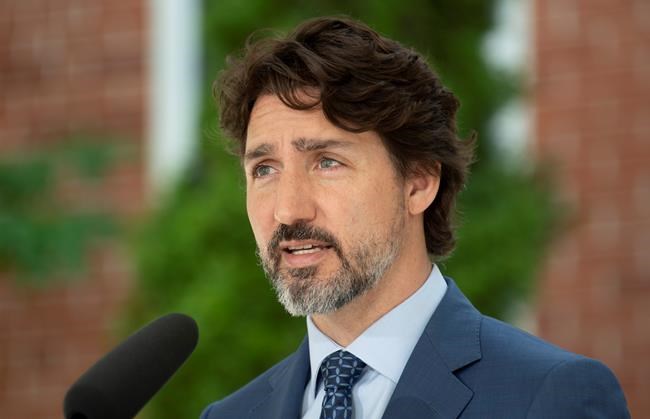
The committee session came hours after Prime Minister Justin Trudeau said public health trumps airline and tourism sector concerns around ongoing travel restrictions due to the coronavirus crisis.
“I understand how difficult this is and how frustrating this is for some people, but we know that reopening too quickly or carelessly would lead to a resurgence that might well force us to go back into lockdown, to shut down the economy once again, and nobody wants that,” Trudeau told reporters.
Air Canada and WestJet repeatedly cited an April statement by the Canadian Transportation Agency, which has not required airlines to reimburse ticket holders for flights cancelled during the pandemic.
“On April 22, the CTA did clarify its statement on vouchers that airline tariffs do not always provide for cash refunds, especially for (cases) beyond the airline’s control,” WestJet aviation security manager Jared Mikoch-Gerke told the committee.
WestJet’s international tariff — the contract between airline and passenger — states that “the total fare paid for each unused segment (of the trip) will be refunded” following a “failure to operate or refusal to transport” by the carrier.
Airlines were not the only focus of MPs’ frustration. Transport Canada officials also faced questions about refunds and health measures.
Theriault asked civil servants why Canada has not followed the lead of its counterparts at the U.S. Department of Transportation and the European Union in requiring carriers to provide refunds in order to receive financial support.
“Our understanding is that to date that has not been fully enforced,” with “a number of key European Union members” looking the other way on EU refund rules, said Lawrence Hanson, assistant deputy minister of policy at Transport Canada.
“The existing tariff never contemplated an event of this kind,” he added. “Obviously the immediate forward picture does not look particularly great…so to suddenly require paying the refunds all at once, which would be in the billions of dollars, could obviously have significant economic consequences for airlines.”
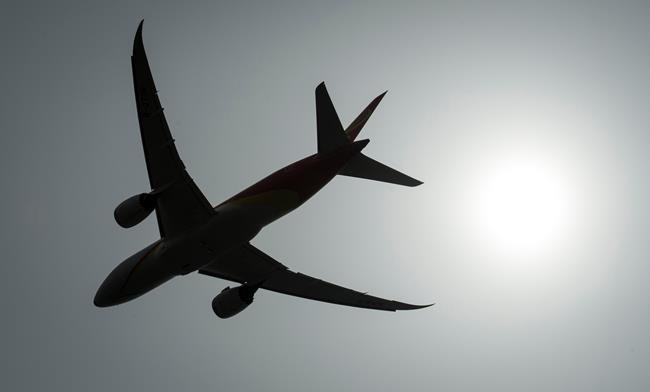
Airline revenue streams have shrunk to five per cent of pre-pandemic levels, with fleets parked and border shutdowns ongoing even as domestic travel demand gradually starts to pick up.
Last week, chief executives from 27 Canadian companies in sectors ranging from aviation to banking and telecommunications called for a “measured” reopening of the skies that would see travel resume across all provinces and between select countries.
Chief Public Health Officer Theresa Tam has called the 14-day quarantine for arrivals from abroad a “cornerstone” of pandemic policy, New Democrat health critic Don Davies noted.
“When we start to relax our standards, we may be actually just be walking into a second phase,” he said, citing flare-ups in Australia, New Zealand and multiple U.S. states following looser restrictions.
“I’m not here to disagree with Dr. Tam. I’m not a doctor. But there are several doctors and health (authorities) around the world that are making contrary decisions,” said Ferio Pugliese, Air Canada’s vice-president of government relations.
A “calculated strategy” with “safe-to-safe air corridors” between countries with diminishing infection rates, said Howard Liebman of Transat.
Many European Union countries have begun to reopen their borders to EU and some non-EU members.
Manitoba and the Maritime provinces continue to restrict interprovincial travel, while travellers arriving in Canada from abroad must self-isolate for two weeks.
Last week, Trudeau extended a ban on non-essential travel between Canada and the U.S. until at least July 21.
“We need to make sure we are keeping Canadians safe first and foremost,” the prime minister said Monday.
Trudeau also cited financial support available across industries, including the federal wage subsidy as well as loans starting at $60 million for large companies.

Kevin Brosseau, assistant deputy minister for safety and security, pointed to mandatory measures that include face masks on board aircraft and, starting next month, temperature checks at the point of departure.
Transport Canada encourages airlines to maintain empty middle seats, but does not require the precaution. However, Brosseau said it hasn’t been ruled out. “I can’t foreclose that as volumes go up, as people start flying again, that that may not be a measure that we take,” Brosseau added.
For now, Air Canada and WestJet block the sale of middle or adjacent seats in economy class and throughout the entire plane, respectively. Ultra-low-cost carrier Flair Airlines charges $49 to guarantee an empty adjacent seat.
This report by The Canadian Press was first published June 22, 2020.
Companies in this story: (TSX:AC, TSX:TRZ)
Related Articles
Air Canada cutting 30 domestic routes

Advertisement Advertise With Us
Advertisement Advertise With Us