Trudeau promises to push police body-cameras with premiers to aid ‘transparency’
Advertisement
Read this article for free:
or
Already have an account? Log in here »
To continue reading, please subscribe:
Digital Subscription
One year of digital access for only $1.44 a week*
- Enjoy unlimited reading on winnipegfreepress.com
- Read the E-Edition, our digital replica newspaper
- Access News Break, our award-winning app
- Play interactive puzzles
*Billed as $5.77 plus GST every four weeks. After 52 weeks, price increases to the regular rate of $19.95 plus GST every four weeks. Offer available to new and qualified returning subscribers only. Cancel any time.
To continue reading, please subscribe:
Add Free Press access to your Brandon Sun subscription for only an additional
$1 for the first 4 weeks*
- Enjoy unlimited reading on winnipegfreepress.com
- Read the E-Edition, our digital replica newspaper
- Access News Break, our award-winning app
- Play interactive puzzles
*Your next Brandon Sun subscription payment will increase by $1.00 and you will be charged $17.95 plus GST for four weeks. After four weeks, your payment will increase to $24.95 plus GST every four weeks.
Read unlimited articles for free today:
or
Already have an account? Log in here »
Hey there, time traveller!
This article was published 08/06/2020 (2320 days ago), so information in it may no longer be current.
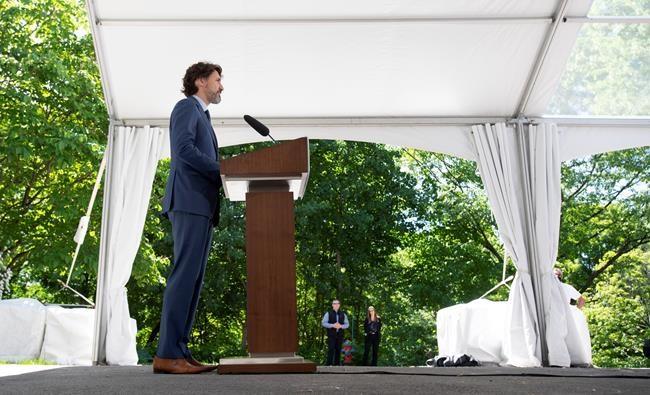
OTTAWA – Prime Minister Justin Trudeau said Monday he will push provincial premiers to equip police with body-worn cameras as a rapid, substantive solution to allegations of racism and brutality.
The cameras document police officers’ interactions with the public and Trudeau says they’re one relatively simple way to address complaints that police in Canada treat racialized people unfairly.
Trudeau was speaking Monday in response to several incidents across the country, including allegations of police brutality from a First Nations chief in Alberta and the fatal police shooting of a 26-year-old Indigenous woman from British Columbia in Edmundston, N.B.
The Canada-wide protests followed the massive American demonstrations sparked by the video showing a white Minneapolis officer kneeling on the neck of a black man, George Floyd, for nearly nine minutes, even as he pleaded that he couldn’t breathe. Floyd died with the officer’s knee still on him.
Fixing centuries of racial injustice won’t happen overnight, the prime minister said, but recent protests have shown him that more needs to be done quickly.
Trudeau said he wants the RCMP and municipal and provincial police forces to use body cameras.
The RCMP rejected body-worn cameras in 2016 because testing revealed technical problems. The Mounties said it couldn’t justify purchasing thousands of them for more than 750 detachments.
Trudeau said he raised the issue with RCMP Commissioner Brenda Lucki in a call Monday and he’ll pursue it with the provincial premiers later in the week.
“The challenges that I’ve heard are more logistical and economic concerns about remote areas, and the way those cameras would work,” Trudeau said.
“But yes, it is something that is, in my opinion, what we need to move forward with.”
Poverty and inequality are underlying factors that need to be addressed, and that includes reviewing spending decisions on the RCMP, said Trudeau.
“Systemic discrimination and racism in Canada goes much further than just policing. It’s about poverty and mental health. It’s about the fact that people are all too often treated like criminals instead of receiving the support that they need,” said Trudeau.
A statement from the RCMP said Lucki agreed that it is critically important for Canadians to feel protected by the police and it is committed to take whatever steps are required to enhance trust between them and the communities they serve.
“The use of body-worn cameras by RCMP officers was discussed as a means of ensuring accurate evidence gathering and accountability,” it said.
“Body-worn video provides increased transparency, while also providing a first-person view of what a police officer encounters, oftentimes in highly dynamic and tense situations.”
The RCMP has reviewed previous research and studies to draw best practices, with a desire to implement body-worn video across the force, it said.
Dr. Theresa Tam, the chief public health officer, said “stigma in all its forms” is a serious public health issue that not just law enforcement, but all sectors, including the health-care system need to seriously address.
“Racism, homophobia, transphobia, sexism, all of those manifestations of stigma and discrimination impacts health in at least three fundamental ways,” Tam said.
“Most importantly, it impacts access to the resources that promote good health — access to the health-care system, access to social services, education and all those support systems. Secondly, it can lead to direct effects on health, including physical injury and violence-related health conditions,” she explained.
“It also can lead to chronic stress, which can lead to an increase in mental health concerns and physical health concerns, which increases your cardiovascular disease or your blood pressure, which of course also is a risk factor for COVID-19.”
Yusuf Faqiri has accused Ontario jail guards of using excessive force against his schizophrenic brother, Soleiman, who was killed in 2016 while he was awaiting transfer to a mental health facility. He said Monday his family was standing in solidarity with Floyd’s because the circumstances of their deaths were so similar.
A lawsuit filed by his family in January 2019 alleges Soleiman Faqiri was punched, kicked and stomped on while he was handcuffed and defenceless, and alleges the occupant of a nearby cell saw a guard place his knee on the back of his neck during the incident. The statement of claim says he was pronounced dead in his cell.
None of the allegations have been proven in court. The Ontario Provincial Police reopened the investigation into the death shortly before the family filed the lawsuit. Kawartha Lakes Police Service has previously investigated the case, but no charges were laid.
“People with mental illness, their lives are viewed as cheap, especially when they are also people of colour,” Yusuf Faqiri said in an interview.
He had no comment on Trudeau’s latest remarks except to say: “We’ve grown numb to good news or signs of hope after waiting three years.”
A new online poll from Leger and the Association for Canadian Studies found that 50 per cent of those surveyed believed that systemic racism based on skin colour, ancestral origin or religious belief was “very” or “somewhat” present among the RCMP or other police.

The survey was conducted June 5 to 7 among 1,523 Canadian respondents who were randomly recruited from an online panel. Internet panels are not considered random samples, so the survey cannot be assigned a margin of error.
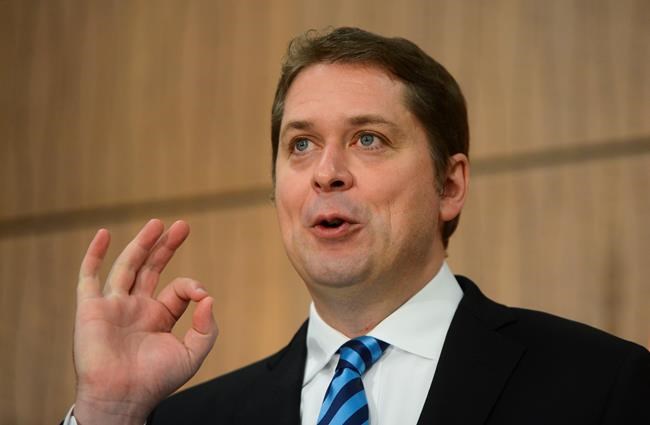
Conservative Leader Andrew Scheer said the RCMP and other police forces need to do more to stamp out systemic racism, but that doesn’t mean taking away funding.
“I don’t believe that defunding the RCMP would make Canadians safer,” he said Monday.
“I believe we have to look at aspects within our police forces and stamp out systemic racism where it exists and put in measures to ensure nobody is mistreated or treated differently because of the colour of their skin or their ethnic background.”
This report by The Canadian Press was first published June 8, 2020.