Halifax lab team to conduct first Canadian trials for possible COVID-19 vaccine

Advertisement

Advertise with us

HALIFAX - The first Canadian clinical trials for a possible COVID-19 vaccine will be conducted by a Halifax research team that also was involved in trials that eventually led to a vaccine for the Ebola virus.

Read this article for free:


By clicking the button above, an account will be created and you will begin to receive some of our recommended newsletters. You may opt out of any newsletter by visiting your Email and Communication Preferences page or by clicking "unsubscribe" at the bottom of any email.

or

Already have an account? Log in here »

To continue reading, please subscribe:

Digital Subscription

One year of digital access for only $1.44 a week*

  • Enjoy unlimited reading on winnipegfreepress.com
  • Read the E-Edition, our digital replica newspaper
  • Access News Break, our award-winning app
  • Play interactive puzzles

*Billed as $5.77 plus GST every four weeks. After 52 weeks, price increases to the regular rate of $19.95 plus GST every four weeks. Offer available to new and qualified returning subscribers only. Cancel any time.

To continue reading, please subscribe:

Add Free Press access to your Brandon Sun subscription for only an additional

$1 for the first 4 weeks*

  • Enjoy unlimited reading on winnipegfreepress.com
  • Read the E-Edition, our digital replica newspaper
  • Access News Break, our award-winning app
  • Play interactive puzzles
Start now

*Your next Brandon Sun subscription payment will increase by $1.00 and you will be charged $17.95 plus GST for four weeks. After four weeks, your payment will increase to $24.95 plus GST every four weeks.

Hey there, time traveller!
This article was published 17/05/2020 (2360 days ago), so information in it may no longer be current.

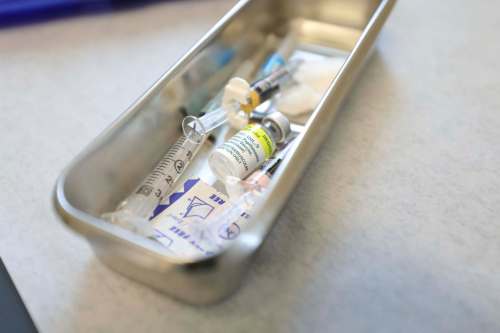
HALIFAX – The first Canadian clinical trials for a possible COVID-19 vaccine will be conducted by a Halifax research team that also was involved in trials that eventually led to a vaccine for the Ebola virus.

Health Canada has approved trials that will be conducted at the Canadian Centre for Vaccinology at Dalhousie University.

The centre’s director, Dr. Scott Halperin, says the lab was one of several in Canada and the U.S. whose work starting in 2014 eventually saw an “emergency release” of an Ebola vaccine that was used in West Africa before a third phase of clinical trials had been completed.

This 2020 electron microscope made available by the U.S. Centers for Disease Control and Prevention image shows the spherical coronavirus particles from the first U.S. case of COVID-19. A recent study sparked some worry last week when it revealed a mutation
This 2020 electron microscope made available by the U.S. Centers for Disease Control and Prevention image shows the spherical coronavirus particles from the first U.S. case of COVID-19. A recent study sparked some worry last week when it revealed a mutation "of urgent concern" in the virus responsible for COVID-19. But experts say more research is needed to determine what that really means.The preliminary, non peer-reviewed study from the Los Alamos National Laboratory in New Mexico indicated that a COVID-19 strand containing a specific mutation — on the spike protein D614G — is emerging as the dominant form of the virus. THE CANADIAN PRESS/AP-C.S. Goldsmith, A. Tamin/ CDC via AP

Halperin said each lab did slightly different studies in order to get the right type of information before quickly moving to the second phase and then the third.

“The Phase 1 studies were done and within six months the data were available and the phase three studies were started in West Africa which then helped to actually stop the epidemic,” he said in an interview.

Halperin said it’s possible the same emergency release could happen in Canada with a potential COVID-19 vaccine if it shows potential and is deemed safe, expediting a process that usually takes a number of years to complete — anywhere from five to seven years under normal circumstances.

“That would be something that Health Canada and the Canadian government would have to decide whether they wanted to do that. But it is certainly one of the options in the tool kit of things they can do to expedite the process if this or any other vaccine is looking promising.”

Halperin pointed out that despite its early use during testing, the Ebola vaccine wasn’t actually licensed as a regular marketed vaccine until late last year.

However, he cautions there’s much work to be done before a COVID-19 vaccine could be approved for use.

The Halifax researchers will be following up work by Chinese manufacturer CanSino Biologics, which is already conducting human clinical trials for the vaccine.

Halperin said the first phase trial should be underway within the next three weeks once final approval is given by the centre’s research ethics board.

Phase 1 will involve fewer than 100 healthy volunteers between the ages of 18 and 55 who will be followed over the next six months.

“We want to make sure that the vaccine is safe first in younger individuals before we go into people who may be at higher risk,” Halperin said.

The participants are given a dose of the vaccine and are clinically monitored through a series of blood tests. They are also asked to record their symptoms in a diary so the researchers can have even more information.

“We collect any type of symptoms they might have whether they think it’s related to the vaccine or not,” said Halperin.

Each participant will make between nine and 13 visits to the centre during the first phase of the study.

If the initial test group shows a safe immune response to the vaccine, Halperin said researchers will quickly transition into an expanded second phase study before the first phase is even completed.

That would involve hundreds of people of all ages, including those aged 65 to 85, and would be administered by several other research centres across the country that are part of the Canadian Immunization Research Network.

Halperin said the network was set up by the federal government in 2009 as part of the response to the H1N1 pandemic. He said the intent was to create the necessary infrastructure to respond rapidly to an emergency and to do early phase clinical trials so vaccines would be available in Canada.

“This is a good test of that (network),” Halperin said of clinical trials that will be the first of “many more to come.”

This report by The Canadian Press was first published May 17, 2020.

Report Error Submit a Tip

More Stories

Why are Manitoba's school immunization programs so far from achieving herd immunity?

Maggie Macintosh  26 minute read Preview

Why are Manitoba's school immunization programs so far from achieving herd immunity?

Maggie Macintosh  26 minute read Saturday, May. 1, 2021

Sometimes, neither a lollipop nor a dinosaur sticker is enough to convince someone to get a needle.

Dr. Michele Feierstein, a pediatrician for more than 35 years, knows that all too well.

Feierstein has given thousands of immunizations to young patients throughout her career, but she has also had her fair share of difficult conversations with parents who are vaccine-hesitant or outright anti-vaxxers.

She does not bar families who have lukewarm feelings about or adamant views against immunization, whether they be rooted in misinformation, distrust, religious belief, or any other reason, from her practice at the Manitoba Clinic.

Read
Saturday, May. 1, 2021

Bloviating ingrate simply doesn’t rate

Maureen Scurfield 5 minute read 2:00 AM EST

DEAR MISS LONELYHEARTS: I was at a party with my younger boyfriend, and I overheard him in another room talking loudly with his friends.

They were all bombed, guzzling beer and rating their girlfriends’ looks. I was listening for my guy to chime in. He finally said I was “a five without makeup, a 6 1/2 with it, but her great personality makes up for the rest.”

I can’t believe he would say that to other people, but he was drinking a lot — disgusting. I’m thinking of leaving him. What do you think?

— ‘Five Without Makeup,’ Osborne Village

US rolls to women's hoops gold medal in Bird's last Olympics

Doug Feinberg, The Associated Press 6 minute read Preview

US rolls to women's hoops gold medal in Bird's last Olympics

Doug Feinberg, The Associated Press 6 minute read Sunday, Aug. 8, 2021

SAITAMA, Japan (AP) — Sue Bird and Diana Taurasi walked off the basketball court together, arm-in-arm, one last time at the Tokyo Games.

They started their journey together five Olympics ago and ended it in the same fashion as always — with gold medals hanging around their necks.

“All of what we’ve done for USA Basketball, we’ve done together. It’s fitting,” Bird said after the 90-75 win over Japan on Sunday.

And now it's over — at least for the 40-year-old Bird.

Read
Sunday, Aug. 8, 2021

Killer pleads guilty in three-year-old daughter’s fatal stabbing

Dean Pritchard 4 minute read Preview

Killer pleads guilty in three-year-old daughter’s fatal stabbing

Dean Pritchard 4 minute read Thursday, May. 26, 2022

A Winnipeg man has pleaded guilty to second-degree murder in the shocking stabbing death of his three-year-old daughter.

Frank Nausigimana, 29, entered his plea before Queen’s Bench Justice Joan McKelvey during a brief hearing Thursday morning.

Asked if he understood he was waiving his right to a trial, Nausigimana, through an American Sign Language interpreter, told McKelvey: “ Yes, I accept the punishment and I am following the law of God.”

“I’ve decided that I am going to pray,” Nausigimana said. “I admit I am guilty.”

Read
Thursday, May. 26, 2022

New council, new opportunies for Winnipeg

Brent Bellamy 6 minute read Preview

New council, new opportunies for Winnipeg

Brent Bellamy 6 minute read 2:00 AM EST

Last week, Winnipeg voters returned Mayor Scott Gillingham to city hall for a second term, but the more surprising election storyline is that nine of the 15 councillors surrounding him will be new faces.

One encouraging aspect of the results is the community-building experience several of these new councillors bring to the job. Their backgrounds in urban planning, neighbourhood advocacy and community development offer valuable perspectives as Winnipeg confronts difficult questions about how it grows.

These perspectives will be particularly important because some of the most consequential decisions councillors can make happen when they evaluate residential development proposals at committee meetings. Over the next four years, the 16 people we’ve just elected will bear the enormous responsibility of deciding where and how Winnipeggers live. These choices will have profound implications for quality of life, social opportunity and the economic viability of our city. They will shape not only the Winnipeg we know today, but the city we leave to our children and grandchildren.

At committee meetings, councillors will hear endless arguments about parking, traffic, and protecting “neighbourhood character.”

Read
2:00 AM EST

Submit a news tip

1 minute read Monday, Mar. 16, 2026

Submit a news tip