WEATHER ALERT

Victoria Day marks subdued start to cottage season during COVID-19: officials

Advertisement

Advertise with us

Life looks to stay fairly quiet in Canada's cottage country this Victoria Day long weekend.

Read this article for free:


By clicking the button above, an account will be created and you will begin to receive some of our recommended newsletters. You may opt out of any newsletter by visiting your Email and Communication Preferences page or by clicking "unsubscribe" at the bottom of any email.

or

Already have an account? Log in here »

To continue reading, please subscribe:

Digital Subscription

One year of digital access for only $1.44 a week*

  • Enjoy unlimited reading on winnipegfreepress.com
  • Read the E-Edition, our digital replica newspaper
  • Access News Break, our award-winning app
  • Play interactive puzzles

*Billed as $5.77 plus GST every four weeks. After 52 weeks, price increases to the regular rate of $19.95 plus GST every four weeks. Offer available to new and qualified returning subscribers only. Cancel any time.

To continue reading, please subscribe:

Add Free Press access to your Brandon Sun subscription for only an additional

$1 for the first 4 weeks*

  • Enjoy unlimited reading on winnipegfreepress.com
  • Read the E-Edition, our digital replica newspaper
  • Access News Break, our award-winning app
  • Play interactive puzzles
Start now

*Your next Brandon Sun subscription payment will increase by $1.00 and you will be charged $17.95 plus GST for four weeks. After four weeks, your payment will increase to $24.95 plus GST every four weeks.

Hey there, time traveller!
This article was published 16/05/2020 (2360 days ago), so information in it may no longer be current.

Life looks to stay fairly quiet in Canada’s cottage country this Victoria Day long weekend.

The COVID-19 pandemic has slowed the traditional influx of urbanites in many resort towns for the first big cottage weekend of the year, with some provinces barring pilgrimages to the lake altogether.

Local officials say seasonal visitors have for the most part respected precautions to keep year-round residents safe, but recognize the restrictions on May Two-Four festivities could forbore a tough summer for businesses that depend on tourism to keep their doors open.
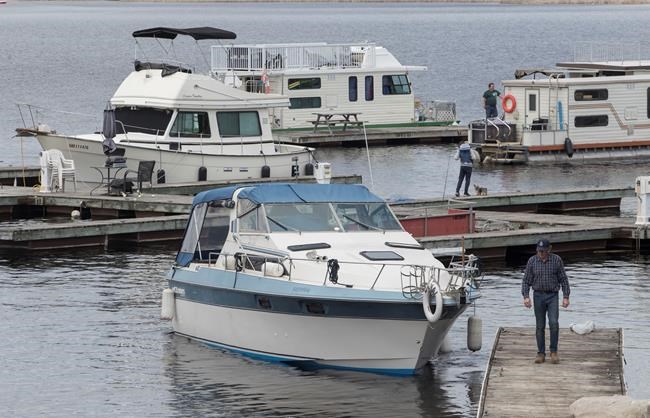
Boats get launched at Kawartha Lakes Marina in Bobcaygeon, Ont. on Saturday, May 16, 2020. THE CANADIAN PRESS/Fred Thornhill

In the District of Sechelt, about 50 kilometres northwest of Vancouver, beaches would typically be bustling with revellers ready to light up the skies with fireworks to ring in the start of cottage season, says Mayor Darnelda Siegers.

But come Monday, Siegers expects both the sands and skies to be clear, perhaps with the exception of rain.

“There won’t be any fireworks on the Sunshine Coast,” Siegers said, referring to the coastal region on British Columbia’s southern mainland.

Siegers said the district has enlisted “community ambassadors” to patrol popular spots over the weekend to ensure people are following physical distancing policies.

She’s echoed the urgings of B.C. authorities to avoid non-essential travel. “Now is not the time to travel for tourism or recreation,” the province’s website reads.

While ferries are operating at 50-per-cent passenger capacity, Siegers said that hasn’t stopped a slow trickle of visitors from coming to Sechelt since Easter weekend.

The people have for the most part been responsible about sticking to their properties and minimizing contact with locals, Siegers said.

Roughly half of Sechelt’s full-time residents are seniors, she said, putting them at higher risk of COVID-19 complications if city dwellers bring the novel coronavirus with them to the cottage.

Still, she recognizes the frustrations of cottage owners who have been denied access to their properties, for which they pay taxes.

Business owners are also having a rough go, said Siegers.

“It’s a tough place to be in for everybody,” she said. “None of us know what this is going to look like going forward.”

Similar concerns have turned cottage country into tricky territory for some lawmakers as the COVID-19 outbreak has pitted the rights of property holders against concerns about overwhelming rural health-care systems.

For example, New Brunswick reopened campgrounds and other recreational businesses earlier this week, drawing ire from out-of-province cottagers who remain barred from crossing the border.

Alberta is also allowing “responsible travel” to campgrounds, summer homes, cabins and cottages within the province, prompting local officials in two popular Rocky Mountain destinations to take action to keep people safe.

Banff Mayor Karen Sorensen tweeted a video last Monday urging visitors to hold off until June to give the town time to implement proper public health protocols.

“Our message will soon change from ‘stay home and stay safe’ to ‘help keep Banff safe,'” Sorensen said.

In Canmore, about 100 kilometres west of Calgary, Mayor John Borrowman warned that the “allure of a long weekend” could draw in visitors, and the town must prepare accordingly.

Borrowman said Thursday that officials are considering making the town’s main drag pedestrian-only so people can stroll through downtown while maintaining a two-metre distance from others. He said the temporary measure would coincide with the reopening of campgrounds on June 1.

“We are in this together,” Borrowman said in a statement on the town’s website. “Reopening is a positive step to recovery, but we all need to continue to do our part to stop the spread.”

Meanwhile, about 230 kilometres north of Toronto, Muskoka Lakes Mayor Phil Harding said traffic on the roads and on the water has picked up, but there’s nowhere near the “beehive of activity” the town typically sees this time of year.

Seasonal residents comprise roughly 80 per cent of the town’s population, said Harding. While some have come to check in on their boats and homes, Harding said most part-timers haven’t strayed from their properties, and have brought their own groceries to prevent strain on local resources.

Harding said he hasn’t seen many tourists, noting that they’d be hard pressed to keep themselves busy with so many businesses shut down.

While communal gatherings remain prohibited, Harding said residents are welcome to ring in Victoria Day by sparking up fireworks on their own property since Ontario lifted its regional fire ban Friday.

The COVID-19 restrictions may make for more muted celebrations to mark the unofficial start to the summer, said Harding, but cottage country isn’t a retreat from the risks of the novel coronavirus.

“We need to really treat this as businesses unusual,” Harding said. “We all need to isolate wherever we are.”

This report by The Canadian Press was first published May 16, 2020.
Report Error Submit a Tip

More Stories

Taxi and ride-hailing services receive 58 complaints since March

Jessica Botelho-Urbanski 5 minute read Preview

Taxi and ride-hailing services receive 58 complaints since March

Jessica Botelho-Urbanski 5 minute read Friday, Aug. 17, 2018

The City of Winnipeg has fielded 58 formal complaints about vehicle-for-hire operations since taking over industry oversight from the province in March.

According to freedom of information request results, the city mostly received complaints about taxi operations, and the two largest companies – Duffy’s Taxi and Unicity Taxi – were the main culprits.

From March 1, 2018 to July 13, 2018, the Winnipeg Parking Authority received 20 complaints about Duffy’s, mostly to do with driver road habits (five complaints), driver conduct (three), service refusal (three) or poor service (three), among other issues.

During the same period, Unicity had 19 complaints, five of them related to poor service and three about driver conduct, plus other misdeeds.

Read
Friday, Aug. 17, 2018

The new normal in Canadian politics

David McLaughlin 5 minute read Preview

The new normal in Canadian politics

David McLaughlin 5 minute read Yesterday at 2:01 AM CDT

“Nothing happening, all at once.”

Welcome to the new normal of Canadian politics, where normality is the new normal. Routine and stable are in; disruptive and excessive are out. Exhibits A and B are the Alberta referendum and the British Columbia election. Voters opted for stability over volatility.

The opposite of being normal is being different from the norm. In politics that means different from where we’ve been and what we’ve come to expect. Two competing trends have dominated our politics for the past decade and a half — progressivism and populism. Think Justin Trudeau and liberal, progressive identity politics in Canada, and Donald Trump and conservative, populist MAGA politics in America. We are now experiencing a swing away from both those trends.

Representing this “new normal” are Prime Minister Mark Carney, for one, and newly elected British Columbia premier, Lorne Doerksen, for another. Both are considered normal because they talk and act like adults in a childish political world. Their political flair is to not have any political flair. They stand out for not standing out.

Read
Yesterday at 2:01 AM CDT

RRC Polytech program cuts take bite out of hospitality, tourism sector

Maggie Macintosh 4 minute read Preview

RRC Polytech program cuts take bite out of hospitality, tourism sector

Maggie Macintosh 4 minute read Saturday, May. 2, 2026

Manitoba’s tourism industry is bracing for the disappearance of hospitality training programs — once-popular courses among international students.

Citing budgetary challenges related to a shift in federal immigration policy, Red River College Polytechnic is scrapping 11 programs and scaling back three others in 2026-27. Its hospitality business management diploma is one of seven permanent casualties.

The announcement, while unsurprising, is but the latest blow to a sector trying to “build back the workforce” in the wake of the COVID-19 pandemic, said Michael Juce, president of the Manitoba Hotel Association.

“Are people going to go outside of Manitoba for training? And if they leave, are they going to come back?” Juce said, adding that rural hotels in particular are already grappling with staffing shortages.

Read
Saturday, May. 2, 2026

Teemu Selanne living the good life in southern California

Mike McIntyre 19 minute read Preview

Teemu Selanne living the good life in southern California

Mike McIntyre 19 minute read Friday, Oct. 15, 2021

LAGUNA BEACH — He likes his coffee black. His steak “medium rare plus.” And he’s an extremely generous pour, especially when it comes to a Moscow mule.

His left knee is giving him all sorts of trouble these days, he’s admittedly almost always running behind schedule and his biggest pride and joy are his four children, who keep him and his wife Sirpa hopping with their numerous athletic pursuits.

He is Teemu Selanne, the beloved Winnipeg Jets legend who, you’ll be happy to know, is still living the good life just a stone’s throw from the Pacific Ocean in this little piece of southern California paradise.

Despite being nearly eight years removed from the end of a Hall of Fame hockey career, the Finnish Flash remains a big deal around here. That was clear as we sat down earlier this week for an exclusive chat inside “Selanne’s Steak Tavern” — a high-end eatery he owns that sits along the stunning Pacific Coast Highway.

Read
Friday, Oct. 15, 2021

Imperialist crusades: 21st-century style

John R. Wiens 5 minute read Preview

Imperialist crusades: 21st-century style

John R. Wiens 5 minute read Wednesday, Jul. 8, 2026

In the 11th century and lasting into the 13th, the papacy launched a series of at least eight military campaigns we now refer to as the Crusades, or Holy Wars. They were an imperialistic call to arms for Christians to retake Jerusalem, which was at the time under Muslim rule.

Spiritual rewards for participation were implied, and other incentives offered, to dull the extra taxation demanded to fund the campaigns. Over time, the “crusades” morphed to become massacres of not only Muslims but also Jews and Christian dissidents — in other words, any enemies of the papacy. If today’s news sounds like déjà vu all over again, it probably should.

The stories keep repeating themselves in many forms. We now know that two 20th century world wars, global in scope, were caused by imperialistic ambitions, changes in the balance of international powers and corresponding arms races. The first was attributed to the assassination of the heir to the Austro-Hungarian throne by a Bosnian Serb, a kind of “regime change” initiative. The second resulted from rising tensions between Allied and Axis powers, triggered by the rise of European fascism and Japanese militarism. The human toll of both was unimaginable.

In the First World War, 15 to 22 million people, including soldiers and civilians, were killed and another 23 million were wounded. These numbers do not account for those otherwise affected — victims of chemical warfare whose compromised health shortened their lives; of the subsequent Spanish flu epidemic amplified by the displacement of peoples; others who died from other diseases caused by war conditions; and those who were malnourished or starved. Nor do they account for the ongoing trauma and resentments passed on intergenerationally to this day.

Read
Wednesday, Jul. 8, 2026

A little toponder, a lot to celebrate

Erna Buffie 5 minute read Yesterday at 2:01 AM CDT

Well, another civic election season has come and gone, and I have to say it was a doozy. The most surprising event was the steady climb in support for young mayoral candidate Noah Redden, who started out with just four per cent public support in September but had reached a solid 14 per cent support in October.

On election day, Redden nearly came in second, less than one percentage point behind Kevin Klein, an experienced politician.

Indeed, the 27-year-old’s accomplishment was nothing short of astonishing. Particularly given that his shoestring campaign was given very little coverage — largely, according to one pundit, because he didn’t send out any press releases.

This when Redden’s unwritten press releases were there for everyone to see on Instagram, as he popped up in locations across the city, posting videos about what he hoped to achieve as mayor.