Ontario, Quebec offer different plans for reopening; Trudeau will not dictate

Advertisement

Advertise with us

Prime Minister Justin Trudeau said Monday that Ottawa will help guide, but not dictate, how provinces and territories should start easing COVID-19 restrictions as Canada's two hardest-hit regions offered up starkly different plans for loosening the rules.

Read this article for free:


or

Already have an account? Log in here »

To continue reading, please subscribe:

Subscribe and receive a limited-edition Free Press branded hat or tote.

Digital Subscription

One year of digital access for only $205*

  • Enjoy unlimited reading on winnipegfreepress.com
  • Read the E-Edition, our digital replica newspaper
  • Access News Break, our award-winning app
  • Play interactive puzzles

*First annual payment billed as $205.00 + GST for one year. This annual subscription will automatically renew at $233.00 + GST every 52 weeks (10% off the regular annual price of $259.35). Offer available to new and qualified returning subscribers only. Cancel any time.

To continue reading, please subscribe:

Add Free Press access to your Brandon Sun subscription for only an additional

$1 for the first 4 weeks*

  • Enjoy unlimited reading on winnipegfreepress.com
  • Read the E-Edition, our digital replica newspaper
  • Access News Break, our award-winning app
  • Play interactive puzzles
Start now

*Your next Brandon Sun subscription payment will increase by $1.00 and you will be charged $17.95 plus GST for four weeks. After four weeks, your payment will increase to $24.95 plus GST every four weeks.

Hey there, time traveller!
This article was published 27/04/2020 (2332 days ago), so information in it may no longer be current.

Prime Minister Justin Trudeau said Monday that Ottawa will help guide, but not dictate, how provinces and territories should start easing COVID-19 restrictions as Canada’s two hardest-hit regions offered up starkly different plans for loosening the rules.

Ontario and Quebec together account for more than 80 per cent of the more than 48,000 cases of COVID-19 in the country.

Quebec came forward with a plan that would see some students back in the classroom by the middle of May, while the Ontario government outlined a three-stage approach to reopening that province’s economy, but without any timelines.

“No one wants the economy to open up more than I do, but we can’t take anything for granted,” Premier Doug Ford said. He noted that all it takes is one infected person to spread the virus to hundreds of others.

The first stage of Ontario’s plan includes opening some workplaces and parks, allowing more people at events such as funerals and resuming non-urgent surgeries.

The second stage includes opening more businesses and outdoor spaces and allowing larger public gatherings.

The third stage would see all workplaces resume activities and further relax rules on public gatherings. Big concerts and sporting events would still be restricted.

“I don’t believe when sports come back they’re going to come back with a full stadium anywhere in North America,” Ford said.

When asked whether there would ever be a complete return to normal, he said: “I don’t think it will ever go back to where it was before, because our lives have changed and we’re doing things differently.”

Ford’s government announced on the weekend that publicly funded schools are to stay closed until at least May 31.

Ontario reported 424 new COVID-19 cases and 57 more deaths. While that was a nearly three per cent increase over Sunday, the province has seen declining growth rates over the last several days.

Overall, there have been 892 deaths in a total of 14,856 cases, with 8,525 of those resolved.

“Progress doesn’t mean we can quit now,” Ford said. “That’s why I won’t set hard dates until we’re ready, because the virus travels at its own speed.”

The Quebec government announced plans to reopen elementary schools and daycares in the Montreal area on May 19 and a week earlier elsewhere. High schools, junior colleges and universities are to remain closed until September.

Premier Francois Legault said he doesn’t expect a vaccine for at least another year and kids can’t stay home that long.

“Life has to continue,” he said. “It’s good for kids to see their friends, their teachers.”

Quebec was to present its economic reopening plans on Tuesday.

There were 84 more COVID-19 deaths in Quebec on Monday for a total of 1,599. Seventy five of those new deaths were in long-term care centres There were 875 new cases of COVID for a total of 24,982.
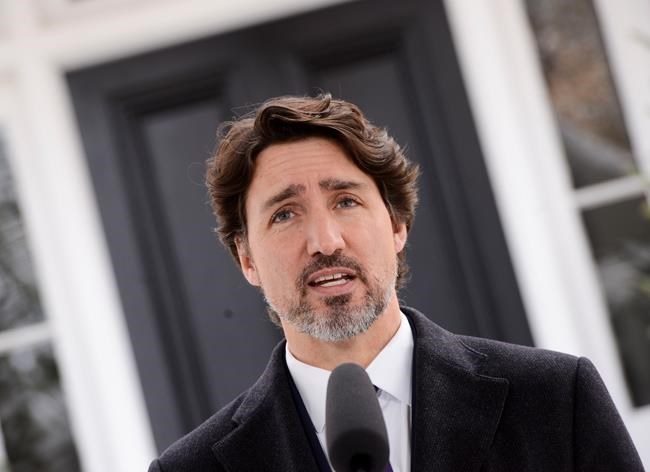
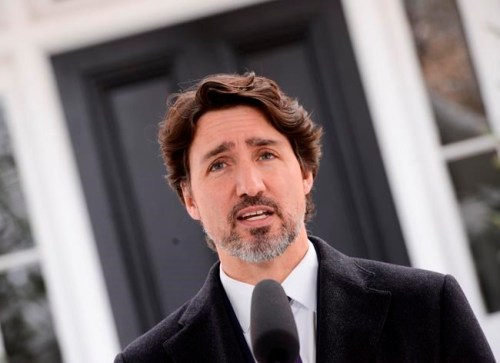
Prime Minister Justin Trudeau addresses Canadians on the COVID-19 pandemic from Rideau Cottage in Ottawa on Monday, April 27, 2020. THE CANADIAN PRESS/Sean Kilpatrick

Saskatchewan, Prince Edward Island and New Brunswick have already announced tentative reopening timelines. Manitoba has said it will announce its plans later this week.

Trudeau said he has full confidence that Canada’s premiers will do what’s right and don’t need the federal government to oversee matters under provincial jurisdiction.

He said Ottawa has been helping develop guidelines on matters such as ensuring provinces have enough medical capacity and enough testing.

The prime minister said the government wouldn’t impose the guidelines, but that he and all 13 premiers would work on them together.

Trudeau cautioned that a complete return to normal is a long way off and governments will have to be careful until there is a vaccine for COVID-19 or a treatment to make it less deadly.

“That caution will remain because at any time if we loosen our measures too much, we can find ourselves back in a tremendous spike,” he said.

“Historians remember from the 1918 Spanish Flu epidemic that the spring was pretty bad, but the fall was much worse. We need to stay vigilant every step of the way.”

Also Monday, businesses began applying for the federal government’s $73-billion wage subsidy program. Trudeau said 10,000 applications had been received in the first few hours.

Companies that qualify will get a subsidy worth 75 per cent of each employee’s wages, up to $847 a week, retroactive to mid-March.

Trudeau said money under the program is to start flowing by May 7.

This report by The Canadian Press was first published April 27, 2020

— With files from Lee Berthiaume in Ottawa, Allison Jones in Toronto and Guiseppe Valiante in Montreal

Report Error Submit a Tip

More Stories

Ontario, Quebec outline reopening plans

Lauren Krugel, The Canadian Press 5 minute read Preview

Ontario, Quebec outline reopening plans

Lauren Krugel, The Canadian Press 5 minute read Monday, Apr. 27, 2020

Prime Minister Justin Trudeau said Monday that Ottawa will help guide, but not dictate, how provinces and territories should start easing COVID-19 restrictions as Canada's two hardest-hit regions offered up starkly different plans for loosening the rules.

Ontario and Quebec together account for more than 80 per cent of the more than 48,000 cases of COVID-19 in the country.

Quebec came forward with a plan that would see some students back in the classroom by the middle of May, while the Ontario government outlined a three-stage approach to reopening that province's economy, but without any timelines.

"No one wants the economy to open up more than I do, but we can't take anything for granted," Premier Doug Ford said. He noted that all it takes is one infected person to spread the virus to hundreds of others.

Read
Monday, Apr. 27, 2020

Nothing wrong with planting trees, but it won’t get province very far on path to net zero

Dan Lett 5 minute read Preview

Nothing wrong with planting trees, but it won’t get province very far on path to net zero

Dan Lett 5 minute read 2:39 PM CDT

Manitoba’s new plan to achieve net zero carbon emissions by 2050 is a lot of things.

It’s detailed. It’s certainly comprehensive in scope. But when it is all said and done, it is still very much a work in progress.

There are 90 individual actions listed in the Path to Net Zero action plan released last week. Together, the government is pledging to put up to $350 million toward what it calls “current forecast government investments.” In short, it is a term that captures actual approved expenditures and additional spending that is not yet approved but which the government would like to make in the future.

Is that all new money? Not really.

Read
2:39 PM CDT

Mourinho’s return to Real Madrid a classic rebound

Jerrad Peters 6 minute read Preview

Mourinho’s return to Real Madrid a classic rebound

Jerrad Peters 6 minute read Friday, Aug. 14, 2026

Not quite a month ago, nearly two million people lined the streets of Madrid to see the World Cup paraded by the Spanish national team. It might as well have been another lifetime.

By the time the Plaza de Cibeles was swept up and sprayed down, the country’s attention had shifted to the only thing — or person — it seemed anyone wanted to be talking about: José Mourinho.

And they haven’t stopped talking about him. He hasn’t let them.

On June 11, the same day the World Cup kicked off in Mexico City, Mourinho was appointed head coach of Real Madrid for a second time. In his initial stint at the sport’s biggest club, which had ended 13 years prior, he’d won the Copa del Rey his first season, La Liga in his second and nothing in his third.

Read
Friday, Aug. 14, 2026

Feds chip in $27M for Winnipeg sewage project

Joyanne Pursaga 3 minute read Preview

Feds chip in $27M for Winnipeg sewage project

Joyanne Pursaga 3 minute read 3:00 PM CDT

The federal government is offering Winnipeg $27 million to help reduce combined sewer overflows, its first financial contribution to the major environmental project.

The City of Winnipeg is provincially mandated to complete a $1.15-billion master plan by 2045 that reduces such sewage spills. The municipal government has so far paid for that work alone, however, as provincial and federal funding focused on the city’s separate $3.1-billion upgrade of the north end sewage treatment plant.

“It’s wonderful to see the federal government (do this) … It’s going to make a difference on the (combined sewer overflow) projects. We’ve got a lot of them to do in the city … With the rain events we saw this year, the importance of accelerating combined sewer projects across the city is more (pressing) than ever,” said Coun. Jeff Browaty (North Kildonan), chairman of finance.

Older combined sewers still serve about one third of Winnipeg, collecting both precipitation and wastewater in a single pipe. Heavy rain or snow can cause the pipes to overflow, which releases billions of litres of diluted sewage into Winnipeg rivers each year.

Read
3:00 PM CDT

Today’s horoscope

Georgia Nicols 4 minute read Preview

Today’s horoscope

Georgia Nicols 4 minute read 2:00 AM CDT

MOON ALERT: After 2 a.m. , there are no restrictions to shopping or important decisions. The moon is in Scorpio.

ARIES (March 21-April 19)

You’ll be pleased at how much you accomplish. This is because your ruler Mars is boosting the sun while it is travelling through your house of employment. You’ll be the perfect example of Col. Saito’s motto: “Be happy in your work.”

TAURUS (April 20-May 20)

Read
2:00 AM CDT

COVID-19 tracking apps raise concerns: watchdogs

Nick Wells, The Canadian Press 6 minute read Preview

COVID-19 tracking apps raise concerns: watchdogs

Nick Wells, The Canadian Press 6 minute read Saturday, May. 2, 2020

VANCOUVER - Privacy watchdogs are voicing concerns over proposals across the country to implement smartphone apps to help track COVID-19.

New Brunswick, Manitoba, Newfoundland and Labrador, and Saskatchewan are among the provinces looking at or planning on creating smartphone apps that would track a user's whereabouts.

Alberta is the first province to launch an app.

Known as contact tracing, the apps track those who the user comes in to contact with, commonly by monitoring a device's Bluetooth signal.

Read
Saturday, May. 2, 2020