Pandemic has shunted aside an array of Liberal initiatives, at least for now
Advertisement
Read this article for free:
or
Already have an account? Log in here »
To continue reading, please subscribe:
Digital Subscription
One year of digital access for only $1.44 a week*
- Enjoy unlimited reading on winnipegfreepress.com
- Read the E-Edition, our digital replica newspaper
- Access News Break, our award-winning app
- Play interactive puzzles
*Billed as $5.77 plus GST every four weeks. After 52 weeks, price increases to the regular rate of $19.95 plus GST every four weeks. Offer available to new and qualified returning subscribers only. Cancel any time.
To continue reading, please subscribe:
Add Free Press access to your Brandon Sun subscription for only an additional
$1 for the first 4 weeks*
- Enjoy unlimited reading on winnipegfreepress.com
- Read the E-Edition, our digital replica newspaper
- Access News Break, our award-winning app
- Play interactive puzzles
*Your next Brandon Sun subscription payment will increase by $1.00 and you will be charged $17.95 plus GST for four weeks. After four weeks, your payment will increase to $24.95 plus GST every four weeks.
Read unlimited articles for free today:
or
Already have an account? Log in here »
Hey there, time traveller!
This article was published 04/04/2020 (2399 days ago), so information in it may no longer be current.
OTTAWA – As a new year dawned, the government’s throne-speech commitments, unfurled just weeks earlier, were grabbing headlines and galvanizing the attention of federal policy-makers.
Then came the most serious public health crisis in recent memory.
The Trudeau government’s planned gun-control measures, assisted-dying legislation and efforts to advance reconciliation with Indigenous Peoples are taking a back seat, at least for now, to the all-consuming fight to help people weather COVID-19.
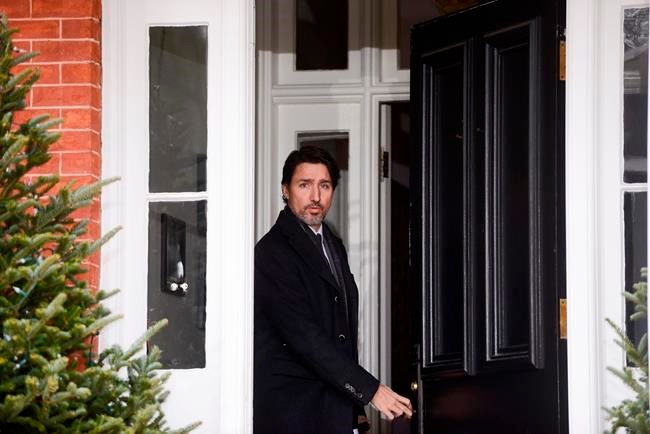
Even the federal budget, a fixture of the late-winter parliamentary agenda, has been delayed indefinitely as the virus monopolizes time and resources.
The minority mandate the Liberals received in the fall election is a starting point, not the final word, said the re-elected Liberal government’s December throne speech, read by the governor general.
“The government is open to new ideas from all parliamentarians, stakeholders, public servants and Canadians. Ideas like universal dental care are worth exploring, and I encourage Parliament to look into this.”
It seems any fresh ideas will now have to find space in an already jammed queue.
The Liberals campaigned on a commitment to outlaw military-style assault rifles, including the popular AR-15, saying guns designed to inflict mass human casualties have no place in Canada. They said owners of legally purchased firearms that fall under the ban would be offered fair-market prices through a buyback program.
The government also plans to empower provinces and cities to take steps to manage the storage and use of handguns within their individual jurisdictions, given that they have different needs and concerns.
PolySeSouvient, a leading voice for stricter controls, urged Public Safety Minister Bill Blair in November to take prompt steps, and the group now sees it as an opportunity lost.
“It’s a real shame that minister Blair did not act decisively and swiftly when he had the chance,” said Heidi Rathjen, co-ordinator of PolySeSouvient, which includes students and graduates of Montreal’s Ecole Polytechnique, where 14 women were gunned down in 1989.
It is one thing to allow online sales of regular hunting firearms and ammunition during the COVID-19 crisis, she said. “It is quite another to allow continued sale of military-style assault weapons in such a volatile context.”
Citing several online social media posts, Rathjen said the group worries a “typically American individualistic survivor mentality” is creeping into Canada.
“Assault weapons and panic-prone individuals in the midst of a pandemic are a very dangerous mix,” she said. “Indeed, you do not want to introduce guns designed for mass killing in a context of generalized high anxiety, with fears of economic meltdown and potential food shortages.”
Although the government is seized with addressing the pandemic, it remains resolute in its commitment to strengthening firearms control in Canada, said Mary-Liz Power, a spokeswoman for Blair.
“Gun-control measures remain a crucial priority in this mandate,” she said. “We will be announcing details of our government’s plan to reduce gun violence in due time, which will come as each step is ready to be implemented.”
Bill C-7 would amend Canada’s law on medical assistance in dying, in response to a Quebec Superior Court ruling last September that struck down a provision restricting the procedure to those whose natural death is “reasonably foreseeable.”
The court initially gave the government until March 11 to change the law but last month granted an extension to July 11.
The bill was introduced in late February and was still in second-reading debate in the House of Commons when Parliament adjourned for the COVID-19 crisis.
There would appear to be little chance of it being approved by the new July deadline but Justice Minister David Lametti’s spokeswoman said no decision had yet been made about seeking another extension.
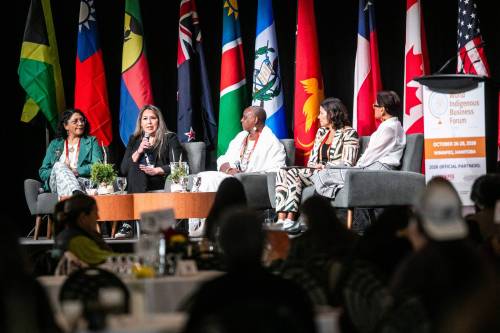
The Liberals promised to build on steps toward improving the lives of First Nations, Metis and Inuit in Canada by continuing to implement recommendations of the Truth and Reconciliation Commission as well as the inquiry into missing and murdered Indigenous women and girls.
The government also pledged legislation to implement the United Nations Declaration on the Rights of Indigenous Peoples in the first year of its new mandate.
Other initiatives include ensuring safe drinking water in First Nations communities and improving access to culturally relevant health care and mental health services.
Indigenous Services Minister Marc Miller said efforts are proceeding on the many recommendations of the missing-and-murdered inquiry.
“The COVID pandemic has really hit a number of ministries quite hard but that doesn’t prevent them from continuing their work in a number of super-important areas, of which this is one.”
Perry Bellegarde, national chief of the Assembly of First Nations, easily rhymes off the long list of Liberal promises to Indigenous Peoples.

“There are so many things that were in the throne speech that we pushed for that we still have to follow up on going forward,” Bellegarde said.
“But we know our energy and attention is on COVID-19 and this health-care threat to all of Canada, including First Nations people. We have to focus on that.”
This report by The Canadian Press was first published April 4, 2020.
—With files from Joan Bryden and Teresa Wright
—Follow @JimBronskill on Twitter
Related Articles
Cda may try to disinfect used masks: Tam
Advertisement Advertise With Us
Advertisement Advertise With Us