Canada fights COVID-19 ‘health crisis’ with travel curbs, billions in spending

Advertisement

Advertise with us

TORONTO - The suspension of Parliament, billions of dollars in extra federal spending, and recommendations against leaving the country were among extraordinary steps public and private sector organizations were taking Friday to try to curb a pandemic that has sparked concerns Canada is headed for a recession.

Read this article for free:


By clicking the button above, an account will be created and you will begin to receive some of our recommended newsletters. You may opt out of any newsletter by visiting your Email and Communication Preferences page or by clicking "unsubscribe" at the bottom of any email.

or

Already have an account? Log in here »

To continue reading, please subscribe:

Digital Subscription

One year of digital access for only $1.44 a week*

  • Enjoy unlimited reading on winnipegfreepress.com
  • Read the E-Edition, our digital replica newspaper
  • Access News Break, our award-winning app
  • Play interactive puzzles

*Billed as $5.77 plus GST every four weeks. After 52 weeks, price increases to the regular rate of $19.95 plus GST every four weeks. Offer available to new and qualified returning subscribers only. Cancel any time.

To continue reading, please subscribe:

Add Free Press access to your Brandon Sun subscription for only an additional

$1 for the first 4 weeks*

  • Enjoy unlimited reading on winnipegfreepress.com
  • Read the E-Edition, our digital replica newspaper
  • Access News Break, our award-winning app
  • Play interactive puzzles
Start now

*Your next Brandon Sun subscription payment will increase by $1.00 and you will be charged $17.95 plus GST for four weeks. After four weeks, your payment will increase to $24.95 plus GST every four weeks.

Hey there, time traveller!
This article was published 13/03/2020 (2423 days ago), so information in it may no longer be current.

TORONTO – The suspension of Parliament, billions of dollars in extra federal spending, and recommendations against leaving the country were among extraordinary steps public and private sector organizations were taking Friday to try to curb a pandemic that has sparked concerns Canada is headed for a recession.

The all-party decision to stop sitting in the House of Commons until April 20 came as Prime Minister Justin Trudeau remained in precautionary self-isolation along with his wife Sophie Gregoire Trudeau, who is in quarantine with a mild case of COVID-19.

“It is an inconvenience and somewhat frustrating,” Trudeau said from outside his home in Ottawa. “We are all social beings after all. but we have to do this because we have to protect our neighbours and our friends —especially our more vulnerable seniors and people with pre-existing conditions.”

The government, Trudeau said, was planning to restrict arriving international flights to unspecified airports to enable more stringent screening. Cruise ships with more than 500 people on board were also barred from docking in Canada until at least July 1, a blow for docks and tourism-dependent jobs.

Travel restrictions and fears have already begun to take hold. The union representing hundreds of WestJet flight attendants said it was expecting the layoff of more than half its members given soaring flight cancellations, according to an internal memo obtained by The Canadian Press.

Trudeau acknowledged the outbreak’s financial impact but said the government had “significant fiscal firepower” to cushion the blow.

“No one should have to worry about paying rent, buying groceries or additional child care because of COVID-19,” Trudeau said. “We will help Canadians financially.”

While financial markets bounced back somewhat from Thursday’s jaw-dropping plunge, the Royal Bank and CIBC warned of economic storm clouds on the horizon. Canada, the banks predicted, could fall into a recession in light of COVID-19 and the steep decline in oil prices sparked by Saudi Arabia’s increased production.

Finance Minister Bill Morneau addressed the concerns by announcing a stimulus program worth $10 billion to help business weather what he called the “health crisis.” The Bank of Canada said it was cutting its key rate by 50 basis points to 0.75 per cent.

“We have your back,” Morneau said. “We are going to do whatever it takes.”

Premier John Horgan said the B.C. and federal governments are looking to help companies and their employees who may have to stay home from work to ride out the pandemic.

In B.C., that means the province’s balanced budget may take a hit, Horgan said.

“I did not seek election and I did not want to form a government just to balance a budget,” he told a news conference in Victoria.

Sophie Gregoire Trudeau attends a rally for her husband Leader of the Liberal Party of Canada, Justin Trudeau in Burnaby, B.C. on Friday, Oct. 11, 2019. The Prime Minister's Office says Sophie Gregoire Trudeau has tested positive for COVID-19. THE CANADIAN PRESS/Frank Gunn

Canada has recorded almost 200 COVID-19 cases and one death in a pandemic that has swept much of the world. Experts say the disease poses little risk to most people, and one of the most effective measures is to wash your hands and maintain at least a metre distance from others.

Countries such as China, where the virus originated, and Italy have already taken drastic measures to curb its spread. U.S. President Donald Trump, who has faced fierce criticism of his handling of the epidemic, declared a national state of emergency on Friday, a rare move that unlocks up to US$50 billion in federal money for battling coronavirus.

“This will pass, and we’re going to be even stronger for it,” Trump said.

Canada’s chief public health officer, Dr. Theresa Tam, advised against any travel abroad as case numbers continued to rise. The medical officer of health in Ontario, which reported 19 new cases Friday, warned against gatherings of more than 250 people.

Quebec, with 17 total confirmed cases, said it was closing schools, colleges, universities and most child-care centres for two weeks.

New Brunswick also announced it is closing public schools, starting Monday, for two weeks.

Toronto’s landmark CN Tower, a major tourist attraction, was closing to visitors as theatre companies tried to reassure reluctant patrons. Cineplex, for example, said it was rolling out “enhanced cleaning protocols,” while Toronto’s TIFF Bell Lightbox theatre said it would limit tickets for the next four weeks. It asked movie-goers to maintain a three-seat distance.

The House of Commons also said it was cancelling all public tours until April 20 and national museums said they were shutting their doors Saturday until further notice.

Thursday had marked a dramatic ramping up of measures to curtail the spread of the virus. Numerous major entertainment and sports events — the Juno Awards and professional hockey among them — were cancelled. Ontario said it would close its schools for two weeks after March break.

Travellers walk through Terminal 3 at Pearson International Airport in Toronto, Friday, March 13, 2020. Provincial governments have advised against international travel and Ontario announced plans to close its schools for two weeks because of COVID-19.THE CANADIAN PRESS/Frank Gunn

Similar announcements continued on Friday, with Manitoba saying it would shutter schools, while various colleges and universities cancelled in-person classes.

“Take care of yourselves and each other,” Rhonda Lenton, president of Toronto’s York University, said.

Nova Scotia, which had yet to see a COVID-19 case, said public sector workers and public school children would have to self-isolate for two weeks on returning to Canada from abroad, though it was unclear how that could be enforced. The province also advised against social gatherings larger than 150 people.

Many mosques cancelled Friday prayers, though some opted to limit the size of gatherings to under 250 people.

Meanwhile, Cardinal Thomas Collins announced that all of the churches in the Archdiocese of Toronto would be closed for public mass on Sunday.

This report by The Canadian Press was first published March 13, 2020

Report Error Submit a Tip

More Stories

The long and winding road

Editorial 4 minute read Preview

The long and winding road

Editorial 4 minute read 2:01 AM CDT

As theatre goes, it sent a strong message.

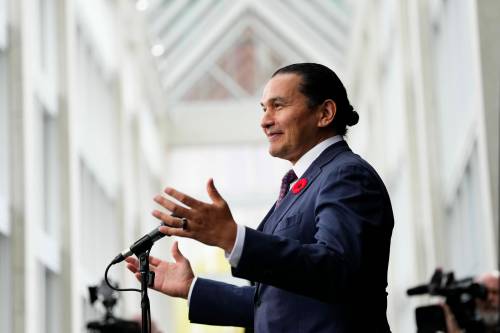
Manitoba Premier Wab Kinew, standing in front of microphones and television cameras, holding up his Indigenous status card and saying that he didn’t feel Canada should have “a race-based form of identification in this country, but that is a reality,” adding that it was time to abolish the Indian Act.

“I think it’s time to abolish the Indian Act, get rid of the Indian Act, move past the Indian Act, and it needs to be done with First Nations people and First Nations governments, of course. I think it’s long overdue that we have a relationship with Indigenous Peoples in Canada that reflects who we are as Canadians today,” he said.

The Indian Act — the name alone suggests how out-dated and out of place the law has become. Originally dating from 1876, the law was put in place to “amend and consolidate the laws respecting Indians” and gave the Minister of the Interior the responsibility to “control and management of the reserves, lands, moneys and property of Indians in Canada.”

Read
2:01 AM CDT

Has the political wind changed?

Gwynne Dyer 5 minute read 2:01 AM CDT

It has been quite a week. First we had “Lula” – Luiz Inácio da Silva (as nobody but his mother ever called him) – defying everybody’s expectations. After winding up two million votes behind his challenger, Flávio Bolsonaro, in the first round of the Brazilian presidential election, he made a “miraculous” comeback in the second.

It was like a man going into a revolving door behind you and coming out in front. At the end of the first round, Lula was two million votes behind; at the end of the second round on Oct. 25 he was four million votes ahead. So how did he win a fourth term without cheating?

That’s what Bolsonaro claims he did, having fled to the United States; Trump, Flávio’s mentor, hints at the same. But Lula’s victory was not miraculous. He only learned to read when he was 10, and at 80 he still refused to have a mobile phone. His team finally made him get one and use it.

He wouldn’t do social media videos, so they created a WhatsApp channel called Lula’s Army, and made him appear on it at least daily. The channel went from zero to 10.8 million viewers in two weeks, and Lula won.

A little toponder, a lot to celebrate

Erna Buffie 5 minute read 2:01 AM CDT

Well, another civic election season has come and gone, and I have to say it was a doozy. The most surprising event was the steady climb in support for young mayoral candidate Noah Redden, who started out with just four per cent public support in September but had reached a solid 14 per cent support in October.

On election day, Redden nearly came in second, less than one percentage point behind Kevin Klein, an experienced politician.

Indeed, the 27-year-old’s accomplishment was nothing short of astonishing. Particularly given that his shoestring campaign was given very little coverage — largely, according to one pundit, because he didn’t send out any press releases.

This when Redden’s unwritten press releases were there for everyone to see on Instagram, as he popped up in locations across the city, posting videos about what he hoped to achieve as mayor.

Nine more deaths, 107 new COVID-19 cases in Manitoba

Katie May 6 minute read Preview

Nine more deaths, 107 new COVID-19 cases in Manitoba

Katie May 6 minute read Monday, Dec. 28, 2020

Manitoba is restarting its COVID-19 vaccination efforts, following a five-day break — and amidst questions about the delay.

The planned pause over Christmas was in the name of efficiency, a provincial government spokesman says, offering no other explanation on the reasoning behind the decision not to vaccinate anyone Dec. 24-28.

On Monday, the province announced nine more pandemic deaths and 107 new cases of the novel coronavirus.

As part of Manitoba's vaccination plan, the most recent immunization clinic happened Dec. 23; the next was set to start Dec. 29.

Read
Monday, Dec. 28, 2020

Doctor’s departure stressful for teen

Kevin Rollason 6 minute read Preview

Doctor’s departure stressful for teen

Kevin Rollason 6 minute read Sunday, Oct. 24, 2021

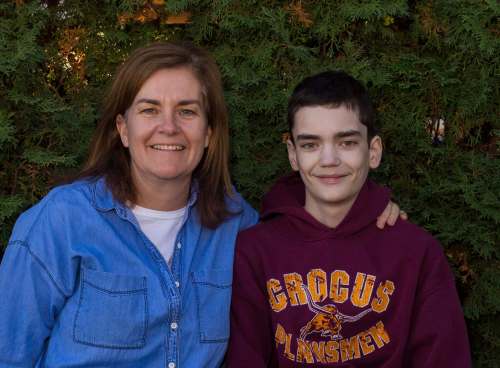
Morgan Walker is a typical teen — but only because a piece of his brain the size of a deck of cards was removed four years ago.

Walker, who had seizures multiple times a day before his surgery, fears other people might not be so lucky.

That’s because his surgeon, Dr. Demitre Serletis, is leaving the province and Health Sciences Centre. Serletis will start practising at the Cleveland Clinic in the new year.

“I was kind of shocked, but I understood why,” Walker said from his home in Brandon. “The government really hasn’t been respecting doctors.”

Read
Sunday, Oct. 24, 2021

The new normal in Canadian politics

David McLaughlin 5 minute read Preview

The new normal in Canadian politics

David McLaughlin 5 minute read 2:01 AM CDT

“Nothing happening, all at once.”

Welcome to the new normal of Canadian politics, where normality is the new normal. Routine and stable are in; disruptive and excessive are out. Exhibits A and B are the Alberta referendum and the British Columbia election. Voters opted for stability over volatility.

The opposite of being normal is being different from the norm. In politics that means different from where we’ve been and what we’ve come to expect. Two competing trends have dominated our politics for the past decade and a half — progressivism and populism. Think Justin Trudeau and liberal, progressive identity politics in Canada, and Donald Trump and conservative, populist MAGA politics in America. We are now experiencing a swing away from both those trends.

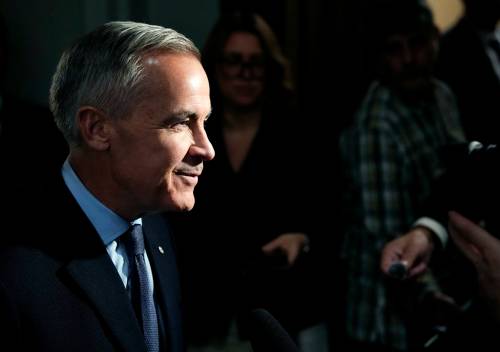
Representing this “new normal” are Prime Minister Mark Carney, for one, and newly elected British Columbia premier, Lorne Doerksen, for another. Both are considered normal because they talk and act like adults in a childish political world. Their political flair is to not have any political flair. They stand out for not standing out.

Read
2:01 AM CDT