Better protections needed for health-care workers during COVID-19: advocates

Advertisement

Advertise with us

VANCOUVER - Canada's first death from the novel coronavirus has highlighted the urgent and often ignored need for better staffing at long-term care facilities where elderly residents are especially vulnerable to the disease, says the head of the Canadian Federation of Nurses Unions.

Read this article for free:


By clicking the button above, an account will be created and you will begin to receive some of our recommended newsletters. You may opt out of any newsletter by visiting your Email and Communication Preferences page or by clicking "unsubscribe" at the bottom of any email.

or

Already have an account? Log in here »

To continue reading, please subscribe:

Digital Subscription

One year of digital access for only $1.44 a week*

  • Enjoy unlimited reading on winnipegfreepress.com
  • Read the E-Edition, our digital replica newspaper
  • Access News Break, our award-winning app
  • Play interactive puzzles

*Billed as $5.77 plus GST every four weeks. After 52 weeks, price increases to the regular rate of $19.95 plus GST every four weeks. Offer available to new and qualified returning subscribers only. Cancel any time.

To continue reading, please subscribe:

Add Free Press access to your Brandon Sun subscription for only an additional

$1 for the first 4 weeks*

  • Enjoy unlimited reading on winnipegfreepress.com
  • Read the E-Edition, our digital replica newspaper
  • Access News Break, our award-winning app
  • Play interactive puzzles
Start now

*Your next Brandon Sun subscription payment will increase by $1.00 and you will be charged $17.95 plus GST for four weeks. After four weeks, your payment will increase to $24.95 plus GST every four weeks.

Hey there, time traveller!
This article was published 11/03/2020 (2427 days ago), so information in it may no longer be current.

VANCOUVER – Canada’s first death from the novel coronavirus has highlighted the urgent and often ignored need for better staffing at long-term care facilities where elderly residents are especially vulnerable to the disease, says the head of the Canadian Federation of Nurses Unions.

Linda Silas said the need has become “top of mind” following the death on Sunday of a man in his 80s at a care home in North Vancouver, where another patient is infected with COVID-19. One of four care aides who contracted the illness there is in hospital and two relatives of another have also been sickened.

Discussions about preparedness were focused on emergency rooms, critical care and public health units, she said.
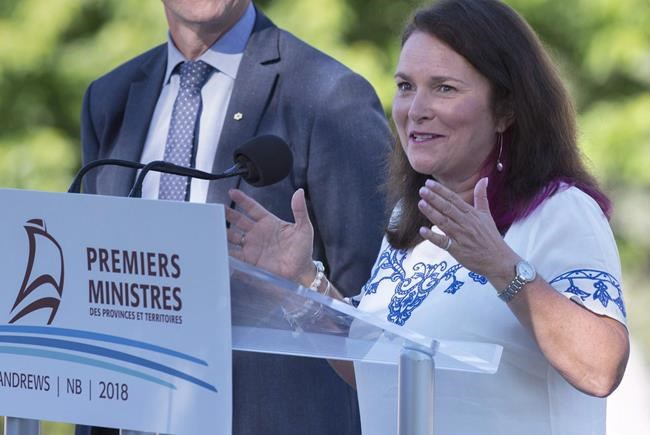
Linda Silas, president of the Canadian Federation of Nurses Unions, talks with reporters after a breakfast meeting with Canadian premiers in St. Andrews, N.B. on Friday, July 20, 2018. Canada's first death from the novel coronavirus has highlighted the urgent and often-ignored need for better staffing at long-term care facilities where elderly residents are especially vulnerable to the lung disease, says the head of the Canadian Federation of Nurses' Unions. THE CANADIAN PRESS/Andrew Vaughan

“A week ago we were talking about ‘Is the acute-care sector ready?’ ” Silas said.

“Everyone’s now talking about, ‘What about long-term care?’ “

More infections of health-care workers leading to 14 days of quarantine would mean greater staff shortages that could leave frail patients, who often have chronic illnesses, at higher risk, Silas said, adding staffing levels are already affected by outbreaks of seasonal influenza.

“When it hits a long-term care facility it’s always more of a crisis than if it hits even your community or hospital. We’ve always known it’s a fragile population with any kind of illness and this (COVID-19) is one of those where we have to pay particular attention,” she said.

Silas said the federation has recommended 4 1/2 hours of care by registered and licensed practical nurses per day, per resident in long-term care facilities across the country.

The actual level of nursing is about three hours, with some provinces, including Ontario and New Brunswick, among the worst as few nurses choose to work in long-term care jobs, she said.

As well, there are shortages of care aides, also called personal support workers, which adds more stress to a challenging work environment, said Silas.

“The working conditions are very difficult. You’re working short all the time, you’re never guaranteed registered nurses and often your only option is to send your patient to the hospital when often it’s not what they need and what’s best for them,” she said.

“And your personal care workers are not often permanent employees. They work casual or part time and they work in different facilities so there’s always a turnover.”

Doris Grinspun, CEO of the Registered Nurses Association of Ontario, said less than 50 per cent of staff in long-term care homes work in just one facility and support workers are also employed in multiple facilities.

“Some of them work in three places,” she said, adding a government directive during the SARS crisis in 2003 required nurses to work in only one facility to reduce the risk of the virus spreading.

Dr. Bonnie Henry, British Columbia’s provincial health officer, said after announcing the death this week that an infected care aide from the same facility is believed to have worked at two other facilities.

“It’s a challenge with our system, with care homes,” she said. “We know that whether it’s care workers or nurses, even physicians, we work in many different health authorities, many different facilities sometimes. That is part of the ongoing investigation at the Lynn Valley care home, to find out exactly where everybody worked and make sure that the other facilities are investigated.”

Silas said a big concern is the lack of employment insurance sick leave benefits for some support workers compared with nurses.

Business and other labour groups have urged the federal government to ease access to such benefits, which the government appears open to doing, along with tax credits and other breaks as part of the federal response.

Finance Minister Bill Morneau has said the government was “looking at taking some initiatives this week” to help affected workers and the health-care system.

Government sources who were not authorized to discuss the plans publicly said Prime Minister Justin Trudeau is expected to announce federal funding on Wednesday to help provincial health-care systems cope with the new coronavirus.

Jennifer Whiteside, spokeswoman for the Hospital Employees’ Union, said care aides in British Columbia work in a “fragmented” system, with some in part-time and casual jobs at various facilities run by either private contractors or health authorities.

Sick leave benefits may be as few as five to seven sick days a year versus 18 days offered by health authorities, Whiteside said, adding aides having to go into quarantine could face financial hardship because of their lower pay levels.

“Their sick leave will be wiped out. They won’t even have enough to cover one period of self isolation should that become necessary and certainly not enough to cover them should they actually become sick with (COVID-19),” she said.

“If a large number get sick then we’ll be having some challenges. There’s no question that a situation like this does really bring into sharp relief some of the challenges we have in the system around how we manage the care-aide labour force.”

Isobel Mackenzie, advocate for seniors in British Columbia, said the job of care aides has long been undervalued and the novel coronavirus may create awareness about the need for change.

“I think what this is going to highlight, and this is a conversation for after we’ve dealt with the crisis, is the different ways in which these care homes are staffed. We need all licensed care homes to be doing things exactly the same under the direction of the officer of the public health officer,” she said.

“How are we going to deal with the fact that some people are going to get paid while they’re off sick and some people aren’t? How are we going to handle the fact that they are working potentially for multiple employers?”

The issue of care aides who travel to various private homes must also be considered for the safety of the wider community, Mackenzie said.

“That’s where we’re going to have to be ever vigilant around monitoring and managing the situation,” she said. “(They) may be providing (seniors) with their medications that they absolutely need and if we don’t go there they aren’t going to get their medications.”

This report by The Canadian Press was first published March 11, 2020.

— With files from Cassandra Szklarski in Toronto

Report Error Submit a Tip

More Stories

Letters, Nov. 2

6 minute read 2:00 AM EST

Post-election reflection

The civic election offered both predictable and surprising results. The re-election of Mayor Scott Gillingham and the defeat of Transcona councillor Russ Wyatt were anticipated.

What was surprising was that, in addition to Wyatt, three other incumbents lost their bids for re-election. Devi Sharma (Old Kildonan), Ross Eadie (Mynarski) and Shawn Dobson (St. James) all went down to defeat, and it is clear to me their replacements will bring stronger voices to city hall.

A total of nine new councillors is a seismic shift in Winnipeg civic politics, not seen since the establishment of the 15-member council some 35 years ago. What is most interesting is the political leanings of the new councillors and how they will work with Mayor Gillingham.

Province tables legislation to cover health-care system changes

Larry Kusch 4 minute read Preview

Province tables legislation to cover health-care system changes

Larry Kusch 4 minute read Wednesday, Mar. 6, 2019

The Pallister government has introduced broad legislation to support several of its key planned health-care reforms.

Health Minister Cameron Friesen said Wednesday that Bill 10 (The Regional Health Authorities Amendment Act) will provide the framework to simplify the administration of the health-care system and improve accountability.

All health services in Manitoba will be delivered through the five current regional health authorities, CancerCare Manitoba and a new provincial authority called Shared Health. The administrative changes are set to begin next month and will continue to be rolled out over the next two to three years.

The Health Department will cease to administer health services directly and focus its activities on planning, policy development, funding and oversight. It will set system-wide performance goals and track results.

Read
Wednesday, Mar. 6, 2019

Oleksiak makes history with seventh Olympic medal

The Canadian Press 8 minute read Preview

Oleksiak makes history with seventh Olympic medal

The Canadian Press 8 minute read Sunday, Aug. 1, 2021

TOKYO - The Canadian women finished their impressive medal haul in the pool – including a record-setting performance from Penny Oleksiak – and Andre De Grasse finally got Canada's men on the board with his second consecutive Olympic bronze in the men's 100 metres.

After finishing third in the medley relay, Maggie Mac Neil draped a bronze medal brimming with significance around Oleksiak's neck as their teammates Kylie Masse and Sydney Pickrem celebrated on the podium.

"Most decorated," they chanted in unison with their arms around each other during post-ceremony interviews with reporters.

On the final day of swimming competition at the Tokyo Olympics, Toronto's Oleksiak took her place at the top among Canada's greatest Olympians. In helping the medley relay team win bronze, she earned her seventh career Olympic medal, and at just 21 became the most decorated Canadian Olympian of all time.

Read
Sunday, Aug. 1, 2021

Russian Olympic biathlon champion loses Sochi doping case

Graham Dunbar, The Associated Press 5 minute read Preview

Russian Olympic biathlon champion loses Sochi doping case

Graham Dunbar, The Associated Press 5 minute read Thursday, Sep. 24, 2020

GENEVA - Two-time Olympic biathlon champion Olga Zaitseva lost her appeal Thursday against disqualification from the 2014 Sochi Olympics for her part in Russia’s state-backed doping program.

The Court of Arbitration for Sport said its judges upheld the International Olympic Committee’s disciplinary ruling of 2017, which used evidence against Zaitseva from Russian whistleblower Grigory Rodchenkov.

Zaitseva’s disqualification from all her Sochi events strips Russia of its silver medal in the women’s biathlon 4x6-kilometre relay. She won — and will retain — her gold medals from the same relay event at the two previous Winter Games in 2006 and 2010.

Her lawyer in Switzerland, Yvan Henzer, said Zaitseva would appeal the CAS ruling at Switzerland’s supreme court. The federal court typically only intervenes if legal process was abused.

Read
Thursday, Sep. 24, 2020

New council, new opportunies for Winnipeg

Brent Bellamy 6 minute read Preview

New council, new opportunies for Winnipeg

Brent Bellamy 6 minute read 2:00 AM EST

Last week, Winnipeg voters returned Mayor Scott Gillingham to city hall for a second term, but the more surprising election storyline is that nine of the 15 councillors surrounding him will be new faces.

One encouraging aspect of the results is the community-building experience several of these new councillors bring to the job. Their backgrounds in urban planning, neighbourhood advocacy and community development offer valuable perspectives as Winnipeg confronts difficult questions about how it grows.

These perspectives will be particularly important because some of the most consequential decisions councillors can make happen when they evaluate residential development proposals at committee meetings. Over the next four years, the 16 people we’ve just elected will bear the enormous responsibility of deciding where and how Winnipeggers live. These choices will have profound implications for quality of life, social opportunity and the economic viability of our city. They will shape not only the Winnipeg we know today, but the city we leave to our children and grandchildren.

At committee meetings, councillors will hear endless arguments about parking, traffic, and protecting “neighbourhood character.”

Read
2:00 AM EST

Manitoba’s First Nations and the Indian Act

Hersh Seth 6 minute read 2:00 AM EST

On Monday in Ottawa, Manitoba Premier Wab Kinew called for the Indian Act to be abolished. Prime Minister Mark Carney said he was open to working with First Nations to reform or repeal this law, calling it racist.

The act was created in 1876 and still controls Indian status, reserve lands and band governance. It’s understandable why many people want a better relationship.

But repealing a law and building a new relationship are not the same. What would replace the act’s protections? Who decides? How do governments ensure removing federal authority gives First Nations power while the Crown keeps its promises?

Manitoba has faced these questions before. In 1971, First Nations created a document called Wahbung: Our Tomorrows, in response to then-prime minister Pierre Trudeau’s white paper on assimilation. More than 45 years later, elders and knowledge keepers met at Turtle Lodge, north of Winnipeg, to continue the conversation. Manitobans Dave Courchene Sr. and his son, Dave Courchene Jr., are generational links to the broader movement, and their story should be part of this discussion.